Flexible Short & Long-Term LED Screen Rental Houston Packages

Houston is a dynamic market for live events, experiential marketing, corporate activations, sports, and public displays. Event planners, marketers, and venue managers increasingly rely on LED screens to deliver high-impact visuals that engage audiences. Flexible rental packages — both short-term and long-term — give organizations the ability to deploy world-class LED solutions without heavy capital expenditure, while offering operational support, technical expertise, and scalability specific to Houston’s unique venue, weather, and regulatory environment.
This article provides a comprehensive professional guide to flexible short- and long-term LED screen rental packages in Houston. It explains package types, technical considerations, logistics, expected costs, ROI, vendor selection criteria, and a practical comparison table to help you choose the best solution for your needs.
Why flexible led screen Rentals Make Sense in Houston
Market dynamics and flexibility
– Houston’s event landscape is varied: conventions downtown, outdoor festivals in Discovery Green and Memorial Park, sports venues, corporate events in the Energy Corridor, and rooftop activations in Midtown. Different events require different screen solutions.
– Flexibility means you can scale up for a multi-day festival, down for a single-day corporate town hall, or secure an ongoing screen for seasonal outdoor advertising without owning expensive hardware.
– Rentals mitigate risks tied to rapid technology changes: pixel pitch improvements and brightness increases mean owning equipment risks obsolescence, while rentals keep you current.
Operational advantages
– One-stop solutions: many Houston vendors provide transport, rigging, installation, operation, and onsite tech support.
– Insurance and compliance: seasoned rental companies handle venue permits, rigging inspections, and weatherproofing strategies.
– Financial control: predictable line-item rental fees vs. capital expenditures, plus tax benefits for operating expenses.
Short-Term LED Screen Rental Packages (Flexible Day-to-Week Options)
What “short-term” usually covers
Short-term packages are designed for events lasting from a single day to several weeks. Typical uses include:
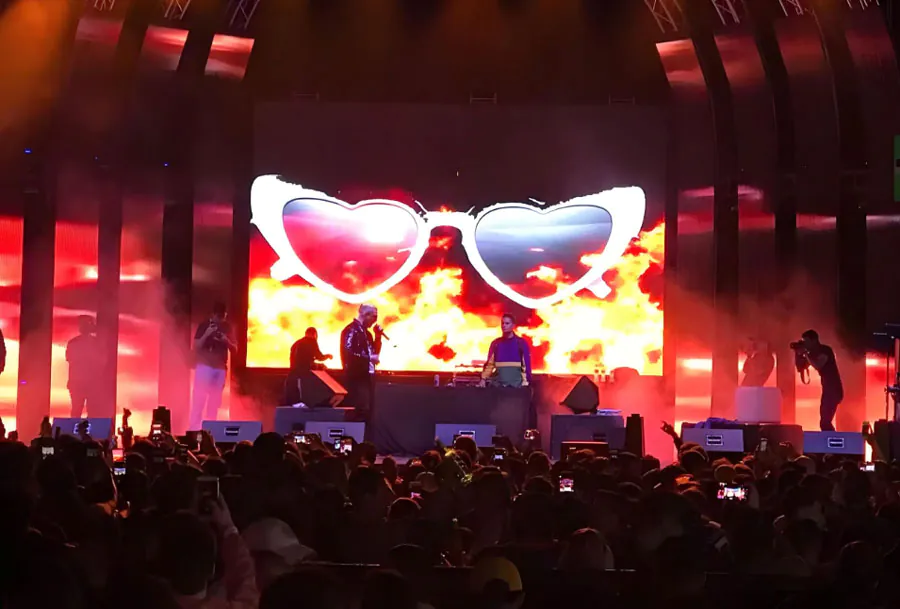
– Concerts and festivals
– Trade shows and expos
– Corporate product launches and roadshows
– Sporting events and watch parties
– Temporary outdoor advertising (campaigns)
Components commonly included
– LED panels (selection of pixel pitches suitable for the viewing distance)
– Control system and playback hardware
– Onsite technician for installation, operation, and strike
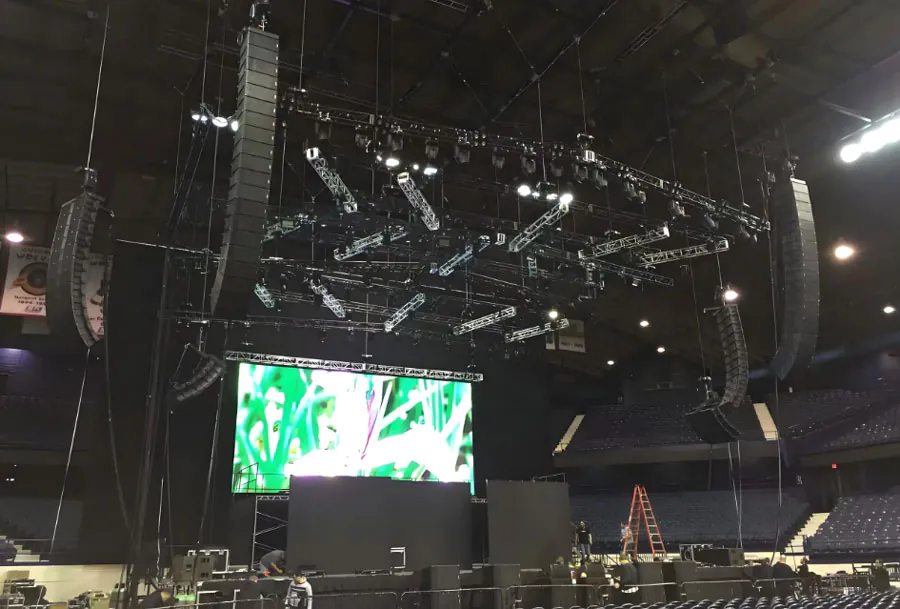
– Trussing, mounting, or ground support
– Basic content loading and testing
– Transportation within the Houston metro area
Service levels and add-ons
– Basic: panels, controller, single technician (good for straightforward setups)
– Standard: includes rigging crew, extended content support, and insurance assistance
– Premium: full creative & content management, multi-camera switching, live streaming integration, and weather-rated enclosures
Long-Term LED Screen Rental Packages (Flexible Month-to-Year Options)
When to consider long-term rentals
– Seasonal installations (outdoor advertising during summer, holiday light displays)
– Sports bars or restaurants looking for a semi-permanent digital display solution
– Construction site signage or long-running campaigns
– Community messaging boards for municipalities or universities
Benefits of long-term agreements
– Lower monthly rates compared to repeated short-term rentals
– Priority scheduling and dedicated service teams
– Scheduled preventive maintenance and monitoring to maximize uptime
– Option to customize enclosures, housings, and permanent rigging solutions
– Better costing predictability and budget alignment for multi-month campaigns
Typical inclusions and responsibilities
– Full hardware set with protective housings for outdoor units
– Ongoing local technical support with SLA (service-level agreements)
– Remote monitoring and diagnostics
– Replacement units for critical failures
– Optional content management and daily updating services
Comparative Analysis Table — Houston Rental Packages

| Package | Typical Duration | Recommended Pixel Pitch / Size | Included Services | Typical Use Case / Price Range (Houston) |
|---|---|---|---|---|
| Short-Term Basic | 1–7 days | P4–P6 (outdoor); P2.6–P4 (indoor) / 8’–20′ wall | Delivery, install, 1 tech, controller | Small concerts, corporate meetings / $800–$4,000 per day |
| Short-Term Standard | 3–14 days | P3–P6 outdoor; P2.6 indoor / 12’–30′ | Rigging, sound sync, content setup, 2+ techs | Mid-size events, trade shows / $3,000–$12,000 per event |
| Short-Term Premium | 1–30 days | P2.6–P4 indoor; high-bright P3 outdoor / 20’–50′ | Full AV production, streaming, creative | Concerts, festivals / $10,000–$50,000+ per event |
| Long-Term Standard | 1–6 months | P3–P6 outdoor; P2.6 indoor / variable | Maintenance, monitoring, monthly billing | Seasonal campaigns, venue displays / $2,000–$8,000 per month |
| Long-Term Enterprise | 6–24 months | P1.9–P4 (higher quality) / custom sizes | SLA, replacement, custom housings | Advertising inventory, stadiums, campuses / $6,000–$40,000+ / month |
Note: Price ranges are illustrative. Actual costs vary with pixel pitch, screen area, location, access, power and rigging requirements, event duration, and vendor.
Technical Considerations for Houston Deployments
Pixel pitch and viewing distance
– Pixel pitch (measurement in mm) determines optimal viewing distance. Lower pixel pitch (P1.9–P2.6) offers higher resolution for close viewing—ideal for indoor conferences or press rooms. Higher pitch (P3–P6) is common outdoors where audiences are farther away.
– Rule of thumb: minimum viewing distance ≈ pixel pitch (mm) × 1 meter. For instance, P4 (4 mm) is readable from ~4 meters (13 ft) and better from 15–50 feet for crisp visuals.
Brightness and daylight visibility
– Outdoor installations in Houston must handle bright sunlight and high ambient light. Look for LED panels rated 5,000–7,500 nits for readability in direct sun.
– Ensure the rental provider offers anti-glare coatings or louvers for extreme angles and Texas sun exposures.
Refresh rate and video fidelity
– High refresh rate (≥3,840 Hz) reduces flicker in camera shots and is essential for broadcast or live-streamed events.
– Ensure controllers support common protocols and content sources (HDMI, SDI, NDI, media servers).
Weatherproofing and outdoor enclosures
– Houston’s climate demands IP65-rated cabinets or better for outdoor rentals. Waterproofing, sealed connectors, and corrosion-resistant frames are essential.
– For long-term outdoor displays, look for temperature control (heating/cooling) and UV-resistant materials.
Power and redundancy
– Ensure sufficient power supply and distribution; LED walls are power-hungry. Discuss generator requirements with your vendor for outdoor venues.
– For mission-critical use, request redundant power feeds and backup control systems.
Logistics, Installation, and Onsite Support
Site surveys and planning
– Reputable vendors perform a site survey to assess sightlines, weight-bearing structures, rigging points, power availability, ingress/egress for trucks, and local restrictions.
– For rooftop or fa?ade installations, structural engineers may be required to sign off.
Rigging, trussing, and safety
– Certified rigging crews must use rated hardware and adhere to OSHA standards. For outdoor events, wind-rating calculations (AASHTO or local codes) determine safe wind speeds for mounted screens.
– Many Houston venues require proof of rigging crew certifications and inspection logs.
Timeline and crew
– Short-term events often require overnight load-in. Confirm lead times for delivery and any venue constraints (curfew, noise).
– Allow time for content testing and camera/AV integration. Typical load-in for medium screens is 6–12 hours; larger festival walls may take a day or more.
Permits, Insurance, and Compliance in Houston
Permit types to expect
– Temporary Structure Permits for large truss systems

– Electrical permits for permanent power connections
– Street or park permits for outdoor events in public spaces
– Signage permits for digital advertising on buildings
Insurance and certificates
– Vendors should provide certificates of insurance (COI) naming the venue and organizer as required.
– Typical requirements: General Liability, Worker’s Compensation, and for some venues, Umbrella policies.
Local codes and wind/weather plans
– Houston has hurricane season protocols and severe weather considerations—plan a weather contingency (de-rig plan, cover solutions, emergency response).
– Be aware of TABC/venue-specific rules that might affect event operations near food/drink service.
Cost Drivers and How to Estimate Your Budget
Primary cost factors
– Screen size and pixel pitch: larger and higher-resolution screens cost more.
– Duration: day rates vs. weekly vs. monthly will change per-day cost.
– Additional equipment: sound, lighting, switching equipment, players.
– Labor: rigging, operators, content technicians, overtime.
– Logistics: distance from vendor, truck size, parking, cranes.
– Permitting, insurance, and venue fees.
– Seasonality: peak event season prices may rise; long-term locks in rates.
Sample budgeting approach
– Define viewing requirements (distance, indoor/outdoor).
– Choose pixel pitch and approximate screen area (width × height).
– Request three-tier quotes (basic, standard, premium) with line-item breakout.
– Ask for a cost-per-view estimate or potential sponsorship revenue to evaluate ROI.
Measuring ROI and Value from LED Rentals
Direct revenue opportunities
– Sponsored content and advertising slots on the screen
– Pay-per-view or premium live-stream packages integrated with the screen content
– Increased ticket sales or higher ticket prices driven by better event experience
Indirect or qualitative value
– Brand lift and social media engagement due to visual impact
– Improved attendee satisfaction and longer dwell times at activations
– Higher perceived production value translating to better artist/host satisfaction
Example ROI scenario
– A 20′ × 12′ LED located at a festival could demand $500 per 30-second sponsor loop shown 4 times/hour over 10 hours = $20,000/day in gross sponsorship potential. Even with conservative fill rates and discounts, screen sponsorship could offset rental and production costs.
How to Choose a Rental Provider in Houston
Key selection criteria
– Technical expertise and breadth of inventory (indoor/outdoor, various pixel pitches)
– Proven track record in Houston and with similar event types
– Local crew availability and quick response times
– Transparent pricing with clear inclusions/exclusions
– Robust SLAs for long-term rentals and spare-part strategies
– Positive references and portfolio of past installations
Questions to ask potential vendors
– What is the minimum recommended viewing distance for this pixel pitch and screen size?
– Can you provide recent references or site photos for similar Houston events?
– What is included in the quote (rigging, insurance, permits, transport)?
– What warranties and SLAs apply for long-term rentals?
– How are power and generator needs handled? Are there backup options?
Case Examples — Houston Use Cases
Outdoor festival — short-term premium
– Requirement: 30′ wide stage backwall visible to a 5,000-person field
– Solution: P4 outdoor LED wall, broadcast-grade controller, full production crew, live camera feed, on-site redundancy
– Outcome: Improved audience experience, sponsor integrations, and social sharing
Corporate campus signage — long-term standard
– Requirement: 10′ × 6′ outdoor display for employee communications and visiting client messaging
– Solution: Long-term rental with protective housing, monitoring, and scheduled maintenance
– Outcome: Consistent corporate messaging without the capital cost of purchase; vendor handled all permitting and upkeep
Best Practices and a Pre-Event Checklist
Pre-event checklist
– Confirm optimal pixel pitch for viewing distance
– Secure site survey and signed rigging plan
– Verify power availability and backup sources
– Obtain venue approvals and necessary permits
– Confirm COI and insurance limits
– Schedule content delivery deadlines and test runs
– Plan weather contingency and de-rig timeline
– Confirm crew call times and access routes for trucks

Operational best practices
– Always request a site-specific plan rather than a generic quote.
– For broadcast or camera-heavy events, verify refresh rates and camera compatibility.
– Use content templates optimized for your screen’s aspect ratio and pixel matrix.
– Provide a dedicated content operator for live-modified content during the event.
Common FAQs
Q: How far in advance should I book an LED rental in Houston?
A: For short-term events, book 4–8 weeks in advance; for peak seasons or large festivals, 3–6 months. Long-term installations require more lead time for permits and custom housings.
Q: Can the same vendor handle all AV — lighting, sound, and LED?
A: Many full-service AV vendors in Houston offer integrated solutions. If you use multiple vendors, ensure someone manages signal flow and system integration.
Q: Are outdoor LED screens safe during storms?
A: Weatherproof cabinets protect from rain, but high winds and severe storms require de-rigging or securing per the manufacturer’s wind load rating and local codes. Discuss emergency plans with your vendor.
Q: What level of creative content is needed for LED walls?
A: High-resolution stills, HD/4K video, camera feeds, and motion graphics optimized for the screen’s native resolution and aspect ratio perform best. Vendors often offer creative services if you need assistance.
Conclusion — Matching Flexibility to Your Goals
Flexible short- and long-term LED screen rental packages give Houston organizers the ability to match technical capability to event goals without the overhead of purchase and maintenance. Short-term rentals maximize impact for one-off events and festivals, while long-term rentals provide continuity and cost efficiency for recurring campaigns or semi-permanent installations. Carefully evaluate pixel pitch, brightness, vendor services, logistics, and local compliance to ensure your LED deployment delivers exceptional visual experiences and measurable returns.
When evaluating proposals, insist on clear line-item quotes, inquire about SLAs and spare-part strategies, and factor in content planning and power logistics early. With well-chosen rental partners in Houston, you can scale visual storytelling, protect budgets, and focus on creating memorable experiences for your audience.