Complete Small Led Display Screen Service With TW VISION Support

Small LED display screens have become indispensable tools for businesses, institutions, and event organizers who need crisp visuals in compact formats. When you choose a complete service package backed by TW VISION support, you are not only investing in hardware and installation but also in an end-to-end professional workflow that covers planning, deployment, optimization, and long-term performance. This article walks through a comprehensive approach to small led display projects, detailing each phase of service, the specific capabilities TW VISION brings to the table, technical and operational considerations, and a practical analysis table to help stakeholders make informed decisions.
Complete Small led display screen Service With TW VISION Support
Why a Complete Service Matters for Small LED Displays
Small LED screens may seem straightforward compared to large LED walls, but delivering consistent image quality, reliable uptime, and a seamless end-user experience still requires a structured service approach. A complete service eliminates gaps between procurement, installation, calibration, and maintenance. With TW VISION support, customers gain a trusted partner that provides standardized processes, trained technicians, and dedicated support channels tailored to small-form-factor LED systems. The result is reduced risk, predictable performance, and a longer useful life for visual assets.
Initial Assessment and Site Survey
The first step in any successful deployment is a thorough needs assessment. TW VISION conducts a site survey that examines viewing distances, ambient light conditions, mounting options, power and data availability, acoustics (if audio is involved), and intended content types. This phase sets realistic expectations for resolution, brightness, and control system integration. TW VISION technicians use both qualitative observations and quantitative measurements (lux readings, sightline analysis) to ensure the selected LED module specifications match the operational environment.
Key outputs of the assessment:
– Recommended pixel pitch and module density based on average and maximum viewing distances.
– Brightness and contrast targets for daytime and nighttime use.
– Mounting and structural recommendations, including wall mounts, freestanding frames, or kiosks.
– Power distribution planning and network/data cabling layout.
– Preliminary project schedule and cost estimate.
Design and Engineering
With site data in hand, TW VISION’s engineering team crafts a design that optimizes visual performance while keeping installation practical. For small LED displays, design priorities often include pixel pitch selection, bezel minimization, cabinet size, and serviceability features such as front access panels for tight spaces. TW VISION creates detailed CAD and wiring diagrams, specifying exact module layouts and recommended control hardware. This step ensures compatibility with existing AV control systems or digital signage players and reduces surprises during installation.
Deliverables from this phase:
– Finalized display layout and module map.
– Structural mounting and mechanical drawings.
– Power and signal distribution schematics.
– Bill of materials with TW VISION-recommended components and spare parts list.
– Implementation milestones and resource plan.
Procurement and Quality Assurance
TW VISION supports procurement either by supplying a turnkey package or by advising on compatible components that meet performance and reliability standards. Quality assurance procedures include pre-shipment testing, burn-in cycles, and factory-adjusted color calibration to minimize on-site commissioning time. TW VISION’s approach emphasizes traceability—each module and power supply is tracked, tested, and documented, ensuring serviceability and warranty compliance.
Essential QA checks:
– Pixel and module integrity tests.
– Voltage and current stability checks for power supplies.
– Signal path verification for controllers and receiving cards.
– Environmental stress testing when required (temperature and humidity ranges).
Installation and On-Site Commissioning
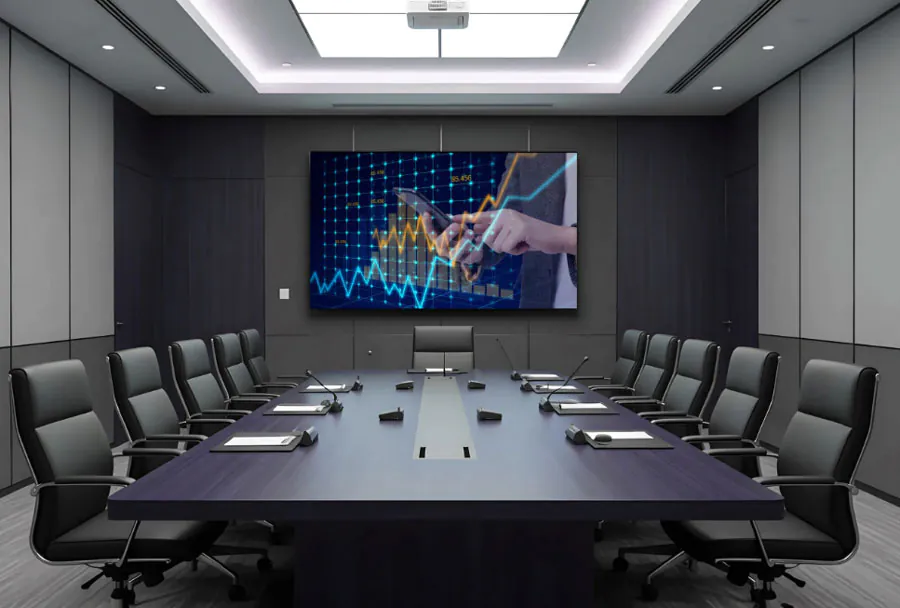
Installation for small LED displays often occurs in constrained spaces such as retail counters, conference rooms, or kiosks. TW VISION’s field technicians are trained to work in tight environments while adhering to safety and building codes. Installation services include secure mounting, precise alignment for seamless seams, power and data cabling terminated per design, and physical verification of module orientation and locking mechanisms.
During commissioning, TW VISION performs:
– System power-up and sequential testing of modules.
– Signal routing verification from the content source to LED controllers.
– Initial grayscale and color balance adjustments.
– Pixel mapping and mask configuration for any non-standard display shapes.
– Integration tests with control systems and scheduling platforms.
Calibration, Color Management, and Optimization
Achieving accurate color and uniform brightness is crucial even for small displays that may serve as focal points. TW VISION employs colorimeters and calibration software to perform precise color balance, gamma correction, and brightness uniformity adjustments. Calibration workflows include setting a target white point, mapping gamma curves, and establishing brightness profiles for different ambient conditions. Calibration is completed both at a hardware level and within the control software to ensure consistent output across content types.
Calibration activities:
– Point-by-point brightness uniformity measurements.
– Color temperature calibration to predefined targets (e.g., 6500K).
– Implementation of ambient light adaptive brightness control where needed.
– Creation of profiles for day and night modes.
Training, Documentation, and Handover
A complete service includes empowering your team to operate and maintain the display. TW VISION provides on-site or virtual training sessions covering routine checks, basic troubleshooting, and content management procedures. Detailed documentation—wiring diagrams, service manuals, warranty certificates, and spare parts lists—is delivered at handover. TW VISION also provides recommendations for monitoring tools and maintenance schedules to prolong display life.
Training topics:
– Power cycling and soft-reboot procedures.
– Pixel error identification and module replacement steps.
– Content scheduling and playback troubleshooting.
– Contact points for TW VISION emergency and maintenance support.
Maintenance, Support, and SLAs
After deployment, TW VISION offers maintenance contracts tailored to operational needs. Options range from periodic preventive maintenance to comprehensive SLAs with defined response times and parts replacement guarantees. For mission-critical applications, customers can opt for faster response times and stockpiled spare modules located regionally.
Typical SLA components:
– Remote diagnostic and firmware update services.
– On-site response windows (e.g., next-business-day, 4-hour, or custom).
– Replacement part shipping and on-site technician dispatch.
– Annual preventive maintenance visits with recalibration.
Remote Monitoring and Preventive Diagnostics
TW VISION’s support extends to remote health monitoring where networked displays transmit status data such as temperature, power consumption, pixel faults, and controller errors. Remote diagnostics allow support engineers to identify trends and recommend preventive actions before failures impact operations. Firmware and configuration updates can be rolled out remotely, minimizing downtime and on-site interventions.
Remote monitoring benefits:
– Early detection of failing power supplies or overheating.
– Scheduled firmware updates with rollback capabilities.
– Centralized logging of error events for trend analysis.
– Reduced total cost of ownership through fewer emergency visits.
Troubleshooting and Spare Parts Strategy
Small LED displays benefit from a pragmatic spare parts strategy. TW VISION advises on a parts inventory that aligns with usage patterns and criticality. Common spares include a small set of modules, a power supply unit, and a controller. TW VISION’s technicians follow a structured troubleshooting flow that moves from software checks to hardware verification, reducing mean time to repair (MTTR).
Troubleshooting steps:
– Verify content source and network path.
– Check power rails and connectors.
– Run module diagnostics and verify pixel-level errors.
– Swap suspect modules with spares and confirm resolution.
Warranty, Lifecycle, and Upgrade Paths
A transparent warranty policy is part of TW VISION’s complete service. Warranty terms outline coverage for manufacturing defects, expected lifetime brightness degradation, and conditions that may void coverage. TW VISION also provides upgrade paths: whether it’s swapping higher-density modules or expanding a single display into a multi-panel setup, upgrade planning is incorporated into the initial design so that future enhancements are cost-effective and minimally disruptive.
Warranty considerations:
– Coverage duration for modules and power supplies.
– Terms for on-site labor and parts replacement.
– End-of-life recommendations and recycling/disposal guidance.
Cost Factors and Return on Investment (ROI)
Total cost for a small LED display service includes hardware, installation labor, calibration, training, and ongoing maintenance. TW VISION works with clients to balance initial outlay against long-term operating costs and expected lifespan. ROI is often measured in improved customer engagement, reduced content delivery downtime, and decreased maintenance costs when compared to less reliable solutions.
Cost variables:
– Pixel pitch and module quality.
– Complexity of mounting and access constraints.
– Required SLA level and spare part inventory.
– Frequency of content changes and need for remote management.
Practical Use Cases and Deployment Scenarios
Small LED displays supported by TW VISION excel in use cases such as retail signage, control room status panels, meeting room indicators, and public information kiosks. Each scenario demands tailored brightness, viewing angle, and mounting solutions. TW VISION’s experience ensures that display performance is matched to functional requirements, from static informational content to dynamic video feeds.
Example deployments covered by the service:
– Indoor retail promotional screens with scheduled content playlists.
– Conference room displays integrated with room scheduling systems.
– Digital queue and wayfinding systems with high visibility in daylight conditions.
Analysis Table: TW VISION Complete Service Features
| Service Area | Description | TW VISION Offering | SLA / Response | Business Benefit |
|---|---|---|---|---|
| Site Survey & Assessment | Evaluate environment, sightlines, and power/data needs | Comprehensive on-site or virtual survey, measurement reports | Survey within project kickoff; report delivered in 5 business days | Right-sized display selection; fewer surprises at install |
| Design & Engineering | Detailed mechanical and electrical design | CAD drawings, wiring schematics, BOM | Design package within agreed timeline (typically 2–3 weeks) | Smoother installation; compatibility with existing systems |
| Installation & Commissioning | Mounting, cabling, power, and signal setup | Certified TW VISION installers, commissioning checklist | Project-based schedule; standard installation windows included | Correct first-time installation; reduced rework |
| Calibration & Optimization | Color balancing and brightness uniformity | On-site calibration tools and software profiles | Calibration at handover; follow-up visit as needed | Consistent visual output; improved viewer experience |
| Support & Maintenance | Preventive maintenance, remote monitoring, spare parts | Tiered maintenance plans, remote diagnostics, parts provisioning | Options from next-business-day to 4-hour response | Lower downtime; predictable maintenance costs |
Implementation Checklist
To ensure a smooth project rollout with TW VISION support, consider the following checklist:
– Confirm viewing requirements and content types with stakeholders.
– Schedule a TW VISION site survey early in the project timeline.
– Approve final design drawings and spare parts list before procurement.
– Allocate a secure network path and power provision as per design.
– Plan for a TW VISION-led commissioning day with stakeholder attendance.
– Enroll in a maintenance plan that aligns with uptime requirements.
– Schedule periodic recalibration and software updates.
Common Pitfalls and How TW VISION Prevents Them
Small LED installations can stumble on several predictable issues: mismatched pixel pitch to viewing distance, insufficient power provisioning, poor cable routing, or lack of spare parts. TW VISION’s methodical approach addresses these through upfront assessments, pre-shipment QA, documented designs, and clearly defined SLAs. By standardizing processes and providing trained personnel, TW VISION reduces the chance of costly post-installation corrections.
Choosing a complete small LED display service backed by TW VISION ensures a professional, accountable, and measurable deployment. Prioritize clear requirements, accept the value of professional calibration and commissioning, and opt for a maintenance plan that reflects your operational needs. TW VISION’s integrated approach—from assessment through lifecycle support—minimizes risk and maximizes visual impact. For organizations seeking a dependable partner for small LED solutions, TW VISION provides the technical competence, field experience, and support infrastructure to deliver consistent results.
By leveraging TW VISION’s complete service model, stakeholders gain not just a display, but an end-to-end solution designed for reliability, quality, and long-term value.