2026 Rental Outdoor LED Screen Prices and Custom Packages

The rental market for outdoor LED screens continues to evolve rapidly into 2026. Advances in chip efficiency, higher brightness, improved weatherproofing, and modular mounting systems have lowered operational complexity while expanding what’s possible for live events, advertising, and temporary installations. At the same time, global supply chain stabilization and fierce competition among rental providers have made pricing more transparent but also more segmented: buyers face a wide range of options from budget-oriented pixel pitches to premium turnkey experiences.
This article provides a practical, market-driven analysis of 2026 rental outdoor LED screen prices and recommended custom packages for common event types. You’ll get actionable guidance on how prices are formed, how to design packages that fit your budget and goals, and an analysis table summarizing typical specs and price ranges. Whether you’re an event producer, AV rental manager, or brand marketer, this primer will help you plan smarter and negotiate better.
How Rental Pricing Is Structured in 2026
Rental pricing typically contains four core components:
– Base screen rental (per sqm or per cabinet)
– Installation and deinstallation labor
– Transport and logistics
– Ancillary equipment and services (processing, mounting, power, control, content support)
Providers will price either per day (common for short events) or per week, with discounts for multi-day hires. In 2026, dynamic pricing models are emerging where providers factor in seasonal demand, inventory utilization (fleet availability), and energy cost indexes. Custom packages often bundle equipment and services to offer simpler budgeting and better overall value.
Key price drivers:
– Pixel pitch (higher resolution => higher rental rate per sqm)
– Brightness and certification for daylight visibility (higher nit ratings cost more)
– Weatherproofing and IP rating (IP65/IP67 units command a premium)
– Rigging complexity and structure (roof rigs, scaffolding, or ground stands)
– Location logistics (urban permits, crane needs, long-distance transport)
– Onsite technical support hours and redundancy requirements
Typical Price Ranges by Pixel Pitch and Screen Size (2026 Market Snapshot)
Below is an analysis table to help compare typical rental prices across common outdoor LED screen configurations in 2026. Figures are typical market ranges (USD) for one-day rental in North America / Western Europe, including equipment rental but excluding taxes and permits.
| Pixel Pitch | Screen Size (sqm) | Typical Rental Price / Day (USD) | Setup & Transport (USD, typical) | Best Use Cases |
|---|---|---|---|---|
| P8–P10 (coarse) | 6–20 | 300 – 900 | 200 – 800 | Outdoor signage, small festivals, secondary stages |
| P4–P6 (mid) | 10–40 | 800 – 2,400 | 400 – 1,200 | Concert side screens, corporate events, medium stages |
| P2.5–P3 (fine) | 12–50 | 1,800 – 6,000 | 700 – 2,000 | Main stage video walls, high-detail branding, sporting events |
| P1.8–P2 (very fine) | 20–100 | 4,000 – 15,000 | 1,500 – 5,000 | High-end corporate launches, broadcast-grade events |
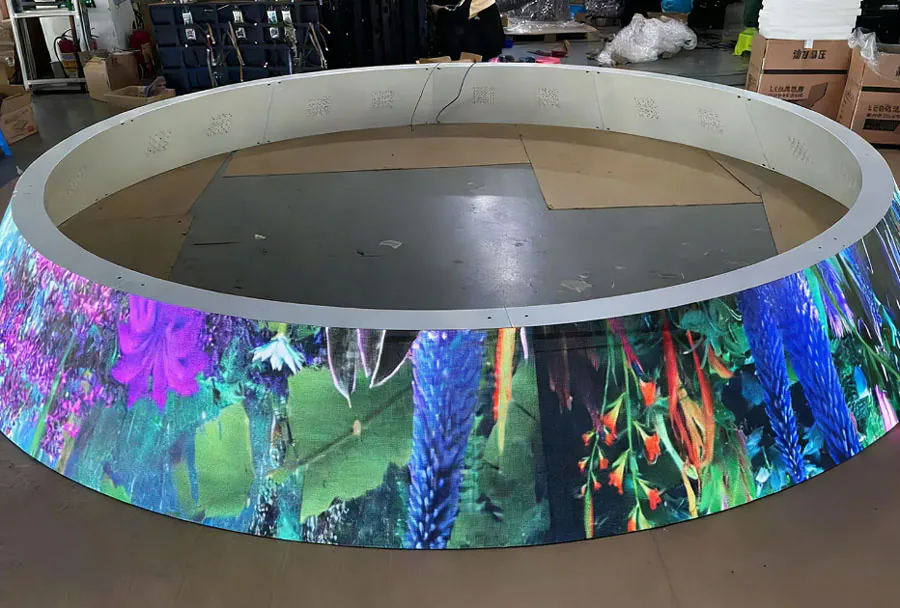
| Curved / LED Floor / Custom | Variable | Priced per project (5,000 – 50,000+) | Project-dependent | Architectural installs, immersive experiences, trade shows |
Note: Prices vary by region and vendor. For single-day municipal events, expect higher permit and placement costs. Multi-day rentals commonly drop daily rates between 20–40% after the first day.
Designing Custom Packages: Basic to Premium
When creating custom packages, successful vendors bundle equipment, labor, transport, and support into predictable tiers. Below are four practical packages tailored to common needs.
– Basic Package (Budget-conscious small events)
– P6–P8 pixel pitch
– Screen area: 8–15 sqm
– Included: Onsite 2-person install crew (4 hours), basic ground stands, daily technical check
– Not included: crane, scaffold, bespoke rigging, extended technical support
– Use case: community festivals, pop-up outdoor ads
– Standard Package (Most popular)
– P4–P6 pixel pitch
– Screen area: 12–30 sqm
– Included: Full transport within 50 miles, 4-person install crew, scaffolding or truss, basic video processing, one onsite tech for event duration
– Add-ons: live feed integration, extended video technician hours
– Use case: corporate events, mid-size concerts, sporting side screens
– Premium Package (Broadcast/High-visibility)
– P2.5–P3 pixel pitch
– Screen area: 20–60 sqm
– Included: IP67-rated modules, redundant power, advanced video processing, rigging with safety certificates, 24/7 on-call techs, rehearsal day
– Add-ons: camera integration, LED floor or curved walls
– Use case: main stages, televised events, international festivals
– VIP/Turnkey Package (Full production)
– Custom pixel pitch and surface area
– Full production support: engineering, structural design, content creation, 24/7 monitoring, remote and onsite redundancy
– Full logistics and permits management
– Ideally for brand activations, stadium events, permanent temporary installs (multi-week)
– Use case: stadium tours, global brand campaigns
Each package should present a clear breakdown of what’s included and what’s considered an extra so clients can forecast total event costs accurately.
How to Choose the Right Pixel Pitch and Size
Choosing pixel pitch is about viewing distance and content type:
– For large venues and long viewing distances (>30 ft / >9 m), P6–P8 often provides a cost-efficient solution.
– For viewing distances of 10–30 ft (3–9 m) where text and fine graphics matter, P2.5–P4 is preferred.
– For close viewing or broadcast-grade presentations (<10 ft>
Calculate recommended pixel pitch by dividing the minimum viewing distance (in meters) by 1.5–2. For example, a 6m minimum viewing distance suggests ~P3–P4. Always confirm with test content: motion, small text, and skin tones require finer pitches.
Screen size planning: determine sightlines and sight cones for the venue, then size for the primary audience segment. Bigger is not always better—consider sightlines, shadows, and the ability to produce content at required resolution.
Negotiation and Cost-Saving Strategies
– Bundle multi-day discounts: negotiate per-day and per-week rates including travel windows. Most vendors will lower day rates on 3+ day engagements.
– Off-peak timing: avoid festival season surcharges by booking in shoulder seasons.
– Standardized packages: standardize equipment preferences and packages across your events to build volume leverage with a vendor.
– Shared logistics: co-locate deliveries with other suppliers or events to split transport costs.
– Use local inventory: sourcing screens locally saves on freight and customs. For touring clients, renting from regional fleets reduces downtime.
– Include contingency clauses: define responsibilities clearly for weather delays and change of scope to avoid surprise markup.
Technical and Contract Considerations
Contracts should explicitly state:
– Pixel pitch, brightness rating (nits), IP rating, and module redundancy
– Exact screen dimensions and number of cabinets
– Power requirements and backup power provisions
– Rigging and structural certifications; engineer sign-offs when needed
– Force majeure and weather clauses (rain vs. high wind operations)
– SLAs for technical uptime and resolution windows for failures
– Insurance minimums and liability limits
Ensure the vendor provides test patterns and a media check before the public event. For critical broadcasts, insist on redundant media servers and power circuits.
Maintenance, Reliability, and Redundancy in 2026
By 2026, LED modules are more reliable, but rental operations still emphasize redundancy:
– Hot-swap modules and spare cabinets carried onsite are standard for premium hires.
– Redundant processors (dual server setup) and N+1 power configurations are recommended for mission-critical events.
– Advanced diagnostics tools now allow predictive failure alerts; include these monitoring services in premium packages.
– Weather protocols: for high winds, safe takedown procedures and predetermined thresholds should be contractual.
Routine preventive maintenance reduces risk and preserves image quality. Verify vendors’ refurbishment cycles and module replacement policies.
Content and Media Considerations
Good content planning saves money. Key points:
– Deliver content at native pixel dimensions to avoid scaling artifacts.
– For mixed-resolution setups (close P2.5 center with P6 side wings), design content with central elements concentrated within the finest-resolution area.
– Use scalable vector graphics for logos and text where possible.
– Confirm media playback formats and codecs with the vendor; standardizing on particular codecs reduces encoding costs.
Vendors often offer content creation and media encoding as add-ons—evaluate whether in-house capability or vendor service offers better value.
Return on Investment and Value Measurement
When renting outdoor LED screens, ROI can be measured through:
– Impression metrics for advertising (impressions per hour CPM equivalents)
– Ticket uplift and attendee satisfaction for events
– Sponsor valuation uplift and brand visibility
– Social media engagement and content amplification
Case example: a 20 sqm P3 main stage wall on a one-day festival may cost $5,000 total (rental + setup). If signage creates 100,000 impressions and sponsors value CPM at $5, revenue potential from signage could be $500, comfortably covering costs and generating margin.
Track impressions (onsite and social), lead capture, and sponsor feedback to quantify success and inform subsequent negotiations.
Market Trends to Watch in 2026 and Beyond
– Modular lightweight cabinets: easier fly systems reduce rigging labor and risk.
– Energy-efficient LEDs: lower power draw reduces generator costs for long events.
– Subscription and fleet-as-a-service models: predictable monthly fees for frequent users.
– Automated pricing platforms: some rental marketplaces now provide instant quotes based on inventory and logistics, improving transparency.
– Integration with XR and AR experiences: interactive LED surfaces and camera-tracking-enabled content are growing for activations.
Checklist for Procuring a Rental Outdoor LED Screen
Before signing:
– Confirm pixel pitch and brightness meet viewing distance and sunlight needs.
– Get an itemized quote: per-day equipment, labor hours, transport, insurance, and extras.
– Ensure rigging certificates and insurance are provided.
– Clarify weather policy and cancellation terms.
– Ask for client references and recent event photos/videos from similar installs.
– Verify media playback compatibility and request a pre-event rehearsal window.
2026 offers more choices and clearer pricing in the rental outdoor LED screen market. The optimal buy depends on viewing distance, content needs, and logistical constraints. By understanding the components of pricing, comparing package tiers, and using negotiation levers—like multi-day discounts, local sourcing, and clear contracts—you can control costs and deliver high-impact visual experiences. Use the analysis table and package templates here as a starting point, then tailor specifics to your event’s scale and goals. With prudent planning and the right vendor partnership, outdoor LED rentals can deliver measurable returns and unforgettable audience experiences.