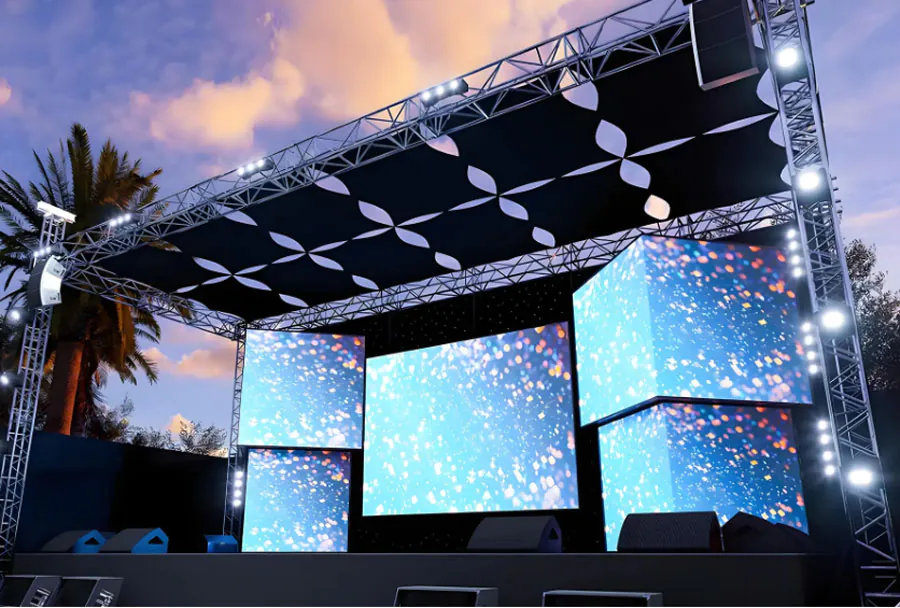
2026 Outdoor LED Screen Rental Prices and Packages in Florida

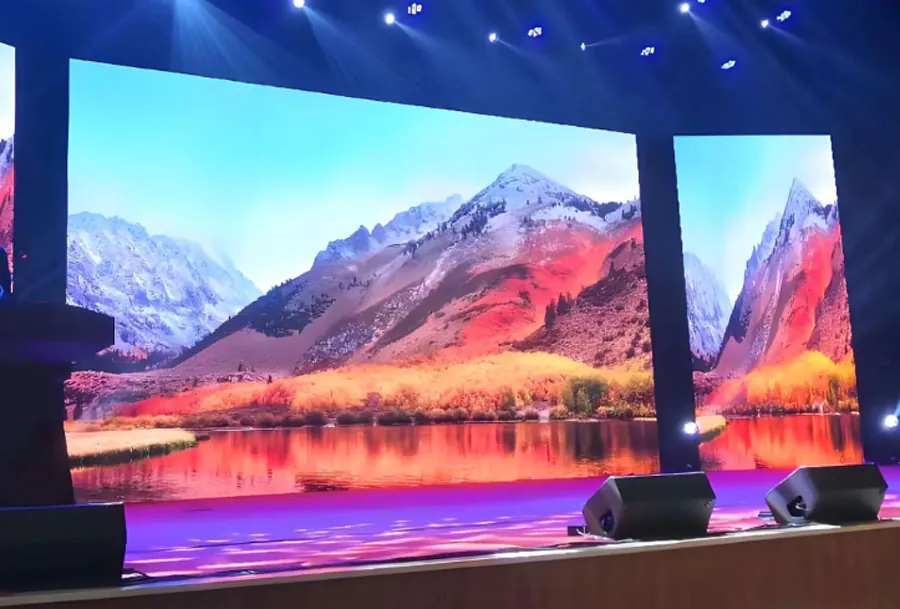
Florida’s event calendar—from beachfront music festivals and municipal celebrations to sports events and corporate activations—makes outdoor LED rental a busy segment year-round. In 2026, demand is shaped by several trends: higher expectations for image quality (finer pixel pitches), continued emphasis on energy efficiency, and persistent needs for rugged weatherproof designs due to Florida’s humidity, salt air in coastal zones, and tropical storm season. These factors push renters to select higher-spec equipment and professional services, which influences price.
Market dynamics and price drivers in 2026
Post-2024 supply normalization and technology improvements (cheaper high-brightness panels, better outdoor-rated cabinets) have made baseline rental costs more competitive. However, inflationary pressures on labor, transport, and permitting—plus insurers’ scrutiny around weather risk—mean that all-in event pricing often includes surcharges or contingency fees. Expect base rental prices to be quoted for equipment only, with delivery, setup, staffing, power, and permits commonly listed as separate line items.
Key Factors That Drive Outdoor LED Rental Prices in Florida
Screen size and pixel pitch
Screen area (square feet or square meters) and pixel pitch (measured in millimeters) are primary determinants of cost. Larger screens require more modules and structural handling; finer pixel pitch (better resolution) commands premium pricing and is typical for close-view corporate events, while coarser pitches are acceptable and cheaper for stadiums and festivals.
Brightness, IP rating, and durability
Outdoor screens must deliver high nits (brightness) for daytime visibility—typically 5,500–8,000 nits or more for Florida sun. Weatherproofing (IP65/IP67 ratings), anti-corrosion finishes for coastal sites, and redundant power/data systems add to rental cost.
Logistics, installation complexity, and permits
Delivery distance, the need for cranes or rigging, structural engineering for ground-supported builds, road closures, and local permitting drive labor and permitting fees. Urban sites with limited access will cost more than open-field installs.
Event duration and timing
Short one-day rentals often incur higher daily rates than multi-day bookings, since mobilization and crew costs are fixed. Peak season pricing (major holidays, winter tourism peaks, and major festivals) can be materially higher than off-peak.
Additional services and content management
On-site operators, video processing (switching, live feeds), content design and playback, sound systems, and generators are add-ons. Bundling these services with equipment typically gives better value but increases the upfront quoted price.
Typical Packages and Price Ranges for 2026
Below is a practical analysis table for commonly offered package tiers in Florida in 2026. Prices are presented as estimated ranges per day to reflect variability by region, vendor, and event specifics. Always request a written quote tailored to your event.
| Package Name | Screen Size (ft) | Pixel Pitch (mm) | Estimated Price Range (per day) | Included Services |
|---|---|---|---|---|
| Community/Basic | 8 x 6 (48 sq ft) | 6–10 mm | $600 – $1,200 | Delivery within local radius, basic setup, technician (minimal) |
| Event Standard | 14 x 8 (112 sq ft) | 4–6 mm | $1,800 – $3,500 | Delivery, setup, operator, basic video processor, transport (short distance) |
| Premium Concert/Stadium | 30 x 16 (480 sq ft) | 3–4 mm | $6,500 – $15,000 | Full rigging, crew, video switching, production support, on-site techs |
| Festival/XXL Billboard | 50 x 20 (1,000 sq ft) | 4–6 mm | $18,000 – $45,000 | Cranes/rigging, multiple technicians, structural engineering, full production package |
| Corporate Fine-Detail | 20 x 10 (200 sq ft) | 2.5–3 mm | $8,000 – $18,000 | High-res panels, color calibration, content prep, dedicated operator |
How to read the table
– “Estimated Price Range” is per day and excludes multi-day discounts, local taxes, and extraordinary logistics.
– “Included Services” lists what vendors commonly provide; verify specifics (hours of service, crew ratio, liability limits).
– Finer pixel pitches (2.5–3 mm) are significantly pricier because of higher module counts and processing needs.
Sample Budget Scenarios: Realistic Totals for Common Florida Events
Small community festival (evening event)
– Screen: Event Standard (112 sq ft, 4–6 mm)
– Equipment rental: $2,200/day
– Delivery & setup (local): $450
– Staffing (2 techs, 6 hrs): $600
– Power generator (if needed): $350
– Permits & public safety fees: $150–$600
Estimated total (single day): $3,750 – $4,400
High school football night game
– Screen: Premium Concert/Stadium (480 sq ft, 3–4 mm) or large scoreboard-quality screen for distant viewing
– Equipment rental: $7,500/day
– Delivery & rigging: $1,200
– Staffing (4 techs): $1,200
– Power/generator + cable runs: $700
– Permits & insurance: $300–$900
Estimated total (single day): $10,900 – $11,500
Beachfront music festival (multi-day weekend)
– Screen: Festival/XXL Billboard for main stage (1,000 sq ft) + side screens
– Equipment rental: $30,000/day (main) + $6,000/day (sides)
– Multi-day discount: 10–20% off base daily rates sometimes applied
– Rigging/crane/structural engineering: $12,000 one-time
– Crew (multiple techs across days): $8,000
– Power & generators (large scale): $12,000
– Permitting, road closures, safety: $5,000–$20,000 depending on jurisdiction
Estimated total (3-day festival): $180,000 – $260,000
Corporate product launch (daytime, close viewing)
– Screen: Corporate Fine-Detail (200 sq ft, 2.5–3 mm)
– Equipment rental: $10,000/day
– Content design & calibration: $2,500–$5,000
– Delivery & setup: $1,000
– Dedicated operator & AV tech: $1,200
– Insurance & permits: $500–$1,500
Estimated total (single day): $15,200 – $18,700
Note: These are example scenarios intended to guide budgeting—actual quotes will vary.
Cost-Saving Strategies and Negotiation Tips
Book early and bundle
Reserve screens and production services well in advance—vendors often give discounts for multi-day bookings or when you bundle sound, lighting, and LED services.
Match pixel pitch to viewing distance
Avoid over-specifying resolution. For audiences viewing from 50+ ft, 5–6 mm pixel pitch often provides acceptable clarity at a fraction of the cost of 3 mm displays.
Leverage off-peak scheduling
If you can move events away from major holiday weekends or peak festival dates, vendors are more likely to offer lower rates.
Share infrastructure when possible
Neighboring events or vendors can sometimes share generator power, forklift/crane time, or stage rigs—splitting costs where safe and permitted.
Negotiate clear service-level terms
Make sure quotes specify the included hours of on-site support, response times for failures, and contingency plans for severe weather. Clear terms reduce unexpected charges.
Logistics, Permits, and Weather Considerations in Florida
Permitting realities
Municipalities across Florida have different requirements. Coastal cities may require additional environmental mitigation or special insurance. Start permit applications 6–10 weeks in advance for large installs; some locales allow faster processing for smaller community events.
Hurricane season and weather clauses
Hurricane season (June–November) can affect pricing and insurance. Expect vendors to include weather-cancellation policies or require additional deposits. Ensure your contract clearly addresses force majeure and payment liabilities if the event is canceled for severe weather.
Site surveys and structural needs
A professional site survey (sometimes at extra cost) identifies rigging points, load-bearing needs, anchoring, and proximity to power. For large screens, structural engineering sign-off may be mandatory.
How to Choose a Vendor and Questions to Ask
Essential questions
– What is the effective viewing distance for the proposed pixel pitch?
– What is the peak brightness (nits) and the IP rating of the screens?
– Do you provide redundancies (backup power, spare modules, duplicate video feeds)?
– What are the exact services included in the quote (hours, crew size, travel limits)?
– What are cancellation, weather, and damage policies?
– Can you provide case studies or references for similar Florida events?
– Do you carry appropriate insurance and do you require event insurance from the client?
Evaluate technical readiness
Ask for a visible test demo or sample video feed, and request details on video processing (scaling, multi-source switching), color calibration, and content ingestion workflow. A vendor who manages content will save time but may charge for editing/capture.
Budgeting for Success in 2026
Planning an outdoor LED rental in Florida for 2026 requires balancing desired image quality against logistics, weather risk, and total production costs. Use the table and sample scenarios as a budgeting baseline, but always obtain multiple detailed quotes and confirm exactly what is included. Reserve a contingency—10–20% of the budget—for unforeseen needs like extra labor, permits, or weather-driven changes. Early planning, a clear scope of services, and a vendor who understands Florida’s permitting and weather landscape will protect your event and maximize the impact of your LED investment.