How TW VISION Stands Out as an Innovative Indoor LED Company in 2026

In 2026, the indoor LED market is defined by faster product cycles, tighter integration between hardware and software, and rising demands for energy efficiency and fine-pitch resolution. As display applications diversify—from corporate lobbies and control rooms to broadcast studios, retail environments, and immersive experience centers—customers expect turnkey solutions that combine performance, reliability, and operational intelligence. TW VISION positions itself not simply as a manufacturer, but as an integrator of optics, electronics, and software. The company’s 2026 strategy demonstrates how an LED firm can lead by focusing on three converging priorities: pixel-level image integrity, system-level sustainability, and cloud-enabled content ecosystems.
How TW VISION Stands Out as an Innovative Indoor LED Company in 2026
Market context and TW VISION’s strategic focus
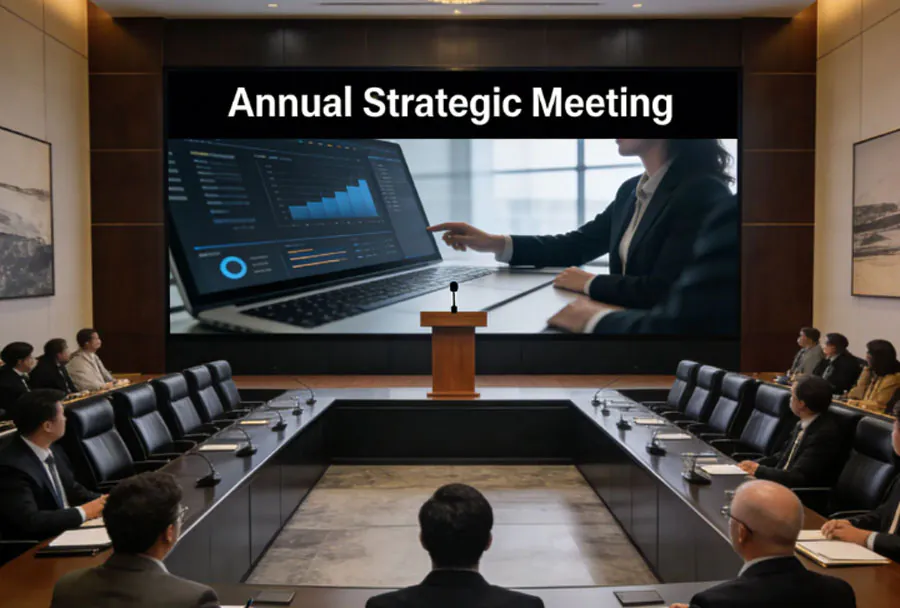
The indoor LED landscape in 2026 is crowded, with legacy producers expanding into fine-pitch products, emerging MicroLED startups promising ultimate pixel density, and software-first companies trying to control content flows. TW VISION has adopted a hybrid strategy that leverages advanced LED module engineering while building proprietary software and lifecycle services. This multi-pronged approach helps the company address critical pain points customers still face: seam-free imaging, predictable long-term color stability, simplified installation and maintenance, and measurable energy and carbon performance.
TW VISION’s R&D investments prioritize three pillars:
– Pixel performance: improving light engine uniformity and color calibration at the module and cabinet level.
– Systems intelligence: integrating sensors, edge processors, and cloud services to automate calibration, power management, and content distribution.
– Circular design: designing modules and accessories for easy repair, reuse, and material recovery.
These focus areas reflect not only product innovation but also business model innovation—selling outcomes (visual performance, uptime, reduced TCO) rather than just hardware boxes.
Technological differentiation: from pixel to system
A major reason TW VISION is recognized as innovative is its vertical integration of pixel engineering with system software. On the hardware side, the company’s 2026 indoor LED lineup features:
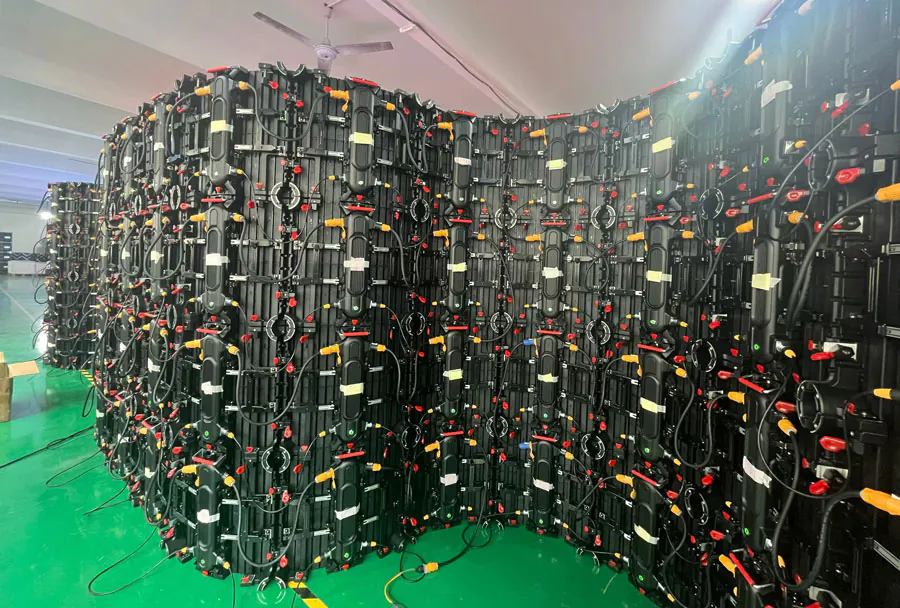
– Fine-pitch COB and packaged MiniLED modules with pixel pitches down to 0.6 mm, optimized for up-close viewing in corporate and control room applications.
– Proprietary thermal architecture that reduces junction temperature by 15–25% compared to prior generations, extending lifetime and stabilizing color.
– High-frequency PWM driving with microseconds-level synchronization to minimize flicker and enable precise HDR rendering for broadcast environments.
On the software side, TW VISION’s platform combines local edge controllers with a cloud management portal. Edge controllers perform pixel-level calibration and real-time sensor-driven adjustments (ambient light, temperature), while the cloud portal provides fleet management, predictive maintenance alerts, and content scheduling. The end result is a system that arrives calibrated, stays calibrated, and adapts dynamically to its environment.
Installation, modularity, and serviceability
Ease of deployment remains a differentiator in interior architecture projects where installation timelines are tight. TW VISION’s modular cabinet system emphasizes tool-less front access for replacements, standardized mechanical mounts for rapid aligning, and smart connection protocols that auto-detect cabinet position and orientation. This reduces on-site labor costs and accelerates commissioning.
Serviceability is paired with a digital twin concept: each display is registered in the cloud with its component serial numbers, firmware versions, and calibration history. When a fault is detected, technicians can pinpoint the affected module and pre-stage replacement parts, minimizing mean time to repair (MTTR). For enterprise customers managing many displays across campuses, this translates to predictable operations and reduced downtime risk.
Software and content ecosystem
TW VISION’s software differentiates the company from purely hardware-centric competitors. The content management system (CMS) supports multiple inputs and integrates with common AV control platforms. Key features include:
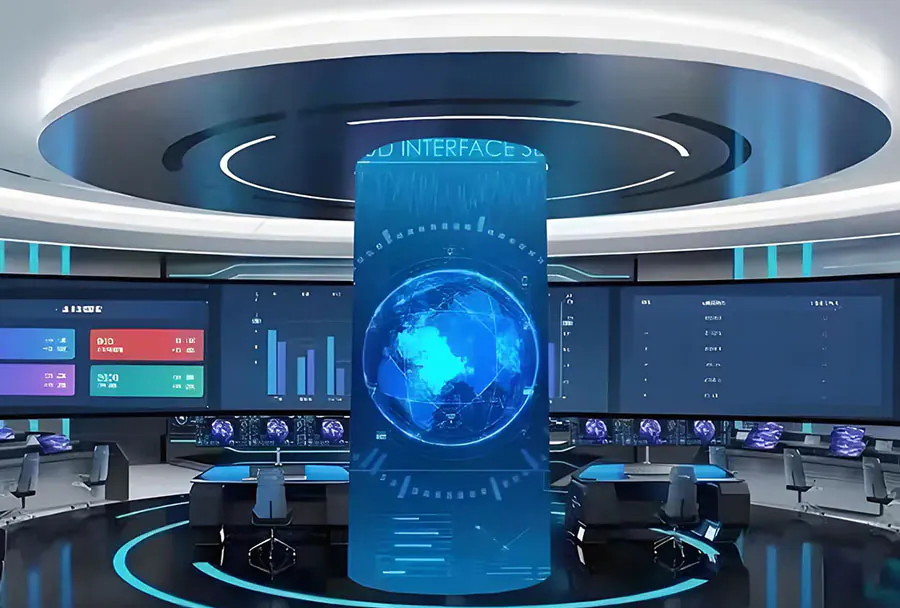
– Automated aspect-ratio and resolution scaling across variable-size displays.
– Real-time color matching across multi-panel setups using sensor feedback and perceptual color algorithms.
– Role-based cloud access for content approvals, analytics, and scheduled playback.
Importantly, TW VISION embraces open APIs to enable integration with third-party creative tools and building management systems. This openness helps architects and integrators incorporate led displays into broader digital experiences rather than treating them as isolated devices.
Sustainability and circular business models
By 2026, sustainability is no longer optional for procurement teams. TW VISION’s approach includes:
– Lifecycle assessments embedded in product spec sheets, showing cradle-to-gate carbon intensity and expected in-field energy consumption.
– Reuse and refurbishment programs: after a display is decommissioned, modules are tested, re-binned, and resold or recycled through certified partners.
– Energy-optimized driving modes and scheduling to minimize power draw during non-peak hours without impacting perceived image quality.
Beyond hardware, TW VISION sells sustainability-as-a-service: analytics that show clients how display schedules, brightness policies, and local sensor integration can reduce energy and carbon footprints. This transparency helps specifiers make informed decisions and supports corporate ESG reporting.
Customer engagement and partnerships
TW VISION’s sales approach in 2026 emphasizes consultative partnerships. For high-profile projects—media walls in airports, immersive retail experiences, or mission-critical control rooms—the company assembles cross-functional teams including visual engineers, content strategists, and service planners. TW VISION works with integrators and system designers early in the architectural phase to ensure mechanical, electrical, and network requirements are optimized for LED performance and maintainability.
Strategic partnerships with chipset suppliers, optical manufacturers, and software houses allow TW VISION to accelerate innovation while maintaining quality control. The company also invests in certified training programs for integrators to preserve consistent installation and maintenance practices globally.
Competitive positioning and market impact
What sets TW VISION apart in 2026 is its ability to deliver coherent outcomes across the full lifecycle of a display installation: design, deployment, operation, and repurposing. Where many competitors focus on one dimension—either high-density pixels or cloud software—TW VISION interweaves both to reduce friction for customers.
The following table summarizes a comparative analysis of key dimensions:
| Feature | TW VISION (2026) | Traditional Competitor | New Entrant / MicroLED | Business Impact / Notes |
|---|---|---|---|---|
| Pixel & Optics | Fine-pitch COB/MiniLED down to 0.6 mm; custom optics for uniformity | Good density, variable uniformity; off-the-shelf optics | Very high density, prototype yield challenges | Better close-view performance and lower visible seams; reliable supply vs. microLED risks |
| Thermal & Longevity | Proprietary thermal design reducing junction temperatures by 15–25% | Standard heatsinking, higher temp operating points | Depends on wafer-level tech; long-term data limited | Longer stable color life reduces recalibration and replacement costs |
| Software & Management | Edge + cloud CMS with sensor-driven calibration and APIs | Basic control, often third-party CMS | Focused on hardware, limited software stack | Lower operational overhead; improved uptime and remote troubleshooting |
| Sustainability | Lifecycle assessments, reuse/refurb programs, energy-optimized modes | Limited recycling programs, few lifecycle metrics | Unclear circular strategies | Supports ESG, reduces total cost of ownership for large fleets |
| Integration & Service | Modular front access, digital twin, certified integrator network | Rear access or partial front access; variable service networks | High performance but uncertain service ecosystem | Faster installs, predictable maintenance, improved client satisfaction |
Case examples that illustrate the advantage
Several 2026 project examples clarify how TW VISION’s approach delivers value:
– A global financial firm replaced a legacy video wall in their trading floor with TW VISION’s 0.9 mm cabinets and edge controllers. The replacement reduced glare and improved color fidelity, while the cloud monitoring reduced MTTR by 60% compared to the previous vendor.
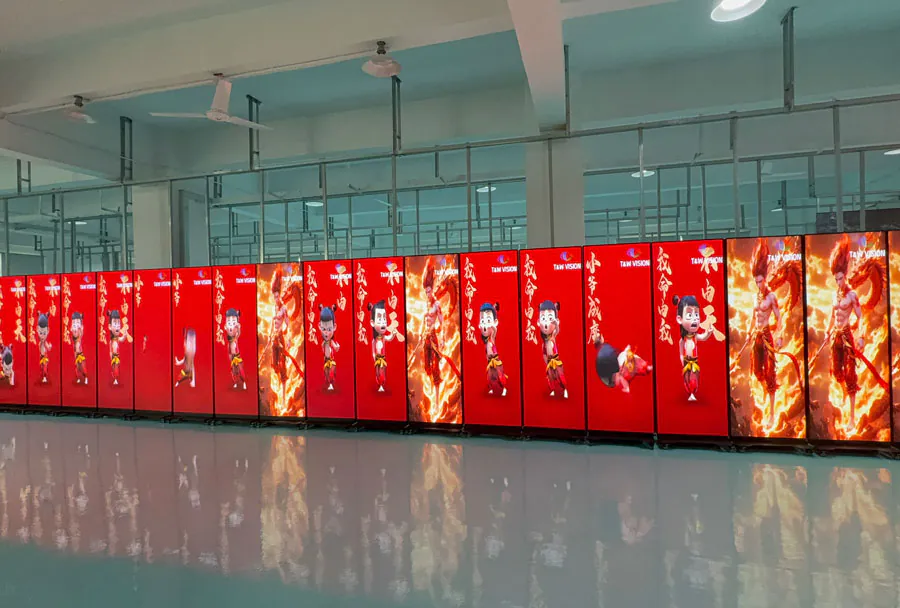
– A major airport integrated a series of modular LED columns for dynamic wayfinding. TW VISION’s standardized mounts and automated calibration allowed multiple vendors to work concurrently and meet a compressed schedule.
– A retail experience brand used TW VISION’s CMS APIs to synchronize store displays with mobile app triggers and inventory systems, creating dynamic product showcases that increased dwell time and conversion.
Each example highlights the combination of visual quality, integration simplicity, and operational intelligence—core tenets of TW VISION’s differentiation.
Risks, challenges, and roadmap
No company is immune to risks. Key challenges for TW VISION include supply chain volatility for certain semiconductor components and the continual pressure to reduce pixel pitch while maintaining cost-effectiveness. The company’s roadmap addresses these through strategic sourcing, modular product families that share components, and incremental improvements in packaging technologies rather than one-off leaps that carry high risk.
TW VISION also invests in standards advocacy for indoor LED calibration and lifecycle reporting, which helps reduce fragmentation in the industry and establishes the company as a thought leader.
outcome-driven innovation
By 2026, TW VISION stands out because it redefines what an indoor LED company can be: not only a pixel vendor but a systems partner that takes responsibility for visual outcomes, operational continuity, and environmental transparency. The combination of high-performance hardware, sensor-enabled system intelligence, open software architecture, and circular services creates a compelling value proposition for enterprises that need more than a display—they need a dependable visual platform that scales, adapts, and performs predictably over time.
For customers and integrators, TW VISION’s model reduces risk at every stage: from specifying and installing to managing and eventually repurposing displays. In a market that increasingly favors integration and lifecycle thinking, TW VISION’s 2026 posture offers a roadmap for others—and a clear reason for clients to choose a partner who delivers measurable visual and operational outcomes, not just components.