Discover the Manufacturing Excellence Behind TW VISION LED Display Supplier Operations

TW VISION has established itself as a notable player in the led display industry by combining robust engineering, disciplined manufacturing processes, and customer-centric supplier operations. For buyers, project managers, and design engineers evaluating LED display suppliers, understanding the manufacturing excellence behind a supplier like TW VISION is critical to assessing reliability, scalability, and long-term partnership potential. This article walks through the key operational pillars—production, quality, supply chain, testing, and innovation—and provides a practical analysis table to compare performance dimensions that matter most when selecting a supplier.
Discover the Manufacturing Excellence Behind TW VISION LED Display Supplier Operations
Operational Foundations: From Design to High-Volume Production
TW VISION’s manufacturing excellence begins at product architecture and flows through production planning. The supplier typically combines modular product design with standardized components to reduce lead times and enable quick customization. Modular design simplifies assembly, supports multiple pixel pitches and cabinet sizes, and reduces the number of unique spare parts—lowering inventory complexity and improving serviceability.
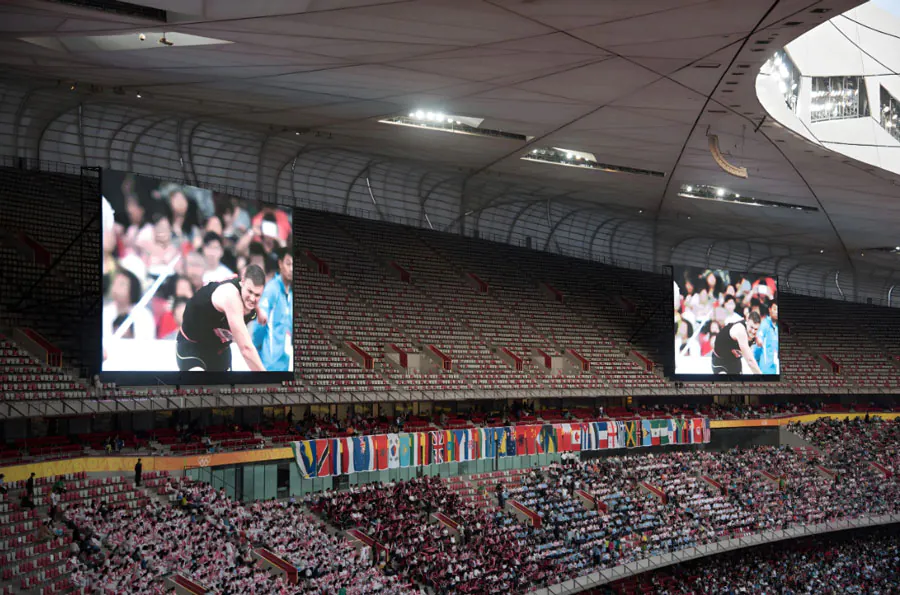
Production planning is driven by demand forecasting and flexible capacity. TW VISION integrates finite-capacity planning tools and real-time production dashboards to balance new orders, scheduled maintenance, and urgent deliveries. By maintaining flexible production lines that can be retooled for different module sizes and resolutions, they achieve high utilization without sacrificing responsiveness. This flexibility is essential for projects ranging from small indoor signage to large outdoor stadium displays.
Precision Manufacturing: SMT, Module Assembly, and Cabinet Integration
Surface-mount technology (SMT) lines form the heartbeat of LED module production. TW VISION typically uses automated SMT lines with inline inspection and high-speed pick-and-place machines to ensure consistent placement accuracy and solder quality. Key process controls include automated optical inspection (AOI), solder paste inspection (SPI), and controlled reflow profiles to minimize defects and ensure long-term reliability.
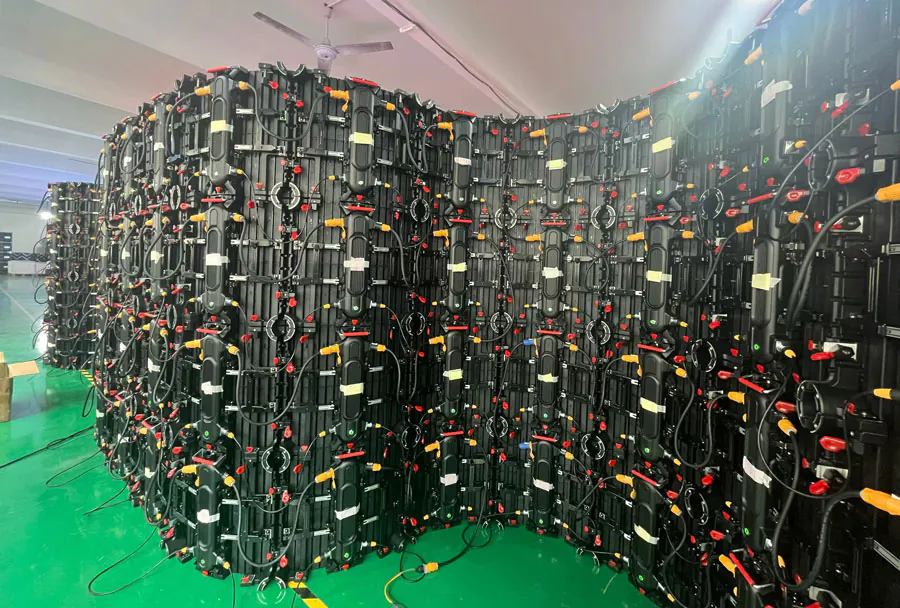
Module assembly follows with fixture-based soldering, adhesive dispensing, and automated bonding for LEDs and driver components. Precision jigs and calibration tools ensure uniform pixel alignment, minimizing visual artifacts at scale. Cabinet integration then combines modules into cabinets with robust mechanical interlocks, thermal management design, and cable harnessing that ensures field serviceability without disrupting cabinet alignment or optical uniformity.
Quality Assurance & Testing: Ensuring Long-Term Reliability
Quality control is a differentiator in LED display manufacturing. TW VISION employs a multi-tiered testing strategy: incoming material inspection (IQC), in-line process checks, end-of-line functional tests, and long-duration burn-in. Incoming inspection focuses on verifying LED binning consistency, PCB integrity, connectors, power supplies, and driver ICs. Traceability is often enforced using barcoding or RFID on batches and critical components, enabling root-cause analysis when issues arise.
End-of-line testing typically includes pixel-level checks, grayscale linearity, color calibration, uniformity mapping, and power/thermal stress tests. A standard practice is to run extended burn-in (48–168 hours depending on product class) under elevated temperatures to surface early failures (infant mortality). For large displays, cabinet-level tests simulate real-world loads and environmental conditions, including ingress protection (IP) checks for outdoor units and shock/vibration tests for touring solutions.
Supply Chain Management: Securing Critical Components and Minimizing Risk
A resilient supply chain is foundational. TW VISION maintains multi-sourcing strategies for critical components (LED chips, driver ICs, power modules) to mitigate single-source risks. Suppliers are audited for quality, capacity, and corporate social responsibility. Contractual agreements often include lead-time commitments, quality guarantees, and consignment stock arrangements to reduce customer lead times.
Inventory strategies combine just-in-time (JIT) with buffer stocks for long-lead components. For high-volume or flagship modules, safety stock is maintained to cover supply disruptions. Vendor-managed inventory (VMI) and electronic data interchange (EDI) links to major suppliers help synchronize demand signals and reduce stockouts. Such disciplined supply chain practices improve predictability for both production and customer delivery schedules.
Technology & Automation: Scaling with Consistency
Automation investments—SMT lines, automated testers, robotic handling, and software-driven traceability—contribute to consistent quality and scaling efficiency. TW VISION often deploys manufacturing execution systems (MES) to capture process data, track work-in-progress, and enforce work instructions. MES integration with enterprise resource planning (ERP) systems synchronizes procurement, production scheduling, and shipping.
Data-driven quality improvement uses statistical process control (SPC) and dashboards to monitor critical metrics (yield, DPMO, throughput). Predictive maintenance of production equipment reduces downtime, while automated calibration stations ensure optical uniformity between modules. For high-value projects, automated color matching and calibration systems reduce manual intervention and improve visual consistency across large installations.
Sustainability & Compliance: Meeting Global Standards
Manufacturers must meet regulatory and environmental requirements globally. TW VISION typically adheres to certifications like ISO 9001 (quality management), ISO 14001 (environmental management), RoHS (restriction of hazardous substances), and often IEC/UL safety standards for power supplies and electrical components. Energy efficiency is addressed at product and process levels—selecting energy-efficient power supplies, optimizing thermal designs to reduce cooling needs, and deploying energy-saving practices in factories.
Sustainability also extends to waste reduction and recycling programs for solder dross, excess PCBs, and packaging materials. Supplier audits include checks for responsible sourcing and ethical labor practices, aligning supplier operations with corporate social responsibility expectations of international clients.
After-Sales & Field Support: Reducing System Downtime
Manufacturing excellence doesn’t end at shipping; after-sales support is pivotal. TW VISION often provides spare parts kits, detailed service manuals, and training for integrators. Remote diagnostics, firmware update mechanisms, and modular replacement designs allow field teams to replace only faulty modules or driver boards rather than entire cabinets—reducing Mean Time To Repair (MTTR) and service costs.
Warranty terms are reinforced by robust failure-data collection and analysis, enabling continuous product improvements. For major clients, service-level agreements (SLAs) and on-site spare pools are common to ensure rapid response for mission-critical displays.
Innovation & R&D: Driving Differentiation
Continuous R&D is integral. TW VISION invests in pixel-level innovations (higher refresh rates, improved grayscale performance), mechanical ergonomics for faster installation, and software tools for color calibration and content management. New materials (higher efficacy LEDs, advanced optical lenses) and driver topologies are evaluated for improved brightness-per-watt and longer lifespans.
Prototyping labs, accelerated life testing (HALT/HASS), and pilot production runs validate new designs before scaling. Collaboration with component suppliers and academic partners accelerates innovation cycles and allows the company to offer cutting-edge solutions such as fine-pitch indoor displays, transparent LED panels, and high-dynamic-range outdoor screens.
Analysis Table: Operational Metrics and Impact (5 columns)
| Operation Area | Key Practices | Metrics / Targets | Technology / Tools | Impact on Quality |
|---|---|---|---|---|
| SMT & PCB Assembly | Automated pick-and-place, SPI, AOI, controlled reflow | Yield ≥ 99.0%, DPMO < 1000 | SMT lines, SPI, AOI, MES | Reduced placement defects; consistent solder joints |
| Module & Cabinet Assembly | Jigs/fixtures, modular design, thermal validation | Assembly cycle time targets; alignment tolerance ≤ 0.2mm | Robotic fixtures, thermal chambers | Improved optical uniformity and mechanical reliability |
| Testing & Burn-in | Functional tests, burn-in, color calibration | MTBF targets, failure rate < 0.5% after burn-in | Burn-in ovens, spectroradiometers, test harnesses | Higher field reliability; fewer early-life failures |
| Supply Chain | Multi-sourcing, VMI, supplier audits | On-time delivery ≥ 95%, critical part lead-time buffer | ERP, EDI, supplier portals | Reduced production disruptions; dependable deliveries |
| Field Support & Service | Spare kits, remote diagnostics, technician training | MTTR ≤ 4 hours (typical), SLA compliance rate ≥ 98% | Remote monitoring, CMMS | Lower downtime; higher customer satisfaction |
| R&D & Test Labs | Pilot runs, HALT/HASS, prototyping | Time-to-market cycles, qualification pass rates | Prototyping stations, accelerated test rigs | Faster innovation with validated reliability |
Risk Management and Continuous Improvement
Manufacturing excellence requires proactive risk management and a culture of continuous improvement. TW VISION typically applies root cause analysis (RCA) and corrective action (CAPA) systems to address defects and supply disruptions. Cross-functional teams review field failures monthly to identify systemic issues. Lean manufacturing principles—5S, Kaizen events, value stream mapping—are used to eliminate waste and shorten lead times.
Scenario planning for component shortages (e.g., LED chip allocations) and contingency manufacturing plans (alternative suppliers, alternate BOMs) mitigate external risks. Security of intellectual property and process know-how is maintained through controlled access and documentation of critical processes.
Choosing TW VISION: What Customers Should Look For
When evaluating TW VISION or similar suppliers, buyers should verify:
– Quality certifications and test evidence (e.g., ISO 9001, product test reports).
– Traceability practices for LEDs and driver electronics.
– Long-term availability policies for key product lines.
– Capacity to run pilot projects followed by ramp to volume.
– Local support, spare parts availability, and warranty terms.
Ask for production samples, burn-in data, and references from installations similar in scale and environment to your project. A supplier’s ability to demonstrate consistent KPIs (yield, on-time delivery, MTTR) is often a stronger indicator of future performance than promotional materials.
Manufacturing Excellence as a Competitive Advantage
The manufacturing excellence behind TW VISION’s operations integrates precise engineering, disciplined production processes, and a resilient supply chain to deliver reliable LED display solutions at scale. By combining automation, rigorous testing, sustainability practices, and continuous innovation, suppliers like TW VISION can offer quality, predictable delivery, and lower lifecycle costs for customers. For system integrators and procurement teams, understanding these operational pillars—and validating them through metrics and on-site evaluations—enables confident supplier selection and long-term project success.
In an industry where visual performance and reliability are paramount, the supplier’s manufacturing capabilities directly translate into on-site performance and customer satisfaction. Focusing on the operational details outlined above will help buyers discern true manufacturing excellence from mere marketing claims.