How TW VISION Outdoor Digital Displays Enhance Customer Engagement in Urban Areas

Urban environments are noisy, fast-moving, and saturated with visual stimuli. For brands and city planners seeking to capture attention and convert passersby into customers, static signage no longer provides the flexibility or measurable impact required. TW VISION outdoor digital displays are designed specifically for these complex urban contexts, combining rugged hardware with intelligent software to create dynamic touchpoints that increase visibility, relevance, and measurable engagement.
How TW VISION Outdoor Digital Displays Enhance Customer Engagement in Urban Areas
Key Technologies Behind TW VISION Outdoor Displays
TW VISION outdoor displays integrate several hardware and software innovations that make them effective in dense urban settings. High-brightness LED and direct-view LED panels ensure legibility under direct sunlight while maintaining color accuracy; elevated contrast ratios and adaptive brightness sensors automatically tune display luminance based on ambient conditions, reducing glare and preserving visual fidelity at all hours. Ruggedized enclosures meet IP65/IP66 ratings, resisting water, dust, and vandalism—critical for city streets and transit hubs.
On the connectivity and intelligence side, TW VISION supports 4G/5G backhaul, wired Ethernet, and Wi-Fi for redundant content delivery. Built-in sensors (ambient light, temperature, proximity) and optional camera modules enable context-aware deployments—display content adapts based on weather, time of day, or incoming audience characteristics. Their content management systems (CMS) support real-time updates, scheduling, programmatic ad insertion, and integration with third-party data sources (traffic feeds, transit schedules, local events), enabling advertisers to deliver highly relevant messages at scale.
How These Technologies Translate to Better Customer Engagement
The translation from technology to engagement occurs in several concrete mechanisms:
– Visibility and Readability: Outdoor displays with high nit ratings (often >5,000 nits) maintain crisp imagery under sunlit conditions, which is foundational to capturing attention in urban corridors where visual competition is intense.
– Contextual Relevance: By integrating local data—weather, transit delays, events—the displays can present content that feels timely and useful, increasing dwell time and recall. For example, a café ad promoting hot beverages during rain is more likely to spur immediate action than a generic ad.
– Dynamic Personalization: Programmatic capabilities allow advertisers to change creative in real-time based on audience composition or inventory—an apparel brand can push commuter-friendly outfits during weekday mornings, then lifestyle ads in the evenings when foot traffic is social.
– Interactivity and Call-to-Action: QR codes, short URLs, NFC taps, and SMS triggers bridge the physical-digital gap. A passerby scanning a code can receive a discount coupon, directions, or an app download link—directly measurable conversions stemming from the digital display.
– Seamless Omnichannel Integration: TW VISION displays can be orchestrated with mobile marketing, social campaigns, and in-store promotions. Cross-channel consistency reinforces messaging and raises conversion probability as customers encounter the brand across multiple touchpoints.
Urban Use Cases and Deployment Strategies
Strategic placement and creative deployment drive the highest engagement returns:
– Transit Hubs and Bus Shelters: High dwell time and predictable foot traffic make transit shelters ideal for delivering promotions and service updates. TW VISION displays in these locations can sync with transit schedules and display real-time arrival information alongside advertising.
– Retail Corridors and Storefronts: Large-format outdoor displays act as visual anchors. Retailers can use them to promote flash sales, showcase inventory, and push in-store pickup options that convert immediacy into footfall.
– Pedestrian Plazas and Event Spaces: In areas where people linger, displays can host immersive, high-impact creative (short-form video, interactive games) that boost social sharing and brand affinity.
– Building Facades and Wraps: Large direct-view LED facades turn buildings into landmarks and provide extensive reach in urban cores; these installations are particularly effective for brand awareness campaigns and major event promotions.
– Mixed-Use Developments and Smart Cities: TW VISION’s CMS integrates with municipal systems to provide a mix of civic information (emergency alerts, wayfinding) and commercial content, creating revenue opportunities while serving public needs.
Deployment strategies should consider sightlines, pedestrian flow, and local regulations (e.g., brightness, content restrictions). In many cities, collaborative planning with municipal authorities not only speeds approvals but also identifies opportunities for public-private partnerships that expand reach.
Metrics and Analytics: Measuring Engagement Effectively
One of the strongest advantages of digital outdoor displays is measurement. TW VISION platforms offer analytics that quantify viewership and impact, enabling data-driven optimization. Key metrics include impressions (passersby within the display’s sightline), dwell time (average time viewers spend looking at the screen), interaction rates (QR scans, NFC taps), conversions (redemptions, store visits), and audience demographics (age, gender estimates when privacy-compliant sensors are used).
Below is an analysis table that maps technical elements to customer engagement outcomes and measurable KPIs:
| Feature | Technical Advantage | Customer Engagement Benefit | Urban Use Case | Measurement Metrics |
|---|---|---|---|---|
| High-Brightness LED | Readable in direct sunlight; vivid colors | Higher attention capture; improved recall | Street-facing storefronts, building facades | Impressions, dwell time, recall surveys |
| Adaptive Brightness Sensors | Auto-adjusts luminance to ambient light | Reduced glare, sustained viewability across dayparts | Transit shelters, plazas | Viewability rate, time-of-day engagement |
| Contextual CMS Integration | Programmatic content based on real-time data | Relevant messaging increases actionability | Transit delays, weather-triggered promos | Conversion lift during triggered events |
| Interactivity (QR/NFC) | Instant physical-to-digital engagement | Direct response and measurable conversions | Retail offers, event registrations | Scan rate, CTR, coupon redemptions |
| Audience Analytics (Privacy-first) | Aggregated demographic and traffic data | Targeting optimization and A/B testing | Campaign refinement in commercial districts | Segmented impressions, ROI per segment |
| Weatherproof Enclosures | 24/7 operation in harsh conditions | Consistent messaging and uptime | Outdoor plazas, transit shelters | Uptime %, maintenance intervals |
Best Practices for Brands and City Planners
To maximize engagement and ROI, follow these practical guidelines:
– Prioritize Context Over Volume: In urban settings, relevance beats repetition. Tailor creatives to local conditions and moments (commute hours, events, weather).
– Keep Messages Short and Visual: Passersby often have just a few seconds to absorb content. Use bold visuals, concise copy, and strong CTAs.
– Use Dayparting Strategically: Adjust content to audience composition—informational and utility-focused messages during morning commutes, promotional and lifestyle content in evenings and weekends.
– Integrate Measurable CTAs: Always include a trackable action—QR codes, SMS keywords, or unique promo codes—so campaign lift can be quantified.
– Ensure Accessibility and Compliance: Respect local regulations concerning brightness and content; ensure content is accessible to diverse audiences (consider font sizes, contrast, and language).
– Maintain Operational Readiness: Schedule regular maintenance and remote diagnostics. Poorly functioning displays damage brand perception more than no signage at all.
– Collaborate with Municipal Stakeholders: Public-private partnerships can unlock premium placements and mutually beneficial civic applications (emergency alerts, wayfinding).
Case Examples and Scenarios
Consider these hypothetical but realistic scenarios demonstrating measurable uplift:
– Retail Chain Pop-Up: A clothing brand uses TW VISION displays outside a pop-up shop in a busy shopping district. By pairing time-sensitive discount codes with QR-driven loyalty sign-ups and optimizing creatives by daypart, the chain records a 38% increase in walk-ins and a 22% redemption rate on displayed coupons over two weeks.
– Transit-Based Promotion: A local coffee brand partners with the city transportation authority to deploy displays at bus shelters, integrating real-time arrival info with coffee offers when weather is cold. The campaign shows a 15% uptick in mobile orders attributed to the shelter displays during morning hours.
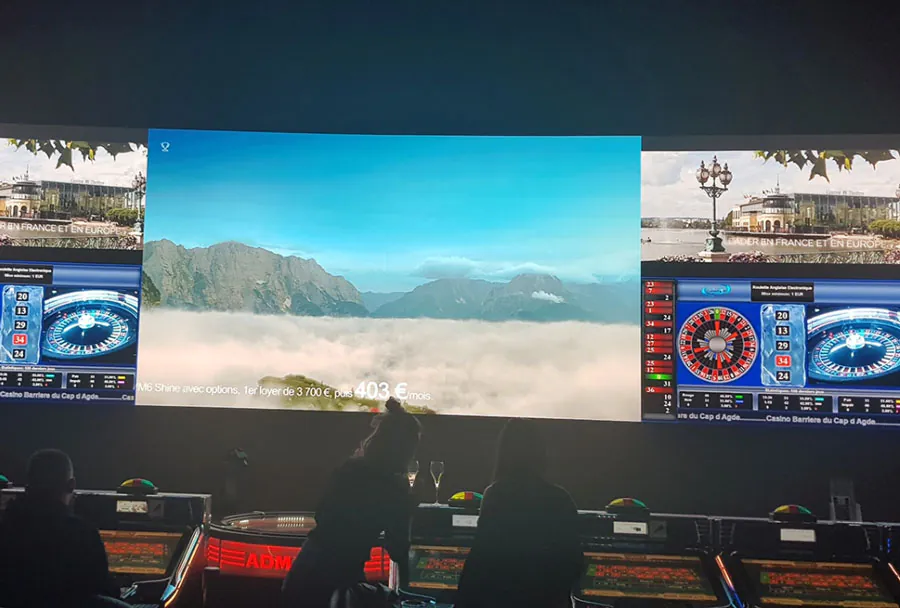
– Event-Driven Awareness: For a major music festival, a stadium fa?ade LED wrap runs artist teasers and ticket links. Engagement analytics show heightened social chatter and a direct correlation between display ad timestamps and online ticket sales spikes.
Future Trends: Where TW VISION Fits in Smart Cities
Looking ahead, the role of outdoor displays will expand beyond advertising into broader urban services. TW VISION’s platforms are well-positioned for several emerging trends:
– AI-Powered Content Optimization: Machine learning models will dynamically select creatives that perform best in specific micro-moments, continuously improving engagement.
– Augmented Reality (AR) Experiences: Displays can trigger AR overlays via mobile apps to create immersive brand interactions, increasing dwell time and shareability.
– Energy-Efficient Designs: Advances in LED efficiency and power management will lower operational costs and support sustainability goals in urban planning.
– Integrated Urban Data Networks: Displays will act as nodes in smart city ecosystems—delivering civic information, supporting public safety alerts, and contributing anonymized foot-traffic analytics for urban planning.
TW VISION outdoor digital displays offer a compelling mix of hardware resilience, visual performance, and intelligent software that together significantly enhance customer engagement in urban areas. By providing readable, context-aware, and interactive content, these displays convert transient city audiences into measurable outcomes—whether in-store visits, mobile engagements, or social buzz. For brands and city planners seeking to maximize impact while maintaining operational efficiency and regulatory compliance, TW VISION’s solutions provide a clear pathway to more engaging, accountable, and future-ready urban communication.