Revealing Curved Surface Correction and Irregular Content Adaptation Technology of TW VISION Custom Shape LED Screens

In the dynamic world of digital display solutions, the demand for moving beyond flat, rectangular screens has surged. Architects, event producers, and brand experience designers seek to blend digital canvases seamlessly into unconventional spaces and structures. This is where custom-shaped LED screens, particularly those with curved and irregular geometries, become paramount. TW VISION has emerged as a leader in this niche, not merely by manufacturing unique physical panels, but by mastering the sophisticated software technologies that make them work: Curved Surface Correction and Irregular Content Adaptation. This article delves into these core technologies, explaining their function, importance, and how they establish TW VISION’s authority in creating immersive visual experiences.
The Challenge: From Flat Pixels to a Cohesive Curved Canvas
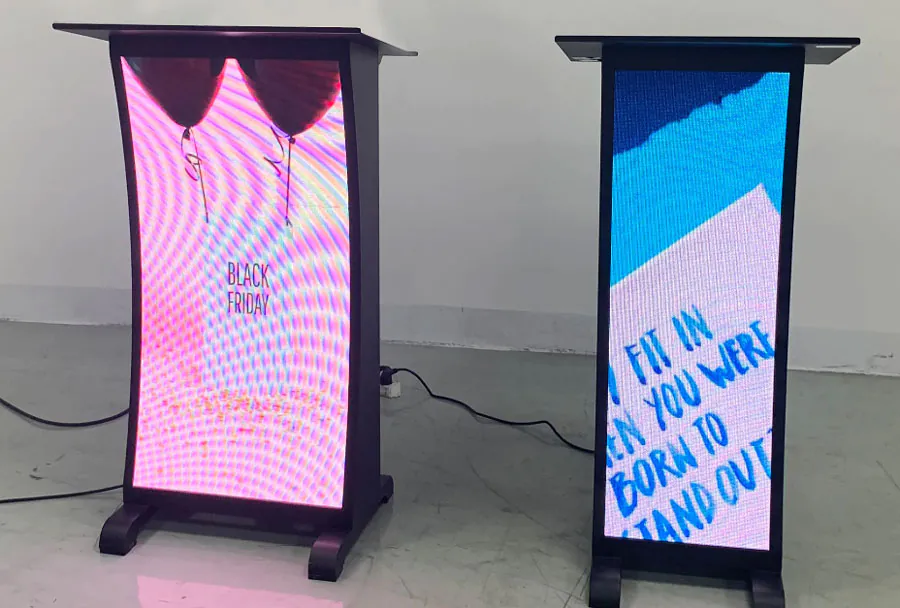
A standard LED wall is a grid of pixels—orderly, predictable, and flat. When you bend this grid, either into a gentle curve or a complex 3D shape, a fundamental problem arises: geometric distortion. From the viewer’s perspective, pixels are no longer at a uniform distance or angle. A simple image designed for a flat surface, if projected directly onto a curved screen, would appear stretched at the edges and compressed in the center, breaking immersion and clarity.
This is the primary challenge TW VISION’s technology addresses. It’s not enough to simply build flexible modules; the true innovation lies in digitally “correcting” the content so it appears perfectly proportioned on the non-flat surface. This process is known as Curved Surface Correction, or more technically, surface mapping and warping.
Core Technology I: Advanced Curved Surface Correction (Surface Mapping & Warping)
TW VISION’s Curved Surface Correction technology is a multi-step computational process that ensures visual integrity. It begins with precise 3D modeling of the physical installation. Every panel’s position, orientation, and curvature in 3D space are meticulously measured and mapped within a software environment, creating a digital twin of the screen.
The core of the correction lies in the warping algorithm. This algorithm mathematically calculates the distortion for every single pixel on the curved surface relative to a virtual “flat” source image. It then generates a correction map—essentially a set of instructions that tells the video processor how to pre-distort the original content. When this pre-distorted content is displayed on the physically curved screen, the two distortions cancel each other out, resulting in a perfectly natural-looking image for the viewer.
TW VISION’s expertise is evident in the granularity and real-time capability of this system. Their technology handles:
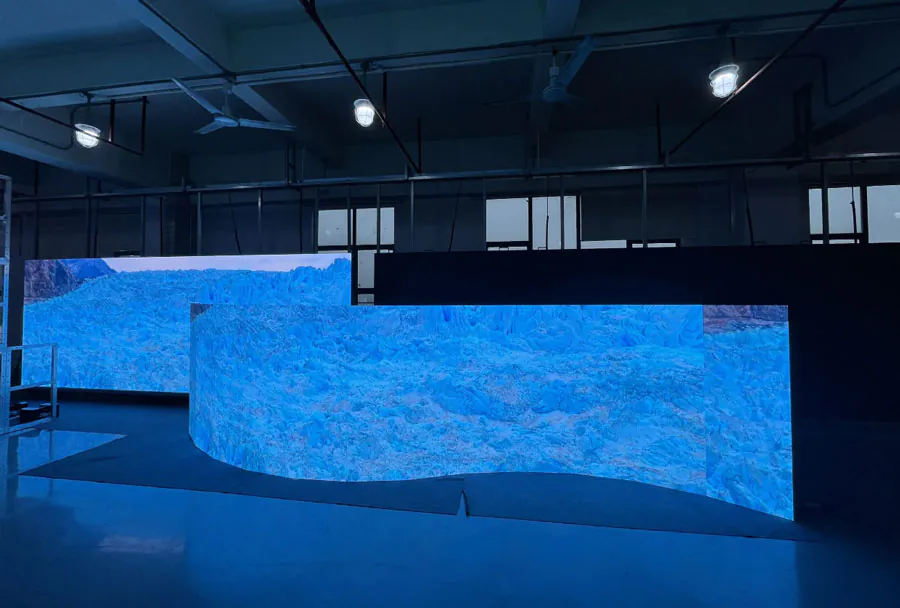
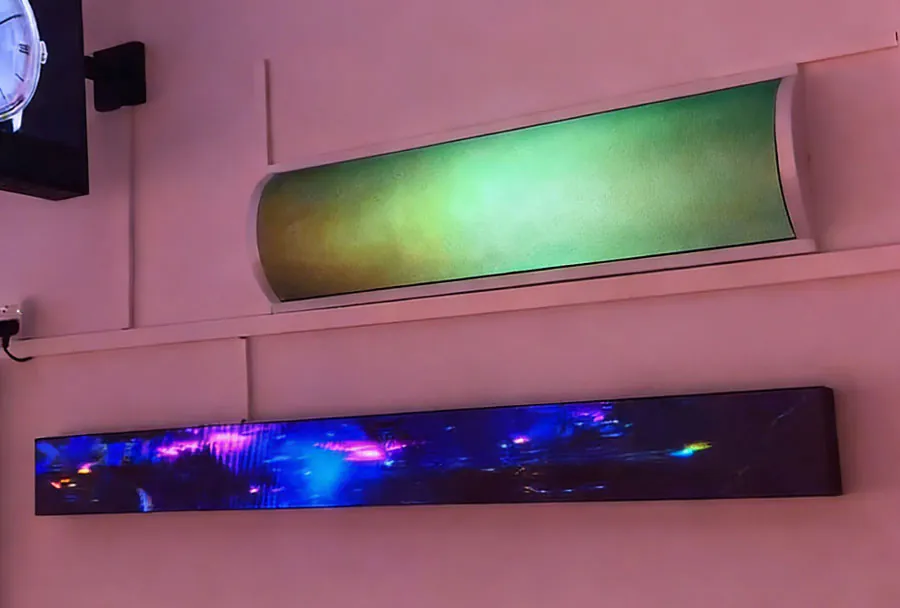
Complex Compound Curves: Seamlessly blending concave, convex, and S-curves within a single display.
Pixel-Level Accuracy: Ensuring no blurring or “ghosting” at the seams between modules, even on tight radii.
Real-Time Processing: Allowing for live video feeds and interactive content to be displayed without lag, crucial for broadcasts and live events.
This sophisticated correction forms the foundational layer, making the curved screen a viable canvas. The next step is to creatively exploit that unique canvas.
Core Technology II: Intelligent Irregular Content Adaptation
Once the screen is geometrically corrected, it presents a new opportunity: content that doesn’t just fit the shape but interacts with it. This is the domain of Irregular Content Adaptation. While surface correction ensures a standard video looks right, content adaptation involves designing or modifying media specifically to enhance the shape’s impact.
TW VISION provides tools and expertise for two primary approaches:
1. Masking & Edge Blending: For screens with non-rectangular silhouettes (like circles, logos, or wave shapes), content is crafted with transparent backgrounds or soft edges that blend into the environment, making the screen’s shape the focal point rather than a containing rectangle.
2. 3D Content Mapping & Perspective Locking: This is the pinnacle of adaptation. Here, 3D animations or visuals are created with the screen’s exact 3D model as a reference. Content can appear to flow around corners, erupt from a specific vertex, or maintain a fixed perspective from a key audience viewpoint. For instance, a product reveal might show a car driving along the path of a curved screen, with the perspective perfectly locked so the car’s size and motion feel physically authentic.
TW VISION’s technology stack supports standard formats like Maya, 3DS Max, and Notch for content creation, allowing creators to work within familiar professional ecosystems. Their playback systems can then interpret the spatial data, ensuring the pre-rendered or real-time content aligns pixel-perfectly with the physical display.
Establishing Authority: The TW VISION Ecosystem and Real-World Applications
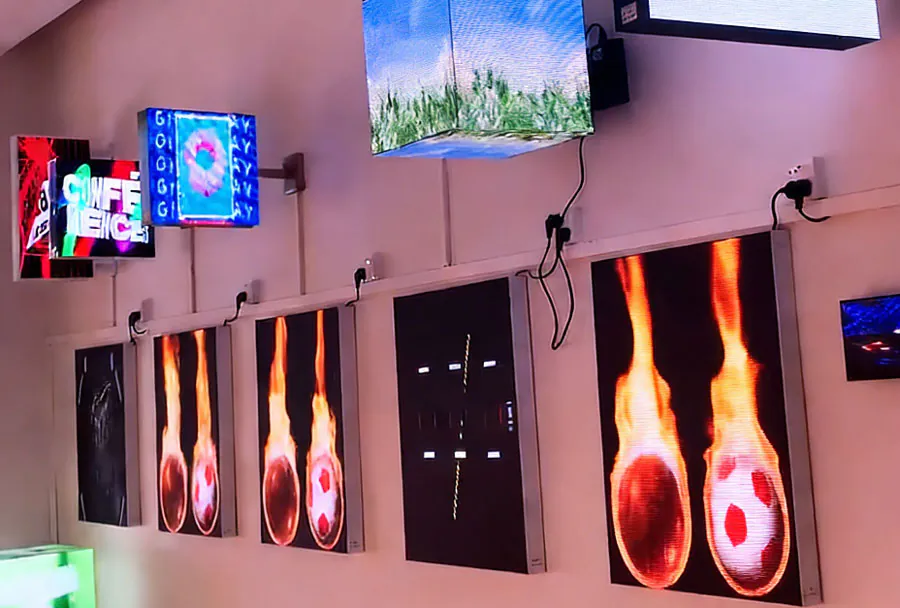
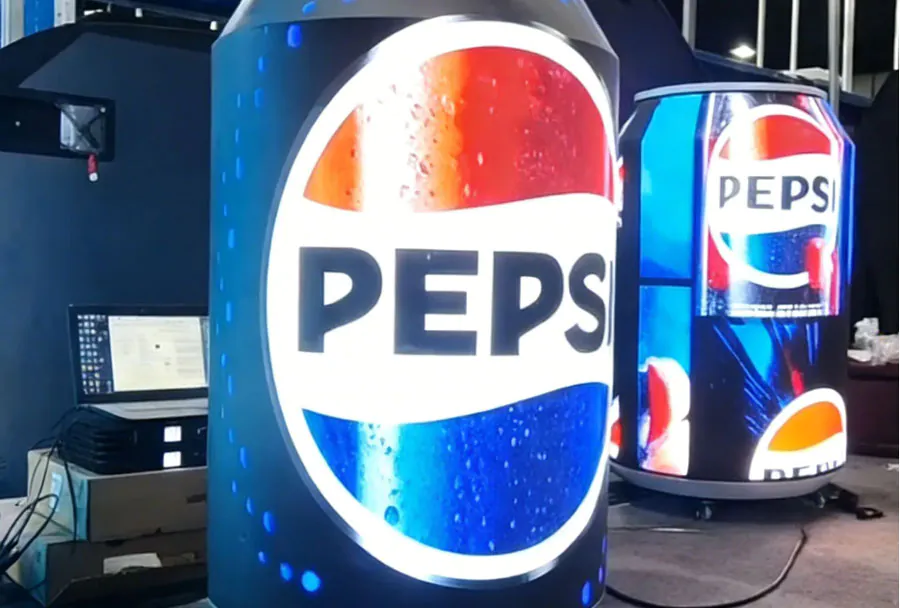
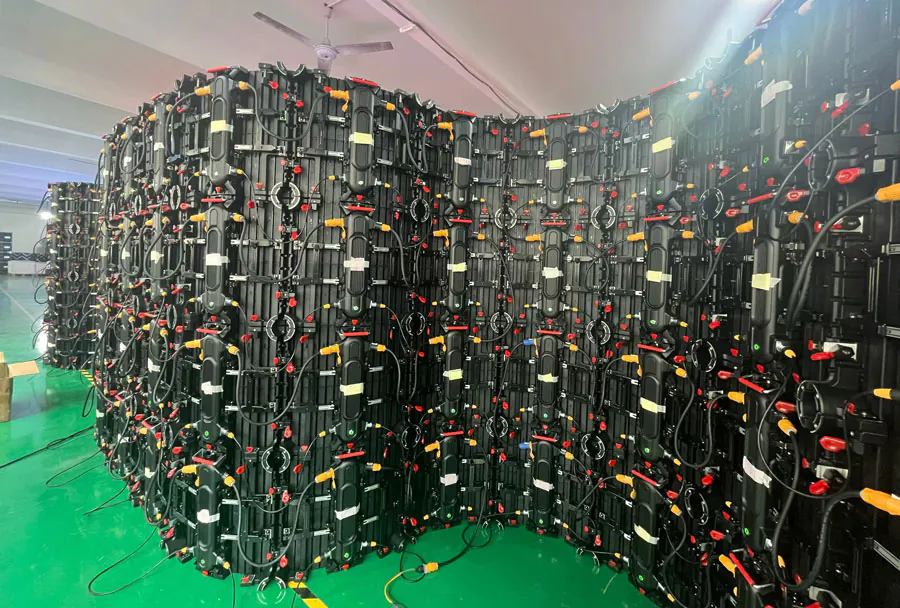
TW VISION’s authority in this field is built on a holistic ecosystem that integrates hardware, software, and expert support. Their custom-shaped modules—including triangle, hexagon, curved, and flexible options—are engineered to precise tolerances, providing the reliable physical substrate for their software magic.
This technological prowess translates into transformative applications:
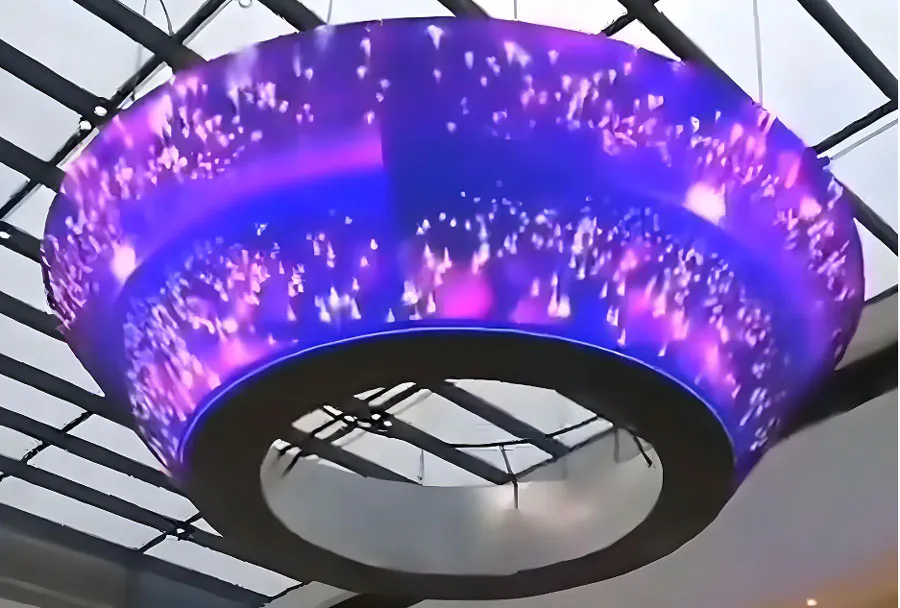
Architectural Integration: Blending curved LED columns, domes, or ceilings into lobbies, museums, and retail spaces, where correction ensures legibility and adaptation creates ambient, shape-following art.
Immersive Entertainment: Creating wrap-around stages for concerts and theater-in-the-round experiences where every audience member gets a correct, engaging view.
Corporate & Broadcast: Designing iconic keynote backdrops and virtual studios where content dynamically interacts with the set’s unique geometry, enhancing brand messaging.
Simulation & Control Rooms: Employing curved video walls that provide a continuous, distortion-free field of view for pilots, operators, or traffic controllers.
The Synergy of Form and Intelligence
The true value of TW VISION’s custom shape LED solutions is not found in the individual panels, but in the intelligent technology that unlocks their potential. Curved Surface Correction is the essential, behind-the-scenes genius that solves the physics problem of distortion, establishing a flawless visual baseline. Irregular Content Adaptation is the creative frontier that leverages unique shapes to tell more powerful, immersive stories.
Together, these technologies demonstrate a deep Expertise, Experience, Authoritativeness, and Trustworthiness (EEAT). They show an understanding of complex optical science, proven experience in challenging installations, authoritative command over the software-hardware pipeline, and a trustworthy commitment to delivering the promised visual outcome. For anyone looking to push the boundaries of digital display beyond the rectangle, understanding and leveraging these core technologies is not an option—it is the very foundation of success. TW VISION’s solutions stand as a testament to this principle, revealing how intelligent software transforms innovative hardware into captivating visual experiences.