Flexible LED Screen Price Guide: How to Get the Best Value for Your Project

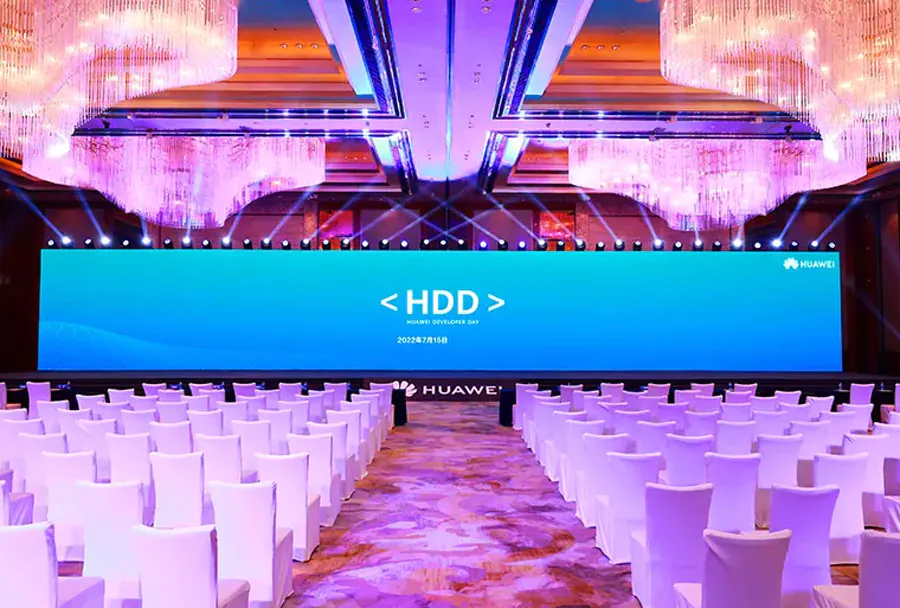
Flexible LED displays have changed the way brands, event planners, retailers, and architects think about digital visuals. Instead of being limited to flat panels, buyers can now wrap screens around columns, build curved backdrops, and create eye-catching shapes that make a stronger impression. Because these products are specialized, many people struggle to understand what drives cost and how to compare quotes from different suppliers. That is why learning about Flex LED Screen Price matters before you request proposals or place an order. A smart buyer looks beyond the headline number and studies pixel pitch, module quality, installation complexity, maintenance access, and long-term operating value. With the right knowledge, you can choose a display that fits your creative vision and your budget.
This article walks you through a systematic approach to securing the best price for your flex screen project: how to define needs, how to evaluate suppliers, what cost drivers to influence, negotiation tactics, and how to balance upfront savings with quality and after-sales support.
1. Define your project requirements precisely
Clarify use case and environment
Start by answering: Where will the screen be installed? Indoor or outdoor? Permanent installation or touring stage rental? Climate, humidity, dust, and sunlight exposure dramatically affect component choices and required IP rating. Outdoor and permanent installations require higher protection levels and will cost more—budget accordingly.
Specify technical parameters
Key specs that drive price:
– Size and total area (square meters)
– Pixel pitch (e.g., P2.6, P3.9) — finer pitches are pricier
– Brightness and contrast requirements
– Curvature/radius tolerance
– Refresh rate and grayscale performance
– Weight and thickness limits
– Mounting system and structural frame needs
Define acceptable tolerances (e.g., allowable brightness variation or dead pixel rate). Precise specs reduce ambiguity in quotes and limit change-order costs.
Performance vs. aesthetic priorities
Decide what matters most: Is absolute image fidelity the priority, or is a visually compelling effect sufficient? For example, stage visuals viewed from distance don’t require ultra-fine pixel pitch; lowering pitch reduces cost significantly.
2. Understand the main cost drivers
Components and materials
Major hardware costs include LED modules, driver ICs, control systems, power supplies, and frames. LED module quality (binning, color consistency, warranty) and driver IC type greatly affect price.
Manufacturing and assembly
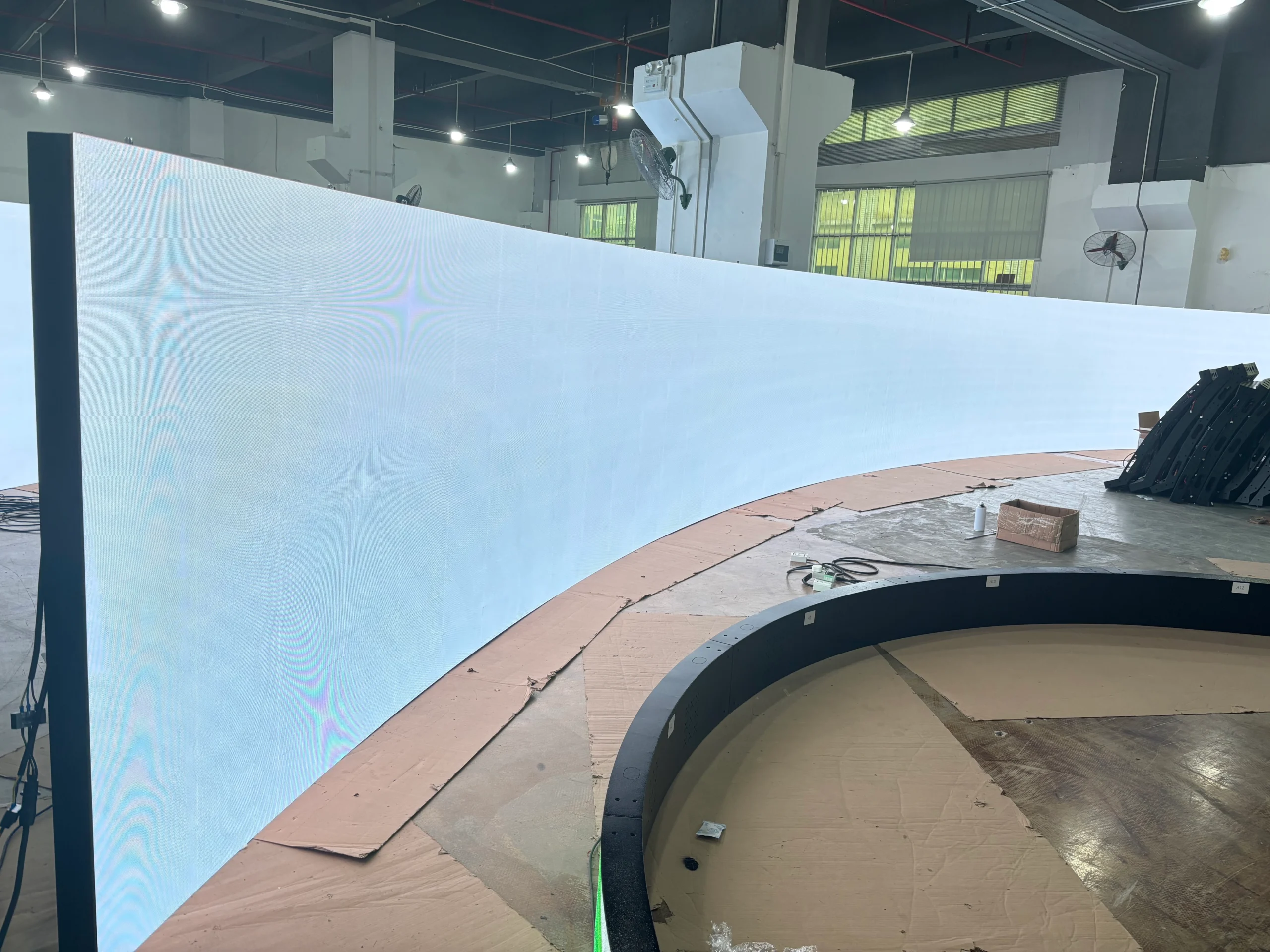
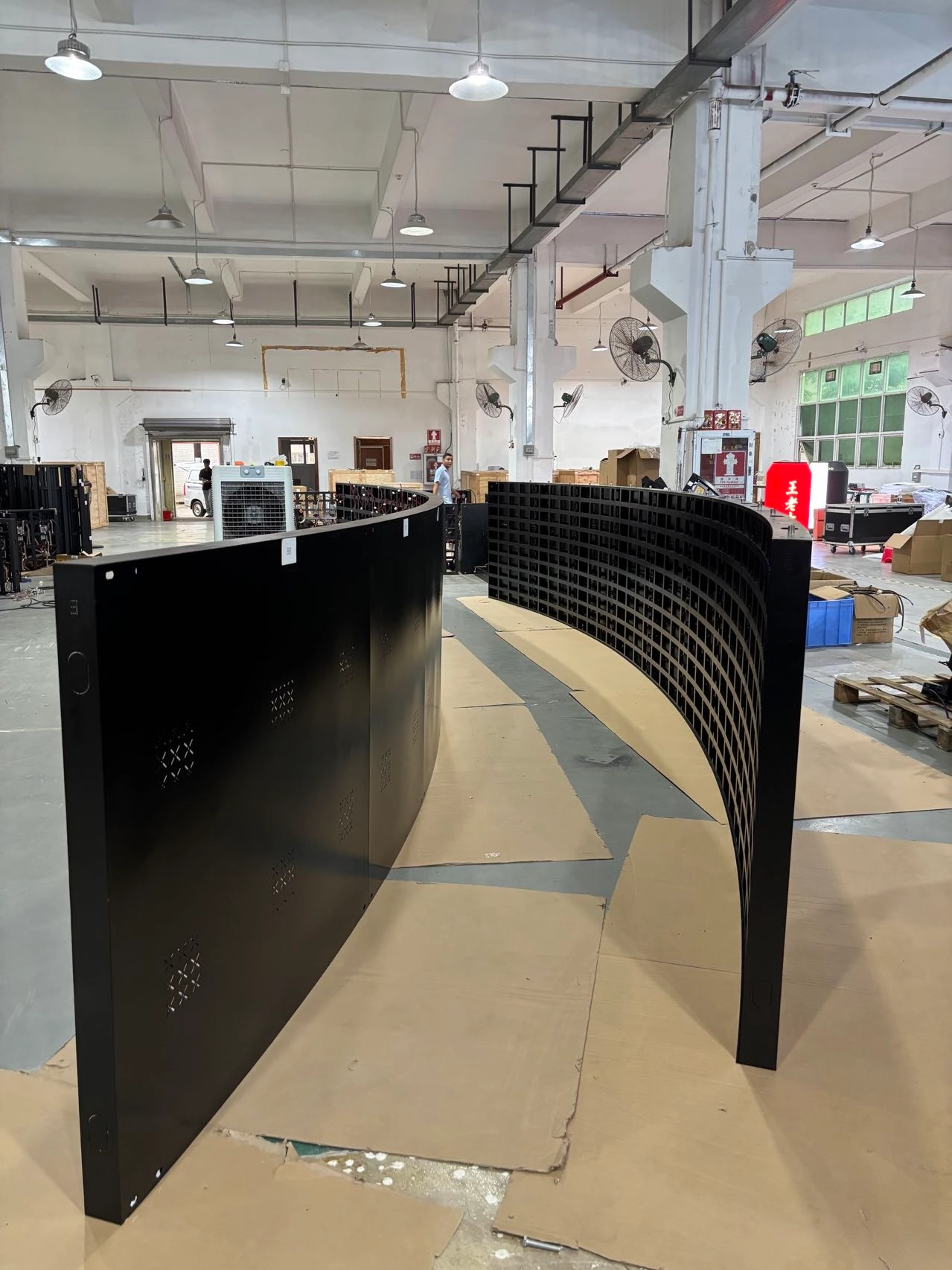
Custom frames, curved modules, and bespoke mounting systems add labor and engineering costs. Manufacturing tolerances for curvature and lightweight designs will require more complex fixtures and testing.
Shipping, taxes, and installation
Large panels are bulky and can be expensive to ship, especially internationally. Import duties, local taxes, and on-site installation (including scaffold, lift, or specialized rigging) are often underbudgeted but can exceed hardware costs.
After-sales service and warranty
Longer warranties and fast local service raise upfront price but reduce risk. Define acceptable warranty terms and include expected response times for service calls in vendor evaluations.
3. Make a sourcing plan: who to approach and how
Supplier types
– OEM manufacturers (often based in Asia): Best for volume and lower per-unit price but may require more oversight.
– Authorized resellers/distributors: Offer local support and sometimes quicker delivery; price includes margin for service.
– System integrators: Provide turnkey solutions (design, installation, programming)—higher cost but less project management on your side.
– Rental houses: If the project is temporary, renting may be more cost-effective than buying.
Get multiple quotes and standardize RFPs
Create a standardized Request for Proposal (RFP) that lists every technical spec, acceptance tests, delivery and installation milestones, penalties, warranty, and maintenance requirements. Ask for itemized pricing so you can compare apples to apples.
4. Use economies of scale and modular design
Order strategically
– Bulk purchasing: Larger orders typically lower per-unit prices. If multiple projects exist, consolidate procurement to increase bargaining power.
– Standardize modules: Use standardized module sizes where possible to reduce custom fabrication.
Design for reusability
If the screen could be reused across events or repurposed, invest in durable frames and modular connectors. Reusability improves long-term cost-efficiency.
5. Technical decisions that lower cost without compromising performance
Choose the right pixel pitch and viewing distance
Map viewing distance to pixel pitch. For audiences further away, larger pixel pitches provide acceptable image quality at significantly lower cost. Use the “distance-to-pixel-pitch” rule of thumb to guide decisions.
Balance brightness and power
Higher brightness increases cost and power consumption. Determine the minimum brightness required for readability in the intended environment and design to that spec.
Consider hybrid approaches
Combine high-density areas (close-up focal points) with lower-density surrounds. This hybrid approach gives the viewer the necessary detail where it’s needed and reduces cost elsewhere.
6. Negotiate smartly and structure contracts for value
Negotiate on total cost of ownership
Don’t fixate on hardware price alone. Negotiate on shipping, installation, warranty coverage, spare parts, and on-site training. Vendors may be more flexible on these add-ons than on list price.
Use milestone payments and acceptance testing
Structure payments around deliverables and acceptance tests (e.g., factory test, on-site assembly, live display test). Hold back a reasonable percentage until final sign-off to incentivize quality.
Ask for bundled services
Request bundles that include spare modules, calibration, and service response commitments. Bundles can reduce overall cost compared to buying these services separately.
7. Minimize hidden and lifecycle costs
Plan for maintenance and spare parts
Ask vendors for recommended spare parts (e.g., modules, power supplies) and expected repair times. Fast replacement minimizes downtime and can justify slightly higher upfront costs.
Estimate energy and operating expenses
Factor in power draw per square meter and expected run hours. For 24/7 permanent installations, energy cost becomes a significant part of lifecycle expense.
Factor in obsolescence and upgrades
LED control systems and protocols evolve. Choose solutions that support firmware updates and are modular enough to upgrade incrementally without replacing the entire screen.
8. Evaluate supplier quality and reliability
Ask for references and visit installations
Request references for projects similar in size and complexity. If possible, visit installations to observe long-term reliability and service responsiveness.
Check certifications and quality control
Verify factory quality controls, testing processes (aging tests, bin sorting), and certifications (e.g., CE, RoHS). These reduce the risk of premature failure.
Same specs, different performance
Two vendors may market the same pixel pitch but use different components and testing standards. Insist on factory test reports and sample inspection.
9. The rental vs. buy decision
When renting is smarter
– Short-term events or touring shows
– Projects with unpredictable future use
– When you need fast deployment without capital expenditure
Rented equipment often includes technical support, transport, and setup, lowering logistical risk.
When buying makes sense
– Long-term installations (multi-year use)
– When you need a unique shape or integration with building systems
– If you have internal maintenance capability
Buying often becomes cheaper over time if utilization is high.
10. Procurement checklist: what to include in the RFP
– Detailed technical specifications (pixel pitch, brightness, contrast, curvature)
– Mechanical drawings and mounting details
– Environmental requirements and IP rating
– Complete Bill of Materials and itemized pricing
– Factory acceptance test (FAT) criteria
– On-site installation and commissioning plan
– Warranty terms and spares list
– Service level agreement (SLA) for repairs and response times
– Delivery schedule, lead times, and penalties for delay
– Payment milestones and holdback terms
– Acceptance tests and final sign-off criteria
11. Practical negotiation tactics and timelines
Run a competitive bidding process
Invite 3–6 qualified vendors to bid. Share a clear RFP and a timeline for questions, site visits, and final bids. Comparative bids increase leverage.
Ask for best and final offers
After initial pricing rounds, request best-and-final offers and encourage vendors to include value-added options (extended warranty, additional spares, faster shipping) in their final price.
Use structured scorecards
Score proposals across cost, technical compliance, warranty, lead time, and local support. This keeps procurement decisions objective.
12. Case study examples and cost-saving scenarios
– A (stage show): By selecting P3.9 instead of P2.6 and combining modular high-density focal panels with lower-density surrounds, a production saved ~35% on panel cost without noticeable visual compromise.
– B (retail wrap): Choosing a slightly slower refresh rate reduced driver IC costs, saving 15% and still meeting the application’s needs.
– C (architectural fa?ade): Consolidated procurement across three buildings allowed bulk pricing and reduced per-project cost by 20% while standardizing maintenance.
Analysis table: major cost drivers and optimization levers
| Cost Driver | Typical Share of Total Cost | Influence on Final Price | How to Optimize | Risk If Ignored |
|---|---|---|---|---|
| LED Modules & Driver ICs | 30%–45% | High | Choose appropriate pixel pitch, select reliable binning, ask for sample testing | Color inconsistency, early failures, image artifacts |
| Control Systems & Software | 10%–20% | Medium | Standardize controllers, ensure firmware upgradability, opt for modular control | Incompatibility, costly upgrades |
| Fabrication & Frames | 15%–25% | High (for curved/custom) | Design for modularity, use standard frame elements, consolidate production runs | High custom costs, longer lead times |
| Shipping & Logistics | 5%–15% | Medium | Consolidate shipments, port selection, negotiate freight terms | Unexpected fees, delays, damage in transit |
| Installation & After-sales | 10%–20% | Medium | Bundle installation with purchase, require SLA, train local techs | High downtime, extra maintenance costs |
13. Practical tips to shave off costs without compromising quality
Use samples and pilot runs
Request sample modules and a small pilot assembly to validate color, curvature, and structural fit before placing a full order.
Negotiate payment terms
Aim for 30% deposit, 50% at shipping, 20% after successful onsite acceptance. This protects cash flow and ties final payment to performance.
Lock in exchange rates and logistics early
Large international purchases are sensitive to currency swings and freight rate volatility. Consider forward contracts or price adjustment clauses.
Leverage local partnerships
Local integrators can reduce installation risk and keep maintenance costs down. They may accept lower margins on hardware when combined with service contracts.
14. Final checklist before signing
– Did you get an itemized quote with unit prices and labor separated?
– Are performance specs and acceptance criteria clearly written into the contract?
– Are warranty and SLA terms acceptable and measurable?
– Is spare parts availability guaranteed for the expected life of the project?
– Have you verified vendor references and seen comparable installations?
– Is there a contingency budget (typically 5%–10%) for unexpected site conditions or design changes?
Conclusion: price is part of a bigger value equation
Getting the best Flexible LED Screen Price requires more than picking the lowest bidder. It’s a disciplined process: define the project, translate needs into precise specs, understand cost drivers, structure procurement to capture economies of scale, and protect value through warranties and acceptance tests. Often, a slightly higher upfront price that secures fast service, verified quality, and predictable lifecycle costs is the true bargain. Approach procurement strategically, and you’ll maximize both the visual impact of your flex screen and the return on your investment.
FAQ
How much does a flexible LED display usually cost?
The average Flexible LED Screen Price can vary widely depending on pixel pitch, screen size, curvature, environment, and supplier scope, so buyers should request project-specific quotes instead of relying on generic online estimates.
Is indoor equipment cheaper than outdoor equipment?
In most cases, Flexible LED Screen Price is lower for indoor models because they typically need less brightness, lighter environmental protection, and simpler enclosure requirements than outdoor installations.
What is the most expensive feature in these projects?
For many custom builds, Flexible LED Screen Price rises fastest when the design requires very fine pixel pitch, tight curves, premium control systems, or specialized structures that are engineered for unusual shapes.
Can I reduce cost by ordering in bulk?
Yes, Flexible LED Screen Price often becomes more favorable on larger or repeat orders because suppliers can optimize production, packaging, and shipping while spreading engineering effort across more units.
Conclusion
Understanding Flexible LED Screen Price is not about finding the lowest number on a quote sheet. It is about knowing which technical factors matter, which project details add hidden cost, and which compromises are safe to make. Buyers who compare specifications carefully, match pixel pitch to viewing distance, and work with experienced suppliers are far more likely to get a display that performs well and lasts longer. Whether you are planning a retail feature, stage backdrop, architectural wall, or branded exhibition build, the smartest purchase comes from balancing creative ambition with practical engineering. When you evaluate total value instead of just upfront cost, you make a more confident and more profitable investment.