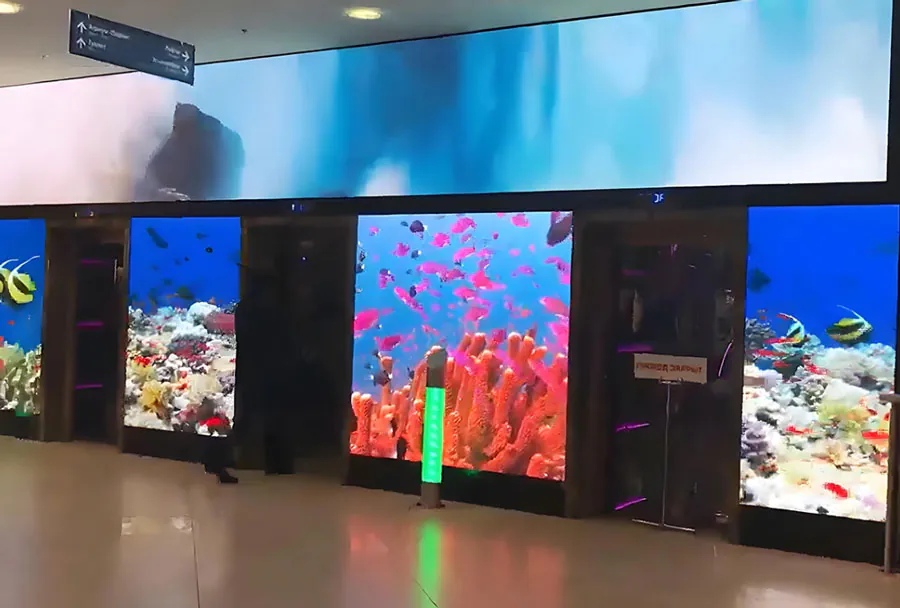
Stage LED Screens: Benefits, Design Trends & Best Practices

Stage LED Screens: Benefits, Design Trends & Best Practices matter more than ever as live productions push for sharper visuals, faster load-ins, and camera-ready output. AVIXA, the Audiovisual and Integrated Experience Association, consistently reports LED displays as one of the strongest growth areas in professional AV.
Table of Contents
- 1. Core Benefits: Why Stage LED Screens Win Over Projection
- 2. Design Trends Shaping Today’s Stage LED Screens
- 3. Best Practices for Choosing Pixel Pitch and Brightness
- 4. Content Design Best Practices for Camera-Ready Visuals
- 5. Installation, Safety, and Maintenance Best Practices
- How does a stage LED screen differ from a fixed-installation video wall?
- What causes flicker when filming a stage LED screen?
- Can the same stage LED screen work indoors and outdoors?
- How long do stage LED panels last under normal use?
- What is the difference between pixel pitch and panel resolution?
- Conclusion
Falling panel costs and better resolution have pushed LED into venues that once relied on projection alone. The core problem most teams face is simple: they compare panel prices and ignore the factors that determine whether a screen looks clean on camera, survives a tour, or pays for itself.
This guide breaks down five practical areas — core benefits, design trends, pixel pitch selection, content strategy, and maintenance workflows. Each section closes with a step you can act on immediately. Whether you manage a rental fleet, a house of worship, or a touring act, the same fundamentals apply.
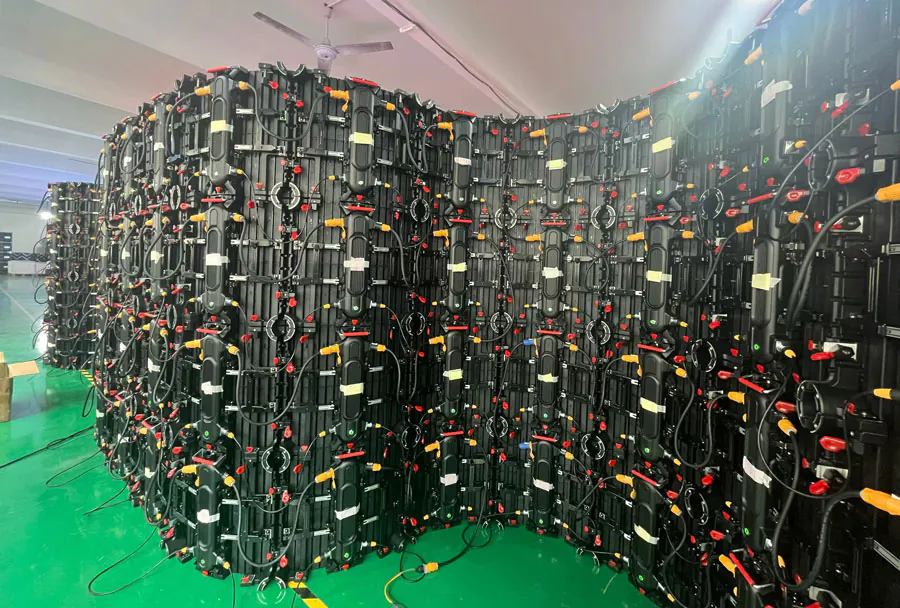
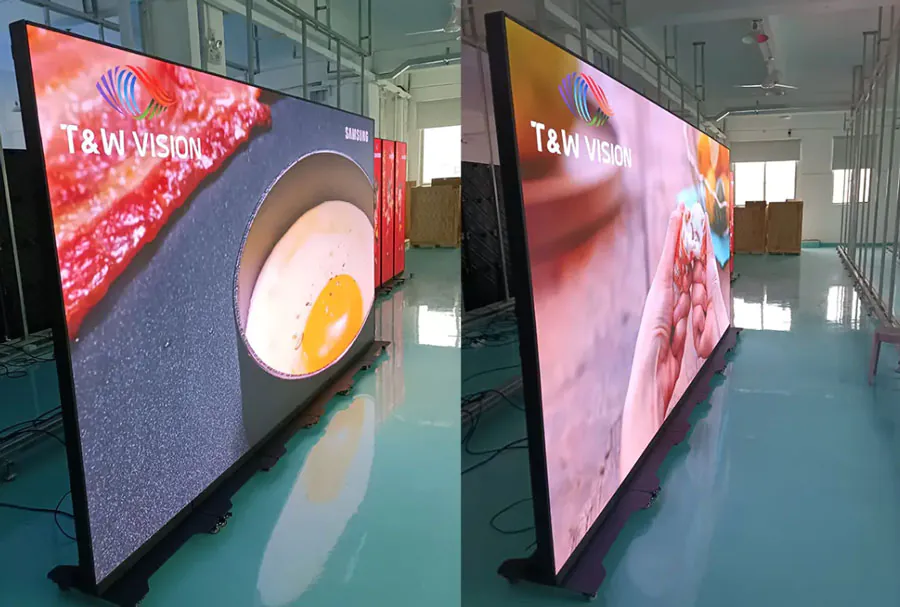
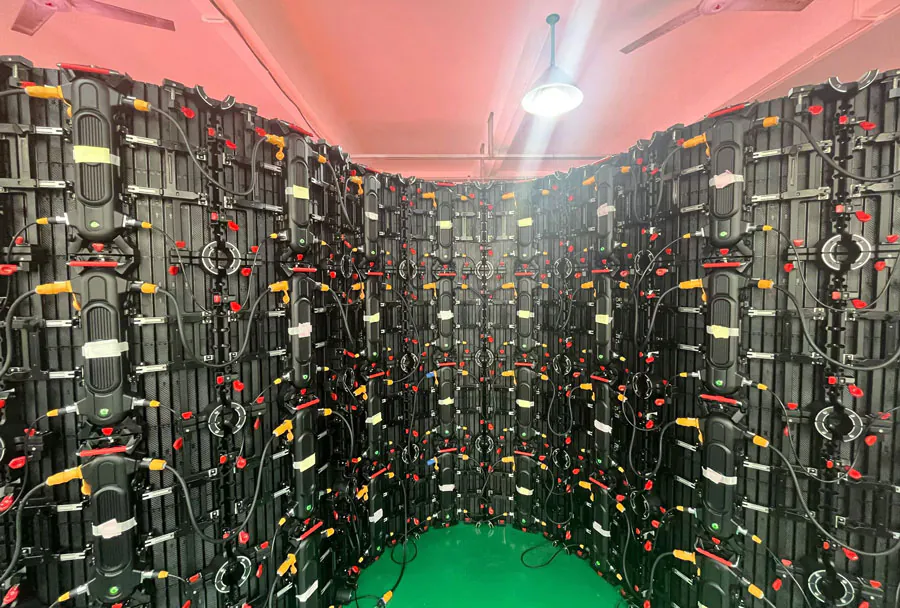
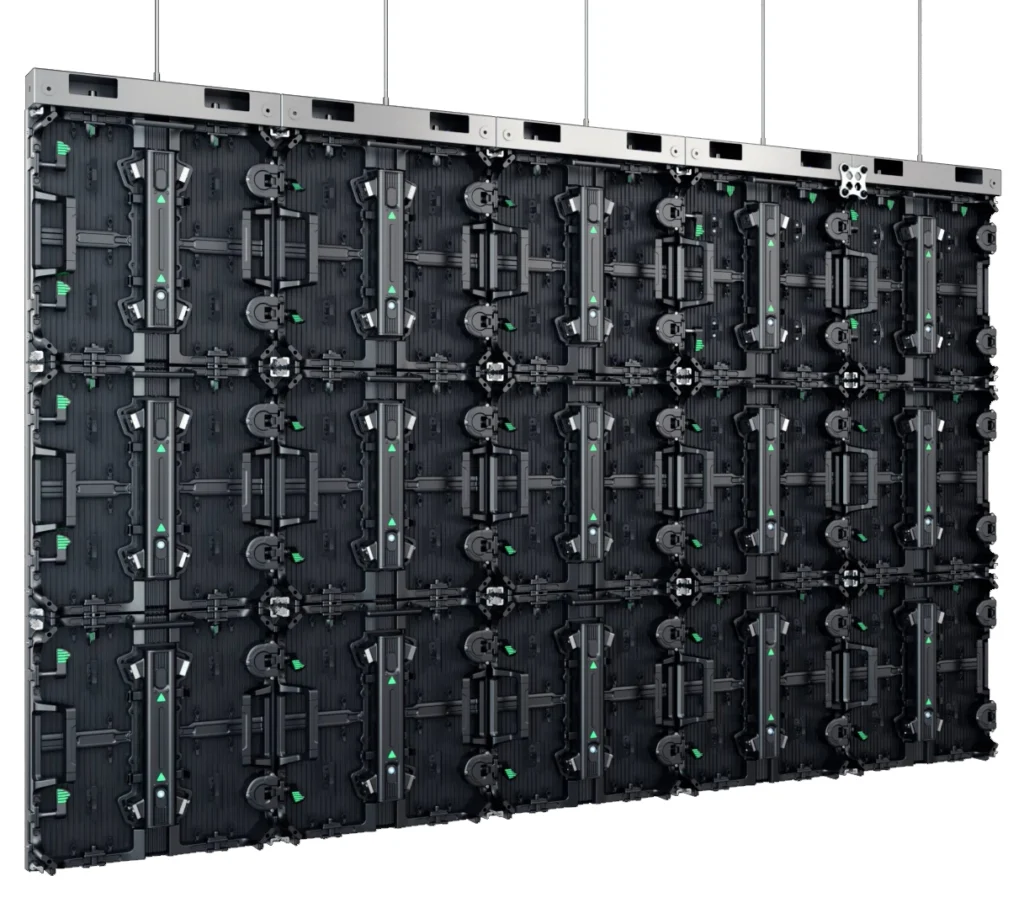
TW VISION indoor/outdoor led panel support 100% front service, everything including power supply, hub card, modules can be take out frontly. If you want a totally front service stage led screen, TW VISION PI series will work for you.
1. Core Benefits: Why Stage LED Screens Win Over Projection
Stage LED Screens: Benefits, Design Trends & Best Practices begin with brightness. Indoor LED panels routinely deliver 600 to 1,200 nits, far above what most projectors can produce under stage lighting. Performers stay visible in front of content instead of getting washed out by ambient spill.
Modularity is the second benefit. You can build a wall to any size or aspect ratio, reconfigure it between shows, and swap a single failed panel instead of replacing the entire display. This is why festivals and corporate roadshows increasingly standardize on LED over projection.
Durability seals the deal. LED modules tolerate vibration, humidity, and repeated assembly cycles better than projector lamps and lenses. Stage LED Screens: Benefits、Design Trends & Best Practices also show up in ownership cost: no lamp replacements, no convergence checks, and no bulb swaps.
How to apply this: Measure the ambient light level where your screen will sit, then choose a panel whose maximum brightness is at least double that level.
2. Design Trends Shaping Today’s Stage LED Screens
Current trends center on curves, transparency, and camera integration. Flexible and curved panels let designers wrap LED around stage architecture instead of building flat walls. Transparent LED panels preserve sightlines and can overlay existing scenery without blocking performers.
Thinner cabinets are another shift. Many manufacturers now ship panels under 10 kilograms per module, which cuts truck space and rigging weight on tour. Higher refresh rates — typically 3,840 Hz, 7680Hz or above for broadcast use — prevent on-camera flicker.
Integration with media servers is now standard. Tools like Resolume let VJs map content across irregular LED arrays in real time. Stage LED Screens: Benefits, Design Trends & Best Practices in the rental market increasingly demand panels that work with these software workflows out of the box.
According to AVIXA’s market intelligence, LED displays continue to gain share against projection in large-venue applications — a trend that shows no sign of slowing.
How to apply this: Before your next design meeting, request a sample of a curved or transparent panel to test how your existing content behaves on a non-flat surface.
3. Best Practices for Choosing Pixel Pitch and Brightness
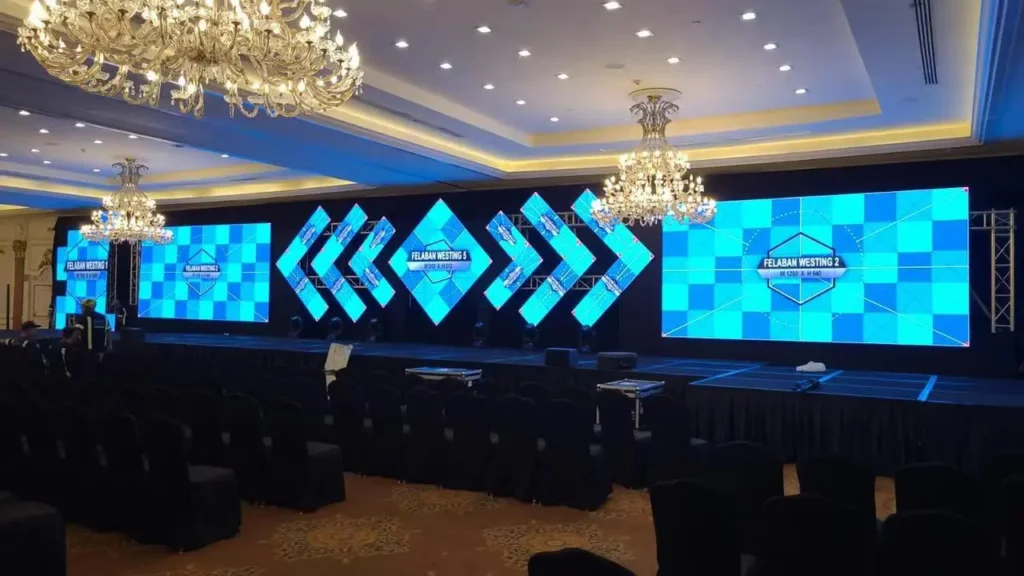
Pixel pitch is the distance in millimeters between adjacent LED clusters. The most useful rule of thumb: the minimum comfortable viewing distance in meters equals the pixel pitch in millimeters. A 2.6mm panel needs viewers at least 2.6 meters away; a 10mm panel needs about 10 meters.
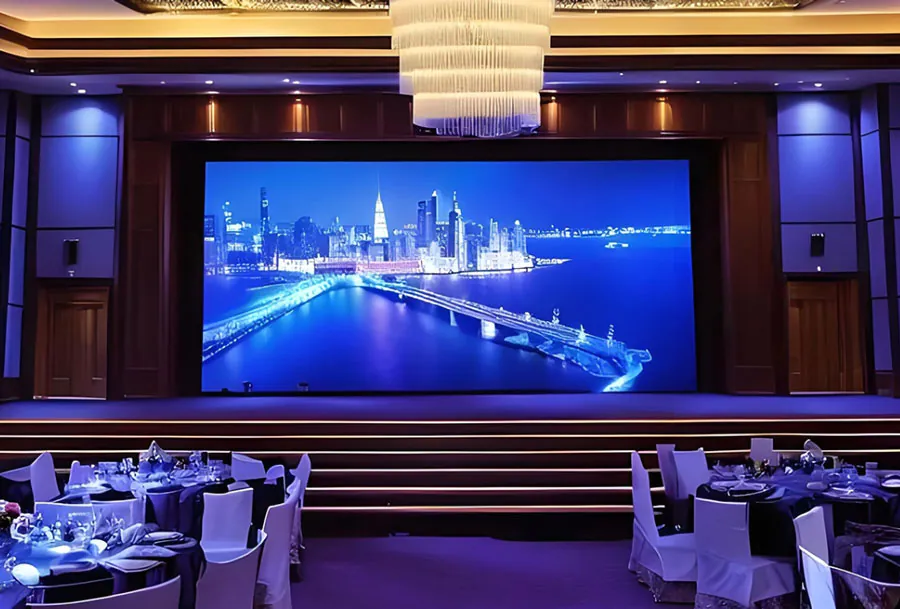
For indoor Stage LED Screens: Benefits、Design Trends & Best Practices, most productions choose pixel pitch between 1.5mm and 4mm. Outdoor and large-format stages often use 6mm to 10mm panels. Brightness demands also scale: indoor theater often works at 1,000 to 1,500 nits, while outdoor daylight requires 5,000 nits or higher.
A common scenario: a venue installs a 4.8mm panel but places the front row only two meters away. Those viewers see visible pixel gaps. The fix is choosing a finer pitch, such as 2.6mm or 2.9mm, for close viewing distances. Stage LED Screens: Benefits、Design Trends & Best Practices depend on matching pitch to the nearest seat, not the average seat.
Use the table below to match pitch to venue type.
| Pixel pitch | Best for | Minimum viewing distance | Action to take |
|---|---|---|---|
| 1.5-2.5mm | TV studios, close audience | 1.5-2.5m | Choose where cameras sit near the wall |
| 2.6-4mm | Indoor stages, churches | 2.6-4m | Match pitch to front-row distance |
| 5-10mm | Outdoor, large venues | 5-10m | Verify 5,000+ nits for daylight |
| 10mm+ | Billboards, festival walls | 10m+ | Prioritize rugged, weather-sealed cabinets |
How to apply this: Measure the distance from the screen to the closest audience member in meters, then select a pixel pitch in millimeters equal to or smaller than that number.
4. Content Design Best Practices for Camera-Ready Visuals
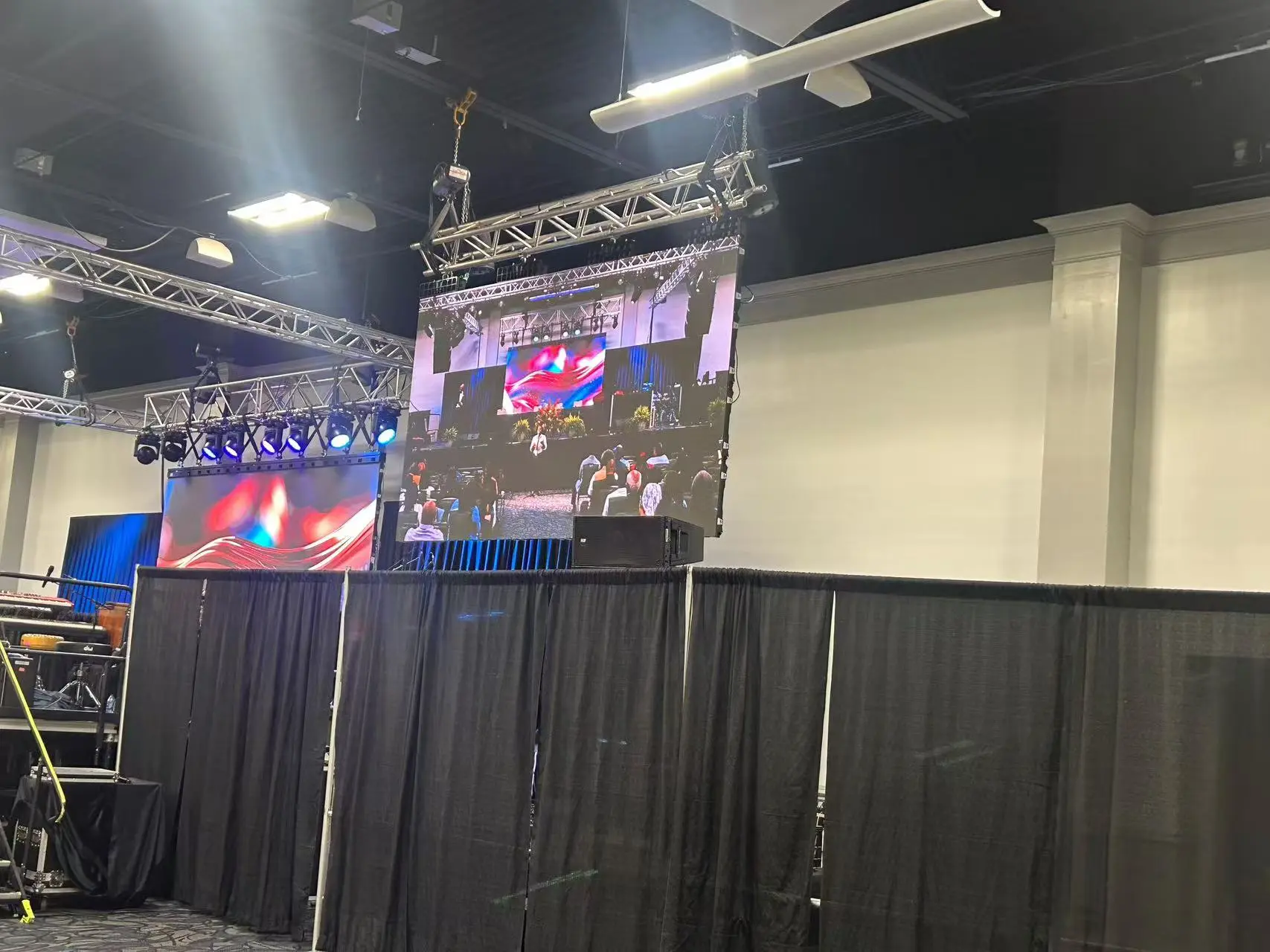
Stage LED Screens extend directly to content. LED walls are unforgiving to low-resolution source material. If your content canvas is 1,920 pixels wide but the physical wall is 10 meters wide, upscaled assets show visible blocking.
Design for the native resolution of the LED processor. Modern processors, such as Novastar control systems, accept multiple input types and scale in real time — but feeding native resolution always looks sharpest. Color calibration also matters: each panel ships with slight brightness and color variance, so load the processor’s calibration data to build a seamless image.
Avoid high-frequency patterns. Thin stripes can trigger moiré artifacts when cameras shoot the screen. For broadcast or IMAG (image magnification), keep contrast moderate and use the panel’s low-brightness mode when available. Stage LED Screens: Benefits、Design Trends & Best Practices for live broadcast require testing content through the actual camera, not just on a monitor.
How to apply this: Before finalizing your next content file, check the LED processor’s exact output resolution and render your content to match that, not your laptop’s display.
5. Installation, Safety, and Maintenance Best Practices
Rigging failures are the biggest hazard with stage LED screens. Every panel, rigging bar, and truss point must be rated for the total dynamic load — including wind on outdoor stages. Always verify the truss’ working load limit before adding a screen, and document the load calculations.
Power planning is equally critical. A large LED wall can draw tens of amps across multiple circuits. Use the manufacturer’s power calculator instead of estimating, and distribute the load across separate breakers to avoid a single point of failure. AVIXA publishes display-safety reference guidelines many production teams adopt as baseline standards.
Spares are non-negotiable. Stage LED Screens: Benefits、Design Trends & Best Practices from seasoned touring crews always include a spare-parts kit: two extra LED modules, one spare power supply, one spare receiving card, and the calibration file on a USB drive. A failed component mid-show is common enough to plan for.
Panel alignment checks during load-in, using a straightedge and software-based seam correction, prevent visible gaps that cameras exaggerate. Stage LED Screens: Benefits、Design Trends & Best Practices for maintenance depend on documenting every repair and firmware update.
How to apply this: Build your spare-parts kit before the next show — two modules, one power supply, one receiving card, and the calibration file.
6. TW VISION Stage LED Screen Recommendation
Based on TW VISION’s manufacture experience on supplying led screen for concerts, conferences, exhibitions, and live events, the stage screen selection will more replying on ROI.
Purchasing an LED display is a significant investment, so you need to consider both your budget and trends in your local market. If you want to stay ahead of the competition and lead the market, choosing a fine-pitch LED display can be a smart long-term investment.
At the same time, you need to consider the type of events you plan to host. For example, a P3.9 LED screen is often sufficient for large concerts because the audience typically views the screen from a greater distance. However, conferences usually require a finer pixel pitch, such as P2.6 or even P1.9, because attendees are seated closer to the screen and need sharper text and images.
You should also consider your return on investment (ROI). Before purchasing an LED display, ask yourself: How many events will I need to host to recover my investment? Answering this question can help you set a realistic budget, choose the right specifications, and make a more informed purchasing decision.
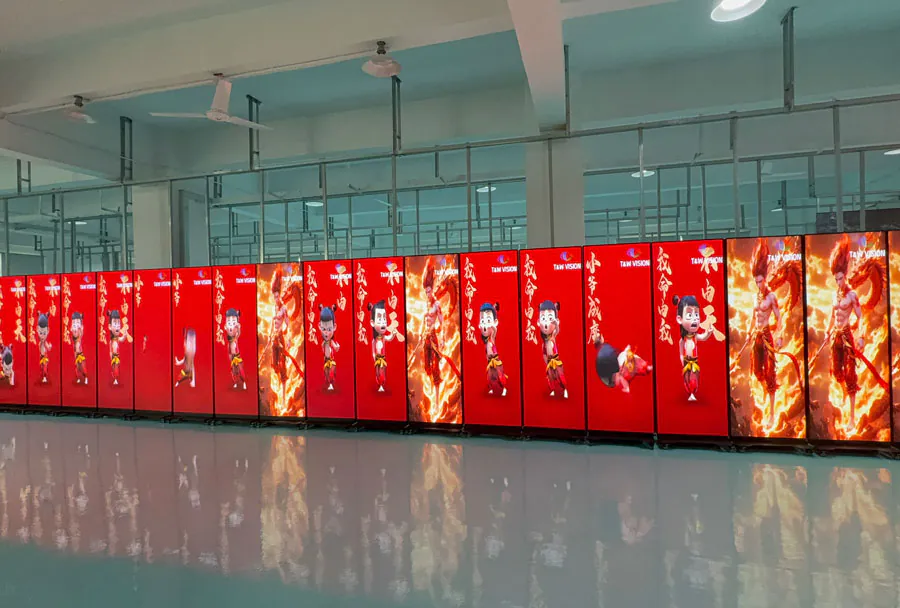
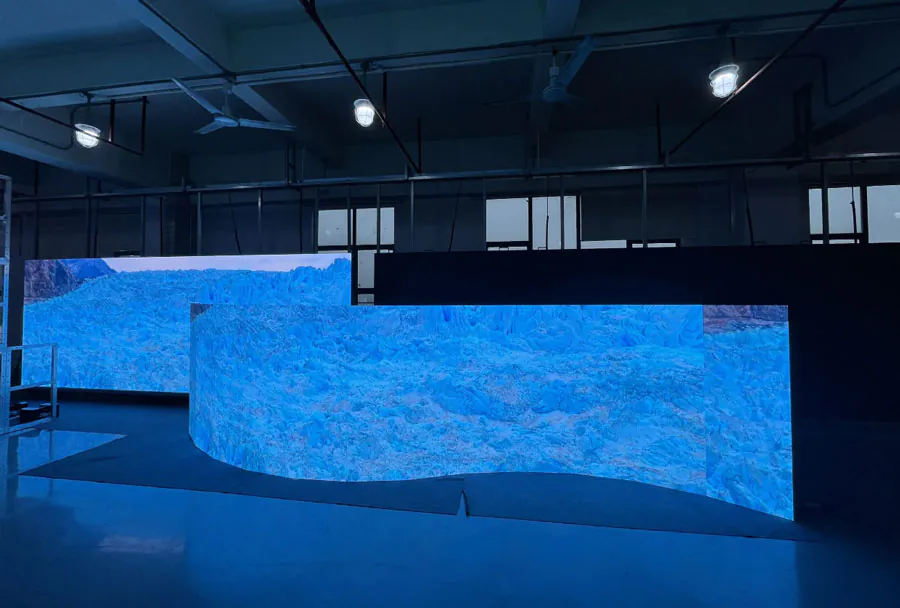
P1.9 indoor stage LED screens for live show usage. Flexible cabinet support -22.5~22.5 degree, 8 panels can make a circle with diameter 1.2 meter.-PD series, TW VISION.
Frequently Asked Questions About Stage LED Screens: Benefits、Design Trends & Best Practices
How does a stage LED screen differ from a fixed-installation video wall?
Stage versions ship in flight cases, use quick-lock rigging, and tolerate repeated assembly cycles. Fixed walls use lighter enclosures with deeper service access. The reverse is also risky: installation-grade panels rarely survive touring. One edge case — buying rental-grade panels for a permanent venue often voids the warranty.
Confirm terms before committing to Stage LED Screens: Benefits、Design Trends & Best Practices in a fixed setting.
What causes flicker when filming a stage LED screen?
Flicker appears when a panel’s refresh rate conflicts with the camera’s shutter speed. Broadcast-safe panels run at 3,840 Hz or higher. If your consumer DSLR still shows scan lines, adjust the shutter angle, not the screen. Test through the actual camera before doors open.
This issue catches many videographers unfamiliar with Stage LED Screens: Benefits、Design Trends & Best Practices in live-event production.
Can the same stage LED screen work indoors and outdoors?
Yes, but outdoor use demands 5,000 nits or higher brightness plus IP65 weather sealing. Indoor panels rarely carry that rating. A specific scenario: a touring act brings a 2.9mm indoor screen to a daylight festival and finds the image unreadable. For dual-purpose work, choose outdoor-rated, 4mm-or-coarser pitch when selecting Stage LED Screens: Benefits、Design Trends & Best Practices equipment.
How long do stage LED panels last under normal use?
Manufacturers commonly rate LEDs at 50,000 to 100,000 hours to half brightness, but real-world failure depends on handling, heat, and power quality. Typically, one dead pixel cluster appears before a whole panel fails. Keep spare modules and run brightness at the minimum the show allows to extend the life of Stage LED Screens: Benefits、Design Trends & Best Practices investments.
What is the difference between pixel pitch and panel resolution?
Pixel pitch is the physical distance between LED centers in millimeters; resolution is the total pixel count. A 3mm module might run 128×128 pixels, but the wall’s total resolution depends on how many modules you tile. This distinction matters when scaling content.
Understanding it helps you avoid overpaying for fine pitch when planning Stage LED Screens: Benefits、Design Trends & Best Practices for a deep auditorium.
Conclusion
– Stage LED screens win on brightness, modularity, and long-term durability — but pitch and brightness selection make or break the result.
– Today’s design trends favor curved, transparent, and camera-friendly panels with high refresh rates.
– Content must match the processor’s native resolution, and calibration data is not optional.
– A documented spare-parts kit and power plan prevent most mid-show failures.
Stage LED Screens: Benefits、Design Trends & Best Practices are within reach for any production team that applies these five fundamentals. Your next step: measure the distance from your screen position to the nearest audience seat.
If that distance in meters is less than your panel’s pixel pitch in millimeters, schedule a demo of a finer-pitch panel before your next event — or pull the front row back. Small measurement changes prevent expensive, visible mistakes.
Related Articles
- LED Video Wall Atlanta: 10 : Expert Guide for Businesses
- Indoor LED Screen Atlanta: 5 : Complete Buying Guide
- mobile led screen rental: 5 Best for Events and Promotions