In-depth Analysis of TW VISION LED Display Manufacturer’s Smart Manufacturing and Quality Control

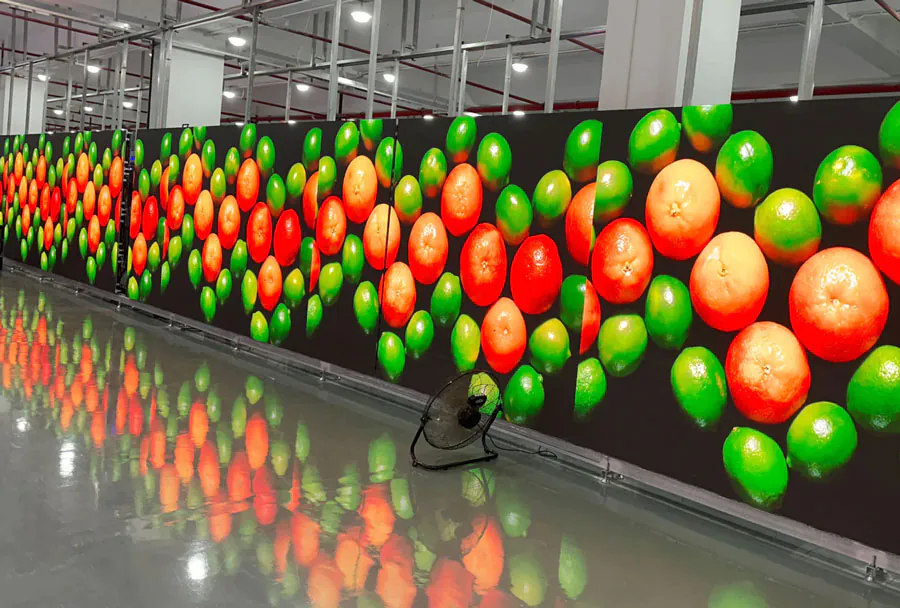
In the fiercely competitive global led display market, manufacturers are relentlessly pursuing higher pixel densities, greater reliability, and more seamless visual experiences. Achieving these goals consistently at scale is a monumental challenge that hinges on two critical pillars: advanced manufacturing processes and uncompromising quality control. TW VISION, as a prominent player in the industry, has strategically invested in building a robust smart manufacturing ecosystem integrated with a data-driven quality management system. This in-depth analysis examines how TW VISION leverages smart manufacturing and rigorous quality control to solidify its market position, ensure product excellence, and meet the evolving demands of professional clients.
1. The Foundation: Smart Manufacturing as a Strategic Imperative
Smart manufacturing at TW VISION is not merely an automation upgrade; it is a holistic, system-wide transformation. It represents a strategic shift from traditional, linear production to a connected, agile, and intelligent operation. The core of this system is the integration of cyber-physical systems, the Internet of Things (IoT), big data analytics, and artificial intelligence (AI) across the entire production chain.
The journey begins with automated material handling and SMT (Surface Mount Technology) lines. Robotic arms and automated guided vehicles (AGVs) ensure precise and efficient movement of components, from PCB panels to thousands of LED chips. The SMT process, critical for mounting micro-components, is fully automated with high-precision placement machines equipped with vision systems. These machines operate with micron-level accuracy, ensuring every red, green, and blue LED chip is placed perfectly. Crucially, every major component—from the driver ICs to the LEDs themselves—is traceable via unique barcodes or QR codes. This creates a digital thread, linking each physical part to its origin, specifications, and test data throughout its lifecycle.
Beyond assembly, the smart factory leverages a centralized Manufacturing Execution System (MES). This system acts as the “central nervous system,” collecting real-time data from every machine, workstation, and test point. It monitors production status, machine performance, process parameters, and yield rates. If a soldering oven’s temperature deviates from the set profile or a placement machine shows a slight drift in accuracy, the MES can trigger alerts for immediate corrective action, preventing batches of non-conforming products.
2. The Core Process: Precision Assembly and Automated Calibration
The assembly of an LED display module is a delicate process. After SMT, the populated PCB undergoes rigorous automated optical inspection (AOI) to detect any soldering defects, missing components, or misalignments before proceeding. The module assembly, involving the attachment of masks, and the final cabinet assembly are guided by digital work instructions on operator terminals, minimizing human error.
A standout feature of TW VISION’s smart manufacturing is its integrated automated calibration and correction system. For high-end displays, uniform brightness and color consistency across millions of pixels are non-negotiable. Post-assembly, each module passes through a dedicated calibration tunnel. Here, high-resolution cameras and spectroradiometers capture the brightness and chromaticity coordinates of every single LED pixel. This massive dataset is processed in real-time by AI algorithms that map the performance of each diode.
The system then applies two key corrections:
Brightness Correction: It adjusts the drive current to each LED to achieve a perfectly uniform brightness level (white balance) across the entire module.
Color Coordinate Correction: It fine-tunes the color output of individual LEDs to ensure they all align precisely within the target color gamut (e.g., Rec. 709 or DCI-P3), eliminating color patches or “mura” effects.
This data is stored on a dedicated correction chip on the module itself. When the display powers on, this chip applies the corrections, guaranteeing consistency straight out of the box. This process, executed at high speed on the production line, is what enables TW VISION to deliver the “seamless canvas” quality required for broadcast studios, control rooms, and premium rental applications.
3. The Guardian: A Multi-Layer, Data-Driven Quality Control Framework
Quality control at TW VISION is pervasive, predictive, and preventive, embedded within the smart manufacturing flow rather than being a final gatekeeper. It operates on multiple layers:
Layer 1: Incoming Quality Control (IQC): All incoming materials—LEDs, ICs, PCBs, power supplies, cabinets—are subjected to stringent sampling tests based on AQL (Acceptable Quality Level) standards. Advanced testing equipment verifies electrical parameters, mechanical dimensions, material composition, and environmental resilience (like testing LEDs for anti-sulfurization).
Layer 2: In-Process Quality Control (IPQC): This is the heart of the real-time quality system. Operators and automated stations perform checks at every critical process step. The AOI machines post-SMT, functional testing of driver boards, and the calibration process are all part of IPQC. Statistical Process Control (SPC) charts are generated automatically, monitoring key parameters for trends. Any sign of a process drifting out of control triggers a root-cause analysis.
Layer 3: Final Quality Control (FQC) and Outgoing Quality Control (OQC): Before a module or cabinet leaves its production line, it undergoes a full functional test, including a final visual inspection under standardized lighting conditions. For finished cabinets, a “burn-in” test is often conducted, where units are powered on for an extended period (e.g., 48-72 hours) under controlled thermal stress to identify and eliminate early-life failures—a process known as “infant mortality” screening.
4. The Intelligence: Big Data, AI, and Continuous Improvement
The true power of TW VISION’s system lies in the synthesis of data from manufacturing and quality control. The massive datasets from MES, test results, calibration data, and even field performance feedback are aggregated in a cloud-based data platform.
AI and machine learning models analyze this data to uncover hidden insights. For example:
Predictive Maintenance: AI can predict when a critical machine, like a solder paste printer, is likely to require maintenance based on vibration, temperature, and performance history, minimizing unplanned downtime.
Yield Optimization: By correlating final test failure modes with specific process parameters from earlier stages, engineers can pinpoint the exact cause of a recurring defect and adjust the process proactively.
Supplier Quality Management: Performance data on components from different suppliers or batches can be analyzed, providing objective feedback for supplier evaluation and component qualification.
This creates a closed-loop system of continuous improvement (Kaizen). Quality is no longer a static target but a dynamically improving benchmark. Insights from data lead to refinements in process parameters, design tweaks, and even supplier specifications, constantly elevating the baseline quality and reliability of the products.
5. Delivering Trust Through Technological Integration
TW VISION’s commitment to smart manufacturing and quality control is fundamentally a commitment to customer trust and product excellence. By weaving together automation, IoT connectivity, real-time data analytics, and AI, the company has built a manufacturing ecosystem that is not only efficient but also inherently precise, consistent, and self-improving.
For clients—from event organizers and rental companies to Fortune 500 corporations and government agencies—this translates into tangible benefits: displays with exceptional uniformity and color fidelity, reduced failure rates leading to lower total cost of ownership, and the confidence that each unit will perform as specified, show after show, year after year. In an industry where a single faulty pixel can disrupt a multi-million-dollar production, TW VISION’s data-driven, intelligent approach to manufacturing and quality control provides the essential foundation for reliability. It demonstrates how deep technological integration in the factory is the key to delivering flawless visual experiences on the world stage.