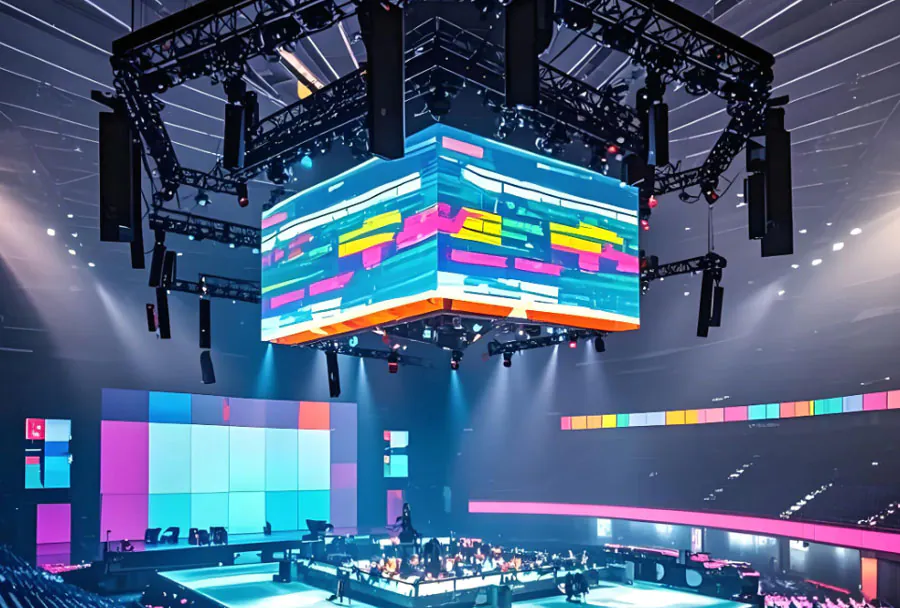
Top Trends Shaping the Future of Outdoor Digital Signage in 2026


Outdoor digital signage is evolving faster than many stakeholders anticipated. Advances in connectivity, artificial intelligence, display technology, and sustainability are converging to turn static roadside screens into dynamic, context-aware communication platforms. Municipal planners, advertisers, retailers, and system integrators all face new opportunities — and new responsibilities — as the market pivots toward smarter, greener, and more measurable out-of-home (OOH) experiences.
Top Trends Shaping the Future of Outdoor Digital Signage in 2026
1. Edge AI and Contextual Content Delivery
Edge computing combined with AI has moved from pilot projects to mainstream deployment. Outdoor screens are now processing video feeds, sensor data, and contextual signals locally to deliver content tailored to real-time conditions — weather, crowd density, time of day, and inferred audience demographics. The benefits are twofold: lower latency (critical for interactive experiences) and reduced backhaul bandwidth, which lowers operational cost.
Practical impact: retailers use edge AI to adapt promotions to passerby profiles; transit authorities display route-specific advisories based on crowd flow predictions. For operators, designing performant edge pipelines and ensuring model updates at scale are the main integration challenges.
Recommendation: prioritize modular edge platforms with standardized APIs and built-in model lifecycle management to keep content relevant and compliant.
2. 5G, Private LTE, and Seamless Connectivity
5G and private LTE networks are unlocking high-bandwidth, low-latency applications for outdoor signage — including live streaming, high-resolution dynamic ads, and multi-screen synchronized experiences. Where fiber is impractical, these wireless networks provide the reliability and speed required for advanced content types, especially in temporary deployments (events, pop-ups).
Considerations: network selection now becomes a strategic decision tied to application needs and geographic constraints. Network slicing and QoS controls let operators prioritize critical telemetry and content delivery while isolating ad traffic.
Recommendation: deploy hybrid connectivity strategies combining wired backhaul, 5G, and edge caching to maximize uptime and content fidelity.
3. Sustainability and Energy-Efficient Displays
Sustainability has become a core requirement rather than a marketing add-on. New display technologies (microLED, low-power LCD with advanced local dimming, e-paper variants for low-refresh contexts) plus power-optimized SoCs reduce energy consumption dramatically. Solar-powered enclosures and intelligent power management (content-aware brightness, night modes, occupancy-triggered wake/sleep cycles) help operators meet corporate ESG goals and lower OPEX.
Regulatory pressure in many cities is accelerating the replacement of old, power-hungry units. Installations that demonstrate carbon reduction and life-cycle planning gain easier permitting and community acceptance.
Recommendation: evaluate total cost of ownership across acquisition, energy, and end-of-life recycling — prioritize displays with modular replaceable components and verifiable sustainability claims.
4. Privacy-First Audience Measurement and Programmatic DOOH
Audience measurement is maturing into privacy-first, aggregated analytics. Rather than collecting personally identifiable data, modern systems use anonymized computer-vision metadata, Bluetooth/Wi-Fi beacons in hashed form, and aggregated device counts to enable programmatic buying and real-time targeting. This enables dynamic pricing and contextual ad swaps while aligning with evolving data protection regulations.
Advertisers benefit from programmatic DOOH’s ability to react to external signals — for instance, switching creatives in response to local sports results or traffic incidents. The balance between targeting precision and privacy compliance will be a defining commercial battleground in 2026.
Recommendation: adopt open standards for measurement and ensure transparent privacy disclosures; contract partners who can certify compliance with emerging regional regulations.
5. Robust Outdoor Hardware and Modular Design
The harsh outdoor environment (temperature extremes, moisture, vandalism, pollution) demands hardware designed for longevity and maintainability. The trend is toward modular enclosures that allow field-replaceable components — camera modules, power units, and display panels — minimizing downtime and lowering lifecycle costs. Anti-glare coatings, polarized lenses, and high-brightness adaptive backlights make daytime readability far better than earlier generations.
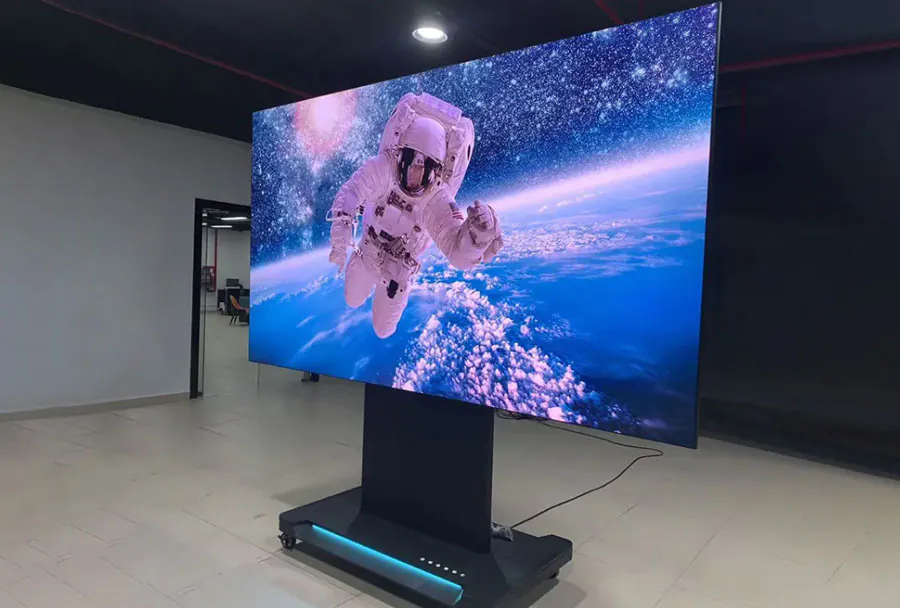
Standardization across vendors is slowly increasing, enabling faster upgrades and reducing lock-in. For city planners, modular systems mean future-proofing: swapping in new panel technology without replacing the entire pole or enclosure.
Recommendation: specify IP ratings, serviceability metrics (MTTR/MTBF), and upgrade paths in procurement contracts.
6. Contactless Interactivity and Multimodal Experiences
COVID-accelerated shifts toward touchless interactions persist. Gesture recognition, voice commands (with constrained vocabularies and local processing), NFC taps, and QR-code-triggered microsites allow safe and convenient engagement. Complementary multimodal experiences — combining screen content with push notifications to opt-in mobile users — create a bridge between physical advertising and mobile conversion.
Designers must balance richness with accessibility and privacy. Local processing for voice and gesture reduces data exposure and latency, but requires robust on-device models and frequent updates.
Recommendation: design interactions that degrade gracefully — e.g., provide both QR and visual call-to-action alternatives — and ensure ADA compliance for public installations.
7. Cybersecurity and Fleet Management at Scale
With signage becoming a distributed compute layer, attack surfaces expand. Secure boot, signed firmware, hardware root of trust, and end-to-end encryption are no longer optional. Fleet management platforms now incorporate automated patching, role-based access control, granular telemetry, and anomaly detection to prevent compromise and ensure uptime.
Operators must assume adversarial attention — both to protect customer data and to avoid physical risks stemming from screen takeover (misinformation, offensive content). Regulatory standards and insurance underwriters increasingly expect demonstrable security controls.
Recommendation: embed security requirements in procurement, mandate third-party audits, and operationalize incident response processes.
8. AR and Immersive Layering
Augmented reality overlays and spatially aware content extend the utility of outdoor screens. Rather than replacing physical displays, AR complements them by enabling deeper engagement for customers with smartphones or wearable devices. Campaigns that combine on-screen prompts with AR coupons or wayfinding improve dwell-time engagement and measurable conversions.
This trend depends on open AR standards, improved mobile AR tooling, and careful UX design to prevent cognitive overload in busy outdoor settings.
Recommendation: pilot AR features tied to clear conversion metrics and ensure content loads quickly on mainstream mobile devices.
9. Measurement, Attribution, and Cross-Channel Integration
Attribution models for DOOH have improved through deterministic and probabilistic linkages to mobile conversions, in-store behaviors, and online metrics. Platforms now offer dashboards that correlate impressions and contextual triggers with footfall lift and incremental sales. Cross-channel orchestration tools let advertisers run coordinated campaigns across OOH, social, and search, improving efficiency and creative relevance.
As measurement becomes more sophisticated, creative teams must design assets optimized for short viewing windows and for multi-channel continuity.
Recommendation: integrate DOOH data with wider martech stacks and insist on consistent identifiers and time-synced analytics.
Analysis Table: Top Trends Overview
| Trend | Impact | Primary Drivers | Key Challenges | Time to Maturity |
|---|---|---|---|---|
| Edge AI & Contextual Content | High | Low-latency needs, compute cost reduction | Model management, hardware heterogeneity | Short (1–2 years) |
| 5G & Private Networks | High | Demand for bandwidth, mobility | Coverage gaps, spectrum costs | Medium (2–4 years) |
| Sustainability & Energy Efficiency | High | Regulation, OPEX reduction | Upfront cost, verification of claims | Medium (2–3 years) |
| Privacy-First Measurement & Programmatic DOOH | High | Ad demand for targeting, privacy laws | Data accuracy vs. anonymity balance | Medium (2–3 years) |
| Modular Hardware & Serviceability | Medium | Lifecycle cost concerns, standards | Vendor alignment, retrofit complexity | Short–Medium (1–3 years) |
Strategic Recommendations for Stakeholders
– For brands and advertisers: craft creatives that adapt in real time and consider short-format narratives optimized for outdoor attention windows. Factor in measurement objectives from campaign inception.
– For integrators and hardware vendors: emphasize modularity, secure device identity, and documented upgrade paths. Provide transparent performance and sustainability metrics.
– For cities and planners: create procurement frameworks that reward energy efficiency, accessibility, and open data APIs. Require demonstrable community benefits and clear maintenance plans.
– For system operators: invest in robust fleet management and cybersecurity practices, and adopt hybrid connectivity strategies to ensure consistent service levels.
As outdoor digital signage becomes an integrated part of urban infrastructure, the distinction between signage, sensor networks, and public information systems will blur. Those who prioritize interoperability, privacy, sustainability, and measurable outcomes will lead the next wave of deployments. 2026 is not just about brighter screens — it’s about smarter systems that respect people, place, and purpose while delivering tangible business and civic value.