Cost Effective Strategies for Deploying Outdoor Digital Signage Networks


Outdoor environments present a unique set of challenges for digital signage—exposure to weather, variable power availability, connectivity limitations, and vandalism risk all increase project complexity and cost. Successful deployments balance upfront capital with ongoing operating expenses while maximizing uptime and audience engagement. The strategies below focus on reducing total cost of ownership (TCO) without compromising reliability or impact, covering planning, hardware selection, network design, content management, installation methods, and maintenance practices.
Cost Effective Strategies for Deploying Outdoor Digital Signage Networks
Understand and Prioritize Cost Drivers
Begin by identifying the biggest cost drivers for your particular sites. Typical major contributors include:
– Hardware ruggedness and specialized enclosures for weather and impact resistance.
– Power provisioning and backup solutions in locations without convenient grid access.
– Secure, resilient connectivity (cellular, fiber, or private wireless).
– Installation complexity (permits, cranes, traffic control).
– Ongoing content management, monitoring, and maintenance.
Prioritization should be based on risk-adjusted impact: sites with high foot traffic and revenue potential justify higher initial spend, while low-traffic or temporary placements benefit from more economical solutions.
Smart Site Survey and Modular Planning
A detailed site survey reduces surprises that drive up costs. Standardize your survey process to collect consistent data: geolocation, sight lines, ambient light, power availability, mounting structure, local ordinances, and cellular/fiber signal strength. Use checklists and mobile forms to avoid rework.
Modular planning enables cost containment. Classify sites into tiers (premium, standard, temporary) and design modular hardware/software bundles per tier. This standardization reduces procurement complexity and allows bulk purchasing, which often yields significant discounts.
Optimize Hardware Selection
Choosing the right hardware is a balance between initial cost and lifespan. Consider the following strategies:
– Use commercial-grade displays with IP65+ enclosures and anti-glare coatings for high-exposure sites; lower-exposure locations can use cost-effective models with weatherproof housing.
– Prioritize displays with efficient thermal management. Passive cooling and designs that avoid constant heating/cooling cycles reduce component failure and energy consumption.
– Choose players that support remote management, power cycling, and local caching to minimize truck rolls and bandwidth costs.
– Consider edge computing modules for networks with many screens; processing ads and analytics locally reduces bandwidth and can improve responsiveness.
Avoid overspecifying: buying the highest-end, highest-brightness units for every site substantially inflates costs. Instead, match brightness and durability to the environmental needs determined during the survey.
Reduce Network and Power Costs
Connectivity and power are recurring expenses. Strategies to minimize these costs include:
– Use a hybrid connectivity approach: where fiber or wired connections are available and affordable, prefer them for lower ongoing costs. For remote or temporary sites, cellular (4G/5G) with optimized data plans can be more cost-effective.
– Negotiate aggregated data plans across your network to reduce per-site cellular fees.
– Implement on-device caching to limit constant streaming and reduce data usage.
– Use power-efficient players and schedule display times to avoid running at full capacity during low-traffic hours.
– Consider solar or hybrid solar-grid setups for off-grid sites. While upfront costs are higher, long-term savings and reduced site visits may justify the investment for remote locations.
– Employ smart power management and remote reboot capabilities to reduce technician dispatches.
Streamline Installation and Mounting
Installation can be a major cost center. Lower installation costs using:
– Standardized mounting systems and templates to reduce custom fabrication and installation time.
– Pre-assembly and factory-configured components to minimize on-site labor.
– Local installation partners trained on your standardized process to reduce travel and reduce scheduling conflicts.
– Early coordination with permitting authorities to reduce hold-ups and associated costs.
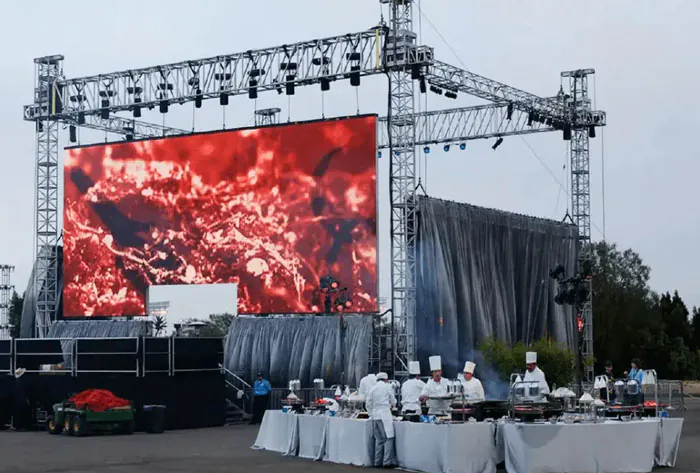
Temporary installations (pop-ups, events) should use quick-mount frames and rental displays to eliminate permanent infrastructure costs.
Leverage Centralized Content Management and Automation
Content management systems (CMS) are central to operational efficiency. Key cost-effective CMS practices:
– Use a single, scalable CMS across your network to simplify licensing and training.
– Automate routine content updates, scheduling, and health-check alerts.
– Implement role-based access to reduce the risk of costly content mistakes and simplify workflows.
– Integrate performance analytics to measure which content drives engagement and revenue; shift spend away from low-performing creative.
A robust CMS reduces manual intervention and enables dynamic ad insertion, which can increase ad revenue and pay for system costs.
Maintenance, Monitoring, and Proactive Support
Ongoing maintenance is where TCO accumulates. Strategies to reduce these costs include:
– Remote monitoring with proactive alerts for screen health, connectivity, temperature, and vandalism attempts to allow remote remediation or scheduled, combined visits.
– Use predictive maintenance: track failure patterns and replace components before catastrophic failure.
– Bundle maintenance into service contracts by region to reduce per-visit costs and capitalize on technician routing.
– Train local staff or partners to perform basic inspections and fixes reducing reliance on specialized technicians.
Documenting maintenance procedures and common troubleshooting reduces time per service call and lowers costs.
Measure ROI and Optimize Continuously
Track KPIs directly linked to cost and revenue:
– Uptime percentage and number of truck rolls.
– Data usage per player and associated connectivity cost.
– Energy consumption per device and per site.
– Ad revenue per screen and engagement metrics (dwell time, interactions).
– Cost per impression.
Use A/B tests with different hardware, brightness levels, scheduling, and content strategies to refine deployments and lower costs while maintaining or increasing revenue.
Practical Deployment Scenarios and Cost Trade-offs
– High-visibility urban centers: invest in higher-brightness, vandal-resistant enclosures, fiber connectivity, and premium ad inventory. Expect higher upfront costs but also higher CPM potential and faster payback.
– Suburban commercial areas: medium-spec displays with cellular backup and solar options for pole-mounted signs achieve a balance between cost and durability.
– Temporary/seasonal campaigns: use rented displays and quick-mount solutions. Lower hardware costs and shorter commitments minimize TCO for limited runs.
Five-Column Analysis Table
| Strategy | Upfront Cost | Ongoing Cost | Impact on ROI | Implementation Complexity |
|---|---|---|---|---|
| High-durability hardware (IP65+, anti-glare) | High | Low–Medium (less failure) | Positive (longer lifespan, fewer truck rolls) | Medium |
| Hybrid connectivity (fiber + cellular backup) | Medium–High | Low–Medium | Positive (reliable ads, higher uptime) | Medium |
| Solar/battery power for off-grid sites | High | Low | Neutral–Positive (saves recurring grid costs, reduces site visits) | High |
| Centralized CMS with automation | Medium | Low–Medium (licenses, support) | High (reduced labor, better monetization) | Medium |
| Standardized mounts & pre-assembly | Low–Medium | Low | Positive (reduces installation cost/time) | Low |
Vendor and Procurement Tips
– Negotiate lifecycle-based contracts: include replacement, monitoring, and upgrade clauses tied to performance SLAs rather than simple hardware procurement.
– Seek vendors offering modular upgrade paths (e.g., swapping media players without replacing the entire display).
– Consolidate vendors where practical to reduce administrative overhead, but retain competitive bidding for large purchases.

– Verify warranties and evaluate whether extended warranties or service agreements lower Long-Term Cost of Ownership when factoring in uptime and replacement costs.
Regulatory and Community Considerations
Local permitting, zoning rules, and community standards can create hidden costs or delays. Early engagement with municipal authorities can reduce permitting time and associated soft costs. Design signage to meet or exceed local safety and aesthetic standards to avoid costly redesigns or removals.
Final Recommendations
To deploy outdoor digital signage networks cost-effectively:
– Start with a rigorous site classification and survey process to match solutions to actual needs.
– Standardize hardware, mounts, and processes to reduce procurement and installation friction.
– Invest in a centralized CMS and remote management tools to minimize manual operations.
– Use a hybrid connectivity and power approach tailored to each site’s economics.
– Prioritize maintenance strategies that emphasize remote remediation and predictive replacement.
By thoughtfully balancing upfront investment against ongoing operational costs—and continuously measuring performance—you can deploy an outdoor digital signage network that maximizes ROI, minimizes interruptions, and remains adaptable as technology and market conditions evolve.