Technical Breakthroughs of TW VISION LED Board Manufacturer in Automotive Dashboard Display Field

The modern automotive cockpit has transformed from a cluster of analog gauges into a dynamic, digital command center. At the heart of this revolution lies the dashboard display, a critical interface for safety, navigation, and vehicle telemetry. Driving this evolution forward is TW VISION, an LED board manufacturer that has established itself as a pivotal force through a series of targeted technical breakthroughs. By focusing on the core challenges of automotive-grade performance—reliability, clarity, integration, and intelligence—TW VISION is not just supplying components but enabling the next generation of driver experiences.
Pioneering Ultra-High Reliability and Extended Lifespan
The automotive environment is one of the harshest for electronics, subject to extreme temperature fluctuations, constant vibration, humidity, and long operational hours. TW VISION’s foundational breakthrough lies in its mastery of materials science and manufacturing processes to achieve unparalleled reliability.
The company employs automotive-grade LEDs with exceptional luminous efficacy and stability, sourced from top-tier suppliers and subjected to rigorous binning processes. This ensures consistent color and brightness across every display, a non-negotiable requirement for safety-critical information. Beyond the LEDs, TW VISION’s innovation shines in its printed circuit board (PCB) construction. Utilizing high-temperature laminates like polyimide or advanced FR-4 composites, their boards resist thermal expansion and contraction that can lead to solder joint failure.
Furthermore, TW VISION has perfected conformal coating techniques, applying a uniform, protective polymeric layer that shields the board from condensation, dust, and chemical contaminants. Their manufacturing lines implement Automated Optical Inspection (AOI) and rigorous thermal cycling tests, simulating years of vehicle life in a matter of weeks. This relentless focus on durability results in LED boards that meet and exceed AEC-Q102 (stress qualification for optoelectronic components) and other stringent automotive standards, guaranteeing a lifespan that aligns with the vehicle’s own, often exceeding 100,000 hours of operation.
Achieving Superior Optical Performance and Readability
A display is useless if it cannot be seen clearly under all conditions. TW VISION’s technical advancements in optical design ensure that information is instantly legible, day or night, in direct sunlight or total darkness.
A key breakthrough is in achieving an exceptionally high contrast ratio and wide viewing angle. Through precise optical modeling, TW VISION designs light guides and diffusion layers that distribute LED light evenly across the display surface, eliminating hotspots and ensuring uniform illumination for symbols, digits, and tell-tale icons. This is coupled with the use of high-brightness LEDs and anti-glare, anti-reflective surface treatments on overlays. The result is a display that maintains vivid colors and sharp graphics even under 100,000 lux of direct sunlight, preventing washout.
For nighttime driving, TW VISION’s boards offer exquisite dimming control. Implementing advanced pulse-width modulation (PWM) drivers at high frequencies (often above 20kHz), they achieve seamless, flicker-free dimming across a vast range. This allows the display brightness to automatically adapt to ambient light sensors, ensuring perfect visibility without causing driver eye strain or night blindness. The color consistency and deep blacks achieved through their optical stack make graphics appear to float, enhancing depth perception and aesthetic appeal.
Enabling Advanced Integration and Flexible Form Factors
As dashboard designs evolve from simple clusters to curved, panoramic, and free-form displays, the underlying LED technology must keep pace. TW VISION’s breakthroughs in miniaturization and flexible circuit design are pivotal here.
The company has pioneered the use of Chip-on-Board (COB) and advanced Chip-Scale Package (CSP) LED technologies directly onto flexible PCBs (FPCBs). This allows for incredibly thin, lightweight, and bendable LED modules that can conform to the sweeping, non-linear shapes of modern instrument panels and center stacks. This flexibility liberates automotive designers from the constraints of rigid rectangles, enabling more organic and immersive cockpit layouts.
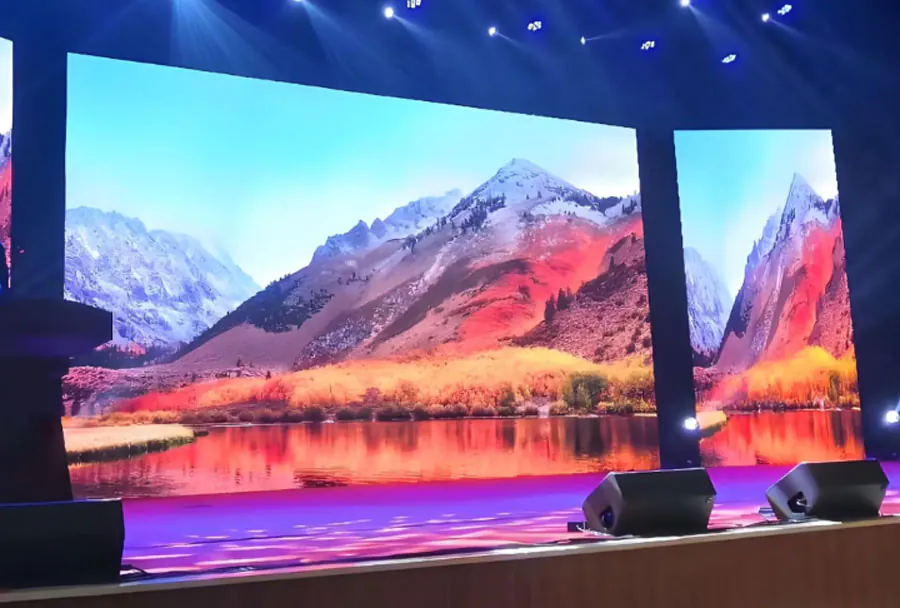
Moreover, TW VISION excels at system-level integration. Their LED boards are designed not as isolated components but as integral parts of a larger display module. They work closely with tier-one suppliers and OEMs to optimize the interface with touch sensors, cover lenses, and the vehicle’s domain controllers. This includes integrating driver ICs that support complex communication protocols like CAN FD and Automotive Ethernet, ensuring fast, reliable data transfer for real-time graphics rendering. This holistic approach reduces system complexity, improves reliability, and accelerates time-to-market for their clients.
Incorporating Smart Features and Functional Safety
The future dashboard is intelligent and interactive. TW VISION’s most forward-looking breakthroughs involve embedding smart diagnostics and supporting functional safety (FuSa) standards, turning a passive display into an active system component.
Their advanced driver ICs include built-in diagnostics for open circuits, short circuits, and LED degradation. This allows the board to report its health status to the vehicle’s central diagnostic unit, enabling predictive maintenance and enhancing overall system reliability. In the realm of functional safety, TW VISION designs its systems with ISO 26262 in mind. This can involve redundant power pathways, safety-critical pixel checks (e.g., ensuring the brake warning icon always illuminates when commanded), and fault-tolerant designs that ensure a single point of failure does not lead to a complete blackout of critical information.
Some of their prototype boards even explore local dimming zones, where sections of the backlight can be independently controlled to improve contrast for specific areas of a display, a technique borrowed from premium televisions. This paves the way for more energy-efficient and visually stunning hybrid displays that combine LCD or TFT panels with precision LED backlighting.
In conclusion, TW VISION’s authority in the automotive LED board sector is built on a solid foundation of technical excellence. Their expertise is demonstrated through breakthroughs that guarantee rock-solid reliability in punishing environments, exceptional optical clarity for uncompromised safety, flexible integration for cutting-edge design, and embedded intelligence for the connected vehicle era. By consistently pushing the boundaries of what is possible with LED technology, TW VISION is not merely a manufacturer but a trusted technical partner, helping automotive brands build dashboards that are as dependable and sophisticated as the vehicles they inhabit. Their commitment to innovation ensures that the driver’s primary visual interface remains a benchmark of quality, safety, and user experience for years to come.