High Refresh LED Signage for Smooth Dynamic Ads Display

In today’s attention economy, advertising is no longer competing only with other ads—it competes with endless motion on every screen a customer sees. From short-form video to interactive store experiences, viewers have become highly sensitive to visual quality. A split-second blur, a rolling band across the screen, or a flicker captured on a phone camera can instantly make a brand look “cheap,” even when the creative itself is excellent. This is why High Refresh LED Signage for Smooth Dynamic Ads Display has become a decisive upgrade for retailers, venues, transport hubs, and corporate environments.
High refresh LED signage isn’t just a spec on a brochure. It is a performance capability that directly impacts how motion graphics, dynamic promotions, sports highlights, and real-time data appear in real environments—under ambient light, on moving audiences, and often through smartphone recording. As a professional service provider, TW VISION focuses on delivering LED signage solutions that ensure motion remains crisp, stable, and premium-looking, even in the most demanding advertising scenarios.
What “High Refresh” Really Means for LED Signage
led displays don’t behave like printed posters. They redraw images continuously. The refresh rate (measured in Hz) describes how many times per second the display updates. A higher refresh rate helps the screen present motion more smoothly and reduces visible artifacts such as flicker or scan lines.
For dynamic advertising—think fast-moving typography, animated transitions, product rotations, video clips, or sports-style motion graphics—high refresh is particularly important because:
– Motion appears cleaner with less perceived stutter.
– Flicker is reduced, especially in peripheral vision and under certain camera shutters.
– Video playback looks more natural, preserving detail in fast movement.
– Brand visuals stay premium even when the viewer is close to the screen.
While many buyers focus first on pixel pitch and brightness, refresh rate is often the hidden factor that decides whether motion content looks “broadcast-grade” or distracting.
Smooth Dynamic Ads: The Real Business Value
Dynamic ads are designed to drive action: a limited-time offer, a new product drop, a live menu update, a real-time queue message, or a directional prompt. The smoother the display, the more confidently people watch it. Poor motion performance creates cognitive friction—viewers look away faster, and the message loses impact.
High refresh LED signage increases business value in several ways:
– Higher attention retention: Smooth animation keeps eyes on the content longer.
– Clearer messaging at a glance: Fast transitions remain readable.
– Improved brand trust: Premium display quality supports premium pricing and brand perception.
– Better performance in mixed environments: Malls, airports, and streets often have harsh lighting and constant movement; stable images win.
When advertisers invest in dynamic creative, they need hardware capable of showing it exactly as designed. Otherwise, the display becomes the bottleneck.
Why Flicker and Banding Happen—And Why They’re Costly
Flicker, banding, and “rolling lines” can appear due to a combination of refresh rate, driver IC performance, scanning method, and control system settings. In the real world, the issue becomes more visible because of two common scenarios:
1. Smartphone filming: Customers, influencers, and media frequently record signage. If a screen produces visible scan lines on camera, the brand’s content can look broken in every shared clip.
2. Human sensitivity to flicker: Even when viewers can’t describe the issue, subtle flicker can cause discomfort and reduce dwell time.
The cost isn’t only aesthetic—it’s reputational. A campaign designed for impact can be undermined by display artifacts that make the ad feel outdated or poorly produced.
Key Specs That Work Together with Refresh Rate
High refresh is essential, but it performs best when paired with the right supporting specifications. When evaluating High Refresh LED Signage for Smooth Dynamic Ads Display, consider these factors as a system:
– Grayscale / Bit depth: Higher grayscale supports smoother gradients in skies, skin tones, and brand color transitions.
– Brightness and contrast: High brightness helps in outdoor or high-ambient-light settings, while contrast improves “pop” for text and product imagery.
– Scan mode and driver IC: These determine how the LED modules are driven and can influence stability in motion.
– Color calibration: Consistent color across panels prevents patchiness and keeps brand colors accurate.
– Processing and control: Strong video processing reduces tearing and supports higher frame-rate content.
A display may claim high refresh, but without balanced engineering, motion can still look unstable. This is why selecting a capable service provider matters as much as selecting the screen.
Where High Refresh LED Signage Performs Best
High refresh is valuable almost everywhere, but it becomes especially critical in specific advertising environments:
– Retail storefront windows: Passersby move quickly; smooth motion makes content readable in seconds.
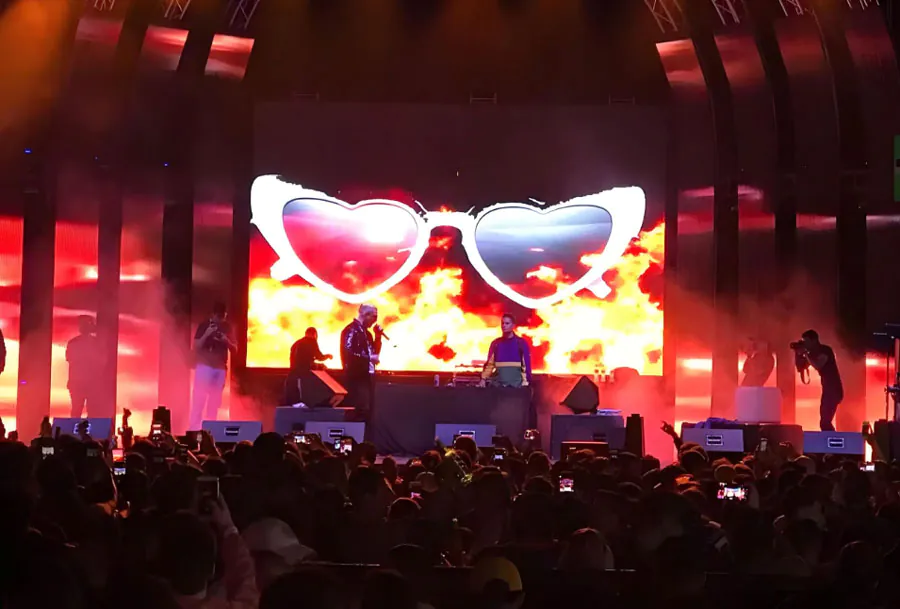
– Shopping malls and atriums: Large-format LED walls often run cinematic ads; high refresh keeps video elegant and immersive.
– Transportation hubs: Travelers glance at screens while walking; stable motion improves message capture.
– Stadiums and arenas: Sports replays and sponsor ads involve fast movement; high refresh preserves detail.
– Corporate lobbies and showrooms: Premium environments demand premium presentation—no flicker, no distractions.
– Outdoor billboards: Bright conditions and long viewing distances require consistent stability and clean transitions.
In each case, motion isn’t just “nice to have.” It is the core of how the message lands.
TW VISION’s Approach: From Display Hardware to Ad Performance
As a service provider, TW VISION positions high refresh LED signage not as a standalone feature, but as part of an end-to-end performance outcome: smooth, reliable dynamic advertising that looks excellent in real conditions. That approach typically includes:
– Solution matching: Selecting the right LED configuration for viewing distance, environment brightness, and content type (static vs. highly animated).
– Quality-focused configuration: Ensuring the refresh and processing pipeline supports smooth motion and stable playback.
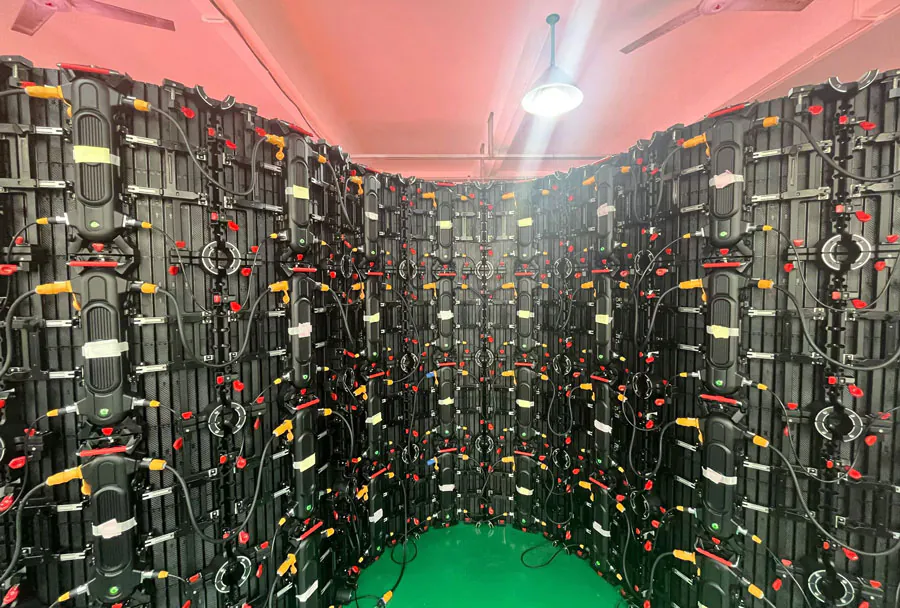
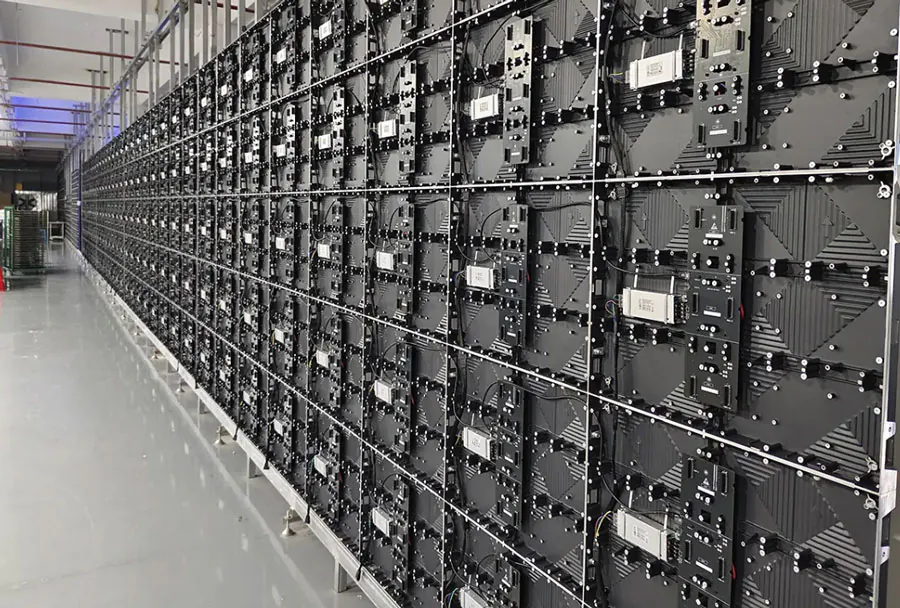
– Installation integrity: Mechanical flatness, correct module alignment, and stable power/data routing contribute to uniform visuals.
– Consistency and calibration: Uniform brightness and color help motion graphics look coherent rather than patchy.
– Operational support: Advertising is continuous; uptime and maintainability affect total ROI.
In other words, TW VISION’s value is not only “a screen,” but a display system designed to protect the visual integrity of dynamic ads over time.
Content Strategy Tips to Maximize High Refresh Signage
When brands upgrade to high refresh LED signage, they can unlock more ambitious creative. A few practical tips help ensure you fully benefit:
– Use motion with purpose: Smooth transitions guide attention—avoid chaotic animation that overwhelms the message.
– Keep text readable during movement: High refresh helps, but typography still needs adequate size and contrast.
– Design for the environment: Outdoor screens need bolder contrast; indoor premium spaces can use subtler gradients.
– Test on-camera: If social sharing matters, test how the signage looks on common smartphones.
– Align frame rates: Ensure content exports and playback settings match the display pipeline to avoid stutter.
High refresh enables quality, but strategy turns quality into measurable results.
Long-Term ROI: More Than Visual Smoothness
A high refresh LED signage investment pays off beyond immediate aesthetics. Over time, it helps organizations:
– Run more diverse content formats: Video, fast promos, real-time dashboards, and interactive experiences.
– Reduce campaign risk: Premium display output protects creative investment.
– Improve audience experience: Less flicker and more stability reduces fatigue in high-traffic environments.
– Strengthen brand consistency: When multiple locations deploy consistent high-quality signage, brand trust grows.
If signage is part of your everyday customer journey, the ROI compounds. The display is not a one-time purchase; it becomes a long-term brand touchpoint.
High Refresh LED Signage as the New Standard for Dynamic Advertising
The modern audience expects motion to look natural, sharp, and stable—whether seen live or through a phone camera. That is why High Refresh LED Signage for Smooth Dynamic Ads Display is rapidly becoming the standard for serious advertisers and venues. It protects the clarity of your message, elevates brand perception, and ensures dynamic content performs the way it was designed.
With TW VISION as the service provider, businesses can approach high refresh LED signage as a complete, performance-driven solution—built not only to display ads, but to make them look exceptional in the real world, every day.