2026 Stage LED Screen Rental Prices and Custom Packages

The live events industry continues to rebound and reinvent itself in 2026, with LED screens playing a central role in concerts, corporate events, festivals, conferences, and hybrid productions. As LED technology becomes more capable and modular, rental companies offer an increasingly diverse set of price points and custom package options. This article analyzes current rental price ranges for stage LED screens in 2026, breaks down the major cost drivers, presents representative packages, and offers practical guidance on designing custom rental packages that balance visual impact, logistics, and budget.
Market overview: Why prices vary in 2026
Several market forces influence LED screen rental prices this year:
– Technology tiers: Higher resolution (lower pixel pitch), higher refresh rates, HDR-capable panels, and curved or transparent LED modules command premium rates.
– Supply chain and capacity: Regional availability of pixel pitches (e.g., 1.5mm–6mm) and inventory levels affect short-notice pricing. Post-pandemic logistics efficiency has stabilized but regional capacity imbalances remain.
– Labor and staging complexity: Pixel mapping, bespoke rigging, structural frames, and certified installation crews increase costs.
– Event duration and scale: Multi-day festivals or long-term installations typically secure volume discounts; one-day events pay a premium per day.
– Value-added services: Content playback systems, media servers, creative programming, power distribution, and on-call technical support are commonly bundled or priced separately.
Typical 2026 price bands and what they buy you
To set expectations, here are general per-day rental price bands observed across major markets (USD):
– Low-end/basic visibility walls (P4–P6): $400–$1,200 per day per module cluster (small to medium screens).
– Mid-tier high-detail (P2.5–P3.9): $1,200–$3,000 per day.
– Premium close-view (P1.2–P2): $3,000–$7,000+ per day depending on size and extras.
– Large-format festival/arena turnkey packages (mixed pitches, rigging, control): $10,000–$60,000+ per event.
Pricing differs by region and vendor, so use these as ballpark guidance.
Analysis table: Representative rental packages (2026)
| Package Tier | Typical Screen Size (W x H) | Pixel Pitch (mm) | Typical Rental Price (per day, USD) | Ideal Events |
|---|---|---|---|---|
| Entry / Background | 6m x 3m | P4–P6 | $800–$1,500 | Small corporate presentations, church stages, local gigs |
| Mid-Range Visual | 10m x 5m | P2.5–P3.9 | $2,000–$5,000 | Regional concerts, conferences, product launches |
| Premium Close-View | 8m x 4m | P1.2–P2 | $4,500–$12,000 | TV shoots, premium corporate events, indoor arenas |
| Festival / Arena Turnkey | 20m x 10m (modular) | Mixed (P1.9–P4) | $15,000–$60,000+ | Large festivals, stadium tours, arena residencies |
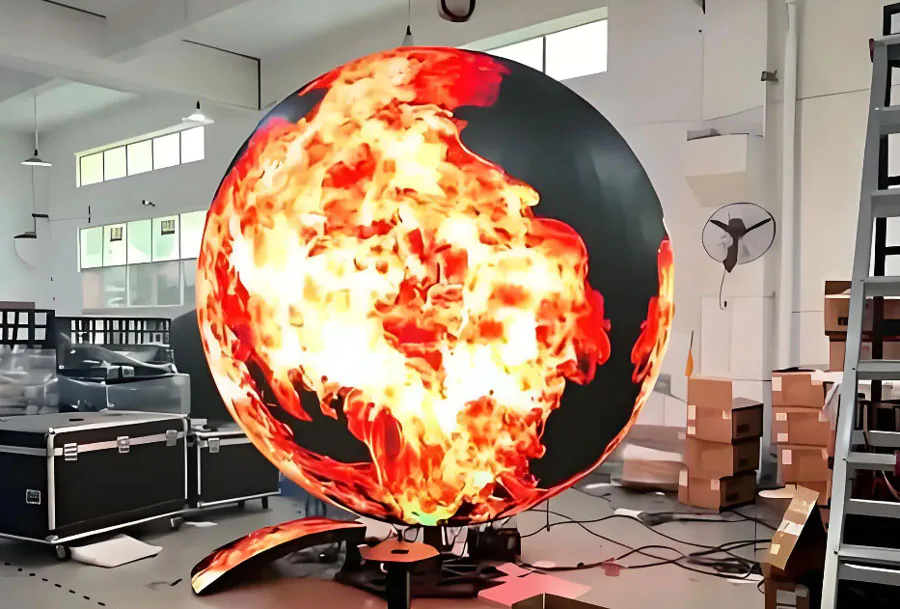
| Creative / Specialty | Custom shapes, transparent, curved | Varies | $5,000–$50,000+ | Brand activations, immersive experiences |
What’s included and what’s extra
Typical inclusions in a rental quote:
– LED panels and necessary control equipment (sending/receiving cards).
– Basic mounting frames and trussing for standard setups.
– One-day technician support for setup and strike (for many quotes).
– Cables, power distribution per agreed scope.
Common extras that increase price:
– Advanced media servers (e.g., Disguise, Resolume) and playback operator.
– Custom rigging, flown structures, or ground-supported scenic frames.
– High refresh-rate or broadcast-grade panels for TV.
– Weatherproofing and outdoor-rated power distribution.
– Transportation, logistics, and storage for multi-location events.
– Extended on-site support (24/7 techs), rehearsals, and content mapping time.
Designing custom packages: key considerations
1. Audience distance and pixel pitch
Match pixel pitch to audience distance. In 2026 industry guidance remains:
– Viewing distance 3–6 meters: P1.2–P2 recommended.
– Viewing distance 6–12 meters: P2.5–P3.9.
– Viewing distance 12+ meters (large outdoor): P4–P6.
Choosing too fine a pixel pitch raises costs unnecessarily. Evaluate sightlines and the percentage of close-up viewers (e.g., camera shoots require finer pitch).
2. Resolution and content intent
If your content is primarily video and live camera feeds, prioritize refresh rate and HDR capability (if needed for broadcast). For large-scale scenic elements that use motion graphics or are viewed from a distance, resolution can be lower and budget allocated to size and brightness.
3. Brightness and environment
Outdoor daytime events require high brightness (6,000–8,000 nits) and often higher energy costs and more substantial power infrastructure. Indoor venues usually need 1,000–2,500 nits. Choose outdoor-rated cabinets and consider anti-glare finishes for high-ambient settings.
4. Rigging, structure, and safety
Custom shapes, curved walls, and large flown arrays require engineering and certified riggers. Always include structural drawings and load calculations in bids. Safety adds cost but is non-negotiable.
Example custom packages and cost breakdowns
Below are three hypothetical custom packages to illustrate trade-offs.
– Package A — Corporate Launch (Mid)
– Screen: 10 x 5m, P2.5
– Hardware: Panels, control system, basic truss, playback laptop
– Crew: 2 techs for setup and event day
– Price estimate: $6,000/day (includes 1 day install + 1 day event prorated)
– Notes: Good visual fidelity for a seated audience up to 40m.
– Package B — TV-Friendly Indoor Concert (Premium)
– Screen: 8 x 4m, P1.5, 3840Hz refresh, HDR-capable
– Hardware: Panels, broadcast-grade sending cards, redundancy, media server
– Crew: 3 techs + 1 content/operator, camera sync
– Price estimate: $18,000/event (includes rehearsals and on-site operator)
– Notes: Prioritizes close camera capture and broadcast compatibility.
– Package C — Weekend Festival Main Stage (Turnkey)
– Screen: 20 x 10m modular, mixed P2/P4 zones
– Hardware: Full rigging, frames, weatherproofing, power distro, two media servers
– Crew: Full install crew, road techs, event operators
– Price estimate: $45,000–$120,000 (depending on days and logistics)
– Notes: Includes coordination with stage manager, load-in/out, and redundancy.
Negotiating and procurement tips
– Bundle services: Renting screens plus playback and crew from one vendor can reduce coordination overhead and sometimes net discounts.
– Book early for peak seasons: Large festivals and year-end corporate windows often require early deposits; last-minute bookings command premiums.
– Ask for componentized quotes: Seeing panel, rigging, labor, transport, and power line items helps negotiate or remove non-essential services.
– Verify redundancy: For critical events, insist on redundant sending cards, backup power plans, and spare panels on site.
– Consider local inventory: Sourcing equipment locally avoids cross-border logistics, customs delays, and additional insurance requirements.
Logistics, contracts, and risk management
Transport and lead times
Transport and lead time can represent 10–25% of total project cost, especially for remote locations. Factor in load-in/out windows, potential road permits for oversized loads, and time to do full system checks.
Insurance and liability
Rental agreements should specify:
– Damage and loss responsibility (wear-and-tear vs. negligence).
– Insurance requirements for the renter and vendor, including public liability.
– Curfew or schedule penalties for extended install/strike times.
Contracts and SLAs
Clarify Service Level Agreements (SLAs): response times for faults during the event, on-site replacement times, and vendor holdover charges. Include acceptance testing criteria prior to event start.
Measuring ROI and budget justification
When justifying costs to stakeholders:
– Tie screen capabilities to measurable outcomes (ticket revenue lift, sponsor exposure, brand recall metrics).
– Use case studies: Show how premium screens improved sponsorship CPM (cost per thousand impressions) or TV production quality.
– Consider rental vs. buy analysis only if you plan more than 12–18 major activations per year, since LED ownership requires storage, maintenance, and tech staff.
Checklist for RFP (Request for Proposal)
Include in your RFP:
– Event dates, load-in/out windows, and rehearsal times.
– Venue plans and rigging points.
– Desired screen dimensions, pixel pitch, and viewing distances.
– Content types (live camera, pre-rendered, interactive).
– Required crew levels and on-site support hours.
– Power availability and technical contacts.
– Budget range and decision timeline.
2026 offers event planners and producers more sophisticated and flexible led screen options than ever. Rental pricing reflects a wide spectrum—from economical basic walls to broadcast-grade, fully redundant turnkey solutions. Smart package design aligns audience sightlines and content needs to the right pixel pitch and size, while controlling costs through careful selection of included services, local inventory, and early booking. Use the pricing bands and examples above as a foundation, then build custom packages around the technical requirements, logistics realities, and commercial goals of each event.
Quick FAQ
– Q: Is it cheaper to buy than rent?
A: Only if you expect heavy, frequent use (generally more than 12–18 large activations per year), and can absorb storage and maintenance costs.
– Q: How much does labor usually add?
A: Labor and rigging commonly add 20–40% to equipment rental costs, more for complex or overnight installs.
– Q: Do pixel pitch prices change rapidly?
A: Prices for premium fine-pitch modules have stabilized, but innovation (higher refresh rates, HDR) creates premium tiers that can command higher rents.