Top Rated Outdoor LED Screen Rental Companies in Florida

Choosing the right outdoor LED screen rental company in Florida is a critical decision for event planners, marketers, sports venues, and municipalities. From outdoor concerts and festivals to sporting events, political rallies, and drive-in cinemas, an LED screen can make or break audience engagement. This article lays out a professional, practical guide to identifying top-rated outdoor LED screen rental companies serving Florida. Rather than simply listing names, it focuses on the attributes that define “top-rated,” the types of providers you’ll encounter, a comparison table of provider types with typical offerings and price ranges, and a step-by-step selection and logistical checklist you can use to compare and vet vendors.
What “Top Rated” Means for Outdoor LED Rentals
Performance and Reliability
Top-rated companies reliably deliver shows that work. That means high-brightness panels (typically 5,000–8,000 nits or more for daytime events), robust weatherproofing (IP65 or higher for outdoor use), solid mounting and rigging systems, and backup power and processing to handle live feeds without failures.
Technical Expertise and Support
A leading provider supplies experienced technical crews, on-site setup and strike services, redundancy plans, and experienced content management. The best teams can integrate multiple inputs (broadcast, live camera, playback, graphics), handle live-match switching, and troubleshoot quickly.
Range of Inventory and Flexibility
Top companies have a range of pixel pitches (P2.6–P6.0 commonly for outdoor events), various module sizes for custom builds, mobile LED trailers for quick deployment, and an inventory large enough to serve small community events and multi-sided stadium installs.
Permitting, Logistics, and Local Knowledge
A major differentiator in Florida is local regulatory and environmental familiarity — hurricane season considerations, municipal permitting norms, and beach or park restrictions. Top vendors assist with permits, traffic control coordination, and Florida-specific weather planning.
Categories of Top-Rated Providers Serving Florida
Not every event needs the same type of provider. In Florida you’ll commonly find five broad categories of top-rated rental companies:
– National full-service production companies with Florida offices or frequent deployments.
– Regional specialists focused on Florida markets and events.
– Manufacturer-rental partners that provide their own panels for rent and rebuild custom solutions.
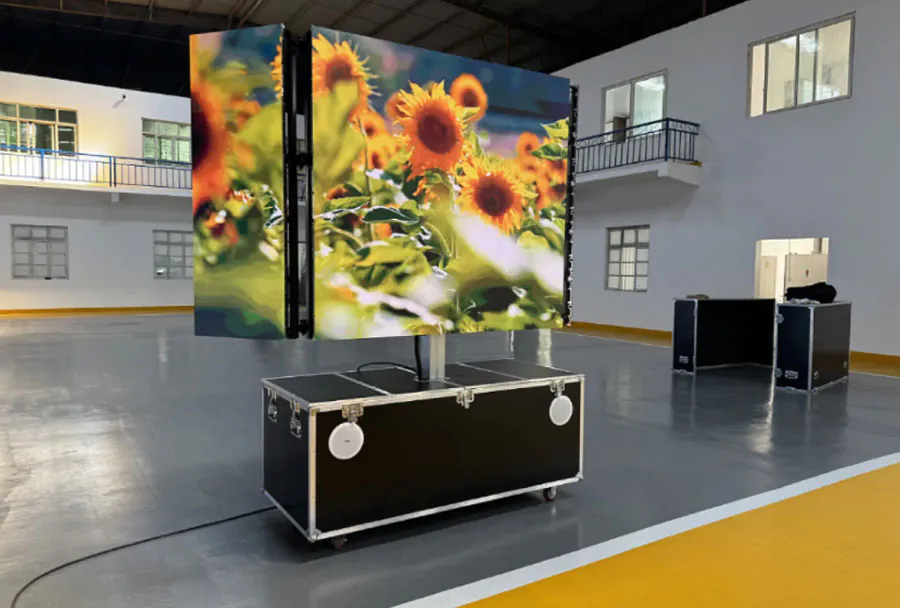
– Mobile LED trailer specialists for fast setup and outdoor roadside or parking-lot events.
– Budget and community rental houses that serve smaller events, schools, and local municipalities.
Each category has strengths and trade-offs. The table below summarizes these categories and what to expect.
Analysis Table: Provider Types and Typical Offerings
| Provider Type | Strengths | Typical Screen Sizes | Best For | Estimated Day Rate (USD) |
|---|---|---|---|---|
| National Full-Service Production | Extensive inventory, broadcast-grade tech, nationwide logistics | From 12’ x 8’ up to event mega-walls 40’+ wide | Large concerts, corporate events, stadium deployments | $2,500 – $20,000+ |
| Regional / Florida Specialist | Local permitting knowledge, quick response, competitive pricing | 10’ x 6’ to 30’ x 16’ | Festivals, municipal events, mid-size sporting events | $1,200 – $8,000 |
| Manufacturer-Rental Partner | Direct access to latest panels, custom builds, warranty support | Custom sizes, modular builds common | High-resolution installs, long-term rentals, creative builds | $1,500 – $12,000 |
| Mobile LED Trailer Specialist | Rapid deploy, integrated trailer systems, built-in power options | 8’ x 6’ up to 20’ x 11’ on trailers | Drive-in movies, outdoor advertising, quick community events | $800 – $4,000 |
| Budget / Community Rentals | Lower rates, simplified packages, local relationships | 6’ x 4’ to 16’ x 9’ | School events, block parties, small municipal needs | $400 – $2,000 |
Note: Estimated day rates are representative ranges and will vary by screen resolution (pixel pitch), accessories (sound, broadcast cameras), travel, set-up complexity, and seasonality. Florida peak season and hurricane season may affect availability and pricing.
How to Evaluate and Vet an Outdoor LED Rental Company
1. Verify Technical Specifications
Ask for panel specs: pixel pitch, brightness (nits), refresh rate (≥ 3,840 Hz for broadcast-friendly screens), ingress protection (IP65 or higher for outdoor), and contrast. Confirm controller types, media server compatibility (Novastar, Brompton), and the ability to handle desired resolutions for content.
2. Review Crew Experience and Certifications
Request crew CVs or references. Rigging and structural safety are critical for outdoor builds; ensure riggers have relevant certifications (e.g., OSHA, local rigging certifications), and that the company follows the Engineering stamped drawings process for large installs.
3. Understand Redundancy and Backup Plans
Top companies run redundant media servers, duplicate video paths (dual inputs), spare modules, and power backup. Clarify what happens if a module fails during a live event and confirm response times.
4. Check Inventory Volume and Scalability
For multi-day or multi-site events, you need enough panels and spares. Ask for photos of recent similar builds and inventory numbers.
5. Confirm Insurance and Contract Terms
Confirm the company carries general liability and equipment insurance. Review indemnity clauses, cancellation policies, weather-force majeure terms, and who is responsible for permitting and site damage.
Florida-Specific Operational Considerations
Weather and Environmental Factors
Florida’s climate demands attention to humidity, salt air near coasts, intense sun, and the possibility of tropical systems. Ensure panels and connectors are rated for coastal salt corrosion, and that there are plans for rapid de-rigging or protective covering in the event of severe weather.
Permits, Traffic, and Venue Rules
Every county and municipality in Florida has different permitting requirements for temporary structures, amplified sound, generator placement, and traffic control. Top providers either coordinate permits or supply detailed permit-ready engineering drawings and documentation.
Local Logistics and Labor
Florida venues often require union labor (in major market areas) or specific local contractor relationships. Make sure the rental partner knows whether the venue requires union crews and cost implications.
Typical Pricing Structure and What Affects Cost
Pricing is rarely a simple per-day screen fee. Typical line items include: screen rental (based on pixel pitch and size), delivery, rigging/installation labor, power/generator rental, media server/processing, operator/tech day rates, content mapping and testing, and travel or mobilization fees for remote sites. Peak-season surcharges (winter tourist season) and last-minute bookings can also increase costs substantially.
Checklist: Questions to Ask Potential Vendors
– What is the pixel pitch and brightness of the panels you propose?
– What is your policy for weather-related cancellations and emergency de-rigs?
– Can you provide engineering drawings and a site-specific risk assessment?
– What backup systems are in place (media server, power, spare modules)?
– Do you handle permits and traffic control, or will we be responsible?
– Can you provide references and photos/videos of similar Florida events?
– What are payment terms, cancellation penalties, and force majeure clauses?
Case Scenarios and Recommendations
Outdoor Concert in Miami (Night Show)
Recommendation: A national full-service or regional specialist with large inventory. For night shows you still need 3,000+ nits for stage visibility, top-tier processing, and broadcast-grade refresh rates if you plan to stream. Ensure sound-visual coordination so audio delay and pixel latency don’t create sync issues.
Beach Film Screening in the Panhandle
Recommendation: Mobile LED trailer or regional rental for rapid setup and lower cost. Choose a screen with P4–P6 pixel pitch for movie viewing distances; prioritize waterproofing and sand/salt-resistant equipment.
Municipal Watch Party for a Sports Event
Recommendation: Community rental or regional specialist. Daytime events require higher brightness (6,000+ nits) for visibility. Coordinate with local authorities for crowd control and power requirements.
Content and Creative Considerations
High-quality content makes the screen look better. Ensure the vendor provides content formatting guidelines (aspect ratio, safe areas for text, recommended codecs and bitrates). For large pixel pitches (P6.0), use large, high-contrast graphics and avoid fine type. For close viewing distances, insist on higher-resolution panels or bring content that’s optimized for the chosen pixel pitch.
Contract Negotiation Tips
– Get a detailed scope of work with responsibilities and deliverables clearly spelled out.
– Build in a weather and force majeure amendment specific to Florida’s hurricane season.
– Request an itemized quote separating equipment, labor, transport, and additional services.
– Negotiate a timeline with milestones: deposit, final payment, test day, and strike.
– Confirm who owns the content playback rights and the protocol for last-minute content changes.
How to Find and Verify Top-Rated Companies
– Read trade publications and industry event recaps to see who others used.
– Check industry associations and event production forums for referrals.
– Request local references in Florida (names, phone numbers, or event links).
– If possible, visit a recent local event to inspect the provider’s equipment and crew in person.
Selecting a top-rated outdoor LED screen rental company for events in Florida means prioritizing robust technical specs, local operational knowledge, clear contractual protections, and vendor responsiveness. Whether you work with a national full-service provider, a Florida regional specialist, a manufacturer-rental partner, a mobile trailer company, or a budget house, the provider’s ability to manage weather, permits, and content delivery will define success. Use the checklist and table in this article to compare options, and never compromise on redundancy, certified rigging, and clear responsibilities.