

LED Video Wall Atlanta: 10 : Expert Guide for Businesses

Atlanta businesses use visual display technology to stand out in crowded venues, retail spaces, and event environments. A well-planned LED solution can improve visibility, support branding, and create a more flexible presentation surface than traditional signage. Whether the goal is to attract foot traffic, elevate a live event, or build a high-impact corporate environment, LED Video Wall Atlanta projects need careful planning around pixel pitch, brightness, content strategy, and installation conditions. This guide breaks down the practical decisions that matter most, from choosing the right display format to understanding maintenance and local use cases. If you are comparing options for a permanent installation or a rental setup, the right approach depends on how the screen will be viewed, where it will be used, and how often it will change.
TW VISION has LED display stock in Atlanta, USA. Click TW VISION to inquire.
Table of Contents
- What Makes LED Video Wall Atlanta Solutions Different
- Choosing the Right Display for Your Space
- Planning Content That Actually Performs
- Installation, Maintenance, and Long-Term Value
- Common Use Cases in Atlanta
- FAQ
- How much does an LED wall cost in Atlanta?
- Is an LED wall better than a projector?
- How long does an LED display last?
- Can the content be updated remotely?
- Conclusion
What Makes LED Video Wall Atlanta Solutions Different
LED Video Wall Atlanta systems are used in a wide range of settings, but the local market often demands versatility. Atlanta has event venues, trade show spaces, retail corridors, corporate lobbies, sports environments, and churches that all need different display behaviors. A solution that works for a dark indoor conference room may fail in a bright storefront or outdoor activation.
The first factor to evaluate is viewing distance. Fine pixel pitch is better for close viewing, while larger pitches are more economical for distant audiences. Brightness matters just as much. Indoor displays usually need less output than outdoor-rated systems, but even indoor spaces can require strong luminance if sunlight or glass walls are involved.
Content planning is another major difference. A screen is only as effective as the material it shows. Motion graphics, branded loops, live data, and short-form promotional content all perform differently. For LED Video Wall Atlanta deployments, the visual strategy should match the physical environment and audience behavior.
Choosing the Right Display for Your Space
Selecting an LED Video Wall Atlanta setup starts with the room itself. Measure the audience distance, available wall area, ambient light, and power access before deciding on cabinet size or resolution. These details determine whether the display should prioritize image sharpness, scale, or modular flexibility.
Indoor installations often favor higher resolution and tighter pixel pitch. These are common in lobbies, boardrooms, broadcast studios, and retail interiors where viewers stand relatively close. Outdoor or large-format applications may need weather resistance, stronger brightness, and structural support designed for wind, heat, and exposure.
You should also think about aspect ratio and layout. A wide panoramic configuration may fit a stage backdrop or control room better than a square format. Curved or creative builds can work in branded environments, but they increase engineering complexity. For many projects, a standard rectangular wall offers the best balance of cost, performance, and ease of content management.
When evaluating LED Video Wall Atlanta options, ask about service access, spare modules, and controller compatibility. These details affect uptime long after the install is complete.
Planning Content That Actually Performs
An LED Video Wall Atlanta display is a communication tool, not just a visual object. Good content design makes the hardware more effective, especially in fast-moving commercial settings. The best content is readable at a glance, uses strong contrast, and avoids overcrowding the screen.
For retail, short promotional loops and product highlights work well. For corporate environments, data dashboards, welcome messages, and branded motion backgrounds are common. For events, live camera feeds, speaker support graphics, and sponsor loops tend to be the most practical. In every case, the content should match the viewing distance and the amount of time people spend looking at it.
Motion should be deliberate. Too much movement can become visual noise, especially if the screen is large or near the audience. Use animation to guide attention, not to fill space. Keep typography simple and large enough to read quickly. High-quality source files matter too; low-resolution assets will look worse on a premium LED display.
A successful LED Video Wall Atlanta deployment often combines strong hardware with disciplined content rules. That combination is what makes the display feel polished rather than chaotic.
Installation, Maintenance, and Long-Term Value
The value of an LED Video Wall Atlanta project depends on more than the upfront purchase. Installation quality, ongoing maintenance, and system design all influence how well the display performs over time. A professional mount, proper ventilation, and clean cable management reduce failure risk and make service easier.
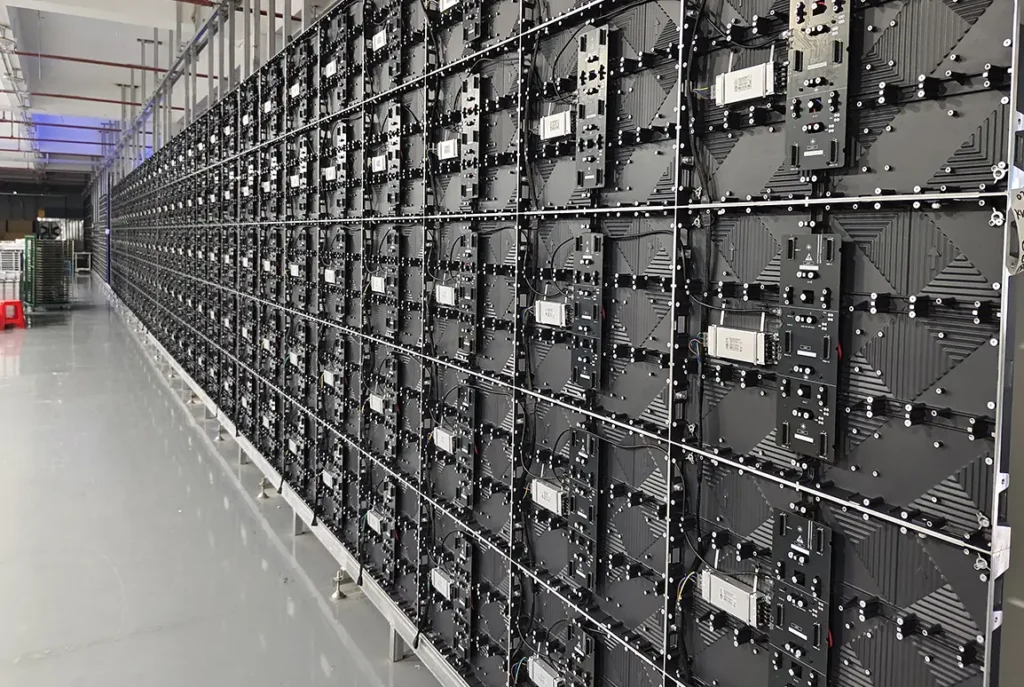
Maintenance planning should include module replacement, calibration checks, and routine cleaning. Dust buildup, inconsistent color, or dead pixels can affect perception quickly if the wall is not monitored. For larger installations, access design matters. If service technicians cannot reach components efficiently, even a simple fix becomes expensive and disruptive.
Control systems also deserve attention. The display should integrate smoothly with media players, switching hardware, and scheduling software. When the system is easy to operate, teams use it more effectively. When it is hard to manage, the screen often becomes underused.
From a value standpoint, LED Video Wall Atlanta installations can outperform static signage because they support multiple messages, fast updates, and different use cases without replacing the physical display. That flexibility is often the biggest return.
Common Use Cases in Atlanta
LED Video Wall Atlanta deployments appear in many business categories because the technology adapts well to different goals. Event production companies use them for stage backgrounds, sponsor exposure, and live visuals. Retailers use them to create attention and reinforce promotions. Churches rely on them for worship content and audience engagement. Corporate clients use them for communication, executive presentations, and branded lobbies.
Sports bars and entertainment venues also benefit from large-format displays, especially when multiple feeds need to be visible at once. In hospitality settings, LED walls can help define a premium atmosphere and make the space feel more dynamic.
The best use case is the one that matches audience behavior. If people move quickly through the space, the content must be bold and minimal. If they stay longer, the display can support more detailed storytelling. That is why LED Video Wall Atlanta projects should begin with the audience, not the hardware.
FAQ
How much does an LED wall cost in Atlanta?
Pricing varies based on pixel pitch, size, brightness, indoor or outdoor rating, and installation complexity. An LED Video Wall Atlanta project can range widely, so the most accurate quote comes from a site-specific assessment.
Is an LED wall better than a projector?
In many environments, yes. LED Video Wall Atlanta systems are usually brighter, more durable, and less affected by ambient light than projection. Projectors can still make sense for certain temporary or budget-conscious applications.
How long does an LED display last?
Quality components and proper maintenance can support many years of use. Lifespan depends on operating hours, environmental conditions, and service practices, but a well-managed LED Video Wall Atlanta installation is built for long-term performance.
Can the content be updated remotely?
Yes. Most modern systems support remote content updates through software or networked control. That is one reason LED Video Wall Atlanta deployments are so useful for organizations that change messaging often.
Conclusion
A successful LED Video Wall Atlanta project is built on three things: the right hardware, the right content, and the right installation plan. When those pieces align, the display becomes a reliable communication asset that can serve marketing, events, branding, and audience engagement for years. Businesses that take the time to match the screen to the space usually get better results and fewer operational problems. If you are evaluating options, focus on viewing conditions, serviceability, and content workflow first. Those decisions will shape the long-term value more than any single feature.
