

Fine Pitch LED Display: 5 Easy Secrets to Know

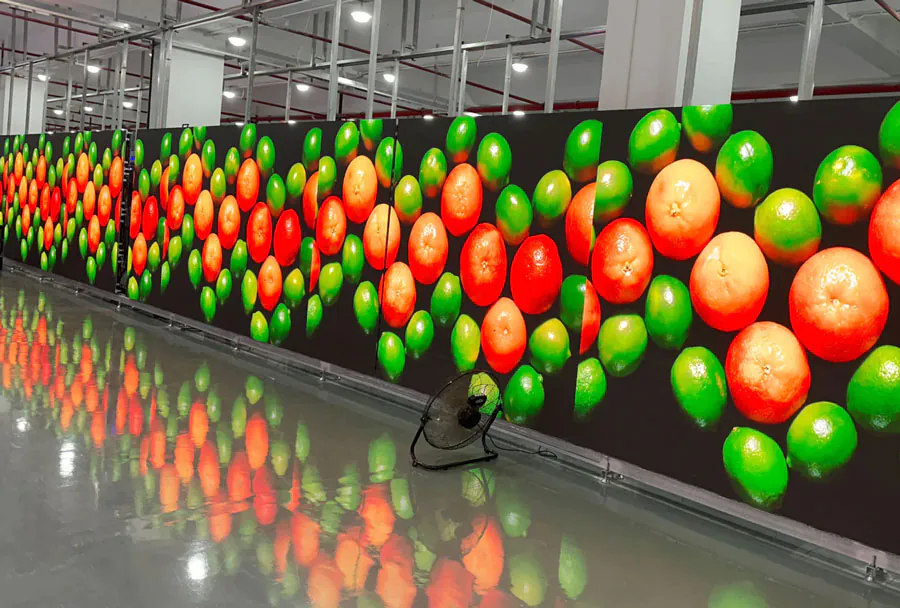
Fine pitch LED display technology has become the go-to choice for indoor video walls that need to look seamless up close. Samsung’s The Wall, for example, has demonstrated pixel pitches as fine as 0.84mm, making individual LEDs nearly invisible even from a few feet away.
Table of Contents
- What Exactly Is a Fine Pitch LED Display?
- How Pixel Pitch Shapes Viewing Distance and Resolution
- Pixel Pitch vs. Resolution
- Viewing Distance Reference
- Choosing the Right Fine Pitch LED Display for Your Space
- Installation, Calibration, and Processing Essentials
- Total Cost of Ownership: What Budgets Miss
- What pixel pitch is best for a conference room?
- Can a fine pitch LED display work in a home theater?
- How long do fine pitch LED displays last?
- Is COB better than SMD for a fine pitch LED display?
- Do fine pitch LED displays need special cooling?
- Conclusion
The problem many buyers face is assuming a tighter pitch always means a better picture. Viewing distance, processing, calibration, and the room itself all change the result. These five factors determine whether the screen looks great—or becomes an expensive mistake.
P1.5 LED display made by TW VISION-COB, 7680HZ refresh rate
What Exactly Is a Fine Pitch LED Display?
A fine pitch LED display is usually defined as an indoor direct-view LED video wall with a pixel pitch of 2.5mm or less. This category emerged because traditional LED billboards have pitches of 4mm, 6mm, 10mm, or more, which look pixelated indoors. Fine pitch panels close the gaps so viewers can stand close without seeing individual LEDs.
AVIXA, the Audiovisual and Integrated Experience Association, explains that pixel pitch is the center-to-center distance between adjacent LEDs and is the main factor in determining how close viewers can stand before noticing pixel structure. In practice, most current fine pitch LED display projects use 0.9mm to 2.5mm panels, while premium microLED products push below 1mm.
When you compare models, check more than the pitch:
– Confirm whether the panel uses SMD or COB packaging.
– Ask for the native resolution and aspect ratio.
– Verify that the quoted brightness is sustainable, not just peak.
How to apply this: On every spec sheet, highlight the exact pixel pitch and the manufacturer’s minimum recommended viewing distance before you look at price.
How Pixel Pitch Shapes Viewing Distance and Resolution
Pixel pitch is the main spec for a fine pitch LED display because it sets the closest distance at which the image appears continuous rather than made of dots. Tighter pitch increases pixel density, but it raises cost faster than most buyers expect.
A practical rule used by many AV integrators is that comfortable minimum viewing distance in meters is roughly one to two times the pixel pitch in millimeters. So a 1.5mm panel is often specified for viewers standing about 1.5 to 3 meters away. For critical control rooms or broadcast sets, some designers push that closer to one meter per millimeter.
Pixel Pitch vs. Resolution
Resolution depends on total cabinet size, not just pitch. A 110-inch 2.5mm panel may show 1080p, while a smaller 0.9mm panel may also show 1080p in less wall space. The small pitch LED display advantage is that you can hit 4K resolutions from a wall that fits a conference room.
Viewing Distance Reference
| Pixel pitch | Typical minimum viewing distance | Best use case | Action to take |
|---|---|---|---|
| 0.9–1.2mm | 3–5 ft | Control rooms, premium retail | Verify 4K source and processing |
| 1.5–1.8mm | 6–10 ft | Corporate lobbies, broadcast | Check camera moiré before install |
| 2.0–2.5mm | 10–15 ft | Conference rooms, worship | Match brightness to ambient light |
| 3.0–4.0mm | 15–25 ft | Auditoriums, large venues | Skip ultra-fine pitch to save cost |
How to apply this: Measure the nearest viewer position first, then use the table to narrow your pixel pitch range before requesting quotes.
Choosing the Right Fine Pitch LED Display for Your Space
Selecting a small pitch LED display starts with the room, not the resolution badge. A display that looks stunning in a dark showroom may wash out next to a window or look too bright in a dim boardroom.
Consider a 20-foot deep boardroom. A 2.0mm panel may look smooth from the farthest seat but show visible pixels at the head of the table. Many buyers then choose 1.2mm for closer seating and discover they also need more processing horsepower to drive the extra pixel count.
Key checks before you buy:
– Map the nearest and farthest viewer positions in feet or meters.
– Estimate ambient light at the brightest time of day.
– Confirm whether the wall must be front-serviceable for tight spaces.
– Request a demo with your actual content, not a stock video.
A small pitch LED display should be specified around the room’s worst-case viewing condition, not its average. If a presenter stands three feet from the wall, that distance controls the design.
How to apply this: Draw a simple floor plan, mark the closest viewer, and write that number on every quote request you send.
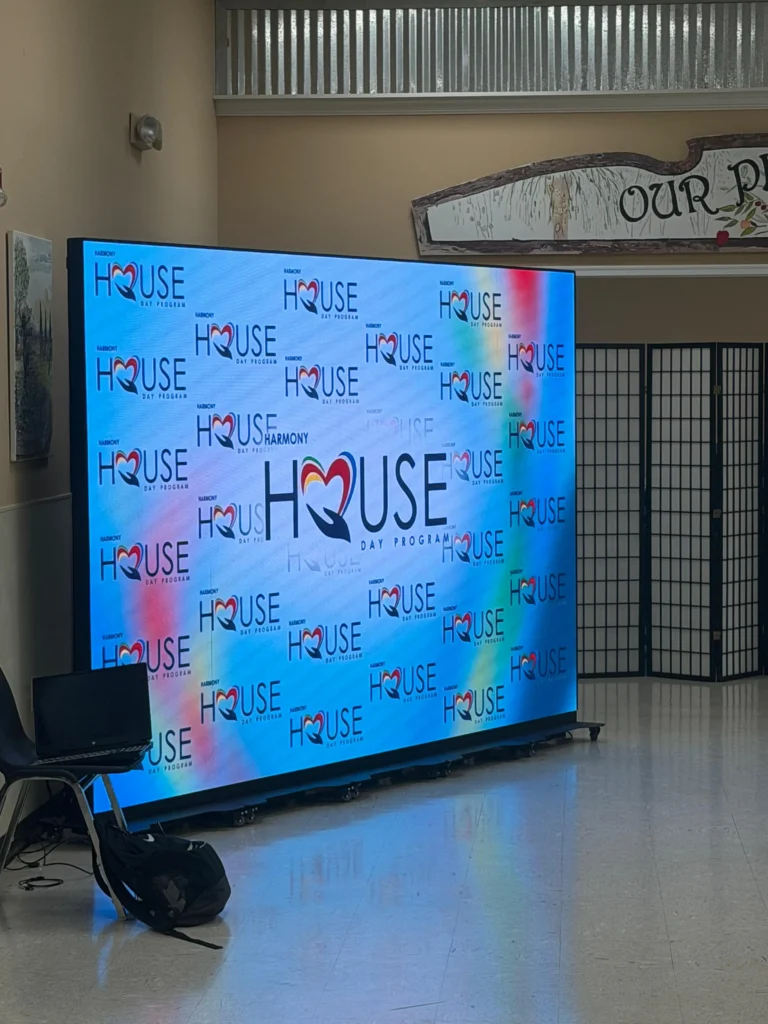
P0.9 LED display made by TW VISION, 7680HZ refresh rate, 4K resolution.
Installation, Calibration, and Processing Essentials
A fine pitch LED display behaves like a system, not a television. The panels must be aligned, color-calibrated, and driven by processing that can handle the wall’s full pixel area.
For processing, many integrators use Novastar controllers and receiving cards to map content across large fine pitch LED display walls. High-end projects may use Brompton Technology Tessera processors, which offer per-pixel calibration and advanced color control. Both platforms matter because uneven color or frame drops are immediately visible at tight pitches.
Calibration should cover brightness and color across every module. Even panels from the same batch can show visible differences if the factory calibration data is not applied correctly on site. Heat is another factor: thermal expansion can shift module seams, so the installation plan should allow for stable temperature and humidity.
– Specify a processor with enough output capacity for the wall’s native resolution.
– Ask for onsite calibration, not just factory calibration.
– Leave service clearance behind or in front of the wall based on the panel design.
How to apply this: Before installation, ask the integrator which processor and calibration workflow will be used, and request a uniformity report after setup.
Total Cost of Ownership: What Budgets Miss
A small pitch LED display quote covers panels, but the real cost includes power, cooling, installation, and long-term maintenance. Many first-time buyers focus on the per-square-meter price and miss these recurring line items.
Power draw rises with pixel density and brightness. A large fine pitch LED display wall can add enough heat to require supplemental cooling in a small room. Electrical work, structural support, and data cabling often appear as separate line items after the first proposal.
Other hidden costs:
– Spare modules and power supplies for quick repairs
– Annual color calibration service if the wall is used for broadcast
– Content management software or a media player
– Extended warranty coverage for key components
You can control total cost by right-sizing the pitch. If the closest viewer is 15 feet away, a 2.5mm fine pitch LED display often looks as sharp as a 1.2mm panel but costs substantially less to buy and operate.
How to apply this: Ask every vendor for a five-year cost estimate that includes power, cooling, and at least one spare module kit.
Frequently Asked Questions About Fine Pitch LED Display
What pixel pitch is best for a conference room?
For a typical conference room where viewers sit 6 to 12 feet away, a 1.5mm to 2.0mm fine pitch LED display usually balances sharpness and cost. The exception is a small room where presenters stand closer than 5 feet; then 0.9mm or 1.2mm may be worth the premium.
Also confirm camera angles if video conferencing will capture the wall, because tight pitches reduce moiré patterns.
Can a fine pitch LED display work in a home theater?
Yes, but only if the room is dark and the viewer sits far enough. A 0.9mm to 1.5mm fine pitch LED display can deliver cinematic contrast in a dedicated theater. The exception is mixed-use living rooms: ambient light and glossy panel surfaces may hurt perceived contrast more than projection would.
How long do fine pitch LED displays last?
Most small pitch LED display manufacturers publish LED lifetime ratings in the tens of thousands of hours before noticeable brightness decay, but that is not a failure guarantee. Real-world service depends on temperature, power quality, and duty cycle. A 24/7 control room will likely need module replacements earlier than a conference room used 40 hours a week.
Is COB better than SMD for a fine pitch LED display?
COB often offers better durability and less glare because LEDs are encased in resin, but SMD can be brighter and easier to service. For a fine pitch LED display under 1.5mm, COB tends to look smoother from close distances. The exception is rental staging, where SMD modules may be faster to swap.
Do fine pitch LED displays need special cooling?
Most indoor fine pitch LED display panels are designed for normal air-conditioned spaces, but large walls can add meaningful heat load. The exception is a tightly enclosed niche or direct sunlight exposure. Confirm the room’s HVAC capacity and leave airflow space behind the wall.
Conclusion
A fine pitch LED display is a system purchase, and the best results come from matching pixel pitch to the room’s closest viewer, then specifying processing and calibration to match. Evaluating the total cost of any fine pitch LED display before purchase prevents budget surprises.
– Match pixel pitch to the closest viewing distance before comparing resolution.
– Choose processing that can drive the full native pixel area without dropped frames.
– Compare COB vs SMD based on service and visual finish.
– Budget for power, cooling, spares, and calibration, not just the panel price.
Next step: measure your nearest viewer position, pick a realistic pitch range, and request a live demo with your own content from an integrator you can verify.
