Energy Efficient Displays from Trusted Indoor LED Company TW VISION

Energy efficiency is no longer an optional feature for indoor led displays — it’s a core requirement for organizations that want high performance, predictable operating costs, and reduced environmental impact. Trusted indoor LED company TW VISION positions itself at the intersection of visual quality and sustainable design, delivering displays that combine low power draw with refined image performance. Below I analyze the technical approaches that drive energy savings, practical benefits for different use cases, and the economic and environmental implications for buyers considering TW VISION indoor LED solutions.
Why Energy Efficiency Matters in Indoor LED Displays
Indoor LED displays are deployed across retail environments, corporate boardrooms, control rooms, museums, and education spaces. In these settings, displays often run for many hours a day — sometimes continuously. Energy consumption affects not only the electricity bill but also thermal load (and therefore cooling costs), display lifetime, and overall sustainability reporting. Energy-efficient displays reduce operational expenses, lower carbon footprint, and can allow organizations to meet increasingly strict sustainability goals without compromising on visual quality.
TW VISION’s emphasis on energy efficiency responds to three practical pressures: rising energy costs, the need for lower total cost of ownership (TCO), and environmental commitments by institutions and enterprises. Energy savings are achieved through a combination of hardware design, intelligent power management, and software-driven brightness and content optimization.
Key Technical Strategies for Energy-Efficient Indoor LED Displays
1. High-Efficiency LED Modules and ICs
At the component level, using LEDs and driver ICs with higher luminous efficacy (lumens per watt) reduces the electrical power needed for a given brightness. TW VISION integrates LED diodes selected for indoor color consistency and high efficacy, alongside efficient constant-current driver circuits that minimize conversion losses. The result is lower full-brightness power draw and better performance at typical operating brightness levels.
2. Adaptive Brightness and Ambient Light Sensing
Many displays operate far below maximum brightness during normal use. TW VISION leverages ambient light sensors and adaptive brightness algorithms to dynamically adjust output based on room conditions and displayed content. Reducing brightness during low ambient light reduces power draw and extends LED lifetime while maintaining perceived image quality.
3. Local Dimming and Pixel-Level Power Control
Advanced local dimming and pixel-level control allow the display to reduce power usage in darker image regions without affecting bright areas. This technique, commonly used in high-end displays, can substantially cut average power consumption for mixed-content applications (e.g., presentations, signage with black backgrounds, or video with high contrast).
4. Efficient Thermal Management
Heat influences both energy efficiency and component longevity. An efficient thermal design — incorporating heat-spreading materials, optimized ventilation, and low-power driving strategies — reduces the need for forced cooling and prevents efficiency losses associated with elevated temperatures. TW VISION’s indoor modules are engineered to manage thermal loads in enclosed environments typical of indoor installations.
5. Smart Power Supplies and Redundancy Design
Power supply efficiency matters. Modern high-efficiency power supplies operating at >90% efficiency reduce wasted energy. TW VISION specifies power architectures designed for typical indoor duty cycles, and redundancies are optimized to avoid unnecessary overprovisioning that would raise baseline power consumption.
Practical Benefits for Typical Indoor Use Cases
– Retail and Digital Signage: Lower energy consumption reduces operating expenses across large networks of screens. Adaptive brightness preserves image appeal while minimizing power during off-peak hours or low-traffic periods.
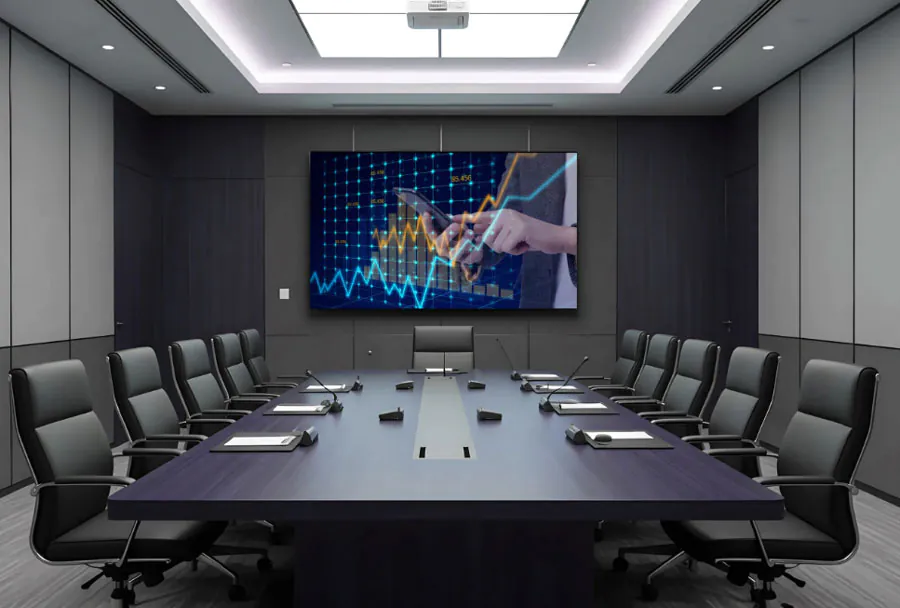
– Corporate and Education: Long daily runtime demands displays that balance performance and TCO. Energy-efficient solutions reduce noise and cooling demands in meeting rooms and classrooms.
– Control Rooms and Operations Centers: These environments require continuous uptime and consistent color accuracy. Energy-efficient displays reduce thermal stress, improving mean time between failures while keeping power budgets manageable.
– Museums and Exhibitions: Preserving artwork and controlling ambient light levels is critical; adaptive, low-power LED panels balance vivid imaging with conservation requirements.
How Energy Efficiency Impacts Total Cost of Ownership
Energy efficiency influences the largest ongoing expenses associated with digital displays. Reduced energy draw translates into direct operational savings, and improved thermal performance often extends the lifetime of LEDs and electronic components, lowering replacement and maintenance costs. When evaluating TCO, buyers should consider:
– Initial capital cost vs. expected energy savings
– Typical daily operating hours and local electricity rates
– Cooling cost reductions due to lower heat output
– Maintenance cycles influenced by operating temperature and duty cycles
A simple payback model often shows that modest increases in upfront cost for higher-efficiency displays can be recovered quickly, particularly in high-usage installations.
Comparative Analysis: Energy and Performance Metrics
Below is a representative comparative table that contrasts conventional indoor LED characteristics with typical improvements associated with energy-optimized designs like those TW VISION promotes. Values are illustrative, based on common industry benchmarks for indoor LED installations; actual performance will vary by model, configuration, and usage patterns.
| Metric | Conventional Indoor LED | TW VISION Typical (Energy-Optimized) | Representative Energy Savings | Comments |
|---|---|---|---|---|
| Power Consumption (W/m2 at typical indoor brightness) | 200–450 W/m2 | 120–300 W/m2 | 20–45% | Lower-efficacy components and static brightness in conventional systems raise average power use. |
| Peak Brightness (nits) | 800–1200 nits | 700–1000 nits | — | TW VISION optimizes for sufficient indoor brightness rather than unnecessary peak levels that increase energy use. |
| Operating Lifetime (hours to 70% lumen maintenance) | 50,000–70,000 hrs | 60,000–80,000 hrs | 10–20% longer | Reduced thermal stress and lower drive currents extend useful life. |
| Heat Output (relative) | Higher | Lower | Reduction in cooling load of 15–30% | Lower heat output reduces air conditioning demand in enclosed spaces. |
| Dynamic Power Management Features | Basic or none | Ambient-adaptive, local dimming, content-aware | Variable; up to 40% on mixed-content | Smart features directly reduce average power during typical content playback. |
Installation, Integration, and Maintenance Considerations
Energy efficiency is tied to installation and system integration practices. TW VISION’s indoor solutions are typically designed for:
– Easy integration with facility control systems for automated brightness scheduling.
– Modular design to simplify maintenance and reduce downtime.
– Calibration services to ensure color consistency at lower drive currents.
– Remote diagnostics to detect suboptimal operating parameters that could increase energy consumption.
Proper installation — including optimizing mounting to avoid direct sunlight, configuring ambient light sensor thresholds, and programming display schedules — is essential to realize advertised energy savings.
Sustainability, Standards, and Certifications
Buyers focused on sustainability should look for compliance with recognized standards and certifications that indicate responsible manufacturing and product safety. Energy-optimized indoor displays contribute to ESG reporting by lowering energy use and extending product lifetimes. TW VISION typically emphasizes adherence to industry norms for safety and material compliance and can provide relevant documentation and testing results as part of procurement.
Buyer Checklist: Choosing an Energy-Efficient Indoor LED Display
– Request measured power consumption at representative brightness levels, not just peak ratings.
– Verify ambient light adaptive functionality and whether it’s enabled out of the box.
– Ask about local dimming and pixel-level control capabilities for your content types.
– Evaluate thermal management strategies and expected maintenance intervals.
– Compare TCO models that include energy, cooling, and replacement costs over a 5–10 year horizon.
– Confirm available service plans and remote-monitoring features to maintain efficiency over time.
Balancing Visual Impact and Operational Efficiency
Energy-efficient indoor LED displays from trusted providers like TW VISION offer a compelling balance of image quality, operational savings, and environmental responsibility. By focusing on component efficiency, adaptive control, intelligent power management, and sound thermal engineering, such displays reduce both direct and indirect costs while maintaining the bright, detailed visuals organizations expect from modern LED technology. For decision-makers, the most important step is to evaluate real-world performance data and lifecycle costs rather than relying on peak-brightness specs alone. When properly specified and installed, energy-optimized indoor LED displays deliver measurable savings and reduced environmental impact — without compromising the visual experience that drives engagement.