

Big screen monitors for churches: 6 : smart buyer guide

Big screen monitors for churches have become a practical solution for congregations seeking clear visuals, flexible placement, and modern communication tools. Whether a church needs lyric display, sermon notes, announcement slides, livestream support, or digital signage in the lobby, choosing the right display can improve visibility and engagement throughout the worship space. Unlike older projection systems, large-format displays often offer brighter images, better contrast, and simpler maintenance.
Table of Contents
- Why churches are choosing large-format displays
- Key features to evaluate before buying
- Screen size and viewing distance
- Brightness and ambient light performance
- Resolution and text clarity
- Commercial vs. consumer displays
- Connectivity and integration
- Mounting and safety
- Audio coordination
- How to choose the right setup for different church spaces
- Main sanctuary
- Fellowship hall or multipurpose room
- Lobby and welcome areas
- Children’s and youth ministry rooms
- Overflow rooms and livestream support
- Budget, installation, and long-term value
- Best practices for content, placement, and worship impact
- Prioritize readability
- Place screens for natural sightlines
- Maintain visual consistency
- Train volunteers and staff
- Balance production quality with ministry purpose
- Test before major services
- FAQ
- What size works best for Big screen monitors for churches?
- Are commercial displays better than TVs for church use?
- Should churches choose projectors or flat-panel displays?
- Can these monitors be used for livestreaming and announcements?
- How long do church display monitors usually last?
- Conclusion
When evaluating Big screen monitors for churches, leaders should think beyond screen size alone. Viewing distance, sanctuary lighting, mounting options, audio integration, and long-term operating costs all matter. The best display setup supports worship without becoming a distraction. This guide explains what to look for, how to compare options, and how to make a smart investment for both small chapels and large sanctuaries.
Why churches are choosing large-format displays
Many ministries are moving toward Big screen monitors for churches because they solve common visual challenges more effectively than legacy projection systems. In sanctuaries with ambient light, stained-glass windows, or multipurpose layouts, standard projectors can struggle to deliver bright, readable content. A large-format monitor can keep text sharp and visible even when the room is not completely dark.
Another reason churches are investing in these displays is versatility. Big screen monitors for churches can be used for worship lyrics, Bible verses, sermon points, video playback, church announcements, donor recognition, event promotion, and children’s ministry communication. A single display technology can serve multiple departments and spaces, from sanctuaries and fellowship halls to classrooms and lobbies.
Maintenance is another major factor. Projectors often require lamp replacements, filter cleaning, and careful calibration. By comparison, many modern flat-panel commercial displays are easier to manage over time. This can reduce technical headaches for volunteer teams and staff members who already juggle many responsibilities each week.
Churches also appreciate the polished appearance. When installed correctly, large displays can look clean and professional while supporting a welcoming worship environment. They fit well in contemporary worship centers, but they can also be integrated thoughtfully into more traditional sanctuaries when aesthetics are considered from the beginning.
Finally, reliability matters. Worship services, funerals, weddings, conferences, and midweek programs all depend on dependable AV systems. Choosing Big screen monitors for churches can mean fewer last-minute issues and more confidence that lyrics, videos, and announcements will display as intended.
Key features to evaluate before buying
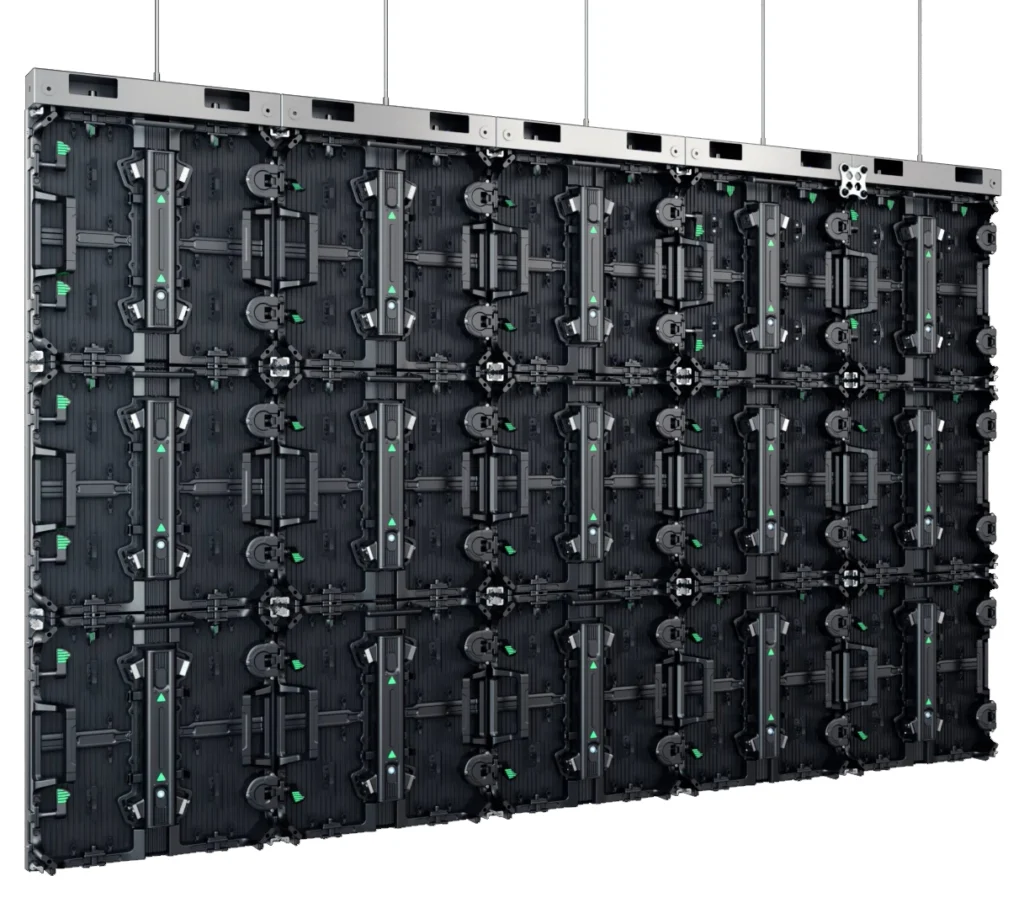
Selecting Big screen monitors for churches requires more than picking the biggest screen your budget allows. The right display should match the room, the audience, and the church’s actual ministry needs.
Screen size and viewing distance
One of the first considerations is how far people will be sitting from the display. A screen that looks impressive up close may be hard to read from the back row. Text-based worship content requires a size that supports readability, not just visual impact. For larger sanctuaries, churches may need multiple screens rather than one oversized display.
Brightness and ambient light performance
Sanctuaries often have unpredictable lighting conditions. Windows, stage lighting, chandeliers, and natural daylight can all affect visibility. Commercial displays with strong brightness ratings generally perform better in these environments than residential TVs. When comparing Big screen monitors for churches, brightness is often one of the most important specifications.
Resolution and text clarity
Most churches should consider at least Full HD, while many now prefer 4K for sharper graphics and video. Higher resolution is especially useful when displaying song lyrics, scripture passages, sermon notes, and livestream elements. Crisp text can significantly improve the worship experience for attendees seated farther away.
Commercial vs. consumer displays
A common mistake is buying a consumer television for heavy weekly ministry use. Consumer sets may be less durable and offer fewer installation and control options. Commercial-grade Big screen monitors for churches are often designed for longer operating hours, more robust mounting, better cooling, and centralized management.
Connectivity and integration
Before purchasing, confirm the display supports the church’s content workflow. That may include HDMI inputs, presentation software, video switchers, streaming encoders, digital signage platforms, and confidence monitor feeds. The monitor should work smoothly with the church’s existing AV ecosystem rather than forcing expensive upgrades elsewhere.
Mounting and safety
Wall placement, truss mounting, stage-side positioning, and mobile carts each require different hardware and planning. Safety is critical in any public gathering space. Churches should use professional-grade mounts and ensure structural support is verified before installation.
Audio coordination
Although most displays include basic speakers, sanctuary sound should usually run through the church audio system instead. This provides better coverage and consistent volume control. If the display will be used in classrooms or lobbies, built-in audio may be sufficient, but that should be assessed case by case.
How to choose the right setup for different church spaces

Not every ministry area needs the same display strategy. The best approach to Big screen monitors for churches depends on how the space is used throughout the week.
Main sanctuary
The sanctuary usually demands the most planning. Churches must evaluate room depth, seating angles, stage design, and lighting conditions. In many cases, dual side screens offer balanced visibility for both left and right seating sections. Some modern churches prefer a center display, while others use LED walls for large-scale visual impact. For many congregations, however, well-placed Big screen monitors for churches provide an excellent middle ground between affordability and performance.
Fellowship hall or multipurpose room
These spaces often host banquets, Bible studies, youth gatherings, and community events. Flexibility matters more than theatrical presentation. A large monitor on a wall mount or rolling cart can serve many purposes without requiring a complex AV installation.
Lobby and welcome areas
Displays in common areas can communicate service times, event reminders, giving campaigns, mission updates, and directional information. In these spaces, Big screen monitors for churches function as digital signage tools that improve communication and reduce dependence on printed posters.
Children’s and youth ministry rooms
Interactive, colorful visuals can enhance teaching and engagement. These rooms may benefit from durable displays with easy input switching for videos, slides, games, and lesson content. The ideal setup should be user-friendly for volunteers and ministry leaders with varying technical skill levels.
Overflow rooms and livestream support
Churches that experience holiday attendance spikes or host large events may need screens in overflow spaces. These displays should pair well with cameras, switchers, and streaming systems so attendees still feel connected to the service. Reliable image synchronization and audio routing are important here.
By matching display type to room function, churches can avoid overspending in low-priority spaces while still investing appropriately where visibility matters most.
Budget, installation, and long-term value
Cost is always a key factor, but the lowest upfront price does not always deliver the best value. When budgeting for Big screen monitors for churches, it helps to think in terms of total system cost rather than screen price alone.

First, include mounting hardware, signal distribution, cabling, media players, control systems, and labor. A display may seem affordable until installation needs are added. Churches should also budget for electrical work if new outlets or power management solutions are required.
Second, consider operating life. Commercial displays often cost more initially but may offer better durability and lower maintenance over time. If a church uses the screen several times each week for worship, rehearsals, classes, and events, reliability can justify the higher investment.
Third, think about future scalability. If the church plans to expand livestreaming, add more campuses, redesign the stage, or improve digital signage, it is wise to choose Big screen monitors for churches that can grow with those plans. A slightly better display purchased today may prevent costly replacement later.
Professional installation is also worth serious consideration. Proper placement affects readability, aesthetics, and safety. Installers can help determine ideal height, tilt angle, cable routing, and structural attachment points. They can also integrate the display with existing presentation and audio systems, reducing setup errors and volunteer frustration.
Another budgeting issue is energy efficiency. Modern displays can vary in power consumption. Churches that operate multiple screens across several buildings may benefit from models with scheduling controls, automatic standby modes, and remote management features.
Finally, ask about warranty coverage and support. Ministry schedules leave little room for downtime, especially around Easter, Christmas, conferences, and special events. Good manufacturer support and a solid commercial warranty can protect the church’s investment and provide peace of mind.
Best practices for content, placement, and worship impact
Buying the right hardware is only part of the equation. To get the most from Big screen monitors for churches, congregations should also focus on how content is designed and how displays are positioned within the room.

Prioritize readability
Song lyrics, scripture, and sermon notes should be easy to read in seconds. Use large fonts, high contrast, and simple backgrounds. Avoid cluttered slides with too much text. If attendees must strain to read, even an expensive screen will underperform.
Place screens for natural sightlines
Displays should support worship without pulling attention away from the platform unnecessarily. The best placement allows people to glance at the screen comfortably while remaining engaged with the service. Poor positioning can cause neck strain, visual imbalance, or distraction.
Maintain visual consistency
Churches that use multiple screens should aim for consistent formatting, brightness, color settings, and slide layouts. A unified visual style strengthens communication and creates a more professional experience for members and visitors alike.
Train volunteers and staff
Technology only works well when the team knows how to use it. Churches should create simple workflows for presentation software, source switching, troubleshooting, and shutdown procedures. This is especially important when Big screen monitors for churches are used by rotating volunteer teams.
Balance production quality with ministry purpose
Screens should enhance worship, not dominate it. The goal is clarity, participation, and communication. Churches should avoid overcomplicating visual design with excessive motion, distracting effects, or unnecessary visual noise.
Test before major services
Run complete checks before Sunday services and special events. Verify inputs, confirm slide formatting, test video playback, and make sure audio sync is correct. Preventive testing minimizes avoidable technical problems during important moments.
When churches combine the right display technology with thoughtful content strategy, screens become a valuable ministry tool rather than just another piece of equipment.
FAQ
What size works best for Big screen monitors for churches?
The best size depends on room dimensions, seating distance, and the kind of content being shown. For lyric and scripture visibility, churches should prioritize readability from the farthest seats. In many cases, multiple Big screen monitors for churches placed strategically work better than a single oversized display.

Are commercial displays better than TVs for church use?
Yes, in most cases. Commercial models built for Big screen monitors for churches are typically more durable, brighter, and better suited for frequent use. They also tend to offer stronger mounting options, longer operating life, and easier integration with AV systems.
Should churches choose projectors or flat-panel displays?
It depends on the room and budget. Projectors can still work well in very large spaces, especially where screen size is the top priority. However, Big screen monitors for churches often provide better brightness, sharper text, and lower maintenance in spaces with ambient light.
Can these monitors be used for livestreaming and announcements?
Absolutely. Many churches use Big screen monitors for churches for sermon visuals, livestream feeds, event promotions, digital signage, and welcome messages. They are flexible tools that support both worship and week-to-week communication.
How long do church display monitors usually last?
Lifespan varies by brand, usage hours, and installation conditions. High-quality commercial Big screen monitors for churches can last for many years when properly installed and maintained. Choosing the right model and using recommended power and ventilation practices will help extend service life.
Conclusion
Choosing Big screen monitors for churches is not just a technology decision; it is a communication and ministry decision. The right display can make worship lyrics easier to follow, sermons easier to understand, announcements more effective, and church spaces more welcoming. By evaluating screen size, brightness, resolution, durability, installation needs, and long-term value, churches can invest wisely and avoid common mistakes.
Most importantly, Big screen monitors for churches should serve the congregation clearly and consistently without becoming a distraction. When selected thoughtfully and used with strong content practices, they can support worship, teaching, outreach, and engagement for years to come.
