TW VISION Bendable Screen For Museums And Exhibition Halls

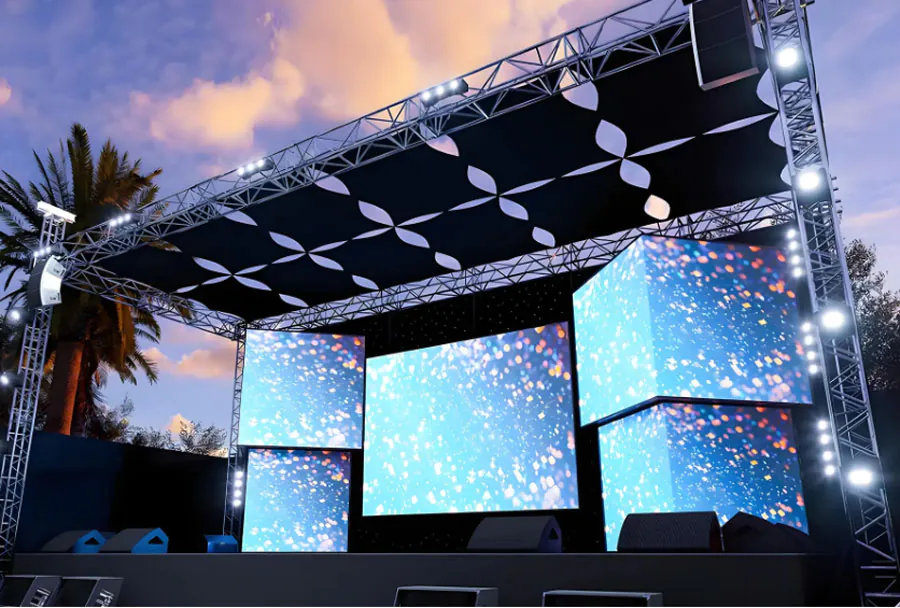
The museum and exhibition market has evolved from static display cases and printed panels to dynamic, immersive storytelling environments. Curators and exhibition designers are increasingly seeking display technologies that are flexible in both form and function—able to adapt to architectural constraints, create emotional resonance, and convey complex narratives. TW VISION Bendable Screen addresses these demands by offering a display platform that can be curved, stretched, and shaped to match bespoke exhibition needs without compromising image quality.
This article provides a professional, practical examination of TW VISION Bendable Screen from the viewpoint of museums and exhibition halls. It covers technical advantages, design integration, visitor experience, conservation and accessibility concerns, installation and maintenance considerations, ROI and lifecycle assessment, and practical implementation strategies. A comparative analysis table highlights how TW VISION performs relative to conventional alternatives.
Core Features and Technical Capabilities
TW VISION Bendable Screen is engineered to combine high-resolution imaging with mechanical flexibility. Its core technical strengths typically include:
– Flexible LED or micro-LED modules with tightly tiled pixel pitches for close viewing distances.
– Controlled curvature radii allowing designers to create concave, convex, and wave-like surfaces.
– Lightweight substrate materials that permit mounting on non-rigid frames or lightweight structures.
– High brightness and contrast ratios for visibility under typical museum lighting conditions.
– Integrated calibration systems for color uniformity across joined segments and curved arrays.
These specifications enable detailed imagery, synchronized multimedia playback, and seamless transitions across contoured surfaces—key for storytelling sequences, interactive installations, and sculptural display elements.
Design Integration and Spatial Flexibility
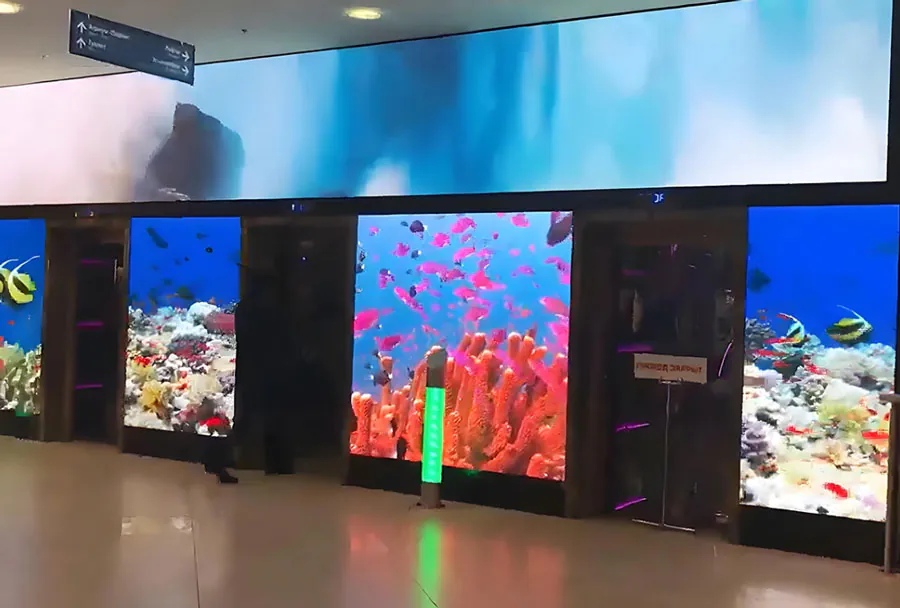
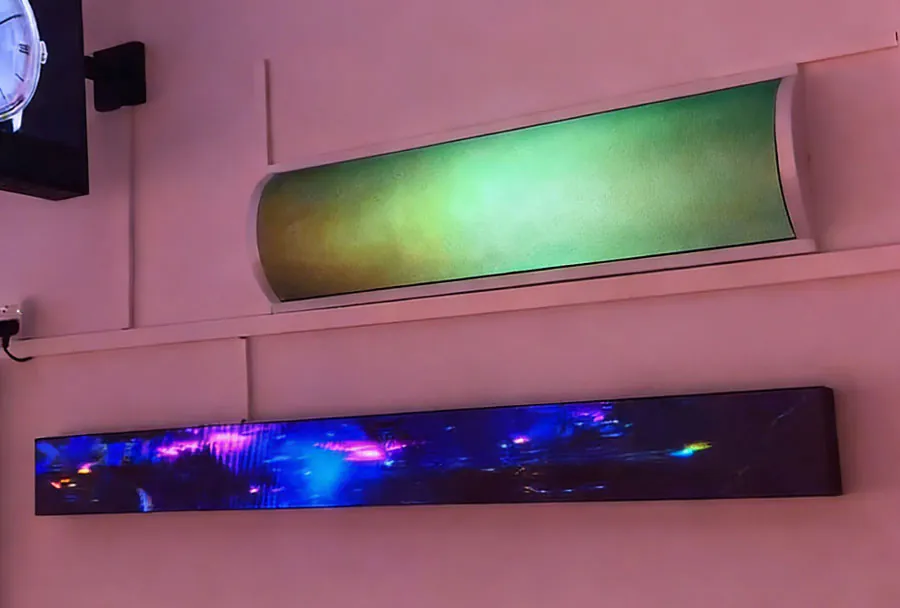
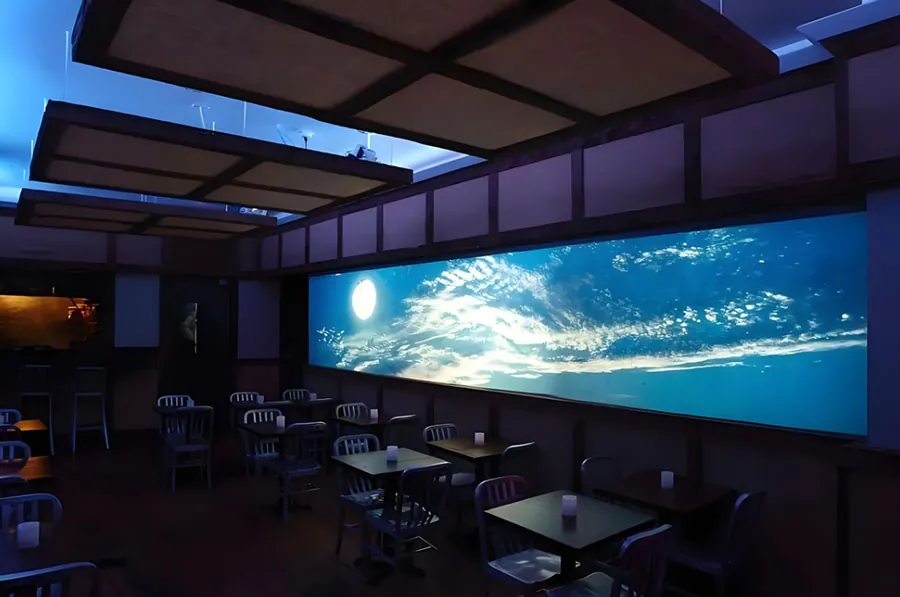
One of the most valuable attributes of bendable screens for museums is spatial adaptability. Unlike rigid panels, TW VISION Bendable Screen can be engineered to conform to columns, wrap around display islands, or form continuous panoramic walls without unsightly seams. Practical design advantages include:
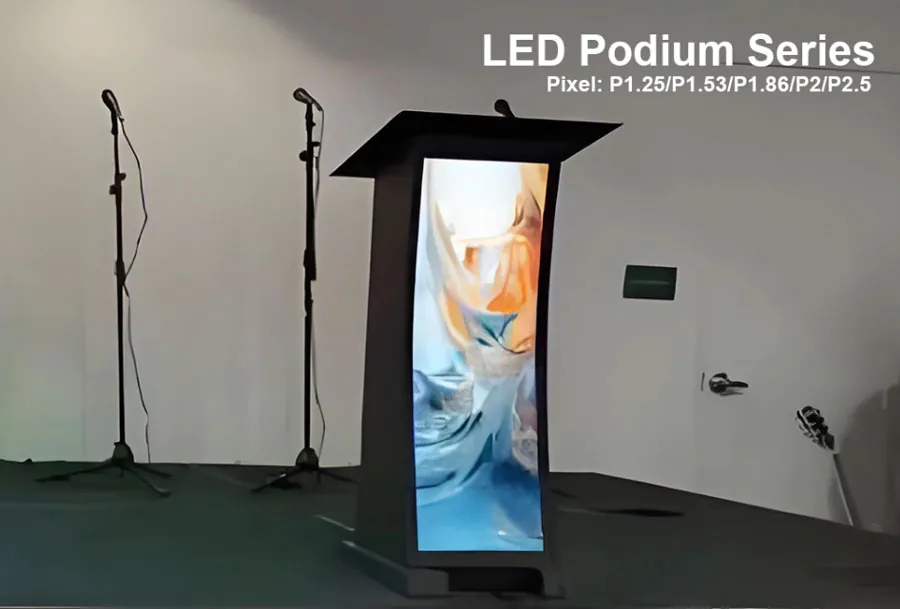
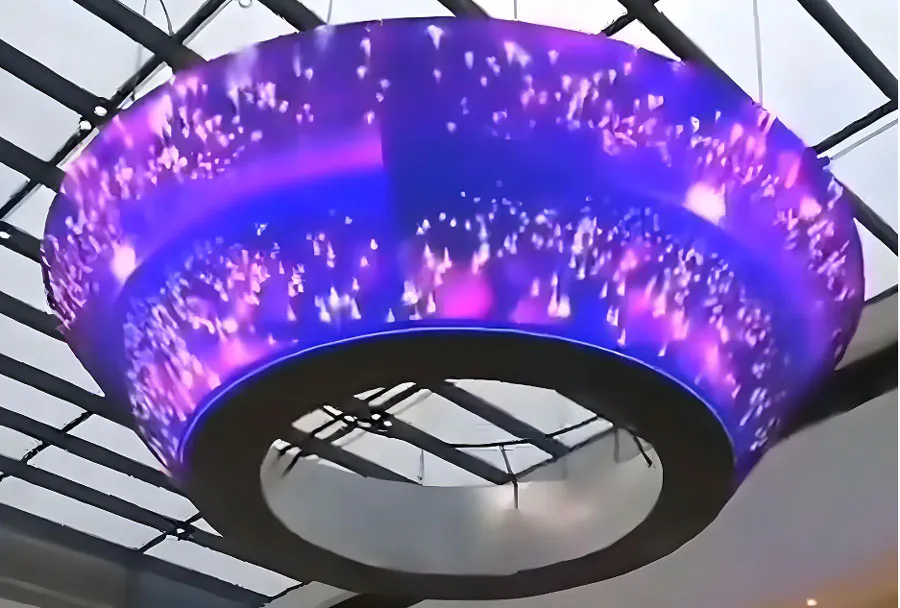
– Custom shapes: The screen can form arcs, cylinders, and organic panels that echo exhibition themes.
– Low-profile mounting: Lightweight, flexible substrates reduce load requirements on historic structures.
– Modular composition: Panels can be combined to create large seamless canvases or smaller discrete elements.
Effective integration begins at the planning phase. Architects and exhibition designers should supply accurate site surveys and 3D models to the integrator so bendable panels can be specified with precise radii and mounting tolerances. Collaboration with conservators is essential when mounting close to artifacts to ensure vibration and heat transfer are within safe limits.
Visitor Experience and Narrative Impact
Display format influences how visitors perceive and retain information. Bendable screens can:
– Create immersive storytelling: Wrap-around visuals can place visitors “inside” a reconstructed environment or narrative.
– Direct attention: Curves and angles can guide sightlines to focal points within the gallery.
– Support multi-sensory design: Synchronization with audio, lighting, and tactile elements enhances engagement.
– Accommodate varying viewing distances: Tight pixel pitches and high contrast ensure clarity both up close for interpretive text and from across the gallery for ambient visuals.
When designing content, teams should consider motion pacing, readability of overlaid text on curved surfaces, and the psychological effect of curvature on perception—subtle curvature can be engaging, while extreme curvature may distort imagery and require content remapping.
Conservation and Environmental Considerations
Museum environments have unique conservation requirements. TW VISION Bendable Screen systems must be evaluated for:
– Heat dissipation: Ensure cooling solutions do not increase ambient temperature around sensitive artifacts.
– Electromagnetic interference: Verify that electronic emissions comply with conservation lab standards.
– Light exposure: Bright dynamic displays can generate cumulative light exposure; use timed playback, proximity sensors, or low-luminance modes for nearby artifacts.

– Mounting impacts: Non-invasive attachment systems, vibration damping, and load distribution are essential for historic structures and delicate mounts.
A cross-disciplinary review with conservators and facilities managers during specification and installation is non-negotiable. Implement programmable brightness controls and use spectrally optimized content to minimize photochemical risks.
Accessibility and Inclusive Design
Bendable screens can support accessibility when thoughtfully implemented:
– Captioning and sign language windows can be integrated into screen layouts.
– Adjustable viewing zones and seating areas can be designed to accommodate wheelchairs and visitors of different heights.
– Audio descriptions and tactile overlays can complement visual content for multisensory access.
– User interface placements should follow universal design principles—controls for interactivity should be reachable and usable for a broad range of abilities.
Include accessibility experts early in the project to ensure compliance with legal requirements (e.g., ADA in the United States) and to achieve truly inclusive experiences.
Installation, Calibration, and Structural Requirements
Installation of a bendable screen involves several stages:
– Structural assessment: Confirm substrate and support structures can handle dynamic loads and long-term stress distribution.
– Environmental conditioning: Ensure humidity and temperature are within device operational tolerances during installation and operation.
– Precision mounting: Curved installations often require custom ribs, flexible frames, or 3D-printed fixtures to maintain consistent bend radii.
– Color calibration and mapping: Due to curvature and multiple modules, color calibration is critical. Integrators use colorimeters and software to achieve seamless color and brightness uniformity.
– Cable management and serviceability: The system must allow for future servicing without disassembling architectural finishes.
Timelines should include time for dry runs, calibration sessions, and conservator sign-off where artifacts are proximate.
Maintenance, Reliability, and Lifespan
Maintenance considerations for museums include uptime, ease of service, and predictable lifecycle costs:
– Modular replacement: TW VISION’s modular approach typically allows individual modules to be swapped without replacing large sections.
– Monitoring tools: Remote diagnostics and health monitoring facilitate proactive maintenance.
– Consumable components: Fans, power supplies, and control electronics have defined lifetimes; factor replacements into long-term budgets.
– Warranty and support: Secure service-level agreements that include on-site response times and parts availability.
A lifecycle cost analysis, factoring initial capital expenditure, maintenance, and expected useful life (often measured in operating hours), supports procurement decisions and helps museums plan capital reserves.
Content Strategy and Production Best Practices
Content for curved surfaces must be created with the medium in mind:
– Pre-visualization: Use 3D models to map content precisely to the curved geometry.
– Aspect and distortion correction: Design content to compensate for geometric distortion and viewer sightlines.
– High-resolution assets: Curved close-view installations require high pixel density to avoid visible pixilation.
– Layered storytelling: Combine ambient motion graphics for distance viewers with interactive elements in lower thirds or dedicated panels for close inspection.
– Playback systems: Use robust media servers with timeline control to synchronize multi-screen installations, networked audio, and external triggers (sensors, buttons).
Content teams should conduct on-site tests to evaluate legibility and aesthetic impact under real lighting and sightline conditions.
Comparative Analysis Table
| Feature | TW VISION Bendable Screen | Traditional LED/LCD Walls | Flexible OLED Panels | Projection Mapping |
|---|---|---|---|---|
| Form Factor | Highly flexible; supports concave/convex shapes and waves | Rigid, flat panels; limited to planar or segmented curves | Thin and flexible; better curvature but limited large seamless sizes | Virtually any surface shape, dependent on projector geometry |
| Brightness & Visibility | High luminance suitable for bright galleries | Very high brightness options for well-lit spaces | Good contrast but generally lower peak brightness | Depends on ambient light; best in controlled/darkened areas |
| Image Uniformity | Engineered calibration for uniform color across curves | Excellent uniformity on flat walls; seams visible if tiled | High uniformity on small to medium surfaces | Seams/blending depend on mapping and surface texture |
| Durability & Maintenance | Modular serviceability; designed for gallery uptime | Durable with standard maintenance protocols | Delicate; sensitive to bending stress and handling | Projector bulbs and alignment require regular service |
| Installation Complexity | Moderate–high: custom mounts and calibration needed | Moderate: predictable mounts, but heavy panels | High: requires careful handling and specialized mounts | High: precise positioning and surface prep required |

Cost and Return on Investment
Initial capital costs for bendable displays are typically higher than single flat panels but comparable to other premium display systems when factoring in custom fabrication and installation. Museums should evaluate ROI in broader terms:
– Increased attendance and dwell time driven by immersive installations.
– Sponsorship and donor engagement opportunities tied to flagship exhibits.
– Reduction in printed sign and reprint costs when interpretive content can be updated digitally.
– Potential for multi-use content across traveling exhibitions or repurposed gallery spaces.
A clear business case combines projected visitation metrics, content refresh frequency, and potential revenue streams (ticketing, events, partnerships). Factor in depreciation and planned refresh cycles—digital displays may require mid-life component updates or complete panel replacements after a decade depending on operating hours.
Risk Management and Common Challenges
Adopting new display formats introduces risks:
– Overuse of motion or brightness can lead to visitor discomfort or fatigue.
– Technical complexity may increase downtime if support contracts are inadequate.
– Content created without curvature-aware workflows can appear distorted or lose impact.
– Conservation concerns if displays are too close to sensitive items.
Mitigation strategies include iterative prototyping, conservative brightness defaults, robust service-level agreements, and early collaboration with subject-matter experts.
Case Examples and Use Scenarios
– Immersive historical environments: Wrap-around landscapes that recreate vistas with ambient soundscapes.
– Artifact storytelling: Curved panels behind cases that provide contextual animations synchronized with object lighting.
– Wayfinding and orientation: Sculptural screens in lobbies to orient visitors with dynamic maps.
– Temporary exhibitions: Modular curved panels that can be reconfigured for touring shows or seasonal programming.
Successful deployments usually start small with a pilot installation, measure visitor response, and then scale to larger gallery-wide projects.
Procurement and Partnership Recommendations
When procuring TW VISION Bendable Screen systems, institutions should:
– Request site-specific proposals including mechanical drawings, thermal analysis, and content proof-of-concept.
– Specify uptime and response time expectations in the contract, including spare parts provisioning.
– Require a training program for in-house AV and content teams.
– Include a phased acceptance plan with havens for conservators to sign off on environmental impacts.
Partner with vendors who have museum-specific experience and can demonstrate previous installations, case studies, and client references.
Conclusion: Strategic Value for Museums and Exhibition Halls
TW VISION Bendable Screen provides museums and exhibition halls with a powerful tool for contemporary storytelling—one that merges architectural form with dynamic content. Its flexibility enables creative, site-responsive design while maintaining the high visual fidelity required for interpretive clarity. Thoughtful implementation—balancing conservation concerns, accessibility requirements, and maintenance planning—turns this technology from a novelty into a long-term asset that enhances visitor engagement and institutional impact.

For museums considering next-generation displays, the recommendation is clear: adopt a phased, evidence-driven approach. Begin with a pilot to validate content workflows and environmental safety, secure robust service agreements, and design with universal access and conservation in mind. When executed well, bendable screens like TW VISION’s offer a compelling path to modern, memorable exhibitions that respect collections while expanding creative possibilities.