Flexible Splicing LED Signage for Digital Advertising Screens

Digital advertising is no longer confined to flat, standard-sized displays. Modern retail, transportation hubs, event venues, and corporate spaces are demanding signage that can bend, wrap, scale, and evolve with changing campaigns. This is where Flexible Splicing LED Signage for Digital Advertising Screens becomes a strategic advantage—combining the creative freedom of flexible LED modules with the scalability of spliced installations. As a service provider, TW VISION focuses on helping customers turn architectural surfaces into high-impact digital media, balancing design ambition with reliable engineering.
What Is Flexible Splicing LED Signage?
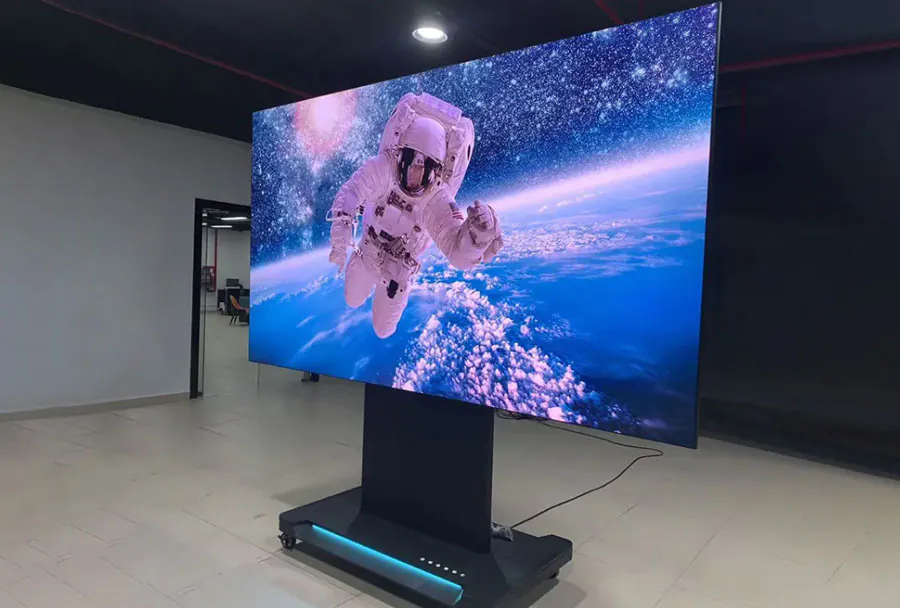
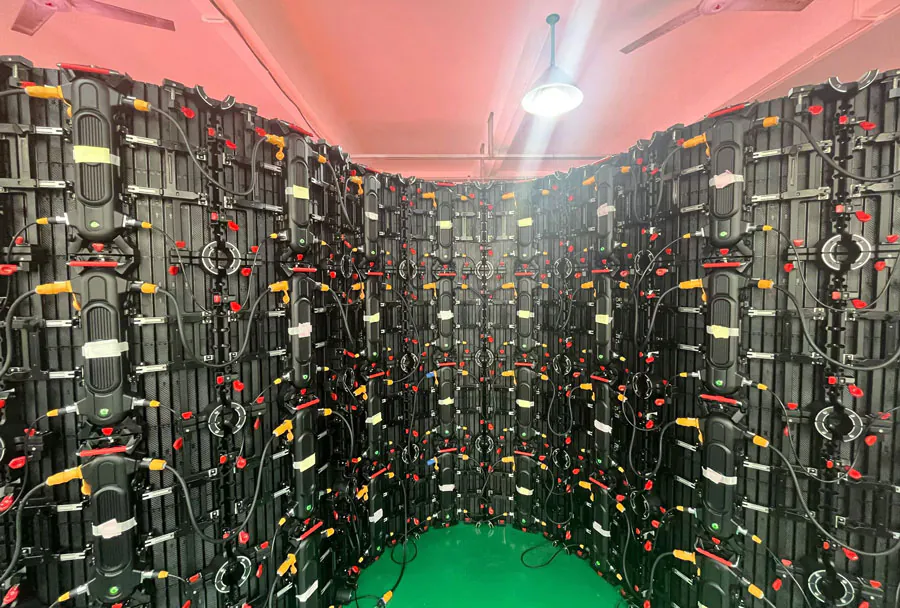
Flexible splicing LED signage refers to an led display solution built from multiple flexible modules that can be seamlessly connected (“spliced”) into a larger screen. Unlike conventional rigid LED cabinets that require flat surfaces and strict installation constraints, flexible modules can conform to curved walls, columns, arches, and custom structures. Through precision alignment, calibration, and control, the final display appears as one unified digital advertising screen.
For digital advertising, this matters because screen shape and placement influence attention. A curved screen that wraps around a storefront corner or a cylindrical pillar in a mall can capture viewers from multiple angles—creating more “viewable seconds” and stronger brand recall.
Why Flexible Splicing Matters for Digital Advertising
Advertising success is often determined by three elements: visibility, memorability, and speed of content refresh. Flexible splicing LED signage strengthens all three.
1) Visibility in high-traffic spaces. Traditional screens are limited by the geometry of the building. Flexible splicing allows brands to occupy surfaces that were previously unusable: curved facades, mezzanine edges, or interior columns. The result is better sightlines and fewer “dead angles.”
2) Memorability through unconventional forms. A flat rectangle is expected; a wave-like LED ribbon, a curved portal, or a wraparound halo feels premium and immersive. Even with the same content, a distinctive physical form elevates perceived value.
3) Speed of campaign updates. Like other digital signage, content can be scheduled, segmented, and changed remotely. For multi-tenant malls, chain retailers, or event operators, this flexibility directly impacts operational efficiency and campaign agility.
Key Use Cases: Where Flexible Splicing LED Signage Performs Best
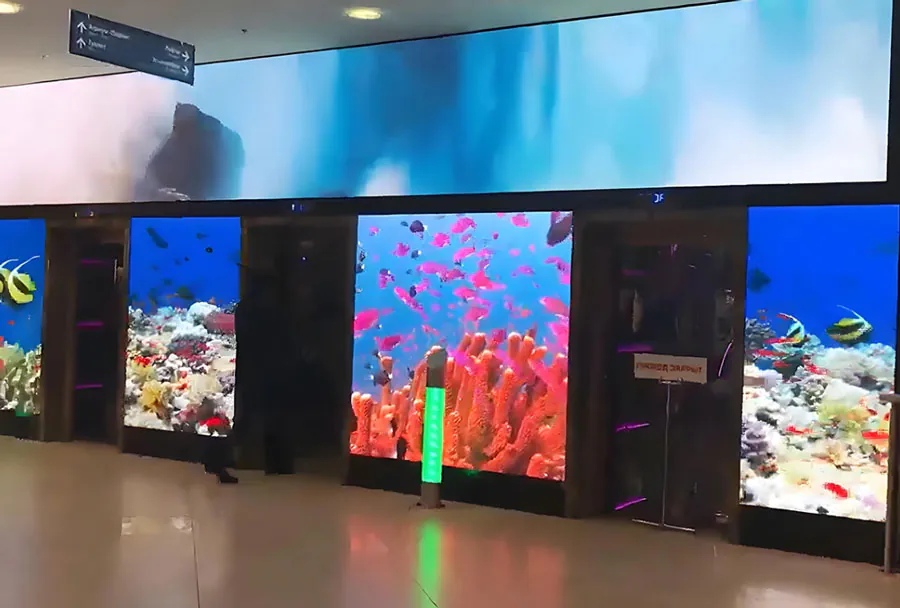
Retail storefronts and shopping malls. Flexible splicing shines in shopfront headers, curved entrance portals, promotional islands, and pillar wraps. It enables brands to create a “digital architecture” that blends with interior design rather than looking like an afterthought.
Transportation and public venues. Airports, metro stations, and bus terminals are visually dense environments where attention is scarce. Curved or strategically spliced LED surfaces can guide passengers, highlight sponsors, and provide announcements without relying on a single crowded billboard.
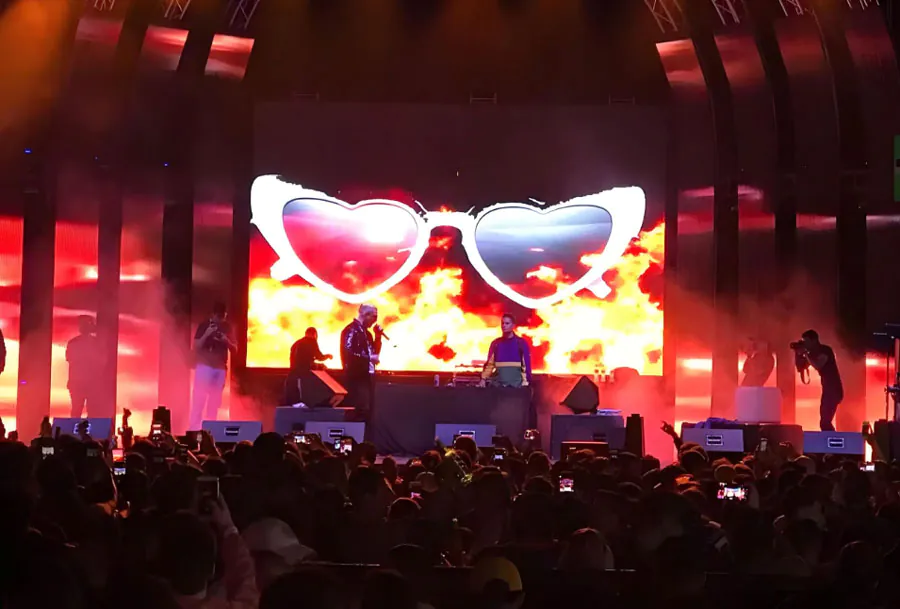
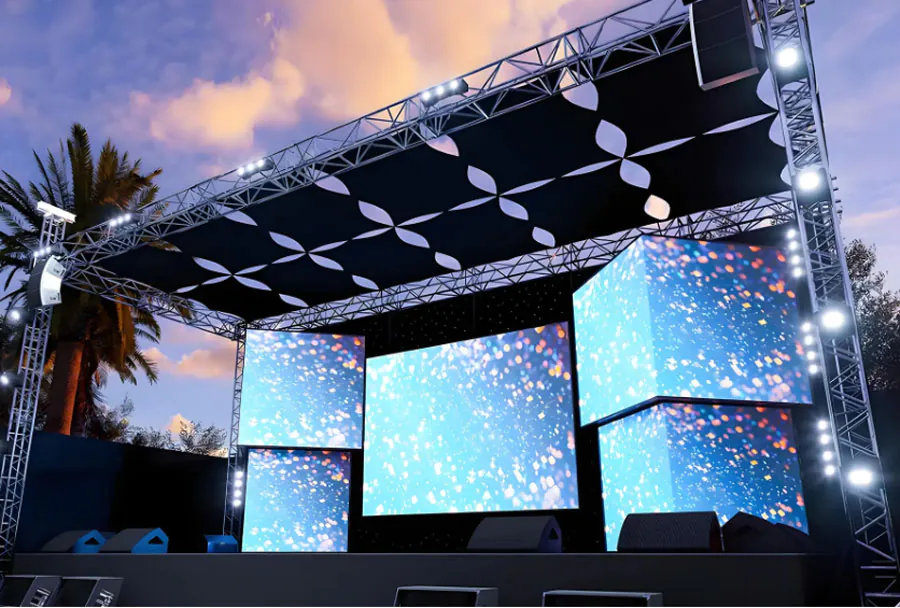
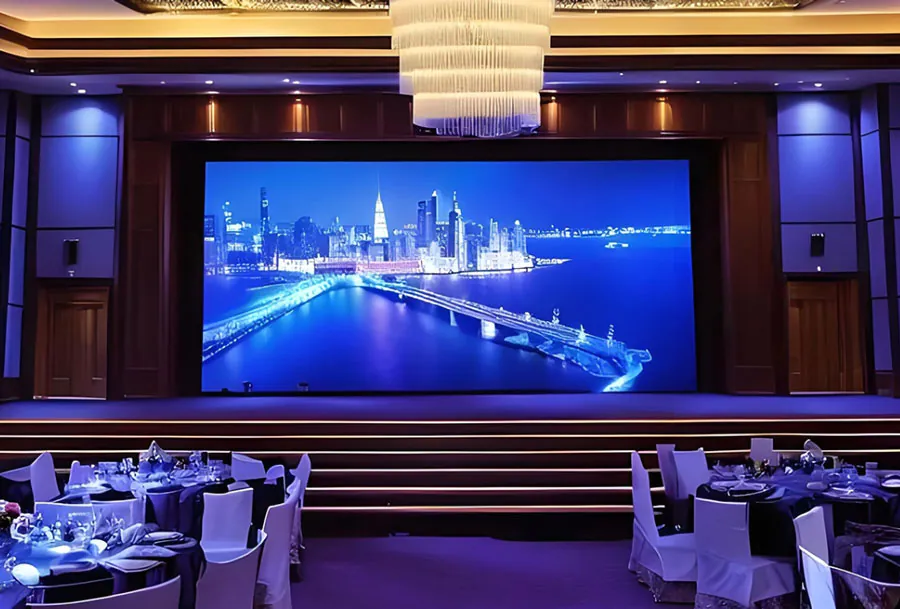
Events, exhibitions, and pop-up installations. Temporary builds often require lightweight structures and creative forms. Flexible modules can be integrated into arcs, tunnels, or stage elements—helping sponsors and organizers deliver immersive brand moments.
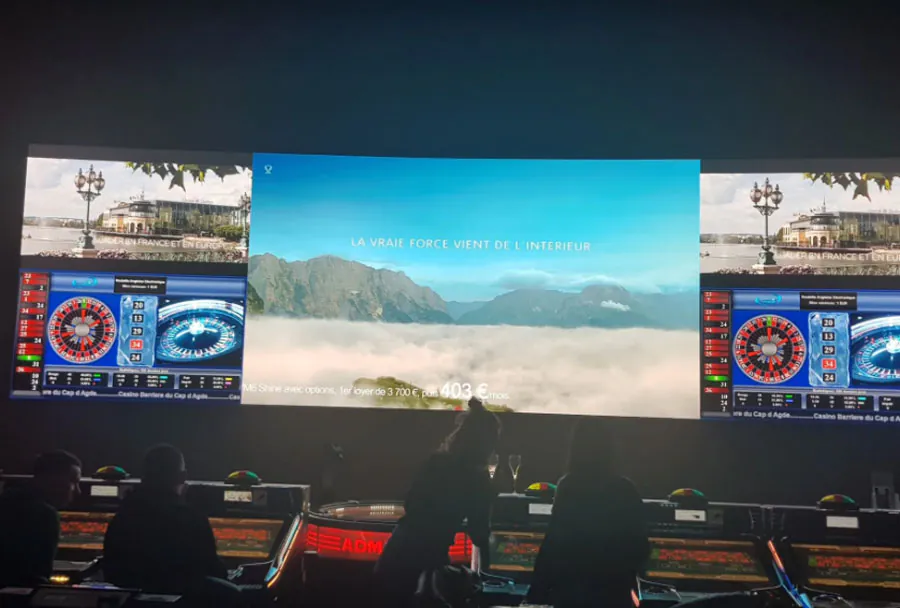
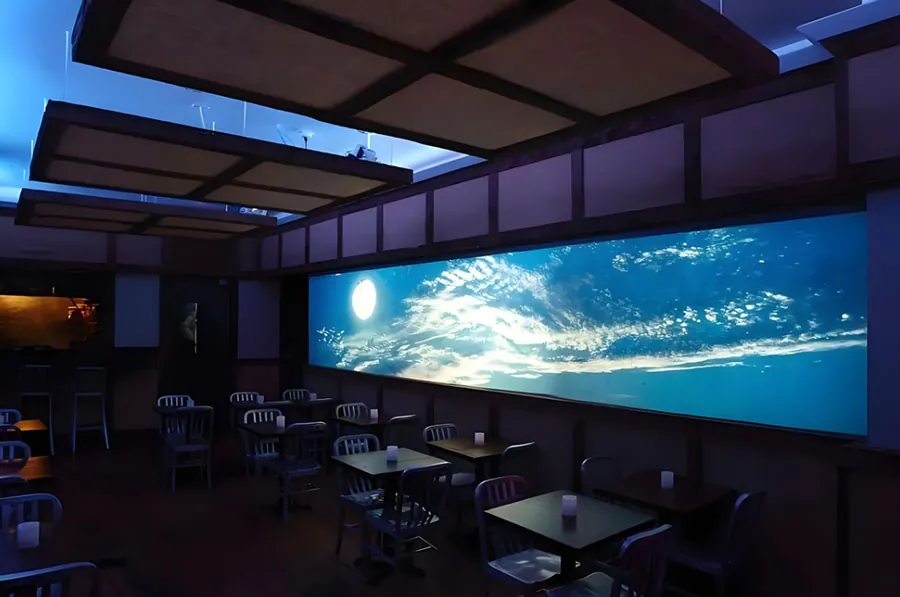
Hospitality and entertainment. Hotels, casinos, theaters, and themed attractions can use flexible splicing to enhance ambience: curved backdrop walls, column wraps, and ceiling edges can become dynamic storytelling surfaces.
Core Technical Elements That Define a Quality Installation
Flexible splicing LED signage is not only about modules bending. Performance comes from the complete system design. When evaluating a solution, focus on these essentials:
Pixel pitch and viewing distance. Digital advertising screens need to match typical audience proximity. Smaller pixel pitch generally supports closer viewing with finer details; larger pitch is more cost-efficient for longer distances. The “right” choice depends on where viewers stand, walk, or queue.
Brightness and environmental adaptation. Indoor retail and outdoor streets require different brightness levels and protective standards. A strong solution maintains clarity without causing glare, while also ensuring stable performance across temperature and humidity changes.
Color consistency and calibration. Spliced displays must look uniform across modules. Without calibration, seams and tonal differences can appear, reducing the premium feel. Professional tuning ensures accurate brand colors—critical for advertisers.
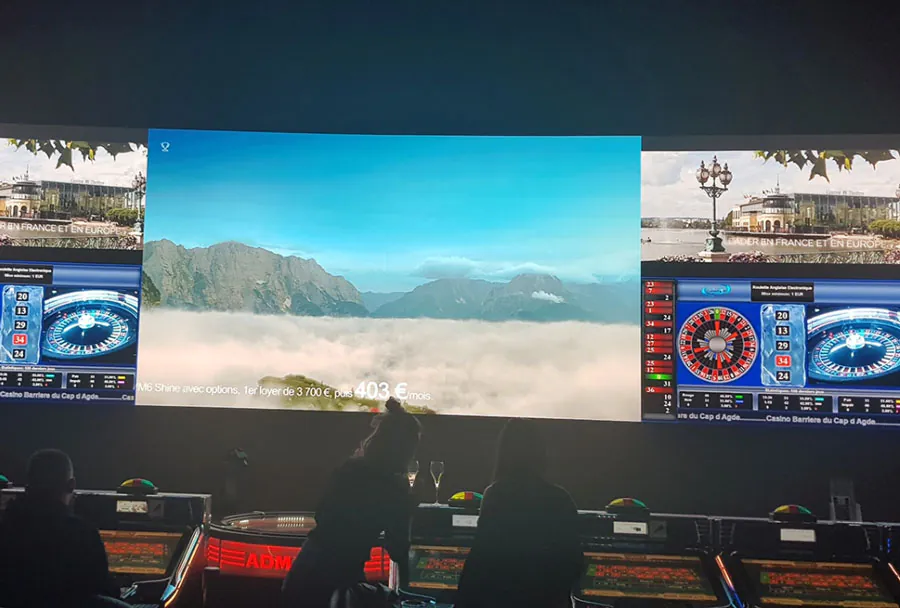
Refresh rate and content smoothness. Advertising content often includes motion graphics. Higher refresh rates and proper processing prevent flicker and scanning artifacts, especially important if the screen is recorded on cameras (common in events and social media).
Mechanical structure and surface precision. Curved installations demand accurate mounting frames. Even small alignment errors can create visible distortions. Engineering the substructure is as important as selecting the LED modules.
Design Freedom: Curves, Columns, Corners, and Beyond
Flexible splicing is popular because it unlocks design freedom while maintaining the scale needed for impactful advertising. Typical shapes include:
– Cylindrical LED pillars for 360-degree exposure in atriums
– Concave/convex curved walls to wrap the viewer’s field of vision
– Corner-wrapped facades that turn building edges into premium ad inventory
– Ribbon-like LED bands along ceilings, escalators, or balcony edges
– Custom sculptural forms where the LED surface becomes part of the brand identity
For brands, these shapes do more than look impressive—they create a signature “media asset” that differentiates a location and can be reused across campaigns.
Content Strategy for Flexible Splicing LED Advertising Screens
A uniquely shaped screen demands content tailored to its geometry. If content is simply stretched from a standard 16:9 layout, the result can feel awkward. Better approaches include:
Geometry-aware motion design. Use curves and wraparound areas to guide the eye. For example, a pillar display can feature rotating product highlights, while a curved wall can simulate depth and parallax.
Segmented playlists by zone. A large spliced LED surface can be divided into regions—branding on one side, promotions on another, and live information in a third.
Dayparting and audience context. Retail traffic changes by hour; transit audiences change by route and schedule. Automated scheduling improves relevance and ad performance.
Short loops with strong readability. People in motion only capture fragments. Prioritize bold typography, high contrast, and concise messaging.
Why TW VISION as a Service Provider
A flexible splicing LED project succeeds when hardware, structure, control systems, and content operations work as one. TW VISION supports customers through an end-to-end service approach aligned to real-world advertising demands:
Consultation and scenario planning. TW VISION evaluates viewing distance, ambient light, audience flow, and architectural constraints, helping clients select suitable pixel pitch, brightness targets, and installation geometry.
Engineering and splicing integration. Flexible modules require careful mechanical planning. TW VISION focuses on stable mounting structures, precise splicing alignment, and on-site calibration to achieve a seamless visual surface.
System configuration and control. Digital advertising often involves scheduling, multi-zone layouts, and remote updates. TW VISION assists with configuration so marketing teams can operate screens efficiently.
Installation coordination and quality verification. Successful delivery includes uniformity checks (brightness and color), seam handling, and performance validation under real lighting conditions—especially important for curved or wrapped surfaces.
Ongoing support for operational continuity. Advertising screens are revenue-critical assets. TW VISION emphasizes maintainability planning—supporting stable operation, troubleshooting workflows, and future expansion when needed.
Installation Considerations: What Decision-Makers Should Ask
Before approving a flexible splicing LED signage project, stakeholders should confirm:
– Is the surface truly suitable for flexible modules? Some complex curves require segmented framing or hybrid structures.
– How will seams be minimized visually? The splicing plan should anticipate sightlines and curvature transitions.
– How is uniformity guaranteed? Calibration and quality control procedures should be defined, not implied.
– What is the maintenance access plan? Advertising environments cannot tolerate long downtime; access panels and modular replacement strategies matter.
– How will content be adapted to the screen shape? The best hardware underperforms without correct motion design templates.
These questions reduce risk and ensure the final display is both striking and sustainable.
ROI and Business Value: More Than a Screen
Flexible splicing LED signage can be evaluated like a media investment rather than a single equipment purchase. Its value typically comes from:
Higher attention per square meter. Curved and wraparound placements increase the chance that audiences notice content across different angles.
Premium ad inventory potential. Venue operators can sell distinctive formats at higher rates because they are scarce and visually dominant.
Brand elevation. A well-integrated LED surface signals innovation and quality, improving store image and customer perception.
Long-term adaptability. Campaigns change weekly; architecture does not. Flexible splicing allows the screen to match the building and remain relevant across future refresh cycles.
Building the Next Generation of Digital Advertising Screens
Flexible splicing LED signage is redefining what digital advertising screens can be: not just rectangles on walls, but dynamic surfaces integrated into architecture. It enables brands and venues to transform overlooked spaces—columns, corners, curves—into high-performing media that commands attention and supports rapid content iteration.
With the right planning, engineering, and calibration, flexible splicing delivers a seamless, premium visual experience at scale. As a service provider, TW VISION supports clients in turning creative ideas into reliable installations—helping digital advertising move from simple display to immersive spatial storytelling.