Innovative Bendable Screen Designs Powered By TW VISION

flexible displays are no longer a distant promise — they are actively reshaping how people interact with devices, environments, and content. At the center of this transformation, TW VISION has positioned itself as a leader in innovative bendable screen designs. Combining material science advances, precision manufacturing, and user-centered product engineering, TW VISION is delivering flexible display solutions that span consumer electronics, automotive interiors, wearables, commercial signage, and more.
This article examines TW VISION’s technical approach, design philosophies, manufacturing strategies, and market implications. We’ll analyze the specific benefits and trade-offs of bendable screens, survey use cases, and provide a comparative analysis table to help product teams and decision-makers understand which designs fit their needs. Finally, we’ll discuss sustainability, reliability, and the future roadmap for bendable displays.
What Makes a Screen Bendable? Core Technologies
Flexible Substrates and Pixel Technologies
Flexible displays rely on a combination of substrate materials and pixel technologies optimized for strain tolerance. Common options include:
– Flexible glass (ultra-thin glass, UTG) that maintains optical clarity while allowing limited bending.
– Polymer substrates (polyimide, PEN) that offer high bending radii and low-cost processing.
– Pixel backplanes using thin-film transistors (TFTs) designed on flexible substrates, commonly low-temperature polycrystalline silicon (LTPS) or oxide semiconductors for AMOLED and micro-LED implementations.
TW VISION integrates these materials with advanced AMOLED and emerging micro-LED arrays to achieve high brightness, color accuracy, and efficiency, while enabling mechanical flexibility.
Encapsulation and Environmental Protection
One of the main engineering challenges is protecting sensitive organic layers from oxygen and moisture. Thin-film encapsulation (TFE) and barrier layers with alternating inorganic/organic stacks help achieve long lifetimes. TW VISION’s proprietary encapsulation processes balance barrier performance with bendability, reducing the risk of delamination and pixel degradation across thousands of bending cycles.
Neutral Mechanical Plane and Stress Management
TW VISION employs neutral plane engineering to place brittle layers (like metal traces or ultra-thin glass) at stress-neutral positions, minimizing tensile/compressive stress during bending. This, combined with strain-relief structures and patterned electrodes, extends device durability.
Design Innovations by TW VISION
Hinge-Less Foldable Surfaces
TW VISION’s hinge-less designs eliminate the traditional mechanical hinge by engineering the display stack to fold within a very small radius. This enables seamless visual continuity across the fold area and reduces mechanical complexity. The result: thinner, lighter devices that offer larger-screen experiences in compact form factors.
Rollable and Scrollable Displays
For rollable screens, TW VISION focuses on layered architectures that can wrap around a roller or spindle with minimal stress. These designs are ideal for televisions that expand on demand, retractable signage, and portable large-format displays. Their precision winding mechanisms ensure uniform curvature and protect display layers during retraction.
Stretchable and Conformal Displays
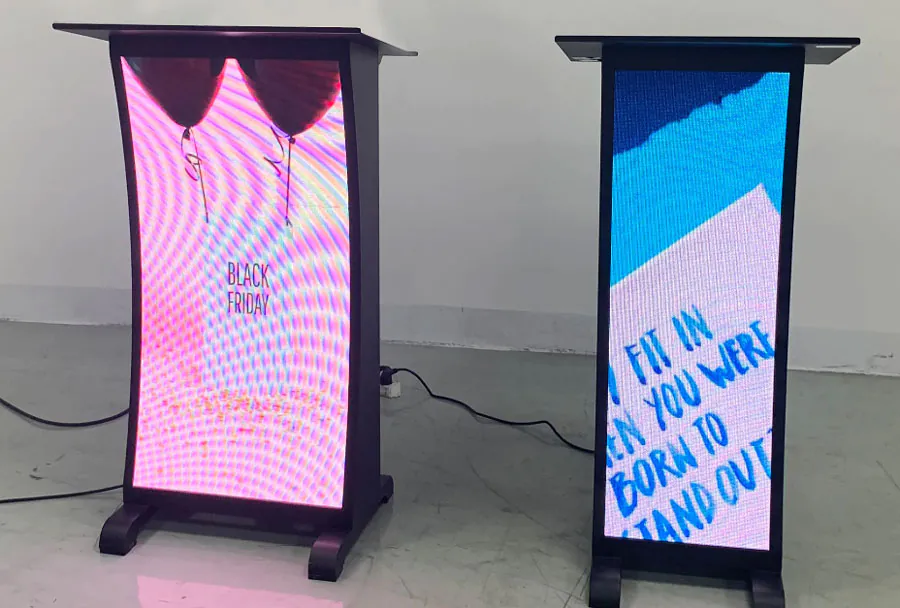
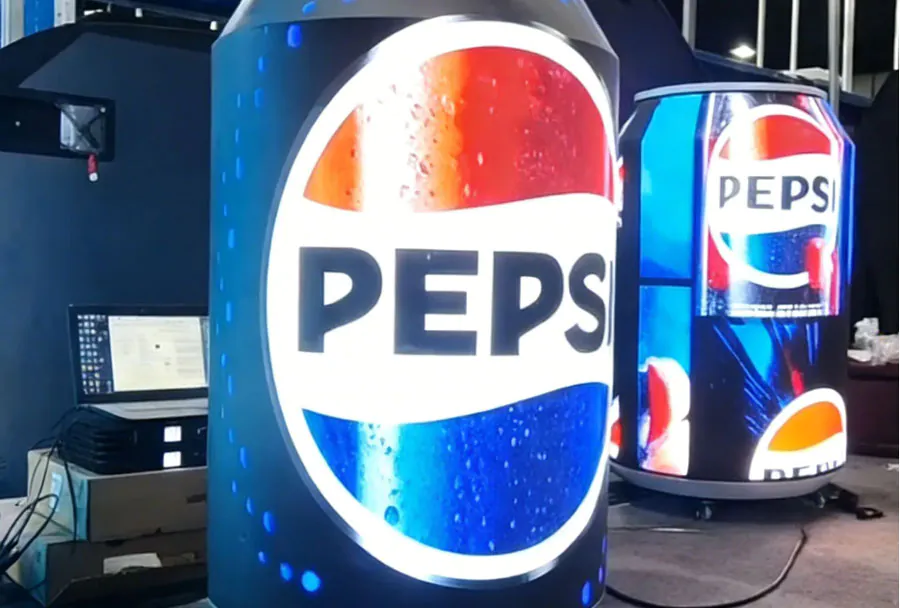
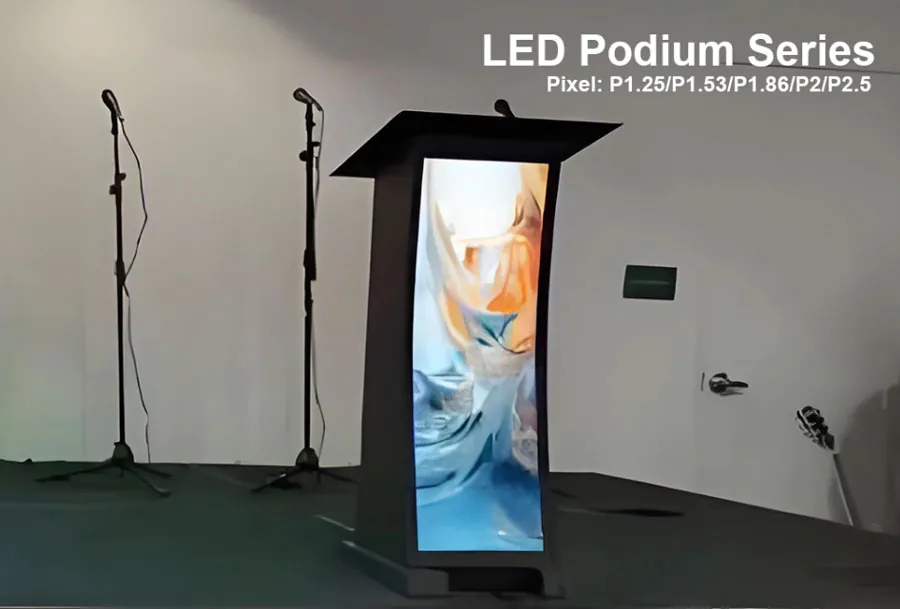
TW VISION is exploring stretchable polymer-based displays that conform to curved surfaces — from vehicle dashboards to fashion and wearables. These displays integrate stretchable interconnects and encapsulation layers that maintain electrical continuity during deformation.
Integrated Touch and Haptics
Bendable displays by TW VISION include integrated capacitive or projected-capacitive touch layers tailored for curved geometries. Haptic actuators (piezoelectric or electrostatic) are co-designed to deliver tactile feedback on non-flat surfaces, closing the gap between mechanical form and user experience.
Manufacturing and Quality Control
Roll-to-Roll and Batch Processes
TW VISION uses a hybrid manufacturing approach. Roll-to-roll processing accelerates throughput for continuous flexible substrates, while batch processes are used for fine-pitch backplanes and micro-LED placement. This combination reduces costs while maintaining high precision.

Automated Inspection and Yield Optimization
Flexible displays demand rigorous inline inspection. TW VISION applies machine-vision systems and AI-based defect detection to monitor micro-defects, particle contamination, and stress concentrations during fabrication. Predictive analytics help optimize process parameters, increasing yield for complex designs.
Use Cases and Applications
Consumer Electronics: Foldables and Rollables
Foldable smartphones and foldable tablets are the most visible consumer applications. TW VISION’s thin-fold stack achieves near-flat performance with a minimal creasing effect. Rollable TVs and monitors offer space-saving entertainment solutions for premium living spaces.
Automotive and Transportation
Curved and wraparound displays are transforming vehicle cockpits. TW VISION’s flexible screens enable continuous instrument clusters, heads-up displays integrated into windshields, and ambient information panels that conform to dashboards and door panels. Their designs account for thermal cycling, vibration, and long lifetimes.
Wearables and Medical Devices
Smart watches, fitness bands, and medical monitors benefit from conformal displays that match body contours. TW VISION collaborates with medical OEMs to implement biocompatible encapsulation and low-power pixel designs suitable for continuous monitoring.
Commercial Signage and Public Installations
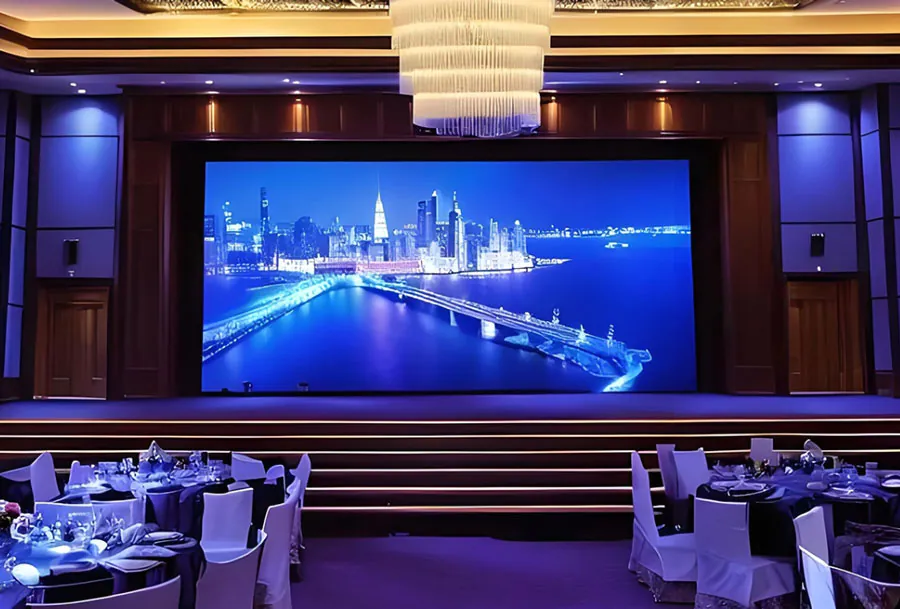
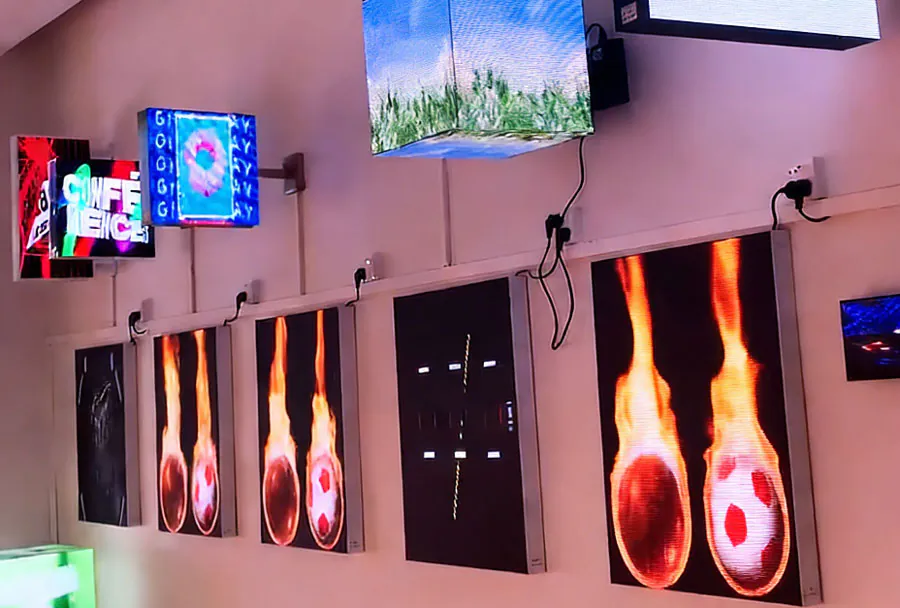
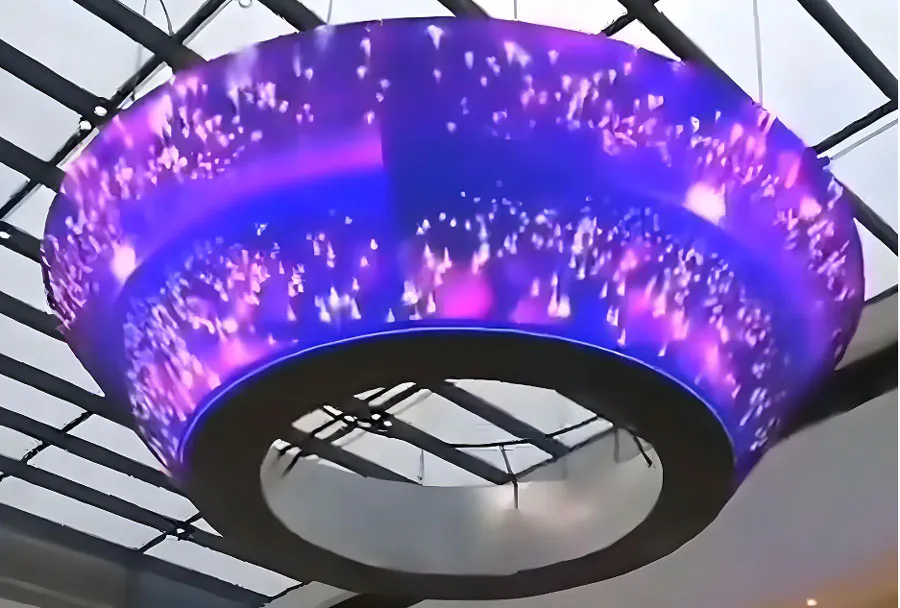
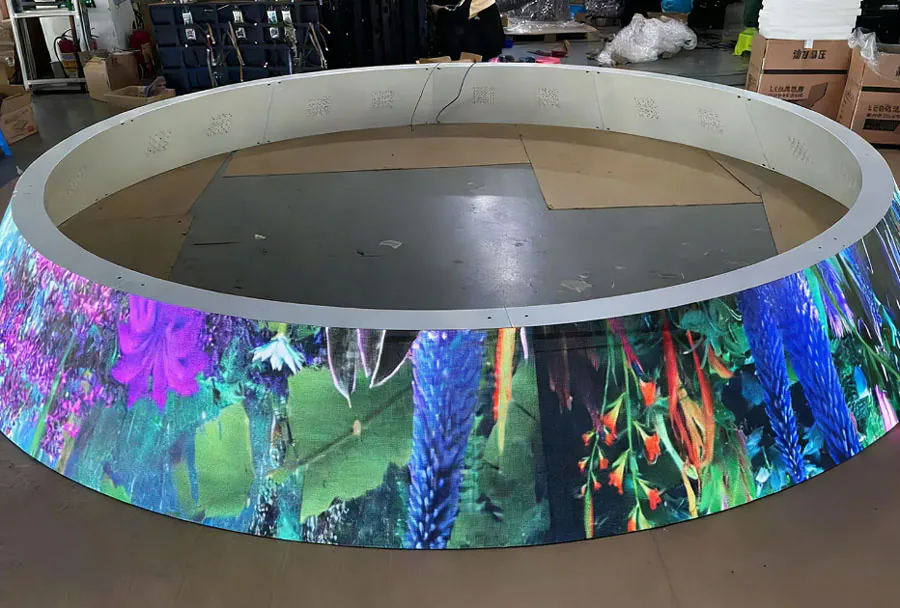
Large-area rollable or tiled flexible panels allow dynamic signage that can be transported, deployed, and reshaped for events. TW VISION’s modular systems help event planners and retail environments create immersive visual experiences with lower logistics cost.
Challenges and TW VISION’s Responses
Reliability Under Mechanical Stress
Challenge: Repeated bending can cause micro-cracks, delamination, and pixel failures.
TW VISION Response: Implementing robust TFE, neutral plane placement, and graded mechanical layers reduce stress. Advanced accelerated lifetime testing simulates years of use to validate designs.
Cost and Manufacturing Yield
Challenge: Flexible displays typically have higher manufacturing costs and lower yields compared to rigid displays.
TW VISION Response: Optimization through roll-to-roll automation, AI-driven quality control, and material sourcing partnerships bring down per-unit costs and stabilize yields for volume production.
Power Efficiency and Brightness
Challenge: Flexible displays must balance thin stacks with thermal management and high peak brightness.
TW VISION Response: Use of high-efficiency emissive materials, micro-LED prototypes for extreme brightness and efficiency, and thermal spreaders integrated into the flex stack.
Market Impact and Competitive Positioning
TW VISION is strategically positioned across several high-growth segments. By offering modular flexible display platforms, they provide OEMs a pathway to differentiate products through novel form factors without reinventing the supply chain. Their combined focus on materials, encapsulation, and manufacturing automation enables competitive pricing and performance.
Key market implications:
– Faster adoption in premium consumer categories (phones, tablets, TVs).
– Rapid integration into automotive infotainment and luxury automotive cabins.
– New form factor opportunities for industrial and medical markets.
Sustainability and End-of-Life Considerations
Flexible displays introduce recycling challenges because of composite layers and mixed materials. TW VISION is investing in:
– Recyclable polymer chemistries and reduced rare materials.
– Design-for-disassembly to separate encapsulants, electrodes, and electronics.
– Partnerships with recyclers to reclaim valuable metals and minimize landfill impact.
Additionally, the durability and potential for multi-use (e.g., reconfigurable signage) extend product lifetimes, reducing overall environmental impact.
User Experience and Software Integration
Flexible displays are more than hardware; they require software that adapts interfaces to changing form factors. TW VISION collaborates with UI/UX teams to create dynamic layouts, responsive gestures, and app continuity as screens bend or roll. Key software considerations:
– Real-time layout adjustments for split-fold or rolled states.
– Adaptive color and brightness profiles to ensure uniform perception across bends.
– Developer toolkits and APIs to encourage third-party app support.
Comparative Analysis Table

| Design Type | Key Features | Advantages | Challenges | TW VISION Contribution |
|---|---|---|---|---|
| Foldable (inward/outward) | Dual-panel or single flexible stack; small fold radius | Larger screen in compact form; multi-window UX | Crease visibility; hinge durability; stress at fold | Hinge-less fold stacks; neutral plane engineering; long-cycle validation |
| Rollable/Spooling | Wrap-around display on roller; variable active area | Space-saving; scalable display size | Uniform curvature control; mechanical wear on spool | Precision winding mechanisms; flexible encapsulation for repeated spooling |
| Stretchable/Conformal | Elastomeric substrates; stretchable interconnects | Conforms to organic shapes; wearable integration | Lower pixel density; reliability under high strain | Advanced stretchable electrode designs; medical-grade encapsulation |
| Curved Automotive Panels | Long continuous panels; high brightness; temperature tolerant | Immersive cockpit; seamless controls | Thermal cycling; vibration; long lifecycle | Automotive-grade testing; thermal spreader integration; vibration-resistant mounts |
| Large-Area Tiled Flexible | Modular panels tiled for huge displays | Scalable signage; easy transport and replacement | Seam visibility; color calibration across tiles | Tiled calibration tools; edge seam minimization; modular connectors |
Case Studies: Real-World Deployments
Premium Foldable Smartphone Partnership
TW VISION collaborated with a major handset OEM to deliver a crease-minimized foldable display. The partnership optimized the stack for ultra-thinness while preserving tactile uniformity. Results included higher consumer satisfaction scores for perceived seam visibility and improved mechanical reliability across 200,000 fold cycles simulated in accelerated testing.
Automotive Wraparound Cluster
An automotive OEM integrated TW VISION’s curved display into a luxury vehicle dashboard, enabling driver-centric information layering and passenger entertainment on a continuous panel. The displays passed extensive thermal and mechanical durability tests specific to automotive standards.
Roadmap and Future Innovations
TW VISION’s near-term roadmap includes:
– Scaling micro-LED flexible arrays to combine brightness and flexibility for outdoor-readable rollable signage.
– Developing higher-yield LTPO-like backplanes for variable refresh rate flexible displays to reduce power use.
– Expanding stretchable display prototypes for medical sensors with integrated biosensing layers.
Longer-term ambitions span fully transparent, ultra-thin rollable displays for architectural glass, and hybrid systems that combine energy harvesting (thin solar layers) with low-power displays for autonomous outdoor devices.
Designing the Future with Flexibility
Innovative bendable screen designs powered by TW VISION are redefining product possibilities across industries. By focusing on materials science, encapsulation technologies, neutral plane mechanics, and sophisticated manufacturing, TW VISION addresses the major hurdles that once hindered flexible display adoption. Their integrated approach — from hardware to software, and from prototyping to mass production — makes flexible screens a practical and compelling choice for designers and OEMs seeking differentiation.
As markets continue to embrace non-traditional form factors, the role of companies like TW VISION will be critical: turning laboratory concepts into robust, manufacturable, and sustainable products. The interplay of superior engineering, smart manufacturing, and thoughtful UX design promises a future where screens bend to human needs, not the other way around.