From Concept to Installation of TW VISION Tailored Custom LED Display Projects

TW VISION’s approach to tailored custom led display projects is a meticulous synthesis of vision, engineering, and execution. From the initial spark of an idea to the final moments when an installation comes to life, the company orchestrates a sequence of collaborative, technical, and logistical steps that transform concepts into high-impact visual experiences. The following overview examines the end-to-end process, with practical insights into how TW VISION ensures each project aligns with client objectives, technical constraints, and long-term operability.
From Concept to Installation of TW VISION Tailored Custom LED Display Projects
1. Discovery and Client Alignment
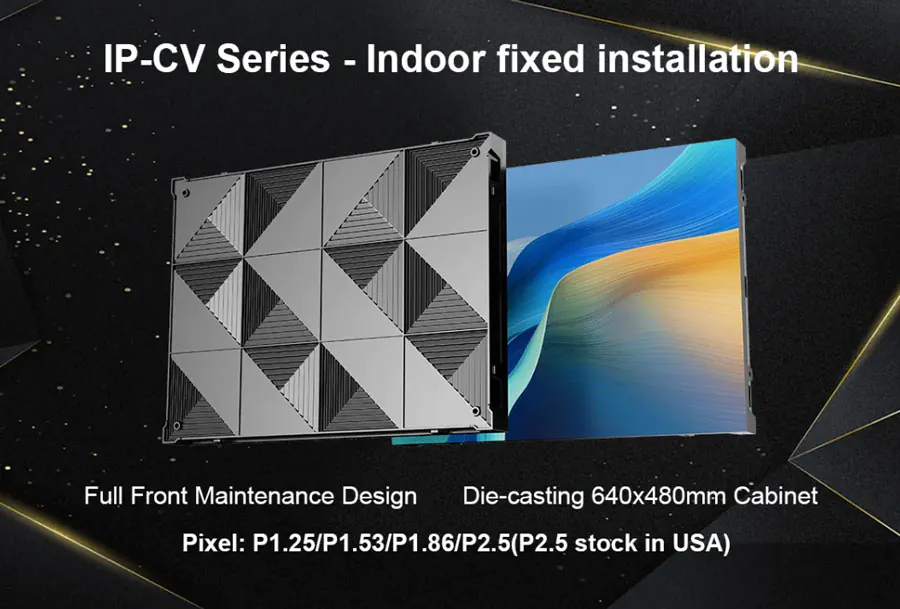
Every successful project begins with a thorough discovery phase. TW VISION prioritizes stakeholder interviews, site surveys, and use-case analysis to establish a clear project brief. Conversations explore the client’s brand goals, content strategy, viewing distance and angle requirements, ambient lighting conditions, budget constraints, and timelines. Early alignment eliminates misunderstandings and informs realistic technical specifications such as pixel pitch, brightness, color accuracy, and refresh rate.
Key deliverables in this stage include a detailed requirements document, preliminary budget estimate, and an initial risk assessment. Equally important is establishing the decision-making hierarchy on the client side—who signs off on creative direction, technical acceptance, and final commissioning.
2. Concept Design and Visualization
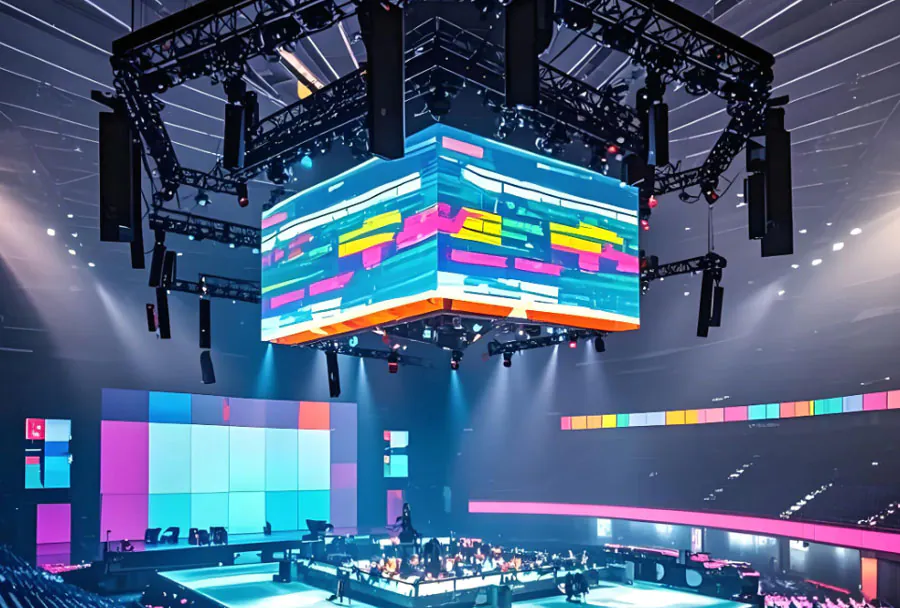
Design translates functional requirements into aesthetic and technical concepts. TW VISION’s design team develops multiple visual mockups and 3D renderings that show scale, content placement, and interaction with the environment. These concept visuals allow clients to evaluate the display’s visual impact—both static and dynamic—across different times of day and event scenarios.
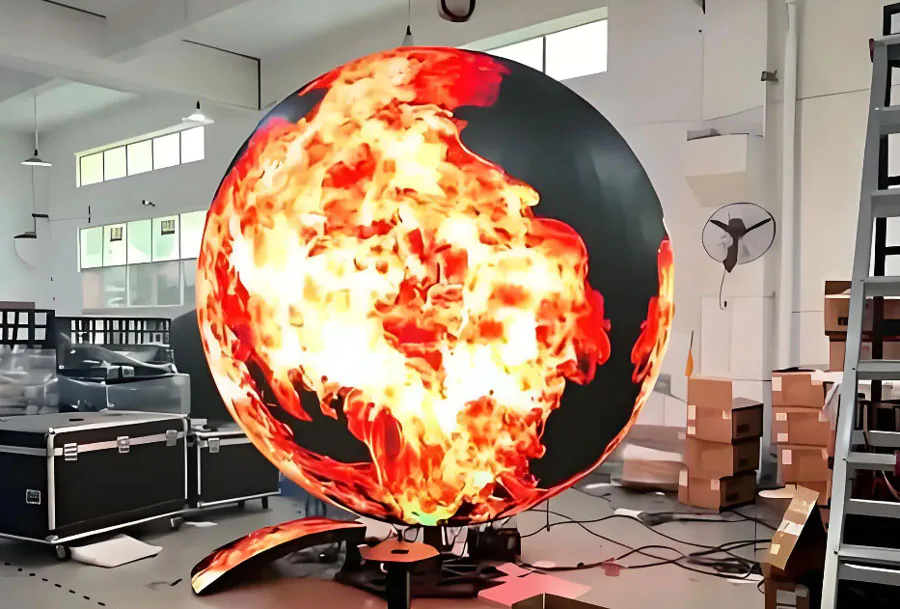
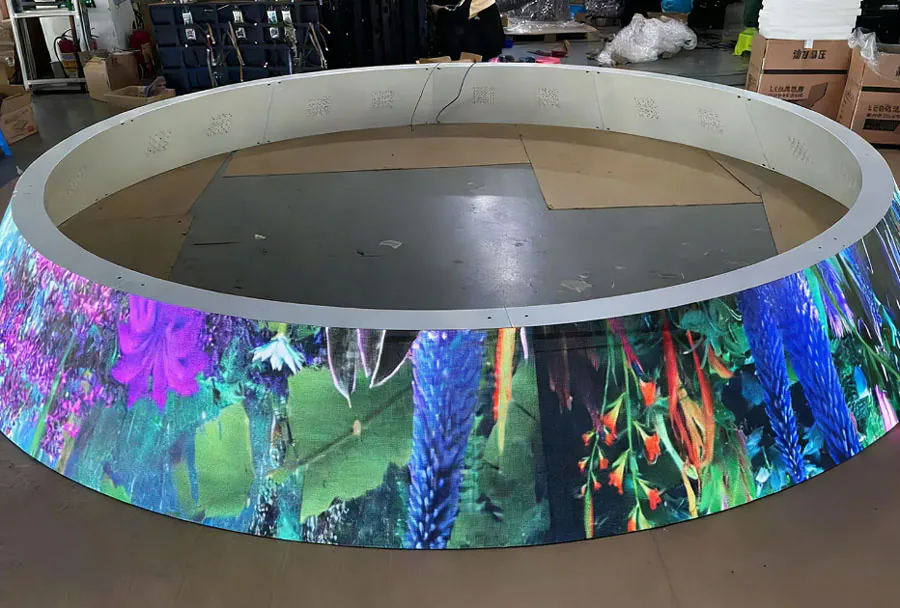
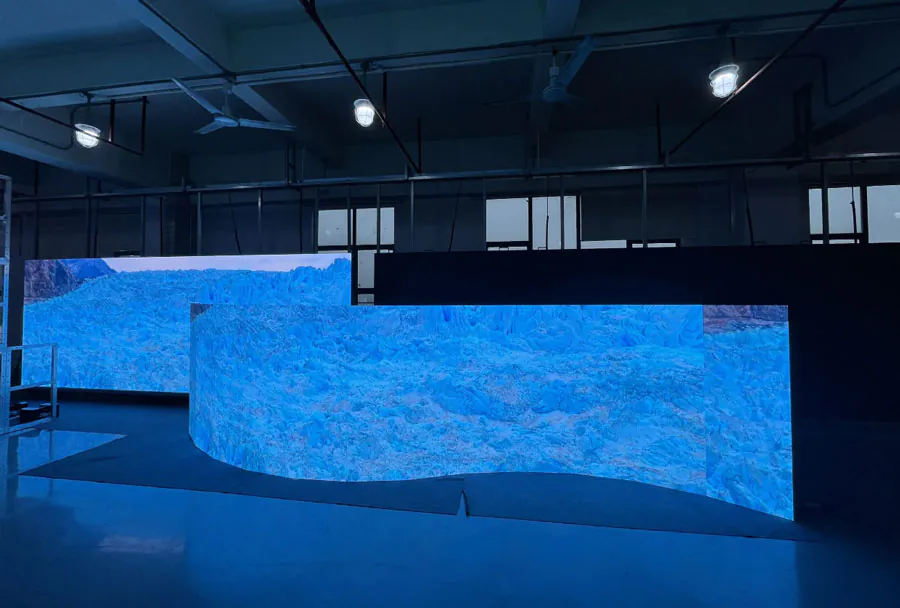
Concept work also includes immersion studies for content flow: how messages transition, how motion is used, and how the display integrates with surrounding architecture. At this stage, options for modularity, curvature (concave/convex), and unique shapes are assessed for feasibility.
3. Engineering and Technical Specification
Once a concept is approved, engineering converts creativity into manufacturable specifications. TW VISION engineers specify LED module types, cabinet design, thermal management, power distribution, data topology (e.g., fiber vs. copper, redundancy), control systems, and supporting structures. Structural engineers validate mounting systems against building codes and wind or seismic loads.
Thermal simulations and power calculations ensure brightness and lifetime targets are met without overheating. Engineers also design for serviceability—front-access vs. rear-access modules, spare module inventory, and easy replacement procedures—especially critical for large-scale or high-availability installations.
4. Prototyping, Testing, and Certification
Prototypes are built to validate visual performance and mechanical fit. Laboratory testing covers brightness, color gamut, uniformity, grayscale linearity, refresh rate, and long-term stability. Environmental tests simulate humidity, temperature cycles, and dust exposure to guarantee operational reliability in the intended setting.
Compliance testing (EMC, safety, and local building regulations) is completed as required. TW VISION typically runs acceptance trials with the client on a prototype to validate content playback, control software behavior, and maintenance accessibility before moving to full production.
5. Manufacture, Quality Control, and Logistics
Customized manufacturing is organized around serialized quality control. Each LED module and cabinet goes through inspection checkpoints: component-level tests, burn-in runs, optical calibration, and final assembly checks. TW VISION’s QC processes record serial numbers and test results to enable traceability and efficient warranty handling.
Logistics planning is critical for large or remote installations. Components are packed for transit with shock and humidity protection. Shipments are coordinated with installation windows, local permit lead times, and on-site crane or lift availability. For international projects, TW VISION manages customs documentation and local compliance paperwork.
6. Installation and Commissioning
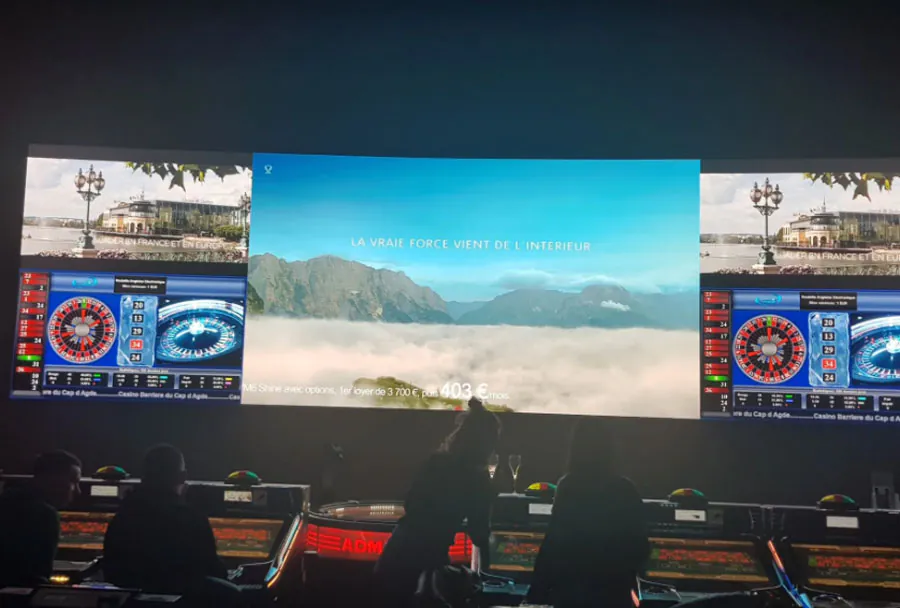
Installation begins with structural installation and verification. Mounts and frames are aligned and re-checked for plumb and load distribution. Electrical feeds and data lines are installed following the engineered schematics. TW VISION emphasizes a staged approach for large displays: power and data segments are brought online incrementally, allowing defects to be isolated and corrected early.
Commissioning includes pixel-level calibration, color tuning to meet a reference standard, timing synchronization, and failover testing of redundant systems. Final acceptance testing is carried out with client representatives and includes operational scenarios (scheduled content changes, emergency messages, and control handovers).
7. Content Strategy, Control Systems, and Integration
A high-performing LED display is only as effective as its content strategy. TW VISION offers control system solutions that integrate with content management systems (CMS), scheduling tools, and third-party data feeds. The company provides training and documentation so client teams can manage day-to-day content, while also offering managed services for clients who prefer a turnkey approach.
Integration may also include network security measures for connected displays, APIs for dynamic content feeds, and synchronization across multiple screens or venues.
8. Maintenance, Monitoring, and Life-Cycle Management
Post-installation service plans are tailored to client needs. Preventive maintenance schedules cover cleaning, firmware updates, and module inspections. Remote monitoring systems report on power usage, temperature trends, pixel failures, and performance metrics, enabling predictive maintenance and minimizing downtime.
TW VISION also advises on spare part reserves and service-level agreements (SLAs) that define response times, on-site technician availability, and escalation procedures.
9. Measuring Impact and ROI
Project success is measured in both technical performance and business impact. TW VISION helps define KPIs such as audience dwell time, impressions, engagement rates (for interactive displays), and advertising revenue. Post-installation analytics combine sensor data, CMS logs, and third-party footfall or sales data to quantify ROI. These insights inform future upgrades and content optimization.
Analysis Table: Project Phase Overview (5 columns)
| Phase | Key Activities | Deliverables | Typical Duration | Risk & Mitigation |
|---|---|---|---|---|
| Discovery | Site survey, stakeholder interviews, requirements capture | Requirements brief, budget estimate, timeline | 1–3 weeks | Scope creep — mitigate with clear sign-off and change-control |
| Design | Visual mockups, 3D models, interaction plans | Design package, imaging renders, content strategy | 2–4 weeks | Design/space mismatch — use accurate site modeling and mockups |
| Engineering | Structural, thermal, electrical engineering, serviceability planning | Tech specs, engineering drawings, permit documents | 2–6 weeks | Code non-compliance — early coordination with authorities |
| Prototype & Testing | Build prototype, lab tests, client acceptance | Test reports, certified prototype, acceptance sign-off | 4–8 weeks | Performance shortfalls — iterative testing and component swaps |
| Manufacture & Logistics | Production runs, QC, packaging, shipping coordination | Serial-tracked units, QC logs, shipping manifests | 6–12 weeks | Delays in supply chain — maintain suppliers and buffer inventory |
| Installation & Commissioning | Mounting, cabling, calibration, client training | Commissioning report, training materials, as-built docs | 1–4 weeks | Site access issues — pre-install planning and contingency scheduling |
10. Customization Examples and Technical Trade-offs
Customization often introduces trade-offs. Finer pixel pitch yields higher resolution but increases cost and power consumption. Curved or irregular shapes create compelling aesthetics but complicate serviceability and thermal behavior. TW VISION navigates these trade-offs using data-driven simulations and by proposing scalable alternatives: for instance, combining a high-density focal area with lower-density peripheral panels to balance cost and visual impact.
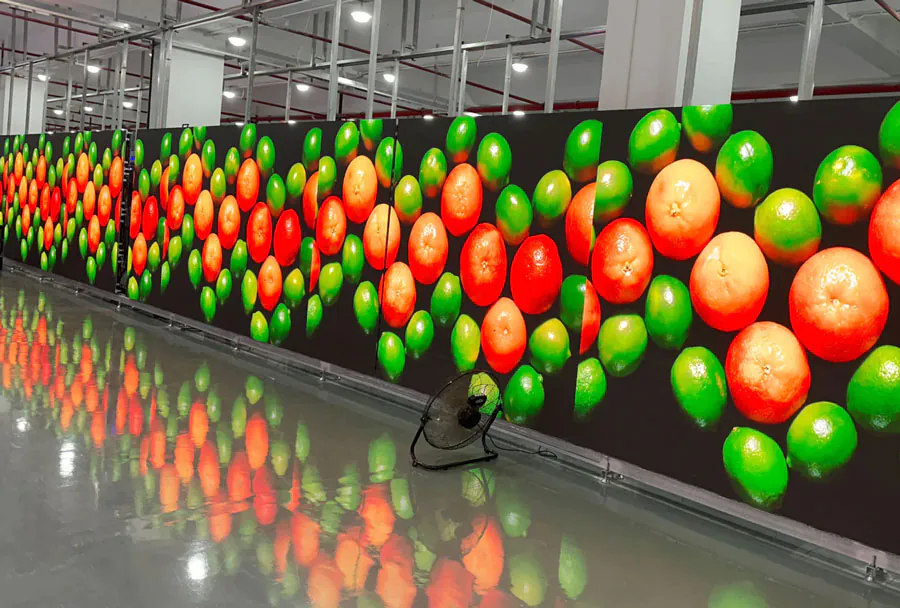
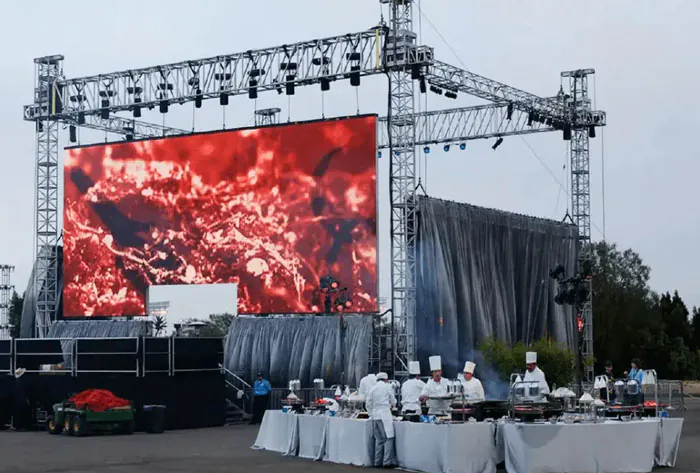
For outdoor installations, choices between passive cooling and active thermal management must reflect local climate data, while ingress protection ratings (IP65 vs. IP67) are selected based on environmental exposure. TW VISION can recommend energy-efficient LED drivers and dimming strategies that reduce operating costs without sacrificing visibility.
11. Project Management and Collaboration Best Practices
Successful delivery requires tight project management. TW VISION applies clear milestone tracking, weekly client updates, and integrated issue tracking. Early procurement of long-lead items (drivers, control servers, structural steel) avoids schedule slips. Cross-disciplinary workshops among design, engineering, and content teams prevent late-stage rework.
Regulatory coordination—permits for mounting, power upgrades, or public safety approvals—should be initiated early. For installations in occupied buildings, TW VISION uses phased installation windows and noise/light mitigation measures to minimize disruption.
12. Sustainability and Future-Proofing
Sustainability considerations shape component selection and operation. TW VISION recommends high-efficiency power supplies, recyclable materials, and modular designs that enable partial upgrades as technology evolves. Firmware update capabilities and open protocols for control systems reduce obsolescence risk. Life-cycle planning includes end-of-life recycling pathways and options for refurbishing modules to extend usable life.
From concept to installation, TW VISION’s tailored LED projects combine creative design, rigorous engineering, and disciplined execution to achieve striking visual systems that meet business goals and operational realities. The company’s process emphasizes early alignment, iterative validation, and robust post-installation support—ensuring that each custom display not only dazzles at launch but continues to deliver measurable value over its service life. Whether a single iconic fa?ade or a network of interactive screens, a TW VISION project is delivered through a predictable, transparent workflow that balances aesthetics, reliability, and long-term cost of ownership.