Flexible LED Display Technology for Creative Media Facades

Cities are no longer defined only by skylines and silhouettes. They are increasingly shaped by light, motion, and interactive narratives that turn buildings into living canvases. At the center of this shift is flexible led display Technology for Creative Media Facades—a category of display solutions engineered to conform to complex architectural surfaces while delivering high-brightness, high-impact visuals in outdoor environments.
As a service provider, TW VISION supports architects, developers, and creative studios in deploying flexible LED systems that merge aesthetic ambition with engineering reliability. From concept to commissioning, flexible LED media facades offer a scalable way to create landmark experiences—without forcing architecture to adapt to a flat screen.
Why Flexible LED Is Redefining the Media Facade
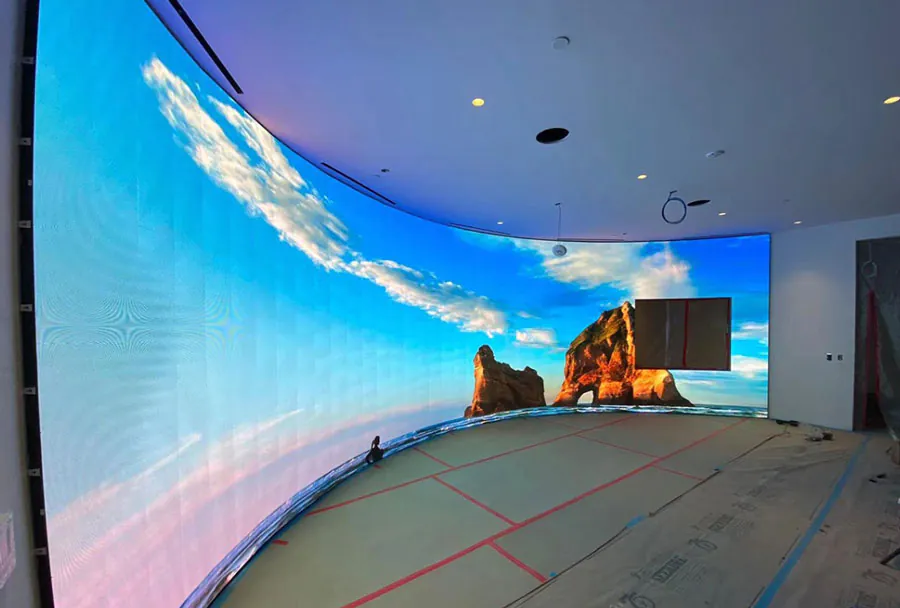
Traditional facade screens usually demand planar surfaces, heavy steel structures, and large, rigid modules. In contrast, flexible LED technology is designed around architectural freedom. It enables installations on curved, cylindrical, wave-like, or segmented surfaces—often with lighter structural requirements and more integration options.
Flexible LED media facades have grown popular for several reasons:
– Form freedom: Designers can wrap corners, follow arcs, or blend into 3D building geometry.
– Creative continuity: Visual content can flow seamlessly across irregular surfaces, creating immersive motion graphics.
– Urban visibility: High brightness and wide viewing angles allow content to remain vivid in daylight and readable from multiple vantage points.
– Brand and placemaking value: A facade becomes a landmark, supporting cultural campaigns, seasonal content, or sponsor activation.
For projects where architecture is expressive by nature—museums, commercial complexes, transportation hubs, flagship retail—flexible LED makes the facade a dynamic extension of the building identity.
Core Technology Principles Behind Flexible LED Facades
Flexible LED displays differ from conventional LED walls in structure, mechanical behavior, and installation logic. While exact product architecture varies, successful flexible facade solutions typically share these technical pillars:
1. Bendable module design
Modules are engineered to tolerate controlled curvature without damaging LEDs, solder points, or driver circuitry. This ability allows them to align with columns, waves, and rounded corners—common elements in contemporary architecture.
2. Lightweight construction
Weight is critical for facade projects, especially retrofits. Flexible systems often reduce load requirements, easing pressure on substructures and simplifying mounting. This can shorten installation schedules and reduce overall engineering complexity.
3. Outdoor durability and stability
Media facades must withstand wind load, UV exposure, humidity, dust, temperature changes, and long runtime cycles. Materials, sealing, coatings, and thermal design are essential to prevent color shift, dead pixels, and premature aging.
4. Uniformity and calibration capability
Because facades are often viewed from long distances, even slight brightness inconsistencies become visible. Professional-grade solutions incorporate calibration and maintenance strategies to keep color and luminance consistent over time.
TW VISION approaches flexible LED facade delivery from the combined perspective of display performance + structural integration + long-term maintainability, ensuring the final outcome matches both creative intent and operational needs.
Creative Possibilities: What Flexible LED Makes Possible
Flexible LED media facades unlock more than “video on a building.” They enable content that feels native to the architecture itself. Common creative applications include:
– Architectural mapping-like motion that follows curves and edges, emphasizing depth and rhythm.
– Kinetic brand identities where logos, typography, and textures move fluidly across non-planar surfaces.
– Event-based narratives (festivals, sports seasons, openings) that transform a building into a time-based installation.
– Data-driven visuals, such as weather-reactive themes, public art streams, social content filters, and city information.
– Interactive experiences triggered by sensors, cameras, or mobile devices—turning passersby into participants.
Because flexible LED can be distributed across a facade in ribbons, panels, or segmented clusters, creators can balance spectacle with elegance—achieving a “media architecture” feel rather than a billboard aesthetic.
Design Considerations for a Successful Flexible LED Facade
To build a media facade that performs reliably and looks refined, several design factors should be aligned early in the project lifecycle:
1) Pixel pitch and viewing distance
The ideal pixel pitch depends on how close the audience will be and how much fine detail the content requires. A facade viewed from across a boulevard can use a larger pitch than one above a pedestrian plaza. The right choice optimizes cost, power, and clarity.
2) Transparency and daytime appearance
Some projects require the facade to preserve daylight, ventilation, or the visible character of the underlying architecture. Depending on the concept, designers may use layouts that maintain a degree of openness or create “lightweight” visual layers that do not overpower the building.
3) Brightness, contrast, and automatic control
Outdoor facades must remain readable under sun glare while avoiding light pollution at night. Smart brightness control, scene-based dimming, and scheduling protect both the audience experience and regulatory compliance.
4) Weather resistance and thermal management
Facade LEDs face harsh environmental conditions. Heat dissipation strategy, ventilation planning, and material selection influence stability, lifespan, and maintenance frequency.
5) Maintenance access and service strategy
A stunning facade that cannot be serviced efficiently becomes a long-term risk. Access routes, modular replacement logic, spare parts planning, and diagnostics should be designed as part of the system—not afterthoughts.
TW VISION supports clients through these decisions, ensuring the flexible LED solution aligns with architectural constraints, budget realities, and the intended audience experience.
System Architecture: Beyond the LED Modules
A creative media facade is an ecosystem. Even the best flexible LED surface depends on supporting systems to deliver stable performance:
– Control systems that manage content playback, synchronization across zones, and redundancy planning.
– Power distribution engineered for facade segmentation, safety, and efficiency.
– Network and monitoring to enable remote health checks, fault alerts, and performance reporting.
– Content workflow that includes formatting, testing, scheduling, and version control—especially important for multi-tenant venues.
TW VISION, as a service provider, helps integrate display hardware with control platforms and operational workflows, so stakeholders can run the facade confidently after opening day.
Installation on Complex Geometry: Turning Curves into Canvases
Curved architecture is where flexible LED shines—but it is also where engineering discipline matters most. The installation process typically involves:
– Geometry surveying and 3D coordination to ensure alignment with the building envelope.
– Mounting structure design that respects wind load, thermal expansion, and fa?ade material interfaces.
– Panelization planning to minimize seams and preserve content continuity across curvature transitions.
– On-site calibration and testing, verifying brightness, color consistency, and refresh performance.
For creative media facades, millimeter-level alignment can be the difference between a premium, integrated look and a visually fragmented surface. TW VISION’s role is to bridge design intent and constructability—helping teams achieve precision without slowing the schedule.
Reliability, Lifespan, and Total Cost of Ownership
A media facade is often expected to operate for many hours daily, year-round. That makes total cost of ownership (TCO) a decisive metric. Flexible LED technology must be evaluated not only on initial impact but on long-term performance:
– Energy efficiency: optimized power design and intelligent dimming can reduce operating costs.
– Component quality: stable LEDs, drivers, and power supplies support longer service life and lower failure rates.
– Serviceability: quick module replacement and clear maintenance procedures reduce downtime.
– Operational governance: content approval flows, scheduling rules, and brightness policies help avoid misuse and community complaints.
TW VISION emphasizes reliability planning so the facade remains a consistent asset—supporting branding and placemaking for years rather than becoming a maintenance burden.
Use Cases Where Flexible LED Facades Deliver Exceptional Value
Flexible LED media facades are particularly effective in these scenarios:
– Commercial complexes and mixed-use districts seeking a signature identity and high foot traffic appeal.
– Flagship retail where storytelling and product campaigns can be updated instantly.
– Hotels and resorts that want atmospheric visuals and seasonal transformations.
– Cultural venues presenting digital art, community programming, and event-driven themes.
– Transportation hubs where wayfinding, city branding, and public messaging can coexist.
In each case, flexibility is not only physical—it’s operational. A facade can shift from art to advertising to civic messaging based on time, event, or audience.
TW VISION’s Service Approach: From Concept to Operation
Delivering a successful flexible LED media facade requires cross-disciplinary coordination—architecture, structural engineering, electrical planning, software, and creative content. TW VISION supports projects through an end-to-end service model that typically includes:
– Consultation and feasibility assessment based on site conditions, geometry, and viewing needs.
– System design support covering pixel pitch selection, brightness strategy, segmentation, and control architecture.
– Integration guidance for mounting, power distribution, and environmental protection.
– Commissioning and calibration ensuring uniformity and stable playback.
– Operational support including monitoring, maintenance planning, and content workflow alignment.
By treating the facade as a long-term media platform—not just an installation—TW VISION helps clients turn architectural surfaces into sustainable digital assets.
The Future of Creative Media Facades
Flexible LED display technology is moving toward more seamless integration with architecture and urban systems. Trends shaping the next phase include:
– More refined “architectural” aesthetics, where displays disappear in daylight and emerge at night as luminous skins.
– Smarter control and automation, enabling responsive content, energy optimization, and predictive maintenance.
– Higher creative sophistication, with generative visuals, real-time data art, and multi-surface storytelling across entire districts.
– Stronger regulatory and environmental expectations, pushing for responsible brightness, lower power use, and community-friendly programming.
In this future, the most successful media facades will be those that feel intentional—enhancing a city’s cultural texture rather than simply competing for attention.
Flexible LED as the New Language of Urban Expression
Flexible LED Display Technology for Creative Media Facades empowers architects and brands to create experiences that are simultaneously sculptural, digital, and emotional. It breaks the rectangle, follows the curve, and allows content to inhabit architecture rather than sit on top of it.
With TW VISION as a service provider, creative media facade projects gain a partner focused on integration, performance, and long-term operational success—helping buildings evolve from static structures into dynamic urban storytellers.