

Circular LED Display Manufacturer: Custom Round LED

Choosing the right Circular LED Display Manufacturer: Custom Round LED Screens is the decision that separates a long-lasting visual centerpiece from a downtime-prone frustration. Circular LED screens are increasingly used in casino ceilings, museum rotundas, flagship retail entrances, and broadcast studios—settings where a rectangular flat panel feels like a compromise.
Table of Contents
- What a Circular LED Display Manufacturer Actually Does
- How Custom Module Geometry Differs From Flat Panels
- Key Specifications to Compare in Custom Round LED Screens
- Brightness, IP Ratings, and the Two Specs Buyers Skip
- Pixel Pitch and Viewing Distance: The Numbers That Drive Design
- Why Circles Change the Viewing Math
- Materials, Build Quality, and Pre-Order Inspections
- What to Check on a Sample Module
- How to Vet a Circular LED Display Manufacturer
- Red Flags to Watch in Supplier Communication
- What is the minimum order quantity for custom round LED screens?
- Can circular LED screens be used outdoors in direct sunlight?
- How are round LED screens installed without visible seams?
- What content formats and control software do round LED screens support?
- How long does production and shipping take for a custom round LED screen?
- Conclusion
The problem most buyers run into is comparing quotes on price and resolution alone while ignoring serviceability, structural integrity, and content mapping support. This guide breaks down five practical evaluation areas, each ending with an action you can apply today before signing any contract.
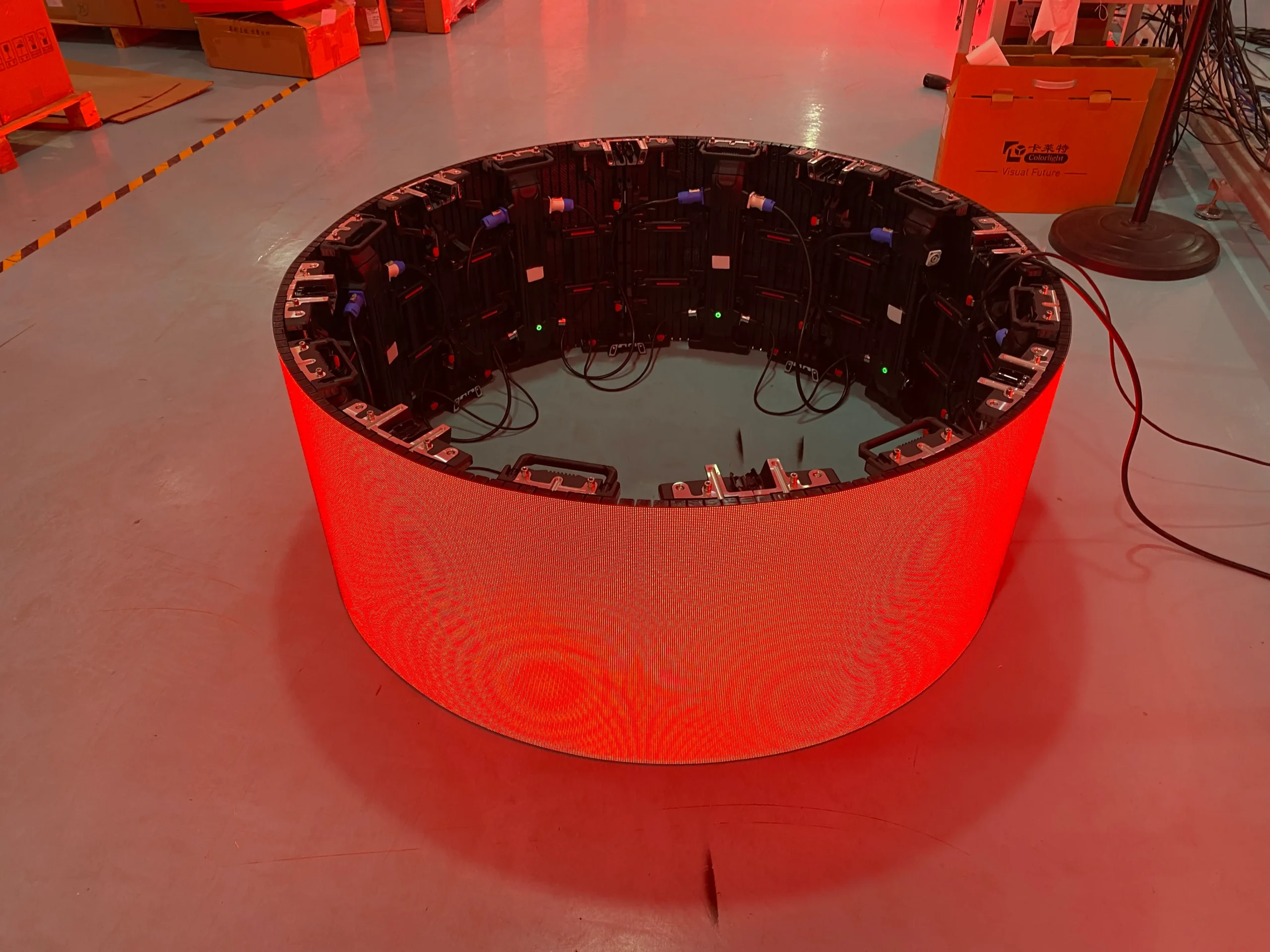
TW VISION’s circular LED display-8 panels to be one round screen. Diameter 1.25m, pixel pitch: P2.6, PQ series.
What a Circular LED Display Manufacturer Actually Does
A Circular LED Display Manufacturer: Custom Round LED Screens provider engineers far more than a round panel. These companies design curved module housings, build custom aluminum or steel support frames, map content to non-rectangular pixel grids, and certify assemblies for safety and electromagnetic compliance.
How Custom Module Geometry Differs From Flat Panels
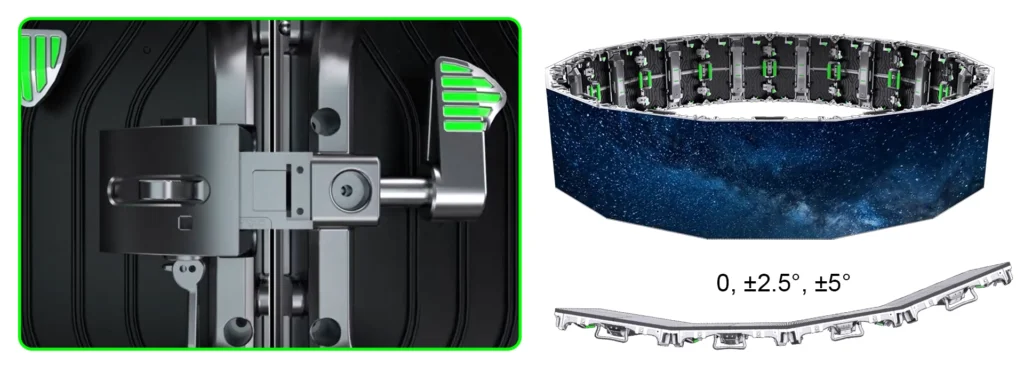
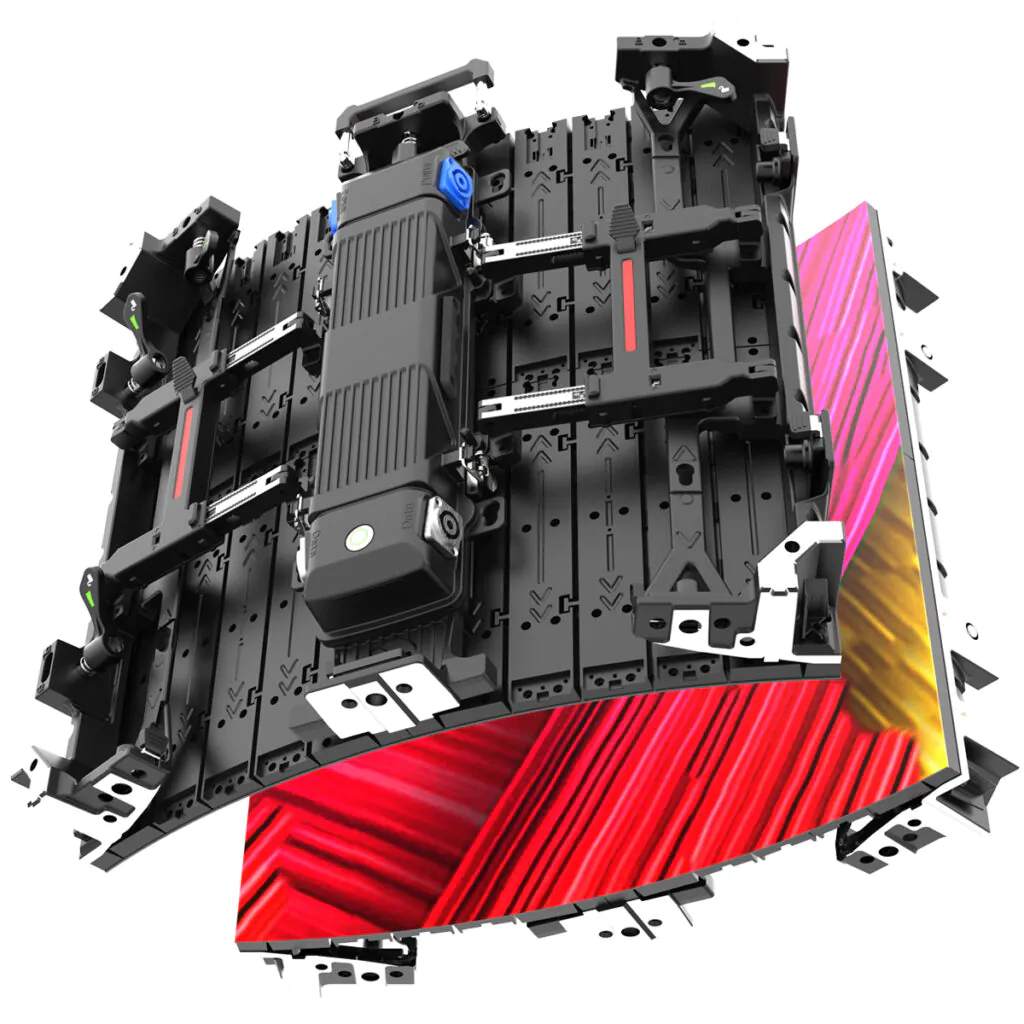
On a standard rectangular screen, every module is identical. On a circle, module wedge angles change continuously, so the manufacturer must machine each segment to match the exact radius. This is why truly circular screens carry a higher cost per square meter than curved or flat equivalents.
Industry body AVIXA, the Audiovisual and Integrated Experience Association, describes direct-view LED as one of the fastest-growing display categories in professional AV, with non-standard form factors drawing fresh interest from architects and experience designers. AVIXA publishes outlook data that helps buyers understand where the category is heading.
Most round builds run on standard control hardware from NovaStar, Colorlight or Mooncell, so you are rarely locked into proprietary systems.
How to apply this: ask any supplier for a system block diagram showing how content travels from your media player to each module in the circle.
Key Specifications to Compare in Custom Round LED Screens
When you request quotes, a Circular LED Display Manufacturer: Custom Round LED Screens supplier will send a wall of numbers. Some of those numbers matter far more than others.
Brightness, IP Ratings, and the Two Specs Buyers Skip
Brightness, in nits, determines whether your round screen stays legible in a sunlit atrium or washes out. Ingress Protection ratings tell you whether dust and moisture will eventually kill the modules.
The two specs buyers skip are refresh rate and average power draw — both directly affect how the display looks on phone cameras and how much heat the room gains.
| Specification | What it tells you | Action to take |
|---|---|---|
| Pixel pitch (mm) | LED density; drives minimum viewing distance | Match pitch to your closest expected viewer |
| Brightness (nits) | Visibility in ambient light | Require 5,000+ nits for bright outdoor use |
| IP rating | Dust and water resistance | Demand IP65 front / IP54 rear for outdoor |
| Refresh rate (Hz) | Flicker in video and phone footage | Specify 3,840 Hz or higher for broadcast |
| Cabinet material | Weight, heat, rigidity | Prefer die-cast aluminum for large rings |
| Power draw (W/m²) | Operating cost and heat load | Compare average, not peak, consumption |
Ask every shortlisted Circular LED Display Manufacturer: Custom Round LED Screens candidate to confirm these values in writing; verbal promises do not survive a warranty claim.
How to apply this: turn the table above into a one-page RFQ sheet and send it to three suppliers this week.
Pixel Pitch and Viewing Distance: The Numbers That Drive Design
Pixel pitch is the center-to-center distance between adjacent LED clusters, and it determines how close a viewer can stand before seeing individual dots. A widely used industry rule of thumb: minimum comfortable viewing distance in meters roughly equals pixel pitch in millimeters — a 2.5 mm screen reads best from about 2.5 meters or farther.
Why Circles Change the Viewing Math
On a round display, a viewer standing near the edge sees those modules at a steeper angle than a viewer facing the center. Effective viewing distance varies across the surface, which means the pitch that works at the top of the ring may look coarse at the bottom.
A competent Circular LED Display Manufacturer: Custom Round LED Screens team will ask where your audience actually stands before recommending module segmentation.
During commissioning, configuration software such as NovaStar’s Nova LCT or Colorlight’s LEDVISION maps content across the non-rectangular grid so circular video fills the display without distortion.
How to apply this: sketch a floor plan showing closest and farthest viewer positions, then ask each Circular LED Display Manufacturer: Custom Round LED Screens candidate to recommend pitch accordingly.
Materials, Build Quality, and Pre-Order Inspections
Reliability in a Circular LED Display Manufacturer: Custom Round LED Screens product depends on what is inside the cabinet. Die-cast aluminum modules shed heat better and weigh less than painted steel, which matters when a large ring hangs overhead. Budget builds often use thicker steel with wider module gaps, producing visible seams that break the circular illusion.
What to Check on a Sample Module
Always order one production sample per pitch before bulk purchase. Inspect alignment tolerance, mask finish, and solder consistency under bright light. Request the CE, FCC, and RoHS certificates for the modules and power supplies, plus ETL or UL listing for North American assemblies. Certificate numbers are verifiable — logos in a brochure are not.
Comparing samples side by side from each Circular LED Display Manufacturer: Custom Round LED Screens shortlist reveals quality differences faster than any spec sheet.
How to apply this: order one sample module from your top two suppliers this week and inspect both under identical lighting.
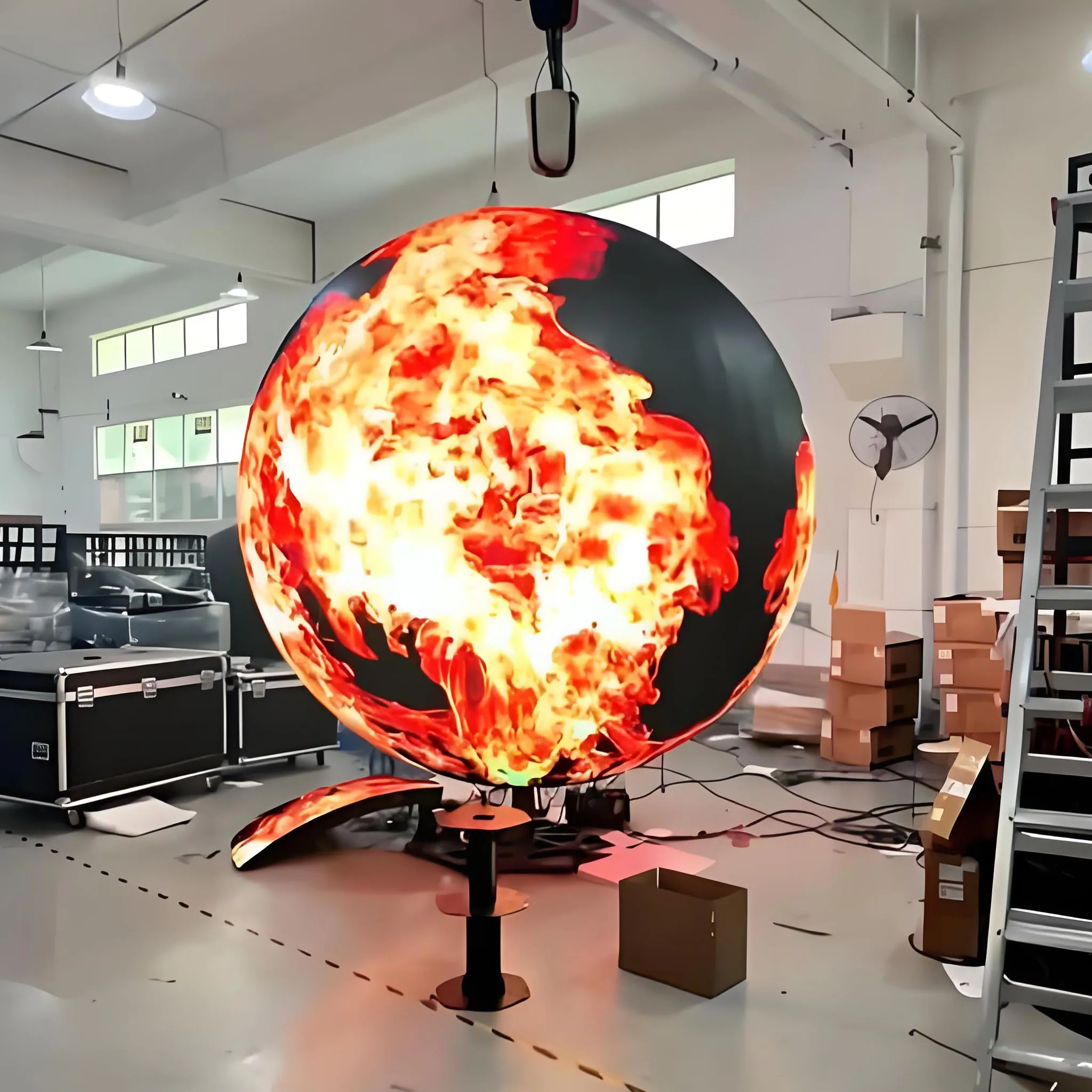
Circular LED display showing dynamic fire visuals for creative commercial applications-made by TW VISION.
How to Vet a Circular LED Display Manufacturer
Every Circular LED Display Manufacturer: Custom Round LED Screens sales team promises on-time delivery and zero failures. Verifying those promises takes three steps: contact reference installations similar in size and shape to your project, confirm export history and payment terms, and read the warranty exclusions carefully.
Red Flags to Watch in Supplier Communication
Suppliers that avoid written answers or refuse to share existing client contacts are signaling exactly how they will behave after payment. Front-service access matters when a wall-mounted round screen has no rear crawl space — ask whether modules pull from the front.
Confirm spare parts policy too; some suppliers include spare modules in the quote, others mark them up later at retail pricing.
A professional Circular LED Display Manufacturer: Custom Round LED Screens partner will document warranty coverage, service access, and spare parts without hesitation.
How to apply this: build a one-page checklist covering references, warranty terms, service access, and spares, and require written answers before signing.
Frequently Asked Questions About Circular LED Display Manufacturer: Custom Round LED Screens
What is the minimum order quantity for custom round LED screens?
Most suppliers of Circular LED Display Manufacturer: Custom Round LED Screens projects set a minimum order quantity because custom module tooling and curved cabinet machining are expensive to produce in small batches. One-off prototypes are possible, but you will pay a premium per square meter and a non-recurring engineering fee.
If you plan to roll the concept across multiple locations, negotiate tooling costs to be credited against a volume order of ten or more units.
Can circular LED screens be used outdoors in direct sunlight?
Yes, provided the Circular LED Display Manufacturer: Custom Round LED Screens supplier builds the cabinet to outdoor standards. This means IP65-rated front surfaces, sealed power supplies, and brightness of at least 5,000 nits to stay legible in sunlight. In coastal or high-humidity environments, ask for anti-corrosion coating on internal metal parts.
One exception: transparent circular displays are rarely weather-rated and usually belong in indoor storefronts.
How are round LED screens installed without visible seams?
Seamless appearance comes from precision machining, not software. A capable Circular LED Display Manufacturer: Custom Round LED Screens partner cuts each module’s edges to match the circle’s radius and assembles them on a rigid frame with tight alignment pins. Pixel mapping software then compensates for the remaining curves.
In practice, the most common seam problem is thermal expansion on large rings, so confirm the frame allows for expansion gaps during installation.
What content formats and control software do round LED screens support?
Round screens accept standard video signals — HDMI, DVI, SDI — and rely on receiving cards to remap content to the circular pixel grid. Leading systems from NovaStar and Colorlight include circular mapping presets, so a Circular LED Display Manufacturer: Custom Round LED Screens supplier should confirm your chosen controller supports your circle’s exact module count.
Avoid proprietary players that lock you into a single content vendor; insist on standard protocols.
How long does production and shipping take for a custom round LED screen?
Typical lead times from a Circular LED Display Manufacturer: Custom Round LED Screens supplier range from three to six weeks for production, depending on order size. Add one to three weeks for sea freight or a few days for air freight, plus time at your receiving dock. Custom tooling may add two to four weeks on a first order.
Always confirm whether the quoted lead time includes aging and burn-in testing, which catches early LED failures before delivery.
Conclusion
Sourcing a Circular LED Display Manufacturer: Custom Round LED Screens build is an engineering decision as much as a purchasing one. The displays that fail early rarely die from bad LEDs — they die from heat, moisture, poor segmentation, and weak service terms.
– Compare six core specs side by side: pixel pitch, brightness, IP rating, refresh rate, cabinet material, and average power draw.
– Inspect physical sample modules before bulk orders; certifications without samples are just paper.
– Confirm content infrastructure: which control system ships with the screen and who handles pixel mapping.
– Demand written answers on references, warranty coverage, front-service access, and spare parts.
Next step: take the table from this guide, turn it into an RFQ sheet, and send it to three shortlisted suppliers this week. The quality of their written replies will tell you more than any brochure ever could.
