

Flexible LED Display: Curved Screen Technology & Custom Solutions

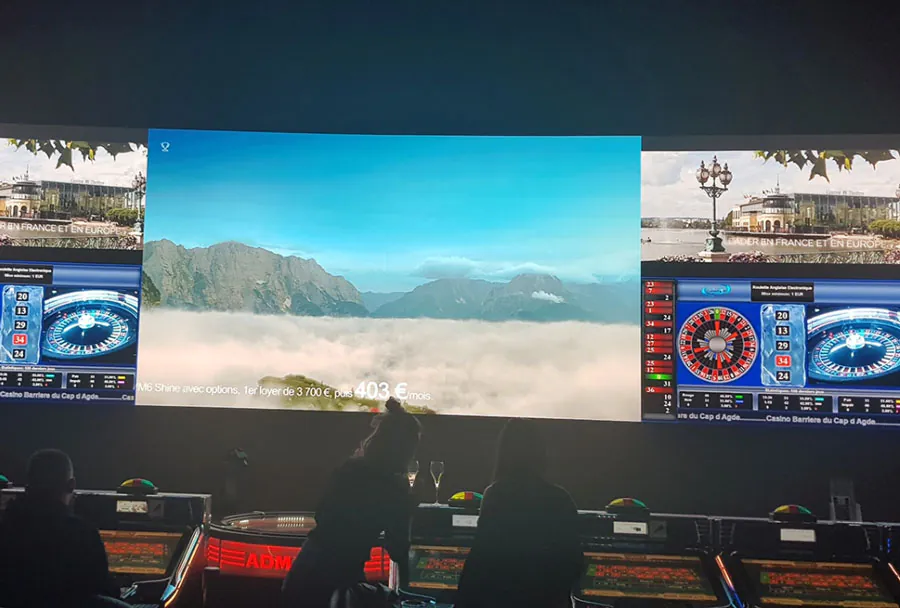
Flexible LED Display: Curved Screen Technology & Custom Solutions is now a practical choice for curved architecture, retail storefronts, and stage design. Unlike rigid LED cabinets, flexible modules follow a continuous arc, eliminating the faceted, segmented look of older curved walls. The Digital Signage Federation describes flexible LED as a direct-view solution for curved architectural surfaces.
Table of Contents
- What Makes a Flexible LED Display Panel Bend
- Curvature Limits and Viewing Geometry
- Lock the Minimum Bend Radius Before Anything Else
- Convex and concave bends are not interchangeable
- Match Pixel Pitch and Viewing Distance to the Curve
- Curvature Types, Mechanical Design, and Bending Radius
- Choose a Processor That Calibrates the Curved Surface
- Tool comparison for curved LED work
- Design the Custom Frame for Service Access and Ventilation
- Front-service vs. rear-service curved frames
- Test for Color Shift and Thermal Expansion on the Real Curve
- Can a flexible LED display wrap a full 360-degree column?
- Is a flexible LED display lighter than a rigid LED wall?
- Can flexible LED panels be used outdoors on a curved storefront?
- How do you prevent content from stretching on a concave flexible LED screen?
- What is the most overlooked cost in a custom curved LED installation?
- Conclusion
The challenge is that most specification mistakes happen before a module is mounted, in bend radius, pixel pitch, processing, frame access, and calibration. This guide breaks down five practical secrets to help you specify a custom curved LED system that performs reliably.
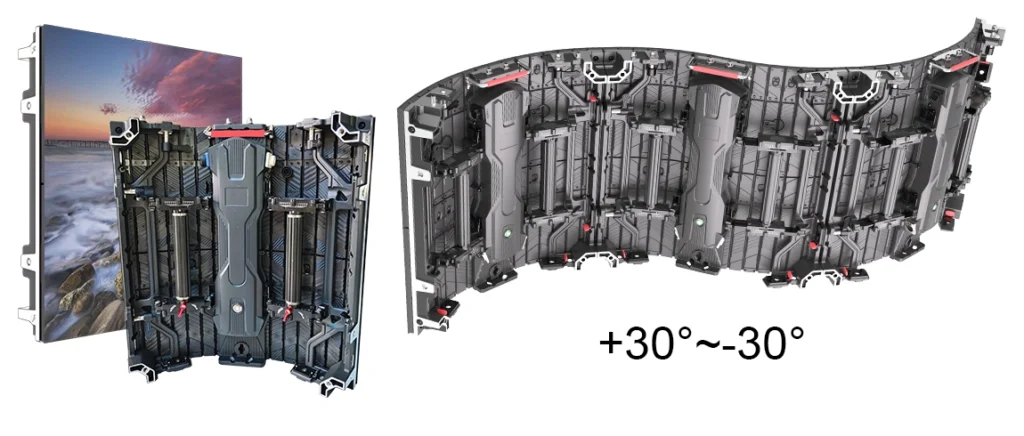
Flexible Led Display panel customized by TW VISION-2 degree for each panel.
What Makes a Flexible LED Display Panel Bend
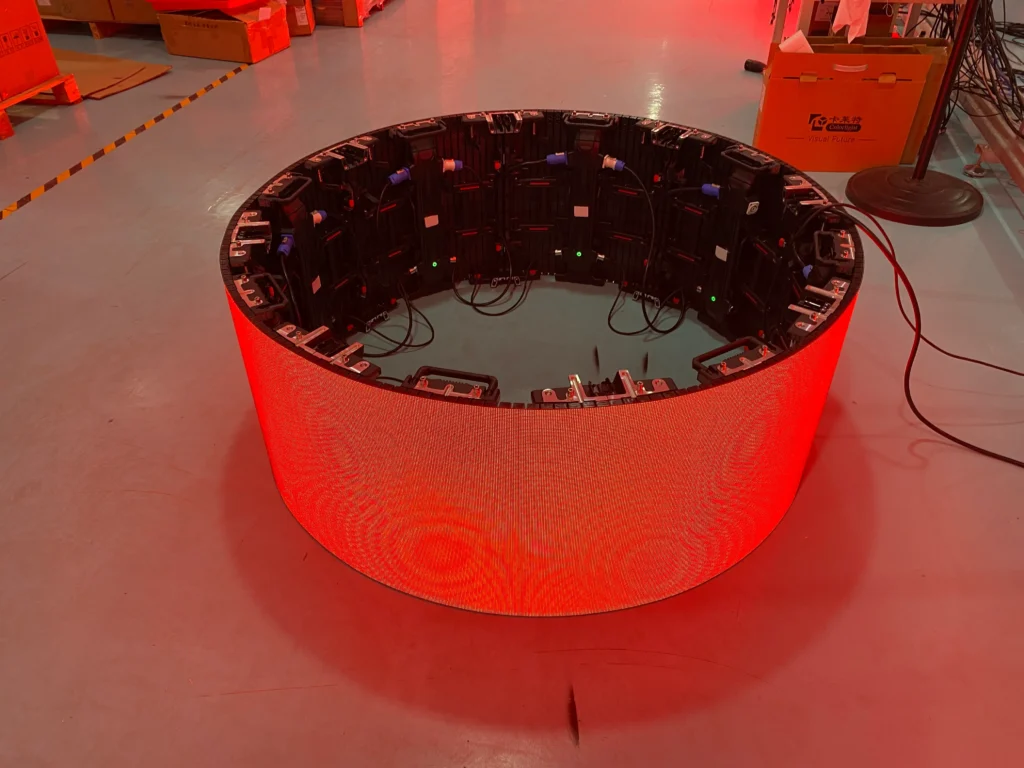
A flexible LED display panel bends because the manufacturer replaces a rigid PCB with a flexible substrate, a locked rigid-flex design, or segmented boards joined by flexible links.
Most standard LED video walls use rigid PCB tiles that tolerate almost no flexing. Flexible LED Display: Technology、Curvature & Custom Applications begins with the substrate choice because it determines how tight the curve can be and how many flex cycles the module will survive.
According to the Society for Information Display, flexible display performance depends on the interaction among substrate, backplane, and encapsulation choices. That means a bendable face does not automatically make the electronics reliable; the driver IC placement, solder joints, and protective coating matter just as much.
Pixel pitch still follows the same rule as flat LED: tighter pitch produces closer viewing distances. However, on a curve, pixel pitch also changes how visible the joins become at the bend. The mechanical drawing is the most important document for Flexible LED Display: Technology、Curvature & Custom Applications because it states the bend axis and minimum bend radius.
How to apply this: request a sample module and physically bend it to your planned radius in the intended orientation before ordering a full wall.
Curvature Limits and Viewing Geometry
Curvature is not just about whether a panel bends; it is about maintaining pixel alignment, viewing angle, and color uniformity across the curve.
Concave curves pull content toward the viewer and work well for stage backdrops and immersive rooms. Convex curves wrap around columns and pillars for a 360-degree sightline. Each shape changes how pixels appear from off-axis positions.
| Curve type | Typical use | Key specification | Action to take |
|---|---|---|---|
| Concave arc | Stage backdrop, immersive room | Horizontal bend axis, pixel pitch | Request CAD drawing with curve radius |
| Convex wrap | Lobby column, kiosk | Module join tolerance | Test one module on a sample curve |
| S-curve | Retail fixture, exhibit | Flexible PCB segments | Ask for maximum combined angle |
| 90-degree edge | Storefront display | Corner module or bezel kit | Confirm cabinet type in the quote |
When you design Flexible LED Display: Technology、Curvature & Custom Applications around a curved surface, start with the mechanical drawing, not the marketing photo. Many integrators report that seams and joins show more problems than the middle of a curve, so corner and edge details deserve early attention.
How to apply this: mock up the exact curve with a single module and view it from the intended audience distance before signing off.
Lock the Minimum Bend Radius Before Anything Else
The tightest curve a module can tolerate is the minimum bend radius. Flexible LED Display: Curved Screen Technology & Custom Solutions specifications should separate convex and concave values, because a panel may bend outward more easily than inward.
Many manufacturer data sheets list different convex and concave limits for the same module, so do not assume one radius applies to both directions.
Convex and concave bends are not interchangeable
Consider a hotel lobby that needs a concave LED wrap around a 600mm-radius column. An integrator selects a flexible module rated for 500mm convex, but the concave limit is 1,000mm. Forcing that panel into the concave curve can crack the PCB or distort the pixel grid. That single mismatch can force a redesign.
How to apply this: request the exact convex and concave bend radius for your chosen pixel pitch, and treat the stricter value as a go/no-go requirement for the frame builder. A Flexible LED Display: Curved Screen Technology & Custom Solutions design should never move forward until both numbers are confirmed.
Match Pixel Pitch and Viewing Distance to the Curve
Pixel pitch on a curve is not the same as on a flat wall. Viewers at the side see edge tiles at a steeper angle, which can lower perceived contrast and color accuracy.
Flexible LED Display: Curved Screen Technology & Custom Solutions work best when the module’s published half-brightness viewing angle is checked against the curve geometry, not just the straight-on spec.
A common scenario is a curved retail storefront specified with a 2.5mm flexible module. Shoppers near the side of the arc see the image at a glancing angle, so the display can look less sharp from those positions even though the straight-on image is fine.
Mapping the sightline from the closest viewer to the farthest edge tile helps you decide whether a smaller pixel pitch is justified. Flexible LED Display: Curved Screen Technology & Custom Solutions depend on this sightline check more than flat walls do.
How to apply this: calculate the steepest viewing angle on the actual curve and verify that the module maintains acceptable contrast from that position before ordering panels.
Curvature Types, Mechanical Design, and Bending Radius
Curved screens come in different geometries—cylindrical wraps, partial cylinders, spherical segments, and freeform organic curves. Each geometry imposes different mechanical constraints:
– Fixed curvature vs. variable curvature: Modules engineered for a fixed minimum bending radius provide stable performance but less adaptability. Variable-curvature modules, often employing segmented or stitched flexible substrates, can accommodate varying radii but require more sophisticated mounting systems.
– Minimum bending radius: This specification indicates the tightest curve a module can sustain without damage or permanent deformation. TW VISION defines bending radii per pixel pitch and module thickness; smaller pitch modules typically allow tighter radii due to denser, thinner construction.
– Structural support and framing: For large installations, a secondary support structure—flexible rails, aluminum frames with adjustable brackets, or skeleton frameworks—ensures load distribution and maintains planar relationships between modules.
Choose a Processor That Calibrates the Curved Surface
A curve changes how each tile catches light and heat, so a processor with per-tile or per-pixel calibration is non-negotiable. Brompton Technology states that calibration should be performed after panels are fixed in their final curved position to maintain uniform brightness and color. Novastar controllers also support receiving card setup and calibration workflows common in LED video walls.
Take, for instance, an integrator who runs the same signal to every cabinet but skips post-mount calibration. The center tiles of a curved wall can appear brighter than the edge tiles because the curve changes each tile’s viewing angle. That mismatch is not a panel defect; it is a processing gap.
Tool comparison for curved LED work
| Tool | Primary role | Action to take |
|---|---|---|
| Brompton Tessera | LED processing and per-tile calibration | Confirm your flexible module is supported before purchase |
| Novastar controllers | Receiving card setup and wall configuration | Run calibration after the curve is mounted |
| Resolume Arena | Real-time content mapping to curved surfaces | Map media to the physical curve before locking content |
Flexible LED Display: Curved Screen Technology & Custom Solutions should not be signed off until calibration is measured on-site after installation.
How to apply this: specify the processor and receiving card before installation, then run a full calibration pass after the flexible modules are fixed to the frame.
Design the Custom Frame for Service Access and Ventilation
A curved frame can block the access needed to replace a failed module. Flexible LED Display: Curved Screen Technology & Custom Solutions must include a service drawing that shows how each module is removed without disturbing adjacent tiles. Many manufacturer installation guides recommend rear access for cabling and module removal, though the exact clearance varies by design.
Front-service vs. rear-service curved frames
In one installation, an airport curved canopy used a shallow steel frame that left no room for rear access. When one module failed, the integrator had to remove several surrounding tiles to reach the panel, adding labor and risking damage to the curve. The frame created the service problem, not the LED module.
For commercial interiors, also confirm that the flexible modules meet the flame rating or certification required by local code. Electrical compliance is part of the custom design, and a Flexible LED Display: Curved Screen Technology & Custom Solutions frame should not make service a secondary consideration.
How to apply this: require a front-service or rear-service access plan before the frame is fabricated, and verify that the specified clearance matches the module manufacturer’s minimum for cooling and connectors.
Test for Color Shift and Thermal Expansion on the Real Curve
Bench testing a flat module tells you little about how it will behave after bending. Color and brightness shift as viewing angles change, and a curved frame can trap heat. Flexible LED Display: Curved Screen Technology & Custom Solutions should include a mounted-sample test before full production.
In another case, a curved stage backdrop looked correct flat but developed a visible hot spot after bending. The issue was the frame blocking passive airflow behind the center tiles, not the LED panel itself. A 24-hour thermal test on the assembled curve would have exposed the problem before the show.
Temperature-related color drift is a known concern in Flexible LED Display: Curved Screen Technology & Custom Solutions, where the frame can change airflow.
How to apply this: build a small curved mock-up, run it for at least 24 hours at the intended brightness, measure the hottest cabinet, and recheck calibration before final client sign-off.
Applications and Use Cases
TW VISION’s flexible curved LED solutions apply across numerous sectors:
– Retail and brand environments: Wraparound displays in storefronts and interiors create immersive product narratives and high-impact advertising.
– Architectural fa?ades and public art: Curved fa?ades with integrated LEDs enable dynamic building skins and programmable public art that interacts with ambient conditions.
– Broadcast and event production: Broadcasters use curved LED walls to create expansive backgrounds with reduced seams and natural-looking perspectives.
– Visitor attractions and museums: Curved screens in exhibits produce panoramic storytelling experiences and interactive displays.
– Transportation hubs and airports: Curved signage and information displays improve wayfinding and passenger engagement.
Frequently Asked Questions About Flexible LED Display: Curved Screen Technology & Custom Solutions
Can a flexible LED display wrap a full 360-degree column?
Yes, many flexible modules can form a full cylinder, but the closure seam and content mapping need extra design attention. In a narrow column, the back side may require a tighter concave bend than the front convex bend, so confirm the module’s concave radius before ordering.
Flexible LED Display: Curved Screen Technology & Custom Solutions for 360-degree jobs often use custom content mapped to the full cylinder circumference.
Is a flexible LED display lighter than a rigid LED wall?
Usually, flexible modules weigh less per square meter because the cabinet is thinner and often built from aluminum. However, total installed weight depends on the curved frame and power supplies. A unique scenario is a suspended curved sign: flexible panels may reduce steel and rigging loads, but you still need a structural engineer to verify hanging points.
Flexible LED Display: Curved Screen Technology & Custom Solutions can simplify the frame, but weight targets must be confirmed with the manufacturer.
Can flexible LED panels be used outdoors on a curved storefront?
Some flexible panels carry outdoor IP ratings, but not all do. For direct weather exposure, verify a front rating of IP65 or higher and a protected rear enclosure. A specific exception is a south-facing storefront where sunlight pushes brightness demands. Outdoor-rated Flexible LED Display: Curved Screen Technology & Custom Solutions require sealed cabinets, adequate brightness, and proper drainage.
How do you prevent content from stretching on a concave flexible LED screen?
Use real-time mapping software that matches the content’s UV map to the physical curve. Content designed for a flat canvas can look elongated at the edges of a concave display. In one edge case, a curved lobby screen used a cylindrical projection map in Resolume to keep logos proportional.
Flexible LED Display: Curved Screen Technology & Custom Solutions content should be mapped after installation, not before.
What is the most overlooked cost in a custom curved LED installation?
The frame and service access often cost more than expected, especially when curves require custom steel or aluminum. A specific scenario: a tight concave arc may require precision-cut ribs at every module joint, adding fabrication time.
Flexible LED Display: Curved Screen Technology & Custom Solutions budgets should include structural engineering, not just the price per square meter of the LED panels.
Conclusion
A successful curved LED project comes down to five decisions you can make before installation.
– Confirm the convex and concave bend radius before the frame is fabricated.
– Match pixel pitch to the steepest viewing angle on the curve.
– Specify a processor that can calibrate after mounting.
– Design the frame for front-service access and ventilation.
– Test a curved mock-up for color shift, heat, and service reach.
Before you approve a Flexible LED Display: Curved Screen Technology & Custom Solutions quote, ask for the mechanical drawing, a supported-panel list from your processor vendor, and a front-service plan. Then build a small curved test section and measure it on-site before full production.
Related Articles
- Indoor LED Screen Atlanta: 5 : Complete Buying Guide
- led screen factory Guide to Quality and Value: Expert Guide
- flexible transparent led screen: 6 Best for Modern Displays
