

Giant LED Screens: Technology, Applications & Future Trends

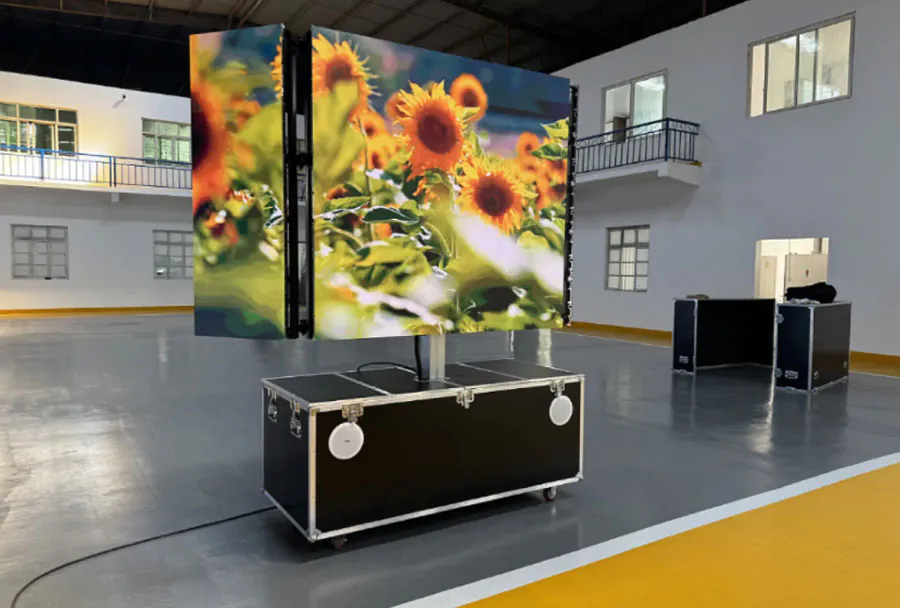
Giant LED Screens: Technology, Applications & Future Trends is a broad but practical topic for anyone buying, renting, or servicing large-format displays. What surprises many buyers is that a giant LED wall is not one giant panel; it is a grid of modular cabinets that must be calibrated to behave as a single seamless surface.
Table of Contents
- The Core Technology Behind Giant LED Screens
- Real-World Applications for Giant LED Screens
- Processing and Calibration
- Pixel Pitch, Viewing Distance, and Visual Performance
- Matching Pitch to Content
- Installation, Power, and Maintenance Essentials
- Future Trends Shaping Giant LED Screens
- How much do giant LED screens cost per square meter?
- What is the difference between LED and LCD video walls?
- How long do giant LED screens last?
- Can giant LED screens be used in direct sunlight?
- What content resolution do I need for a curved LED screen?
- Conclusion
The problem is that spec sheets often highlight pixel pitch and peak brightness while ignoring processing, power, and long-term serviceability. This article covers five core areas: the display technology itself, the most common applications, pixel pitch and viewing distance, installation and maintenance, and the future trends that will affect purchasing decisions.
Use these insights to ask sharper questions before you sign a purchase or rental agreement.
The Core Technology Behind Giant LED Screens
In Giant LED Screens: Technology、Applications & Future Trends, the foundation is direct-view LED, not a projector and not a traditional LCD panel. Each module contains red, green, and blue LED packages; groups of modules form a cabinet, and cabinets tile together into a larger wall.
Because LEDs are emissive, they can produce deep blacks in dark environments and enough brightness for sunlight.
A key engineering choice is surface-mount device (SMD) versus chip-on-board (COB) packaging. SMD remains common for many indoor and outdoor panels, while COB is used in fine-pitch installations where smoother surfaces and better durability matter. Heat management and driver IC quality affect color consistency more than the LED chip brand alone.
The Digital Signage Federation’s guidance is simple: match pixel pitch to the closest viewer distance, not just total resolution (Digital Signage Federation). That principle explains why a P10 billboard looks sharp from the highway but pixelated up close.
When you review Giant LED Screens: Technology、Applications & Future Trends product data, check cabinet size, module redundancy, and the processor ecosystem rather than brightness alone.
How to apply this: Request the manufacturer’s photometric report for brightness and color uniformity, and confirm whether individual modules can be replaced on-site.
Real-World Applications for Giant LED Screens
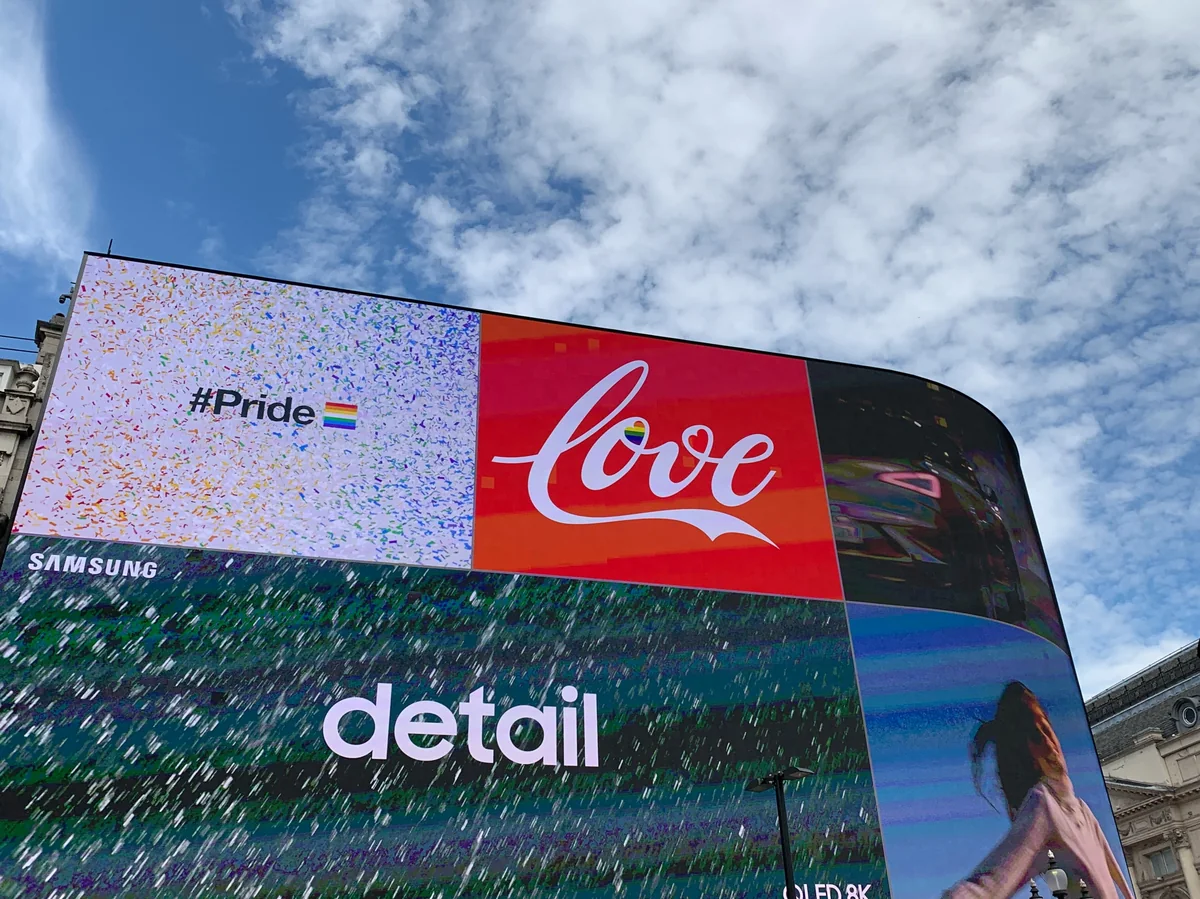
The strongest use cases for Giant LED Screens: Technology、Applications & Future Trends depend on viewing distance, ambient light, and content type. Indoor corporate lobbies, outdoor billboards, stadium ribbon boards, broadcast studios, and touring concert stages each create different requirements.
Consider a stadium ribbon display. It may need high refresh to avoid visible scan lines on camera, while an outdoor billboard may prioritize weather sealing and front service access. The same product category solves both problems, but the specific configuration changes.
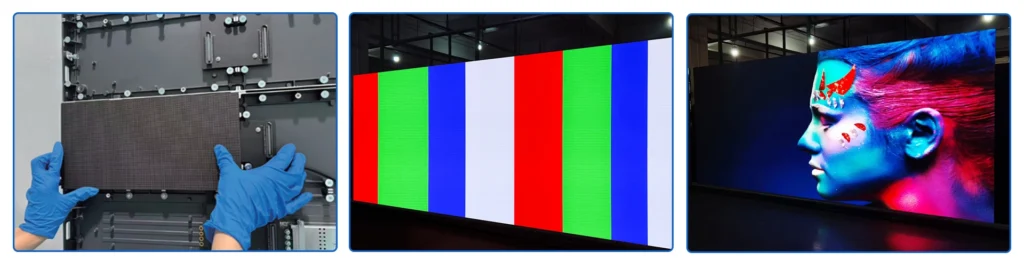
Processing is where many projects succeed or fail. NovaStar makes LED display controllers and calibration systems used to map content and maintain uniformity. Brompton Technology provides video processing that handles HDR, color correction, and low-latency content for live events. Integrators often spend as much effort on processing as on panel selection.
Processing and Calibration
Good processing can rescue a mediocre panel, but a high-end panel cannot hide poor processing. Ask whether the system supports per-module calibration, HDR, and low-latency switching. Rental and broadcast users often test this with camera captures rather than eyeballing the wall.
When planning Giant LED Screens: Technology、Applications & Future Trends use cases, write down the primary content type before you compare panels.
How to apply this: Create a one-page use case sheet that lists viewing distance, ambient light, content source, and service access; share it with at least two integrators.
Pixel Pitch, Viewing Distance, and Visual Performance
Pixel pitch is the distance in millimeters between the centers of adjacent LED pixels. It is the single most misunderstood spec in Giant LED Screens: Technology、Applications & Future Trends purchasing decisions. A lower number means tighter pixels, but buying the tightest pitch is not always the right call.
In one indoor lobby scenario, a 2.5mm pitch wall viewed from 4 meters may look sharp, while the same wall viewed from 1.5 meters shows visible pixel structure. The closer your audience, the finer the pitch you need. Outdoor environments add another factor: high ambient light forces you to prioritize brightness and contrast coatings.
| Environment | Common pitch range | Closest comfortable viewing | What to check |
|---|---|---|---|
| Indoor fine pitch | 0.9 mm to 1.5 mm | Roughly 1 m to 2 m | COB quality and seams |
| Indoor standard | 1.8 mm to 3 mm | Roughly 2.5 m to 4 m | Color uniformity |
| Outdoor close viewing | 3 mm to 6 mm | Roughly 4 m to 8 m | Brightness and IP rating |
| Outdoor billboard | 6 mm to 10 mm | Roughly 10 m or more | Front service access |
| Spectacular/creative | 10 mm and wider | Long distance only | Structural load rating |
Matching Pitch to Content
Thin fonts, small UI text, and detailed maps need tighter pitch than full-screen video. Test real content on a representative panel before finalizing a Giant LED Screens: Technology、Applications & Future Trends specification, especially for control rooms.
Human visual acuity matters more than raw resolution. For Giant LED Screens: Technology、Applications & Future Trends performance, ask for a display mockup or on-site sample before committing.
How to apply this: Calculate the closest expected viewer distance, then ask the integrator for the minimum pitch that remains visually smooth at that distance.

Installation, Power, and Maintenance Essentials
Installation quality often determines whether Giant LED Screens: Technology、Applications & Future Trends projects stay reliable for years. A large wall adds significant weight and wind load, so structural engineering is not optional, especially outdoors. Power distribution, data cabling, and cooling paths must be planned before the first cabinet ships.
Many outdoor cabinets carry IP65 front and IP54 rear ratings, meaning they resist rain from the front but still need protected rear service areas. Heat is an underrated killer: high temperatures accelerate LED wear and can shift color over time. Proper ventilation and thermal monitoring reduce that risk.
Serviceability changes the total cost of ownership. Modular cabinets allow replacement of a single tile instead of the entire screen. Keep spare modules on hand; an outdoor display can be down for days if a unique module is out of stock.
For Giant LED Screens: Technology、Applications & Future Trends installations, treat maintenance access as a design requirement, not an afterthought.
How to apply this: Add a maintenance checklist to your site survey: structural points, power redundancy, spare module inventory, and a named local service partner.
Future Trends Shaping Giant LED Screens
Future development in Giant LED Screens: Technology、Applications & Future Trends is moving toward finer pitches, better HDR processing, lower power consumption, and more flexible form factors. Major manufacturers now offer all-in-one LED display lines, reducing the complexity of traditional modular video walls.
MicroLED and COB technology continue to improve black levels and durability. Transparent LED films and curved or flexible panels are expanding into retail windows, architectural facades, and stage design. AI-assisted calibration is also becoming more common; some processors can correct brightness and color drift automatically across thousands of modules.
A practical trend to watch is the move from raw panel specs to managed display systems. Buyers increasingly pay for ongoing monitoring, automatic calibration, and content management, not just hardware. Sustainability is also shaping the market, with lower-power driver ICs and serviceable designs gaining attention.
When you evaluate Giant LED Screens: Technology、Applications & Future Trends roadmaps, ask which firmware and processing features can be updated in place.
How to apply this: Add a future-proofing line to your request for proposal: require remote monitoring, modular firmware updates, and a clear multi-year spare parts path.
Frequently Asked Questions About Giant LED Screens: Technology、Applications & Future Trends
How much do giant LED screens cost per square meter?
Cost varies by pixel pitch, outdoor rating, and processing. A fine-pitch indoor wall can be several times the price of a billboard-grade panel. When budgeting for Giant LED Screens: Technology、Applications & Future Trends, get quotes for the full system—panels, processors, rigging, spares, and installation. Exception: rental projects may quote weekly rates rather than purchase cost.
What is the difference between LED and LCD video walls?
Direct-view LED uses individual emissive pixels; LCD video walls use backlit liquid crystal panels with visible bezels. For outdoor or large-format work, a giant LED screen is usually the better fit. For Giant LED Screens: Technology、Applications & Future Trends comparisons, start by defining whether the wall is indoor, outdoor, large, or small.
Exception: small indoor meeting rooms may still prefer LCD for lower cost and easy replacement.
How long do giant LED screens last?
Many LED packages are rated for 50,000 to 100,000 hours, but brightness decays gradually and power supplies may fail sooner. For Giant LED Screens: Technology、Applications & Future Trends planning, use a practical service life of 7 to 10 years and schedule annual calibration. Exception: high-heat outdoor sites can shorten effective life, so review thermal logs.
Can giant LED screens be used in direct sunlight?
Yes, if the modules have sufficient nit brightness and appropriate face coatings. In Giant LED Screens: Technology、Applications & Future Trends outdoor projects, many deploy 4,500 nits or higher for direct sun. Exception: north-facing or heavily shaded walls may work with lower brightness, reducing power and heat load.
What content resolution do I need for a curved LED screen?
Base content on the wall’s actual pixel dimensions, not just 4K. Curved installations may need custom coordinate mapping through a processor. For Giant LED Screens: Technology、Applications & Future Trends curved designs, request a mapping test before the build. Exception: gentle curves often work with standard scaling, but tight curves require custom processing.
Conclusion
– Start with viewing distance and ambient light before comparing pixel pitch or brightness.
– Treat processing, calibration, power, and service access as part of the purchase, not add-ons.
– Verify weather ratings and thermal management for outdoor installations.
– Plan for future maintenance with spare modules and upgradeable processing.
The decisions you make today affect total cost of ownership for years. Giant LED Screens: Technology、Applications & Future Trends rewards buyers who ask system-level questions. Next step: schedule a site demo or request a paid sample panel for your exact content and viewing distance.
