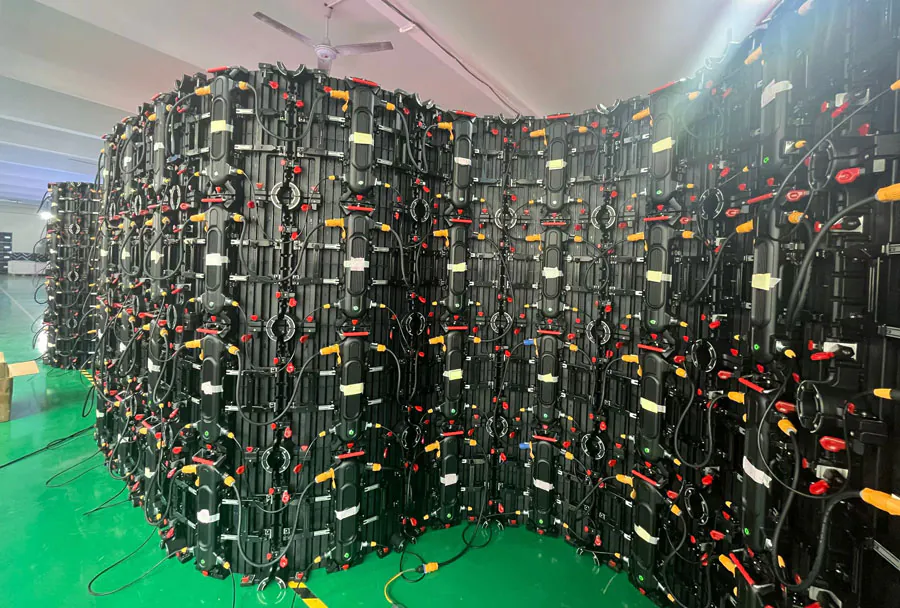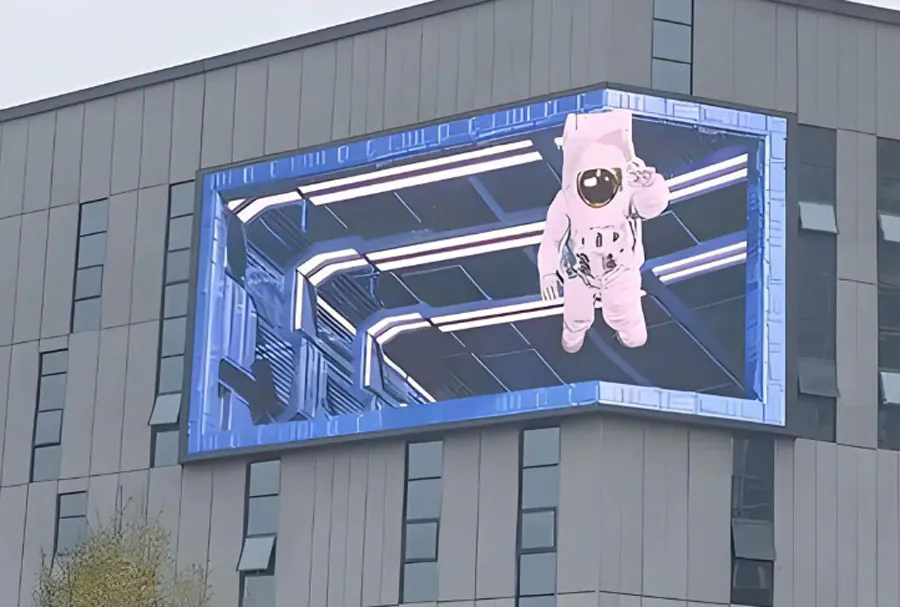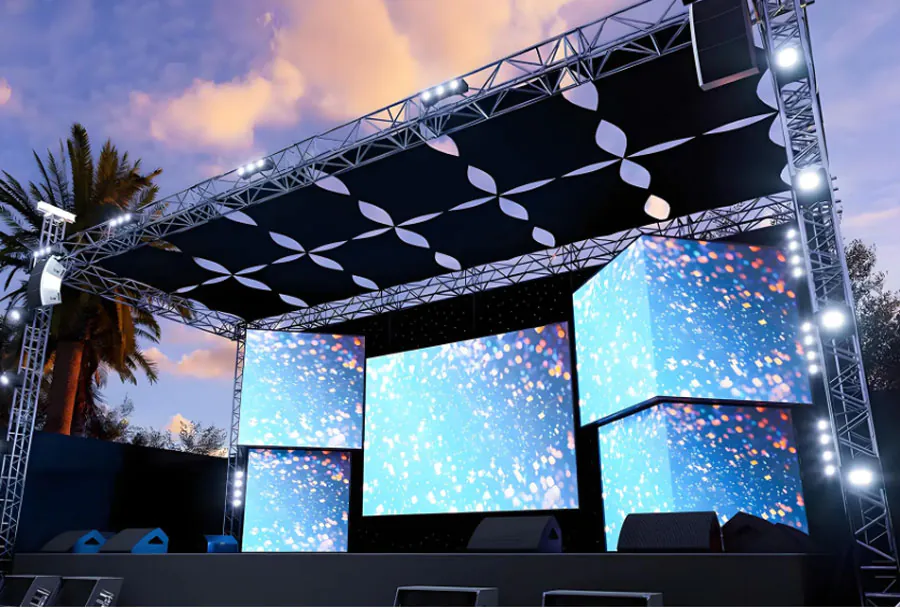
Flexible LED Displays for Curved Walls, Columns, and Custom Shapes

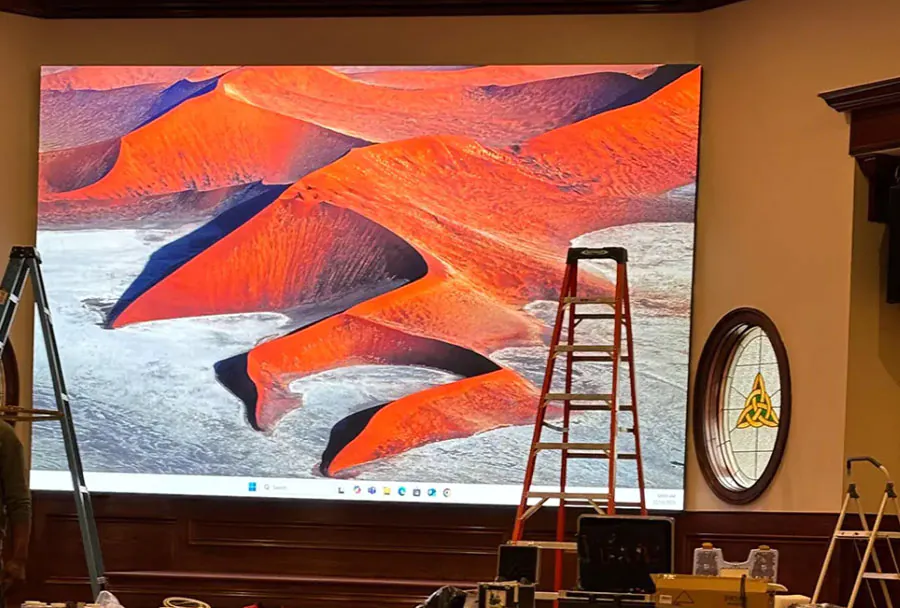
TW VISION’s premium LED flexible screen solutions are transforming the way designers, architects, and experiential marketers think about visual surfaces. In an era where immersive environments and memorable brand experiences are crucial, traditional flat screens often limit creativity. flexible led displays break those constraints, allowing visuals to conform to curves, wrap around structures, and integrate seamlessly into unconventional spaces.TW VISION develops and supplies flexible LED display products for custom commercial and architectural applications. Its modular designs support curved surfaces, cylindrical structures, and other creative display configurations, while product customization and manufacturing support help customers match their display specifications to project requirements.
Why Flexible LED Displays Matter
flexible led screens expand the palette of what’s possible in spatial storytelling. Rather than designing content around a rectangular frame, creators can let architecture dictate visual form. TW VISION’s flexible solutions enable smooth curvature, cylindrical wrapping, and complex freeform surfaces while delivering consistent brightness, color fidelity, and reliability. This capability is especially valuable for spaces that require seamless integration of media into structural elements—columns, arches, ceilings, and sculptural forms—where a rigid panel would interrupt the flow or be physically impossible to mount.
Beyond aesthetics, flexible LED displays can optimize sightlines, reduce glare through adaptive curvature, and increase audience engagement by aligning content with movement and perspective. TW VISION’s products are engineered to address these functional needs while maintaining straightforward installation, serviceability, and long-term durability.
Key Technical Characteristics of TW VISION Flexible LED Screens
TW VISION’s premium flexible LED solutions are designed to balance pixel density, flexibility, brightness, and serviceability. Key technical dimensions to consider when specifying a TW VISION flexible screen include pixel pitch, module flexibility radius, brightness (cd/m2), color gamut and calibration, refresh rate, and ingress protection for indoor/outdoor environments. TW VISION emphasizes modular design: individual flexible panels or modules can be joined with consistent seam control, allowing for large, uninterrupted canvases or segmented installations depending on the creative brief.
Important characteristics:
– Pixel pitch options that address viewing distance requirements, from high-density close-view designs to larger-pitch solutions for distant viewing.
– Mechanical flexibility allowing precise curvature without compromising LED alignment or uniformity.
– High-brightness and wide color gamut capabilities for vivid imagery in variable ambient light conditions.
– Robust thermal management and power delivery designed to operate reliably in continuous use scenarios.
– Accessible maintenance approach that enables module-level replacement without dismantling entire assemblies.
Design and Planning Considerations
Successful integration of TW VISION flexible LED screens begins with early-stage collaboration between designers, engineers, and installation teams. Key planning elements include structural support assessments, power and data routing, content strategy, viewing-distance analysis, and safety/egress considerations.
– Structural Support: flexible displays reduce dead weight and thickness compared to many rigid LED cabinets, but they still require engineered support points and secure mounting methods. TW VISION provides mounting options tailored to curved surfaces, hanging arrays, and recessed installations.
– Power and Data: Plan for centralized power distribution and data control hubs that minimize visible cabling. TW VISION’s systems are compatible with standardized control architectures, enabling clean integrations.
– Viewing Distance and Pixel Pitch: Choose pixel pitch based on anticipated closest viewing distance. Closer audiences need finer pitches for readable text and detailed imagery.
– Thermal and Ambient Light: Consider ventilation and heat dissipation, particularly in enclosed areas, and select brightness levels compatible with ambient lighting to avoid washout or excessive power use.
– Service Access: Ensure modules remain accessible for future maintenance. TW VISION supports front- and rear-serviceable configurations to suit space constraints.
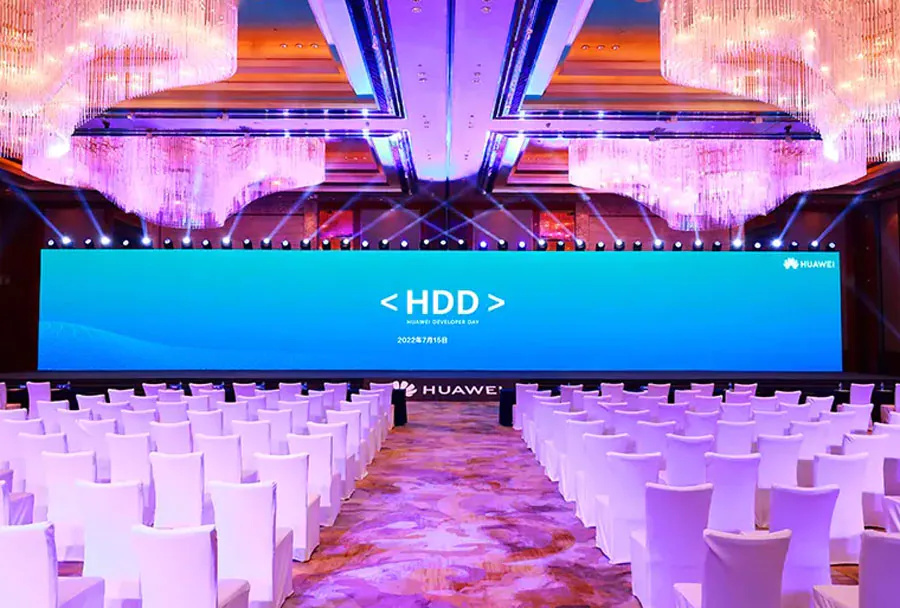
As the radius decreases, curvature has a greater impact on pixel density and image detail because adjacent screen sections rotate through larger angles over shorter distances. For accurate results, the design must account for the actual radius, arc length, and viewer location.
How to apply this: Use arc length instead of straight-line width when calculating canvas resolution, module quantities, and content safe zones.
Installation Methods and Best Practices
TW VISION prioritizes ease of installation to reduce onsite labor and commissioning time. Common installation scenarios include curved wall wraps, column cladding, ceiling integrations, and freeform sculptures. Best practices for each scenario include:
– Curved Wall Wraps: Use continuous rails and modular mounting brackets that allow panels to conform to the designed radius. Maintain a measured seam strategy to preserve visual continuity.
– Column Cladding: Use a model-compatible mounting system, such as magnetic attachments, mechanical brackets, or custom-engineered support structures. Confirm the mounting method with the LED display manufacturer before applying any adhesive, as unsuitable bonding materials can restrict maintenance access or affect heat dissipation.
– Suspended Ceilings: Suspended LED displays require an engineered support structure, appropriately rated suspension components, and independent secondary safety restraints where required. A qualified structural professional should verify the applicable load conditions and installation requirements before deployment.
– Outdoor Installations: Specify weatherproofed enclosures and appropriate ingress protection levels; design for drainage and UV resistance.
– Onsite Calibration: TW VISION provides product specifications, technical documentation, and customization support to help customers coordinate mounting systems, cable routing, and environmental protection requirements.
Final Calibration: After installation, the project team should verify brightness, color consistency, grayscale performance, and image alignment across the complete display.
How Curvature Affects Pixel Density and Image Detail on Flexible LED Displays
Physical Pixel Density Does Not Increase When the Screen Bends
Curvature does not change the native pixel count or the center-to-center spacing of LEDs built into a module.
Pixel Pitch Sets the Native Density
Pixel pitch is measured in millimeters between the centers of adjacent pixels. Planar’s official viewing-distance guide states that “pixel pitch directly determines pixel density.” (planar.com)
You can estimate native density with two calculations:
– Horizontal pixels per meter: `1,000 ÷ pixel pitch in mm`
– Pixels per square meter: `1,000,000 ÷ pixel pitch²`
At 1.5 mm pitch, the results are approximately 667 pixels per linear meter and 444,444 pixels per square meter. A 2.5 mm product provides 400 pixels per meter and 160,000 pixels per square meter.
Bending Changes Presentation, Not Resolution
How Curvature Affects Pixel Density and Image Detail on Flexible LED Displays is often misunderstood because a curved surface may look denser from one position. That visual compression is a projection effect, not an increase in addressable resolution.
Planar lists flexible LED products with pixel pitches ranging from 0.9 mm to 3.9 mm. Each model keeps its specified pitch while forming concave or convex surfaces. (planar.com)
Consider a 1.5 mm module wrapped around a column. Its LEDs do not move closer together along the module surface, although their spacing may appear compressed when viewed at an angle.
How Curvature Affects Pixel Density and Image Detail on Flexible LED Displays should therefore be assessed from the physical surface and the intended audience position.
How to apply this: Calculate pixels per meter from the specified pitch before evaluating renderings, photographs, or viewing-angle effects.
Curvature Changes Apparent Pixel Spacing and Detail
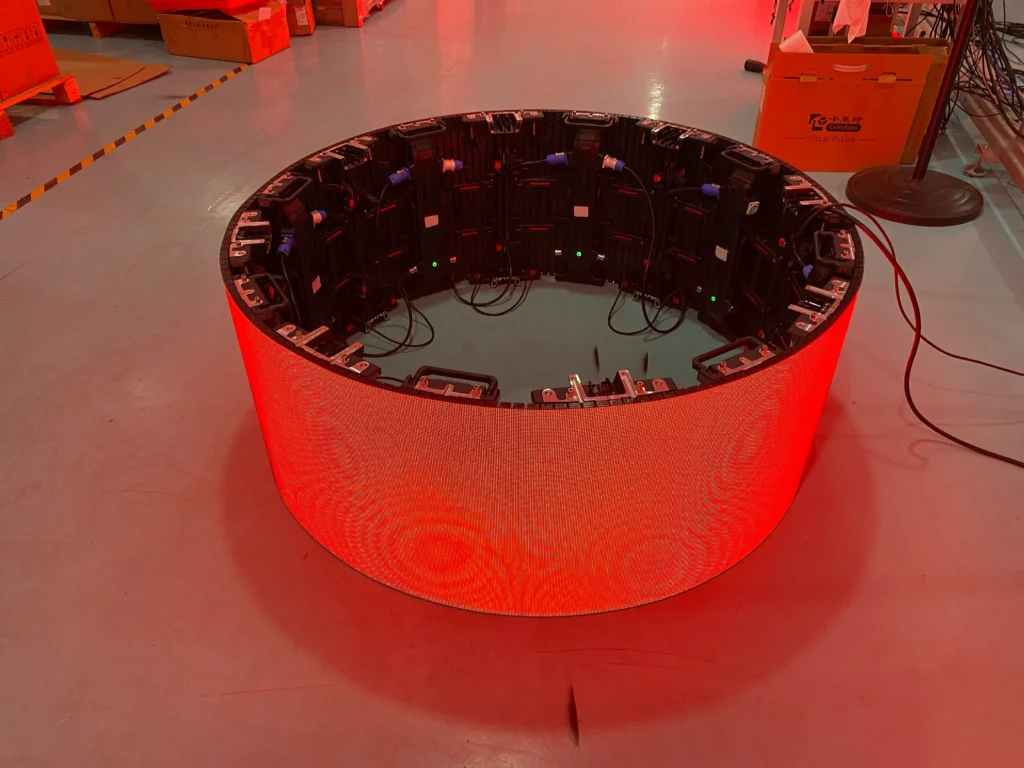
Curvature changes apparent detail by altering the angle, distance, and projected spacing of different screen areas.
Projection Compresses Off-Axis Pixels
In a simplified orthographic model, the projected horizontal pitch is approximately:
`Projected pitch = physical pitch × cos(viewing angle)`
At a 30-degree angle, `cos(30°)` is about 0.866. A physical pitch of 1.5 mm therefore projects to approximately 1.30 mm across the viewer’s image plane.
This can make pixels appear closer together horizontally, but it does not reveal extra source detail. Text, faces, and graphics may instead look compressed or distorted.
| Surface condition | Pixel count | Apparent effect | What to check |
|---|---|---|---|
| Flat, centered | Unchanged | Balanced spacing | Native sharpness |
| Flat, off-axis | Unchanged | Horizontal compression | Text width |
| Concave | Unchanged | More face-on areas | Viewer position |
| Convex | Unchanged | Edges turn away | Edge visibility |
| Tight radius | Unchanged | Faster angle changes | Detail consistency |
Concave and Convex Curves Behave Differently
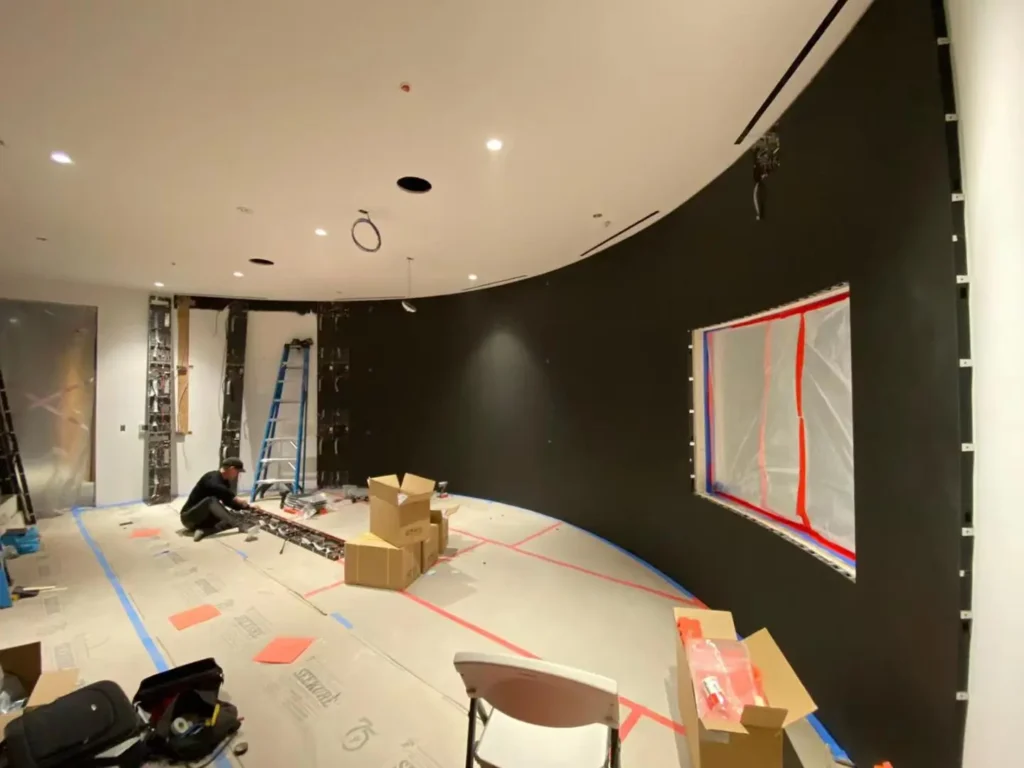
A concave display can direct more local surface normals toward an audience positioned inside the curve. A convex display does the opposite at its outer edges, where pixels increasingly face away from a centered viewer.
How Curvature Affects Pixel Density and Image Detail on Flexible LED Displays consequently depends on where people stand. A curve designed around a central control desk may look consistent there but uneven from a side entrance.
A common scenario is a convex column wrap carrying small text. Characters remain fully rendered, yet the portions approaching the sides become visually narrower and harder to read.
How Curvature Affects Pixel Density and Image Detail on Flexible LED Displays is best judged through audience-specific sightlines rather than one front elevation.
How to apply this: Mark your primary viewing positions and calculate the local viewing angle at the center and both edges of the display.
Radius, Arc Length, and Viewing Position Control Results
Curve radius controls how quickly pixel orientation changes across the display, while arc length determines the actual number of pixel columns available.
Measure the Surface, Not the Chord
A flat plan may show the chord, which is the straight distance between two endpoints. Flexible LED modules follow the longer arc.
For a circular surface:
– Arc length: `radius × angle in radians`
– Chord length: `2 × radius × sin(angle ÷ 2)`
– Pixel columns: `arc length ÷ pixel pitch`
Planar states that its Tile Flex modules can form curved surfaces with a 1-meter minimum curve diameter, equal to a 0.5-meter radius. The product line is offered in pitches from 1.2 mm to 2.5 mm. (planar.com)
Tight Curves Create Faster Visual Change
Consider a semicircle with a 0.5-meter radius. Its arc length is approximately 1.57 meters, while its endpoint-to-endpoint chord is only 1 meter.
At 2 mm pitch, the curved surface can contain about 785 pixel columns along the arc. Planning content from the 1-meter chord would incorrectly suggest only 500 columns.
Mapping and Calibration Preserve Native Detail
Correct pixel mapping ensures that source pixels reach the intended LEDs without unnecessary scaling or geometric distortion.
Build the Canvas From Native Pixels
A display with a 4-meter arc and 2 mm pixel pitch contains approximately 2,000 pixel columns along that arc. Your playback canvas should use the actual mapped pixel count rather than the display’s straight projected width.
How Curvature Affects Pixel Density and Image Detail on Flexible LED Displays becomes a content-production issue when flat artwork is stretched across a curved mesh. Logos can widen near the center, text can compress near edges, and circular objects can become oval from key viewing positions.
Use UV-style unwrapping or a three-dimensional previsualization workflow when content must appear geometrically correct from one controlled location.
Use Real Configuration and Processing Tools
NovaStar NovaLCT configures LED modules, cabinets, screen topology, calibration, and seam brightness. Its documentation includes module and cabinet modes, a 1:1 topology view, brightness or chroma calibration, and hardware-saving controls. (oss.novastar.tech)
Brompton Tessera software provides processor configuration, fixture mapping, content thumbnails, and video-on-canvas preview features for compatible Tessera systems. (bromptontech.com)
Calibration can improve color and brightness consistency, but it cannot recreate detail removed by scaling. How Curvature Affects Pixel Density and Image Detail on Flexible LED Displays still depends on native mapping and content geometry.
How to apply this: Confirm the exact pixel canvas, map every cabinet at 1:1 resolution, and display a grid test pattern before loading final content.
Creative Applications and Use Cases
TW VISION’s flexible LED screens unlock a spectrum of creative applications:
– Retail Flagship Stores: Wrap displays around architectural features to guide circulation and craft high-impact product storytelling.
– Hospitality and Venues: Create dynamic lobbies, bar fronts, and ceiling installations that shift mood and ambience through programmable content.
– Museums and Exhibitions: Design immersive exhibits that merge physical artifacts with responsive visual layers.
– Corporate Spaces: Employ elegant curved screens for auditoriums, lobby art, and brand narrative displays that elevate corporate identity.
– Experiential Marketing and Events: Assemble temporary or semi-permanent curved installations for pop-ups and roadshows that demand fast setup and striking visual impact.
TW VISION’s flexible solutions are engineered to accommodate both permanent and temporary installations, offering durable performance with the aesthetic freedom to match ambitious design intents.
Content Strategy for Curved and Flexible Screens
Designing content for flexible surfaces requires a tailored approach. Traditional flat-mapped video can distort when displayed on curved geometry. TW VISION recommends content creators apply the following strategies:
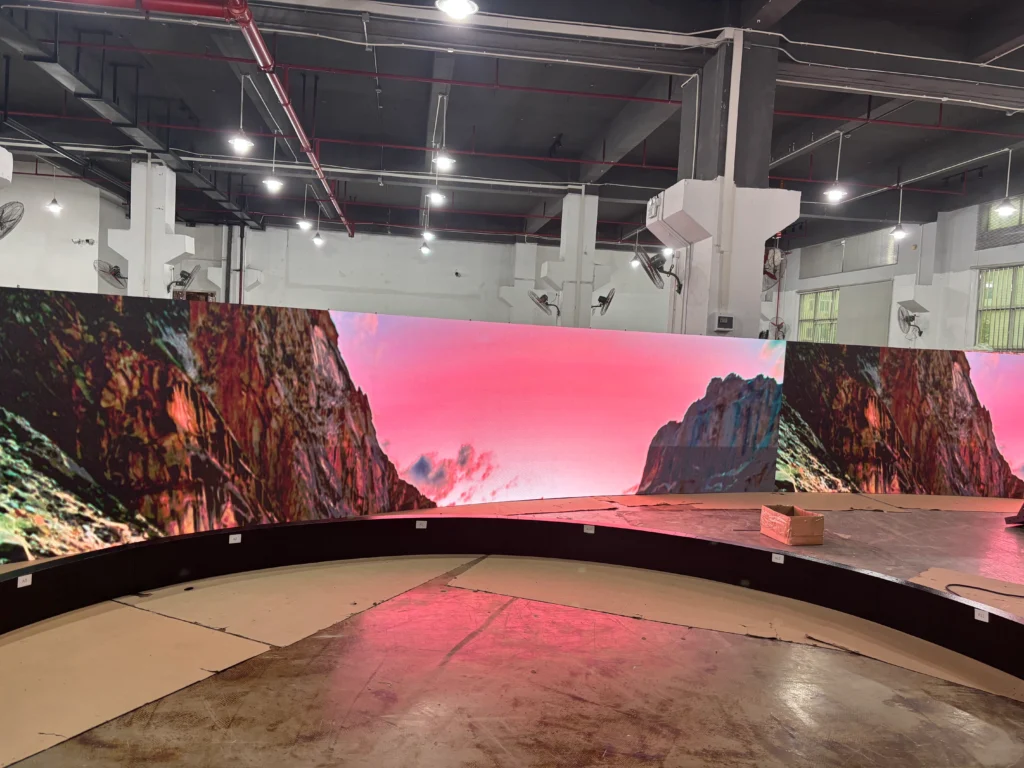
– Geometry-Aware Content: Produce videos and graphics mapped to the final surface geometry to prevent stretching and maintain composition.
– Modular Content Blocks: Create content in segments that align with panel boundaries, facilitating future updates without re-authoring entire pieces.
– Parallax and Depth: Use parallax effects and depth layering to accentuate curvature and spatial relationships, increasing perceived dimensionality.
– Brightness Management: Adjust brightness and contrast according to ambient lighting and viewing conditions. Avoid unnecessarily high output and prolonged static content that may contribute to uneven LED aging over time.
TW VISION’s control platforms support warping and mapping tools to help adapt content quickly to irregular surfaces and to preview the final appearance during the previsualization stage.
Longevity, Maintenance, and Safety
Long-term reliability and ease of maintenance are core benefits of choosing TW VISION. Their modular approach simplifies component-level replacement and reduces total cost of ownership. Recommended maintenance practices include:
– Scheduled Inspections: Periodic checks for loose mounts, cabling integrity, and module alignment.
– Cleaning Protocols: Use manufacturer-approved cleaning techniques to preserve optical coatings and LED housings without damaging flexible substrates.
– Firmware and Calibration Updates: Keep control firmware updated and perform color recalibrations after major system changes or annually for mission-critical installations.
– Safety Measures: Ensure all suspended or load-bearing installations include redundant safety wires and adhere to local building codes and fire safety regulations.
TW VISION provides service documentation and aftermarket support to help owners maintain peak performance and comply with safety standards.
Return on Investment and Value Proposition
Investing in flexible LED screens from TW VISION offers measurable ROI in several areas:
– Enhanced Engagement: Creative LED installations can help brands attract attention and create more distinctive visual experiences. Actual engagement and conversion results depend on content quality, location, audience behavior, and campaign execution.
– Potential Retrofit Savings: Flexible LED modules may simplify integration with certain curved or irregular surfaces. However, the final project cost depends on frame fabrication, structural modifications, electrical work, and maintenance access requirements.
– Branding Impact: Unique visual forms support premium brand positioning and memorable guest experiences, which can translate to higher perceived value and marketing lift.
– Reduced Retrofit Costs: Flexible displays conform to existing architecture more readily, often reducing construction and retrofitting expenses compared to creating new mounting structures for rigid panels.
A well-scoped TW VISION installation balances initial cost with expected life span, energy consumption, and the intangible marketing value gained through elevated visitor experiences.
Analysis Table: TW VISION Flexible LED Screen Attributes
| Attribute | Specification Range | Design Impact | Recommended Installation | TW VISION Advantage |
| Pixel Pitch | 1.2mm–4.8mm | Determines detail and viewing distance suitability | Use finer pitches for close-view exhibits; larger pitches for distant signage | Offers a variety of pixel pitches to match different viewing scenarios without compromising flexibility |
| Minimum Radius | Model-specific; confirm the minimum bend radius for each model | Enables curves, cylinders, and freeform shapes | Suitable for columns, curved walls, and sculptural facades | Engineered module flexibility with controlled pixel alignment |
| Brightness | 800–5000 cd/m² | Ensures visibility in varied ambient light | Use lower brightness for controlled interiors and higher brightness for bright lobbies or outdoor environments | Configurable brightness options to meet different site conditions |
| Serviceability | Front and rear service options | Affects ease and speed of maintenance | Choose based on access constraints and acceptable downtime | Modular panels designed for convenient maintenance and replacement |
| Ingress Protection | IP20–IP65 (model-dependent) | Defines suitability for indoor and outdoor exposure | Use IP20 for indoor environments and higher IP ratings for semi-outdoor or exposed applications | Model-specific protection options for different application environments |
Project Workflow: From Concept to Commissioning
A structured workflow ensures TW VISION flexible LED projects meet expectations on schedule and budget:
1. Concept & Site Survey: Evaluate site geometry, power, control rooms, structural constraints, and sightlines. TW VISION can assist with technical feasibility studies.
2. Design & Engineering: Define pixel pitch, panel layout, mounting strategy, and environmental protections. Produce detailed drawings for coordination.
3. Prototyping & Mockups: Use digital mockups and, where feasible, physical prototypes to verify curve radii, seams, and content mapping.
4. Manufacturing & Pre-Calibration: TW VISION pre-configures panels and performs factory calibration to minimize onsite tuning.
5. Installation & Integration: Mechanical mounting, cable routing, control system integration, and safety inspections.
6. Content Mapping & Commissioning: Final mapping, color calibration across modules, stress testing, and training for operators.
7. Handover & Support: Deliver documentation, maintenance schedules, and access to TW VISION’s support channels.
This workflow reduces surprises and ensures predictable outcomes for creative installations.
Sustainability and Operational Efficiency
TW VISION recognizes sustainability as a practical consideration for long-term operations. Flexible LED systems can be optimized for energy efficiency through dimming controls, smart scheduling, and content strategies that minimize peak brightness when unnecessary. Additionally, modular repairability reduces waste by enabling targeted replacements instead of full-panel disposal. TW VISION incorporates materials and engineering choices that increase service life and reduce the environmental impact of frequent rebuilds.
Customization and Collaborative Services
One of the strengths of TW VISION is the ability to collaborate with clients on custom formats and special finishes. Whether the brief calls for a seamless cylindrical display, a textile-backed curved screen, or a recessed ceiling application, TW VISION provides engineering input to realize the vision while maintaining performance metrics. Their teams can also advise on control system architectures and content workflows to ensure smooth operations once the installation is live.
Common Challenges and Mitigations
Flexible LED projects introduce unique challenges, but TW VISION’s approach mitigates many common issues:
– Challenge: Mismatched curvature leading to seam irregularities. Mitigation: Pre-visualization and mockups to confirm radii; precision-engineered mounting rails.
– Challenge: Uneven brightness across large arrays. Mitigation: Factory calibration and onsite color tuning with spectral measurement tools.
– Challenge: Limited service access in tight spaces. Mitigation: Selection of front-serviceable modules and planning for maintenance clearances.
– Challenge: Integration with building systems. Mitigation: Early coordination and TW VISION-supported engineering documentation for power, control, and structural teams.
By anticipating these issues, TW VISION helps clients avoid delays and costly rework.
Why Choose TW VISION for Flexible LED Installations
TW VISION’s premium LED flexible screens represent a strategic choice for projects that demand both artistic expression and technical reliability. The company’s emphasis on modular design, robust engineering, and installation support enables designers and facility managers to realize complex visual concepts in a practical, serviceable way. TW VISION’s product range covers a spectrum of pixel pitches, brightness levels, protection ratings, and service options, making it adaptable to many creative scenarios—from intimate gallery displays to large-scale architectural features.
Choosing TW VISION means working with an LED display manufacturer that provides flexible LED products, customized configurations, and technical support for creative commercial display projects. For anyone seeking to push the boundaries of environmental media and spatial storytelling, TW VISION’s flexible LED screens offer a compelling combination of aesthetic flexibility, technical performance, and lifecycle value.