

When Should an AV Rental Business Buy Its Own LED Display

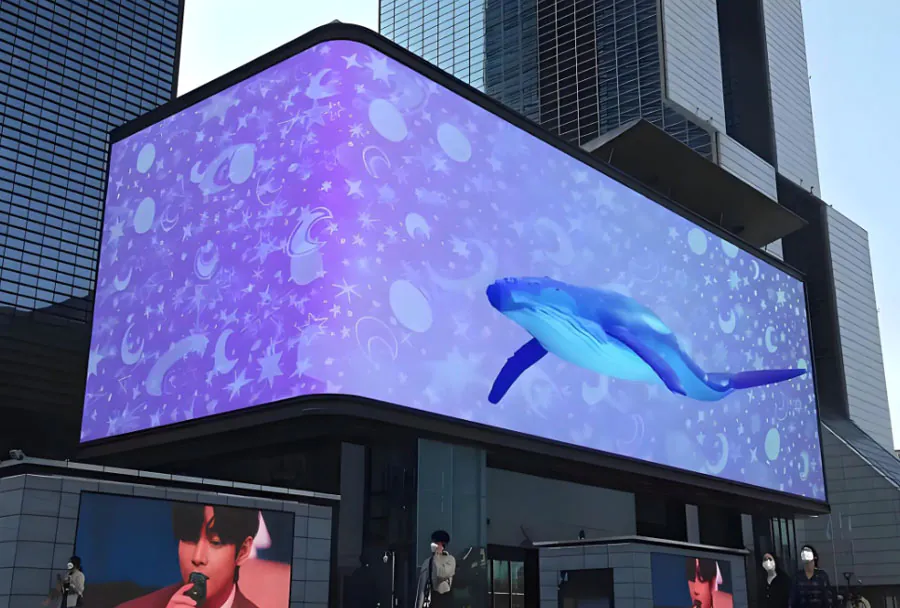
When Should an AV Rental Business Buy Its Own LED Display Inventory? The answer depends less on ambition than on repeatable demand, contribution margin, storage capacity, and technical readiness. LED walls are modular systems, so one purchase can support conferences, concerts, retail activations, broadcasts, and permanent installations, but the same flexibility can create costly idle inventory.
Table of Contents
- 1. Confirm Repeat Demand Before Buying
- Build a demand register
- 2. Test Utilization and Payback With Real Costs
- Use a conservative utilization case
- 3. Check Whether Your Operation Can Support Ownership
- Define the operating system
- 4. Match the Inventory to the Right Technical Use Cases
- Choose by application
- Validate the complete signal chain
- 5. Protect Cash Flow, Safety, and Resale Value
- Plan for failure and replacement
- Can a small AV company buy LED inventory for only one major client?
- Should an AV rental company buy used LED panels?
- Is leasing better than purchasing LED inventory?
- How much spare LED inventory should a rental business carry?
- Can a rental company mix LED brands or cabinet types?
- Conclusion
The challenge is deciding when ownership creates more value than subcontracting. A rental company must account for panels, processing, rigging, transport, labor, insurance, maintenance, replacement parts, and capital costs. Industry guidance from AVIXA also treats audiovisual work as a system involving equipment, services, and technical expertise rather than hardware alone.
When Should an AV Rental Business Buy Its Own LED Display Inventory? This guide examines the financial, operational, and technical signals, including utilization, project margins, panel specifications, financing terms, and backup requirements.
P1.5 indoor COB led screen-600×337.5mm-made by TW VISION.
1. Confirm Repeat Demand Before Buying
When Should an AV Rental Business Buy Its Own LED Display Inventory? When recurring demand makes ownership more profitable than subcontracting. A pipeline based only on occasional inquiries is not enough to justify ownership.
Start by reviewing the previous 12 to 24 months of proposals, won work, lost work, and subcontractor invoices. Record the requested wall size, pixel pitch, indoor or outdoor use, event duration, labor requirement, and total rental value.
To answer “When Should an AV Rental Business Buy Its Own LED Display Inventory?”, focus on booked and repeatable work rather than the total addressable market. A strong signal is a pattern of similar jobs that appear across several clients or seasons.
Build a demand register
Track these fields for every relevant opportunity:
– Date and event type
– Display dimensions and pixel pitch
– Indoor or outdoor environment
– Subcontracted equipment cost
– Transport and crew cost
– Client price
– Lost reason, if the job was not won
– Probability and expected booking date
A corporate AV provider may repeatedly rent similar indoor walls for annual conferences. When Should an AV Rental Business Buy Its Own LED Display Inventory? This pattern can justify a focused first purchase because the company already understands the required format.
The U.S. Bureau of Labor Statistics classifies audio and video equipment technicians as a distinct occupation, which reinforces an important point: LED ownership creates a labor responsibility, not only an equipment opportunity. BLS occupational data can help with workforce planning, although local wages and availability vary.
How to apply this: Export your last two years of quotes and invoices, group them by LED wall specification, and identify the smallest inventory package that matches repeated demand.
2. Test Utilization and Payback With Real Costs
When Should an AV Rental Business Buy Its Own LED Display Inventory? When expected utilization delivers a stronger contribution margin than repeated rentals after all ownership costs. The calculation uses booked days, not inquiries or calendar days.
Answering “When Should an AV Rental Business Buy Its Own LED Display Inventory?” requires calculating each package’s monthly contribution. Include the purchase price, financing interest, insurance, storage, maintenance, testing labor, transport, repair reserves, and depreciation treatment recommended by your accountant.
Use this basic model:
`Annual contribution = rental revenue – variable event costs – annual ownership costs`
Then compare it with:
`Annual subcontracting cost = supplier equipment charges + supplier delivery charges + related labor`
The useful comparison is not simply “purchase price divided by daily rate.” That formula ignores idle periods, damaged modules, replacement parts, processing equipment, and the cost of capital.
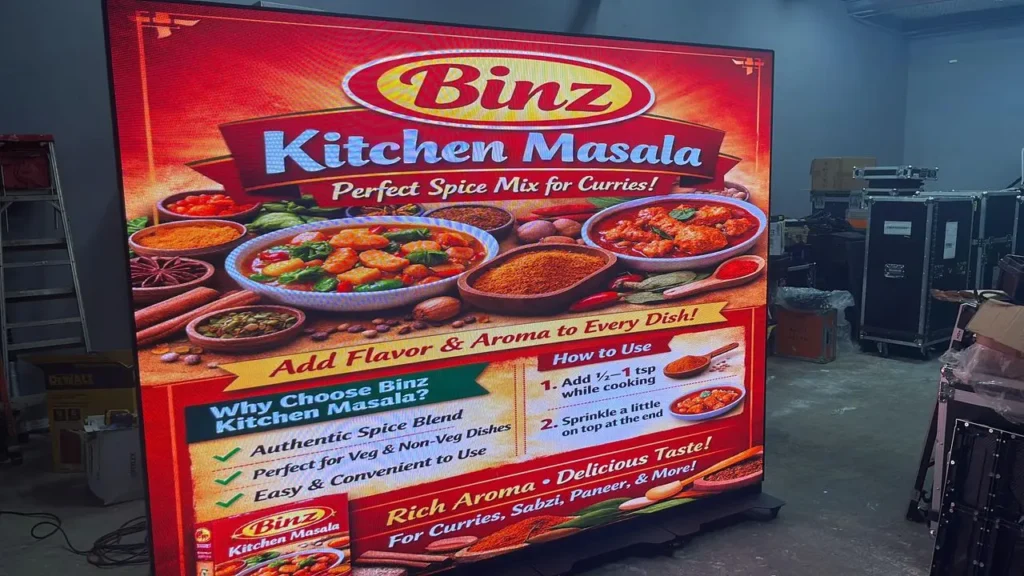
Use a conservative utilization case
Build three scenarios:
– Low utilization based on confirmed bookings only
– Expected utilization based on confirmed bookings plus qualified opportunities
– High utilization based on realistic capacity, not unlimited demand
IRS Publication 946 explains that depreciation depends on the property type, recovery period, and applicable tax rules. It should not be used as a substitute for a cash-flow model. Review IRS Publication 946 with a tax professional before treating depreciation as a purchasing benefit.
When Should an AV Rental Business Buy Its Own LED Display Inventory? Gross revenue alone cannot settle the question. A package requiring two technicians, a larger vehicle, and specialist rigging may return less per day than a smaller package with faster setup and broader demand.
How to apply this: Put three utilization scenarios into a spreadsheet and require the expected case to remain viable after adding financing, labor, storage, insurance, and repair reserves.
3. Check Whether Your Operation Can Support Ownership
When Should an AV Rental Business Buy Its Own LED Display Inventory? When it can safely transport, test, maintain, deploy, and recover the system without relying entirely on the manufacturer. Operational readiness often determines profitability more than panel price.
To answer “When Should an AV Rental Business Buy Its Own LED Display Inventory?”, assess the complete workflow from warehouse intake to final pack-down. LED modules can be damaged by impact, moisture, incorrect handling, poor cable management, and unsuitable storage conditions.
Define the operating system
Before buying, document:
– Incoming inspection and asset labeling
– Module testing before every dispatch
– Spare-module and spare-power-supply policy
– Flight case or rack configuration
– Receiving and return checklists
– Firmware and configuration control
– Technician authorization levels
– Damage reporting and client sign-off
The Occupational Safety and Health Administration states that employers are responsible for providing a workplace free from recognized hazards and for following applicable safety requirements. OSHA’s event safety resources are a useful starting point, but local rules and venue requirements still apply.
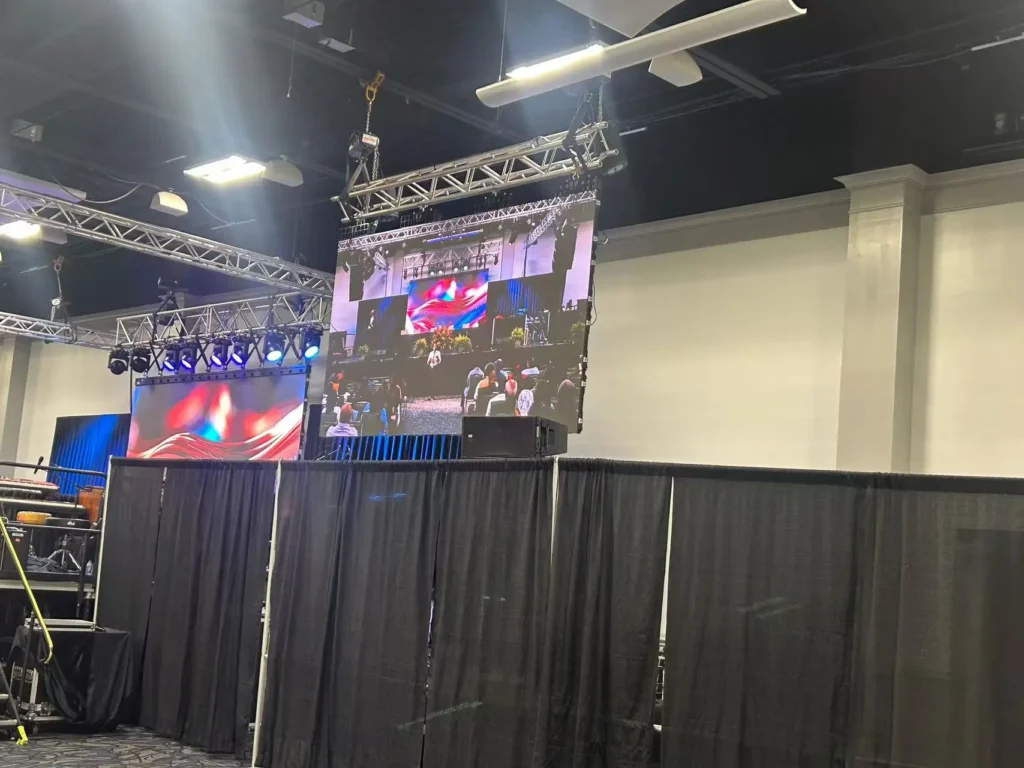
When Should an AV Rental Business Buy Its Own LED Display Inventory? A mock deployment provides practical evidence. Use the planned crew, cases, processors, cables, and vehicle; measure setup time, identify missing parts, and verify that technicians can diagnose a failed module without delaying the client.
Ownership also requires clear responsibility for technical documentation. Keep cabinet maps, receiving cards, power distribution notes, signal-flow diagrams, and approved configuration files with the inventory.
How to apply this: Schedule a full warehouse rehearsal using the proposed system and do not approve the purchase until the team completes testing, loading, deployment, fault isolation, and repacking.
4. Match the Inventory to the Right Technical Use Cases
When Should an AV Rental Business Buy Its Own LED Display Inventory? When a focused package solves known client problems. Buying one product for every possible environment increases capital exposure and may leave you with specifications that are difficult to rent.
Answering “When Should an AV Rental Business Buy Its Own LED Display Inventory?” starts with defining viewing distance, brightness, refresh behavior, cabinet format, weight, power demand, and weather exposure before comparing brands.
Choose by application
Indoor corporate events may prioritize fine pixel pitch, quiet operation, low weight, and clean camera images. Outdoor work may require weather protection, stronger brightness, ballast or rigging solutions, and more robust transport procedures.
Pixel pitch is a physical specification, not a universal quality score. A smaller pitch can support closer viewing, but it may also increase purchase cost and require more careful handling. Ask suppliers for native specifications, service procedures, warranty limits, and processor compatibility.
Validate the complete signal chain
The display is only one part of the system. Confirm compatibility among:
– Receiving cards
– Sending cards or processors
– Video sources
– Genlock or synchronization requirements
– Power distribution
– Control software
– Backup signal paths
– Touring cases and connectors
Conference cabinets may lack the processing flexibility a broadcast client requires, erasing early project margins through upgrade costs. When Should an AV Rental Business Buy Its Own LED Display Inventory? Only after confirming that the complete system supports its intended jobs.
The manufacturer’s manual should define operating limits, handling instructions, environmental ratings, and service procedures. Treat those documents as purchasing requirements rather than paperwork collected after delivery.
How to apply this: Create a one-page technical specification for your first package and obtain written supplier confirmation that the cabinets, processors, power systems, cases, and accessories work together.
5. Protect Cash Flow, Safety, and Resale Value
When Should an AV Rental Business Buy Its Own LED Display Inventory? When it can carry the asset through slow periods while funding normal operations. Cash-flow pressure can turn a profitable equipment strategy into a service problem.
When considering “When Should an AV Rental Business Buy Its Own LED Display Inventory?”, separate the equipment decision from the financing decision. Compare cash purchase, equipment finance, leasing, and supplier payment terms using the total cost over the planned holding period.
Include these costs in the review:
– Down payment or deposit
– Interest and arrangement fees
– Insurance premiums
– Warehouse rent and security
– Preventive maintenance
– Replacement modules and power supplies
– Software or licensing requirements
– Freight, customs, and taxes
– Disposal or resale costs
Plan for failure and replacement
A professional rental package needs a documented response when a cabinet, power supply, processor, or cable fails. The backup plan may involve spare units, a local service agreement, a second supplier, or access to short-term rental stock.
The European Commission’s CE marking guidance explains that CE marking applies to products covered by relevant European Union requirements. It does not mean every product is suitable for every event, venue, or safety condition.
When Should an AV Rental Business Buy Its Own LED Display Inventory? Resale prospects also matter. Standardized cabinets, documented service history, available spare parts, and widely supported processing systems are generally easier to redeploy than an unusual configuration purchased for one client.
| Decision area | What it tells you | Action to take |
|---|---|---|
| Repeat bookings | Demand consistency | Separate booked work from leads |
| Contribution margin | Economic value | Include labor and ownership costs |
| Pixel pitch | Viewing suitability | Match pitch to audience distance |
| Spare inventory | Failure resilience | Set a documented reserve |
| Financing cost | Cash-flow pressure | Compare total repayment |
| Resale support | Exit flexibility | Check parts and market adoption |
How to apply this: Ask your accountant, insurer, and lead technician to review the purchase model together before signing a supplier or finance agreement.
Frequently Asked Questions About When Should an AV Rental Business Buy Its Own LED Display Inventory?
Can a small AV company buy LED inventory for only one major client?
When Should an AV Rental Business Buy Its Own LED Display Inventory? A single major client may support a purchase, but creates concentration risk. Cancellation, supplier changes, or a different display format could leave the asset idle. When Should an AV Rental Business Buy Its Own LED Display Inventory?
In this case, request a signed commitment, deposit, minimum booking volume, or purchase agreement before ordering equipment.
Should an AV rental company buy used LED panels?
When Should an AV Rental Business Buy Its Own LED Display Inventory? Used panels are an option when the supplier provides accurate age, service history, pixel-failure records, cabinet documentation, and test access. Avoid discontinued systems with unavailable receiving cards or power supplies. When Should an AV Rental Business Buy Its Own LED Display Inventory?
A lower price supports buying only if repairs will not create long client delays.
Is leasing better than purchasing LED inventory?
When Should an AV Rental Business Buy Its Own LED Display Inventory? Compare ownership with leasing, which may preserve working capital but cost more over the full term and limit customization or resale. Seasonal businesses should inspect payment timing. When Should an AV Rental Business Buy Its Own LED Display Inventory?
Leasing may suit predictable bookings, while ownership may provide more flexibility after the finance term ends.
How much spare LED inventory should a rental business carry?
When Should an AV Rental Business Buy Its Own LED Display Inventory? First establish spare requirements: failure rates, cabinet design, transport conditions, and client tolerance prevent a universal ratio. Ask the manufacturer about service stock and review failure records after each event. When Should an AV Rental Business Buy Its Own LED Display Inventory?
A critical live broadcast requires a stricter backup plan than a low-risk private presentation.

Can a rental company mix LED brands or cabinet types?
When Should an AV Rental Business Buy Its Own LED Display Inventory? Account for mixed systems’ effects on color matching, processing, spare parts, firmware, and training. Separate indoor and outdoor packages may justify different systems. When Should an AV Rental Business Buy Its Own LED Display Inventory?
If systems must be mixed on one show, test the full chain under production conditions before promising the configuration.
Conclusion
The right purchase decision comes from evidence, not excitement about owning equipment. Review demand, contribution margin, technical fit, operational capacity, financing, and failure planning together.
– Confirm recurring bookings before expanding inventory.
– Model conservative utilization with every ownership cost included.
– Match pixel pitch, brightness, cabinet design, and processing to real applications.
– Maintain spares, documentation, trained staff, and a service plan.
– Protect cash flow by comparing purchase and financing options over the full holding period.
When Should an AV Rental Business Buy Its Own LED Display Inventory? Usually, the answer is when repeatable work can support the asset through slow periods and your team can deliver it reliably without depending on emergency subcontracting.
Start by building a two-year demand register and a three-scenario ownership model. Then test the proposed package in your warehouse before requesting final supplier and finance terms.
