Bendable LED Display for Museums and Exhibition Halls

Bendable LED Display for Museums and exhibition halls turns curved walls, columns, arches, and irregular structures into active storytelling surfaces.
Table of Contents
- 1. Define the Museum Experience Before Choosing Hardware
- Start With the Interpretive Purpose
- Map the Viewing Envelope
- 2. Match the LED Construction to the Curve
- Check Radius and Pixel Pitch Separately
- Test the Actual Geometry
- 3. Plan Structure, Access, and Visitor Safety
- Protect Circulation Routes
- Design for Maintenance
- 4. Build Content for the Physical Canvas
- Use the Correct Production Tools
- Control Motion, Tone, and Legibility
- 5. Specify Acceptance Tests and Operating Procedures
- Test More Than Brightness
- Prepare for Daily Operation
- 6. Comparative between TW VISION bendable screen and traditional LED screen
- How can a flexible LED installation work in a touring exhibition?
- When is projection a better choice than bendable LED?
- How should museum staff clean a curved LED surface?
- Why does an LED display flicker in photographs or video?
- What happens if replacement modules do not match the original display?
- Conclusion
The geometry is more demanding than it first appears: a semicircular display with a 6-meter diameter has an arc length of about 9.42 meters, based on the formula π × radius, so its content canvas is much wider than its straight-line span.
The main challenge is coordinating exhibition design, structural limits, pixel pitch, accessibility, and media production before hardware is ordered. A display may fit the architecture but still fail if visitors can see pixel seams, emergency routes become restricted, or important text bends beyond comfortable viewing angles.
The following five sections explain how to define the experience, compare LED construction types, plan a compliant installation, build the content workflow, and test the completed system. You will also learn which specifications belong in a supplier brief and which decisions require physical samples rather than brochure claims.
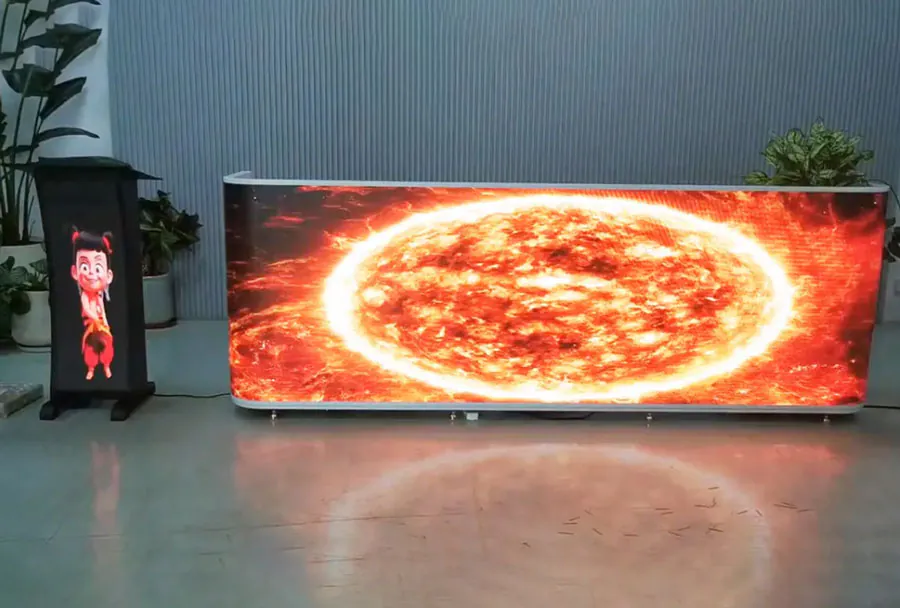
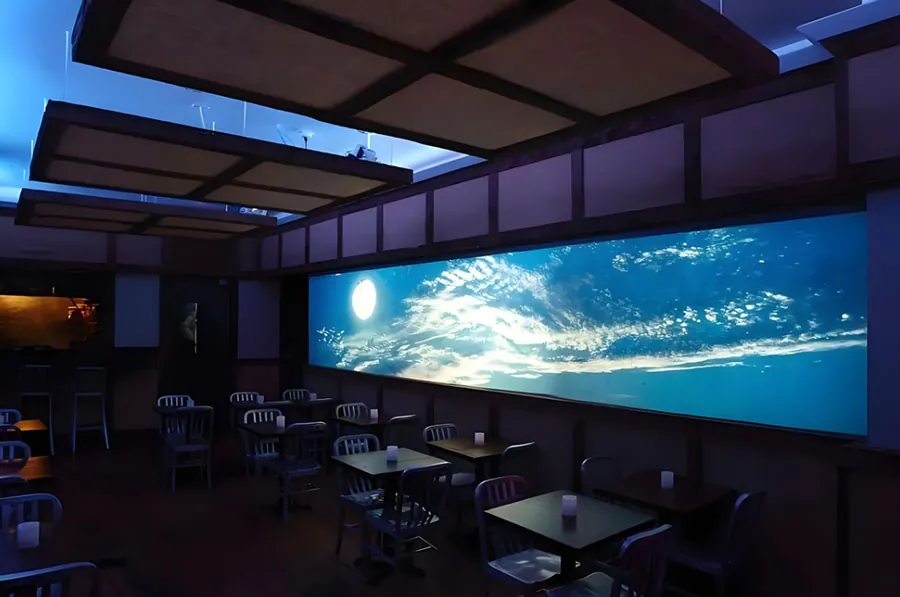
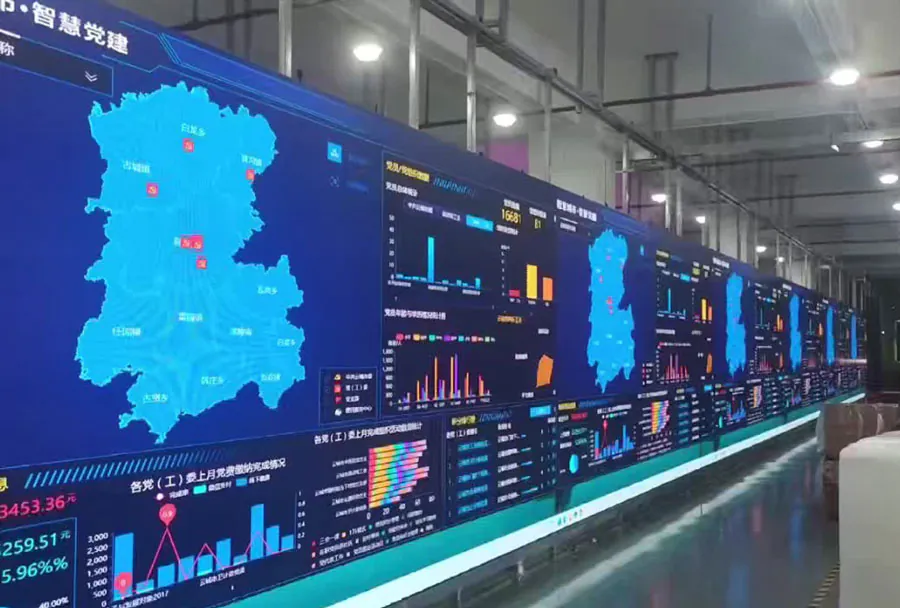
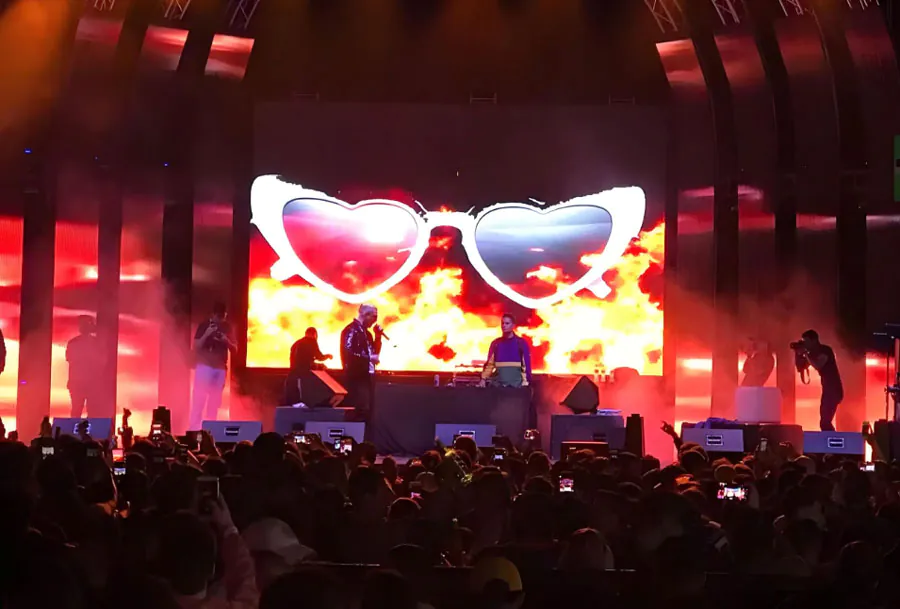
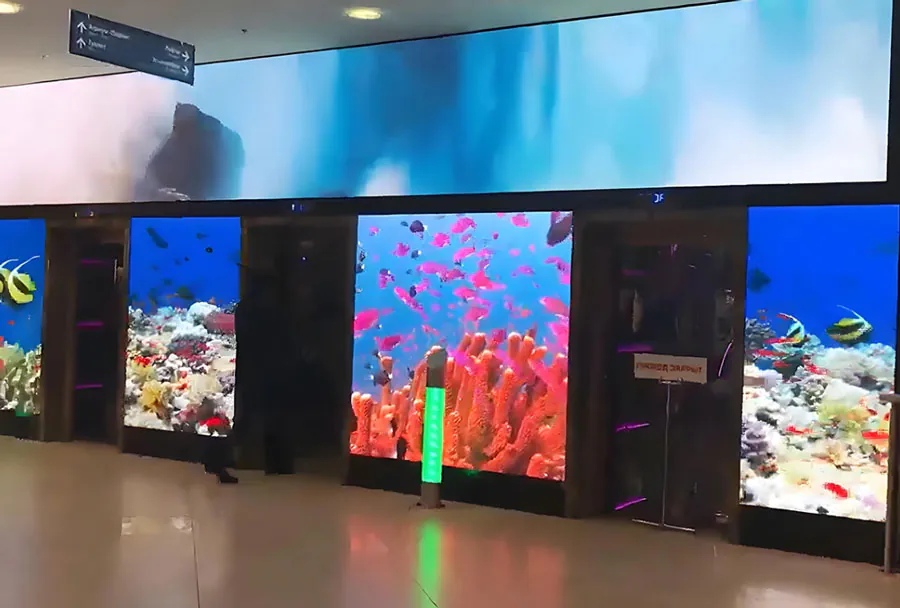
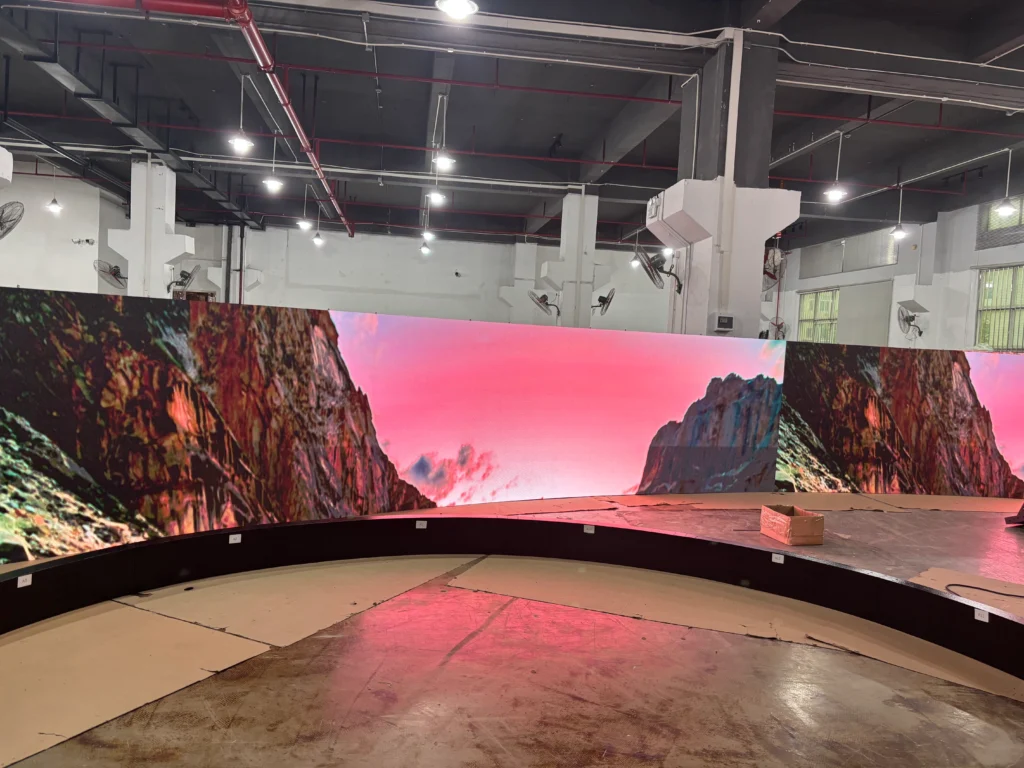
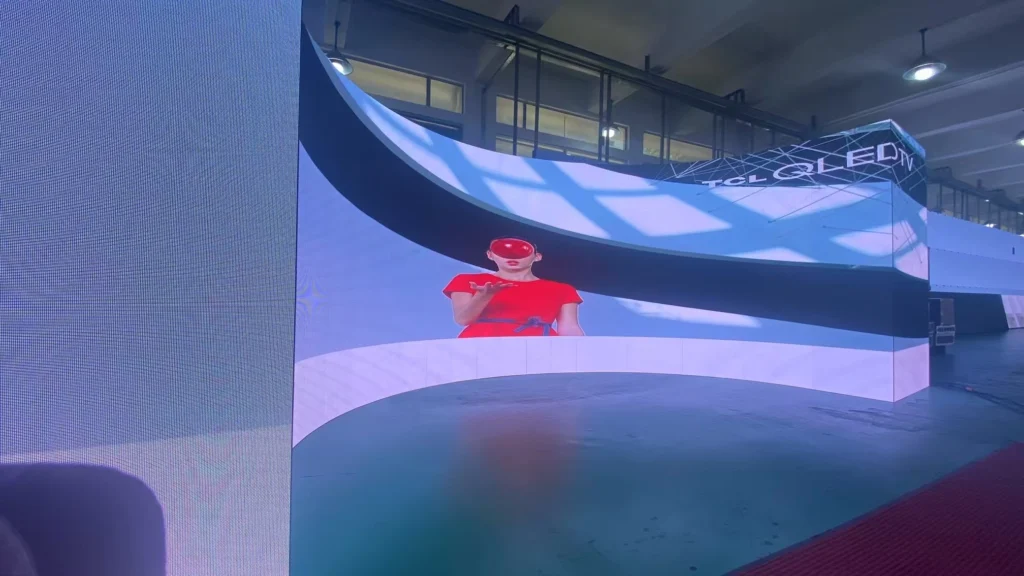
P1.9 flexible led screen made by TW VISON, PD series, bended 22.5 degree.
1. Define the Museum Experience Before Choosing Hardware
The right display begins with a clear visitor experience, not a particular LED product. A Bendable LED Display for Museums and Exhibition Halls should support the collection, interpretive goal, and expected viewing behavior instead of becoming an unrelated visual attraction.
Start With the Interpretive Purpose
Write down whether the screen will present artifacts, timelines, ambient media, live event content, or interactive information. Each purpose creates different requirements for resolution, brightness, audio synchronization, and viewing distance.
The International Council of Museums adopted its current museum definition in 2022. It states that museums should offer “varied experiences for education, enjoyment, reflection and knowledge sharing,” providing a useful test for technology-led exhibition decisions.
Map the Viewing Envelope
Record the closest and farthest viewing positions, the normal direction of travel, and the angles from which visitors will encounter the display. Consider a 6-meter-diameter semicircular wall: its media surface is approximately 9.42 meters wide along the curve, although the architectural opening measures only 6 meters across.
A Bendable LED Display for Museums and Exhibition Halls also needs content-safe zones. Keep captions, faces, and artifact labels away from sharp transitions where curved geometry can distort or conceal them.
How to apply this: create a one-page brief today that lists the interpretive purpose, display dimensions, viewing distances, visitor path, content types, and accessibility needs before requesting quotations.
2. Match the LED Construction to the Curve
Choose the LED construction according to the radius, installation duration, image detail, and maintenance access. A Bendable LED Display for Museums and Exhibition Halls may use soft modules, faceted cabinets, rental panels, or a custom structure, but these options are not interchangeable.
Check Radius and Pixel Pitch Separately
Minimum bend radius describes mechanical flexibility; pixel pitch describes the center-to-center spacing between adjacent pixels. A product can bend tightly and still lack enough image detail for close viewing.
There is no universal minimum radius for “flexible LED.” Request the manufacturer’s data sheet for the exact module, because the allowable concave radius, convex radius, and bending direction can differ.
For a 3-meter-wide active area, dividing width by pitch gives a useful horizontal pixel estimate. A 2.5 mm pitch provides 1,200 pixel positions across 3,000 mm, while a 1.5 mm pitch provides 2,000.
| Construction | Best use | What to check |
|---|---|---|
| Soft LED modules | Smooth fixed curves | Minimum radius |
| Faceted cabinets | Broad arcs | Visible joint angles |
| Rental panels | Temporary exhibitions | Locking hardware |
| Custom frames | Irregular forms | Service access |
Test the Actual Geometry
Ask the supplier to assemble a representative curved section rather than presenting one flat module. View seams, dark lines, reflections, and color consistency from the planned visitor positions.
A Bendable LED Display for Museums and Exhibition Halls should also be tested with real captions and collection images, not only saturated promotional video.
How to apply this: calculate the required canvas resolution from physical dimensions and proposed pixel pitch, then request a curved sample using the same module batch and support system.
3. Plan Structure, Access, and Visitor Safety
A successful installation needs documented structural loads, service clearances, cable routes, ventilation, and accessible circulation. A Bendable LED Display for Museums and Exhibition Halls must be treated as part of the built environment, especially when it wraps columns or projects into a visitor route.
Protect Circulation Routes
The 2010 ADA Standards for Accessible Design state that objects with leading edges more than 27 inches and not more than 80 inches above the floor may protrude no more than 4 inches horizontally into a circulation path. Local accessibility, building, electrical, and fire rules may add further obligations.
In a narrow gallery, a curved screen edge, maintenance door, or temporary barrier can become the critical obstruction. Check the complete installed depth rather than relying on the visible module thickness.
Design for Maintenance
Provide a documented method for replacing modules, receiving cards, power supplies, and cables. Front-service modules can help where rear access is impossible, but technicians still need a stable working position and a safe isolation procedure.
The supporting frame should be reviewed by a qualified structural professional using manufacturer-supplied weights and attachment details. A Bendable LED Display for Museums and Exhibition Halls may also need independent suspension, secondary retention, or floor loading review according to the venue and local authority.
How to apply this: mark the display’s full depth, doors, barriers, and service zones on the floor plan, then obtain written accessibility, structural, electrical, and fire-safety approval before fabrication.
4. Build Content for the Physical Canvas
Content should be designed on a pixel-accurate template that reflects the final curve, seams, masks, and viewing angles. A Bendable LED Display for Museums and Exhibition Halls cannot be treated like a conventional flat television with unusual dimensions.
Use the Correct Production Tools
SketchUp can model the display and visitor sightlines in three dimensions. QLab provides cue-based media playback and show control on macOS, while Brompton Technology’s Tessera platform processes and maps video for supported LED systems.
A 3840 × 2160 source contains 8,294,400 pixels, but extra source pixels do not recover detail lost through incorrect mapping or scaling. Build the master composition at the processor’s confirmed output resolution and test how content crosses each physical transition.
Control Motion, Tone, and Legibility
Use slower motion around tight curves because different parts of the image enter a visitor’s view at different times. Keep essential labels in flatter visual zones and verify text at the closest expected viewing position.
A 10-bit signal can represent 1,024 code values per channel, compared with 256 for an 8-bit signal. That mathematical difference can support smoother gradients, but the entire chain must preserve the signal format for the benefit to reach the screen.
A common scenario is a panoramic timeline whose dates disappear around the curve before visitors finish reading them. Bendable LED Display for Museums and Exhibition Halls content should therefore be reviewed on the installed surface, not approved only from a desktop preview.
How to apply this: obtain the final pixel map, create a full-resolution test reel with text, gradients, faces, and motion, and review it from every planned visitor position.
5. Specify Acceptance Tests and Operating Procedures
A measurable acceptance plan is the strongest protection against visual defects and operational surprises. Every Bendable LED Display for Museums and Exhibition Halls procurement package should define what the supplier must demonstrate before final payment.
Test More Than Brightness
Include checks for dead or stuck pixels, module alignment, seam visibility, color consistency, flicker on camera, signal recovery, playback synchronization, fan noise, and service access. Record the test content, viewing positions, processor settings, and ambient lighting conditions so results can be repeated.
During acceptance, run an agreed program for a fixed period, such as eight hours, and include black, white, primary colors, gray ramps, fine text, and moving images. The duration is a project test condition, not a universal industry standard.
Prepare for Daily Operation
Document startup, shutdown, emergency isolation, content loading, calibration, and fault reporting. Assign responsibility for software licenses, network access, spare parts, and firmware decisions rather than leaving these tasks with an unnamed future operator.
Bendable LED Display for Museums and Exhibition Halls contracts should identify the exact module batch, processor model, warranty terms, response times, and replacement process. Spare modules should be stored under conditions specified by the manufacturer and tracked so repair stock is not used without a record.
How to apply this: attach a signed acceptance checklist to the purchase agreement and require the installer to train named staff using the final hardware, content system, and fault-reporting process.
6. Comparative between TW VISION bendable screen and traditional LED screen
Comparative Analysis Table
| Feature | TW VISION Bendable Screen | Traditional LED/LCD Walls | Flexible OLED Panels | Projection Mapping |
|---|---|---|---|---|
| Form Factor | Highly flexible; supports concave/convex shapes and waves | Rigid, flat panels; limited to planar or segmented curves | Thin and flexible; better curvature but limited large seamless sizes | Virtually any surface shape, dependent on projector geometry |
| Brightness & Visibility | High luminance suitable for bright galleries | Very high brightness options for well-lit spaces | Good contrast but generally lower peak brightness | Depends on ambient light; best in controlled/darkened areas |
| Image Uniformity | Engineered calibration for uniform color across curves | Excellent uniformity on flat walls; seams visible if tiled | High uniformity on small to medium surfaces | Seams/blending depend on mapping and surface texture |
| Durability & Maintenance | Modular serviceability; designed for gallery uptime | Durable with standard maintenance protocols | Delicate; sensitive to bending stress and handling | Projector bulbs and alignment require regular service |
| Installation Complexity | Moderate–high: custom mounts and calibration needed | Moderate: predictable mounts, but heavy panels | High: requires careful handling and specialized mounts | High: precise positioning and surface prep required |
Frequently Asked Questions About Bendable LED Display for Museums and Exhibition Halls
How can a flexible LED installation work in a touring exhibition?
Use modular structures, repeatable alignment points, labeled cabling, and transport cases designed for the specific panels. Bendable LED Display for Museums and Exhibition Halls equipment used on tour must tolerate repeated assembly without changing its intended radius.
A venue with limited loading access may require smaller transport sections, even when larger sections would make installation faster, so confirm door, lift, dock, and vehicle dimensions early.
When is projection a better choice than bendable LED?
Projection may be better when the surface must remain physically untouched, equipment must disappear after closing, or a very large image is needed at moderate brightness. Bendable LED Display for Museums and Exhibition Halls is generally less affected by people casting shadows, but it adds physical depth and weight.
In a protected historic interior, projection may avoid attachments that conservation teams will not authorize.
How should museum staff clean a curved LED surface?
Follow the module manufacturer’s written cleaning instructions and isolate power before any approved surface procedure. Bendable LED Display for Museums and Exhibition Halls modules can contain exposed or lightly protected LED packages that may be damaged by pressure, liquid, or unsuitable chemicals.
Where visitors can touch the display, a separate protective design may be necessary; do not assume a generic screen cleaner is compatible.
Why does an LED display flicker in photographs or video?
Camera shutter timing can interact with the display’s refresh behavior, scan pattern, and processor configuration. Bendable LED Display for Museums and Exhibition Halls installations used for press events should be camera-tested before opening, using the actual cameras and frame rates where possible.
A screen that appears stable to visitors may still show bands on camera, and changing brightness alone may not resolve the issue.
What happens if replacement modules do not match the original display?
Replacement modules may show color or brightness differences because of LED binning, component revisions, operating hours, or calibration data. Bendable LED Display for Museums and Exhibition Halls projects should retain compatible spares from the original production batch when feasible.
If those spares are exhausted years later, processor-assisted calibration may reduce visible differences, but it cannot guarantee that mechanically incompatible modules will fit the existing structure.
Conclusion
A curved LED installation succeeds when exhibition goals, engineering, content production, and long-term maintenance are planned together. Bendable LED Display for Museums and Exhibition Halls projects should be evaluated as complete visitor systems rather than collections of flexible modules.
– Define the interpretive purpose and visitor viewing envelope first.
– Verify bend radius, pixel pitch, and seams with a physical curved sample.
– Review structural loads, circulation routes, service access, and local compliance.
– Use a pixel-accurate content workflow and a measurable acceptance checklist.
Your next step is to prepare a project brief containing the physical geometry, visitor path, source content, required resolution, operating model, and acceptance tests. Send the same brief to each qualified supplier so you can compare proposed systems on consistent technical and operational criteria.

Related Blogs:
- ultra-thin flexible LED screen: complete guide: Expert Guide – LED DISPLAY MANUFACTURE TW VISION
- Flexible LED Display Screens for Retail and Commercial Spaces – LED DISPLAY MANUFACTURE TW VISION
- Bendable LED Display Installation Services: TW VISION