LED Display Screen Near Me: Buy, Pick Up or Ship

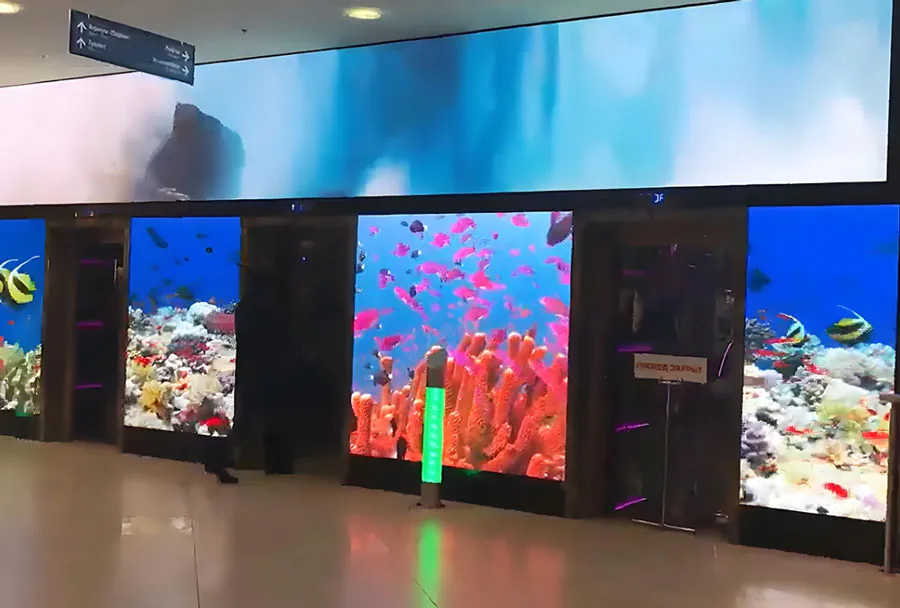
A search for an LED display screen near me usually means one of two things: a local supplier who can hand over hardware quickly, or a company that books a screen for a weekend. TW VISION sells LED display screens outright, so this page covers buying, Atlanta pickup, and nationwide freight rather than a weekend booking. The sections below show how to define the screen, compare stock against made-to-order production, verify quality, and plan pickup or delivery without surprises.

Table of Contents
What an LED Display Screen Near Me Means at TW VISION
A search for an LED display screen near me is really a distance question, yet the answer depends on what sits in stock. TW VISION sells hardware outright, so the practical choice is between a unit available for pickup and a cabinet we build to order. That distinction matters more than the distance to a warehouse, because a made-to-order screen follows production rather than a pickup counter. Ask for the stock list in writing, including cabinet size, pitch, quantity, and the date the count was checked, because a verbal claim is not a delivery date.
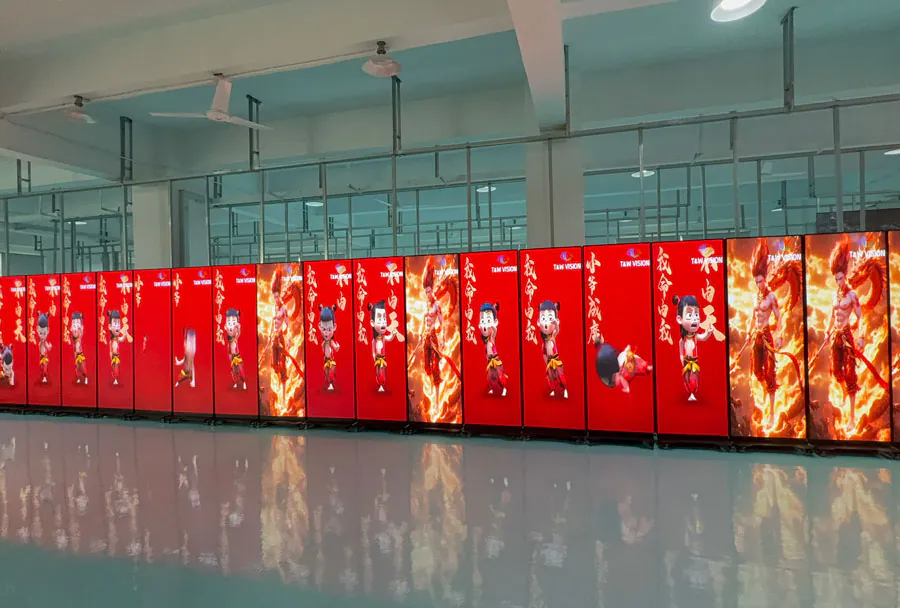
TW VISION holds stock in Atlanta, GA for US customers. Portable and poster displays, indoor modules and cabinets, and spare parts such as power supplies and receiving cards can ship from that warehouse, and buyers can arrange local pickup in Atlanta or nationwide freight. However, we build outdoor cabinets to order, so they follow the production schedule rather than the stock list.
Stock changes the timeline. A portable or poster unit can leave the warehouse after payment and an appointment, while an outdoor cabinet enters production and ships when the batch is complete. Therefore, ask which category your project falls into before comparing prices, because a stock quote and a production quote answer different questions.
Local pickup also changes inspection. Buyers who collect in Atlanta can open the cases, check the cabinet count, and confirm the module map before the screen leaves the dock. Buyers who choose freight should request the same checklist and photograph the pallet on arrival.
Define the Screen Before You Compare Prices
Before you compare an LED display screen near me, write a one-page brief that covers the venue, the audience, the content, and the operating conditions. List indoor, outdoor, or covered-outdoor use; the minimum and typical viewing distance; the screen width and height; the native aspect ratio of your content; and whether cameras will film close-ups or slow motion. Camera use changes the brief. If the screen will appear on broadcast or in close-up video, test moiré, refresh, and low-gray performance at the real shutter speed, because a screen that looks clean to the eye can still strobe on camera.
Pixel pitch is the center-to-center distance between pixels, usually in millimeters. A smaller pitch places more diodes per square meter, which sharpens close viewing but raises cost and processing demand. Use the table below as a starting point, then confirm the final pitch with a sample viewed at the real distance.
| Viewer distance | Typical pitch |
|---|---|
| 6–10 ft | 2–3 mm |
| 20–40 ft | 4–5 mm |
| 50–100 ft | 8–10 mm |
| 100+ ft | 12 mm or larger |
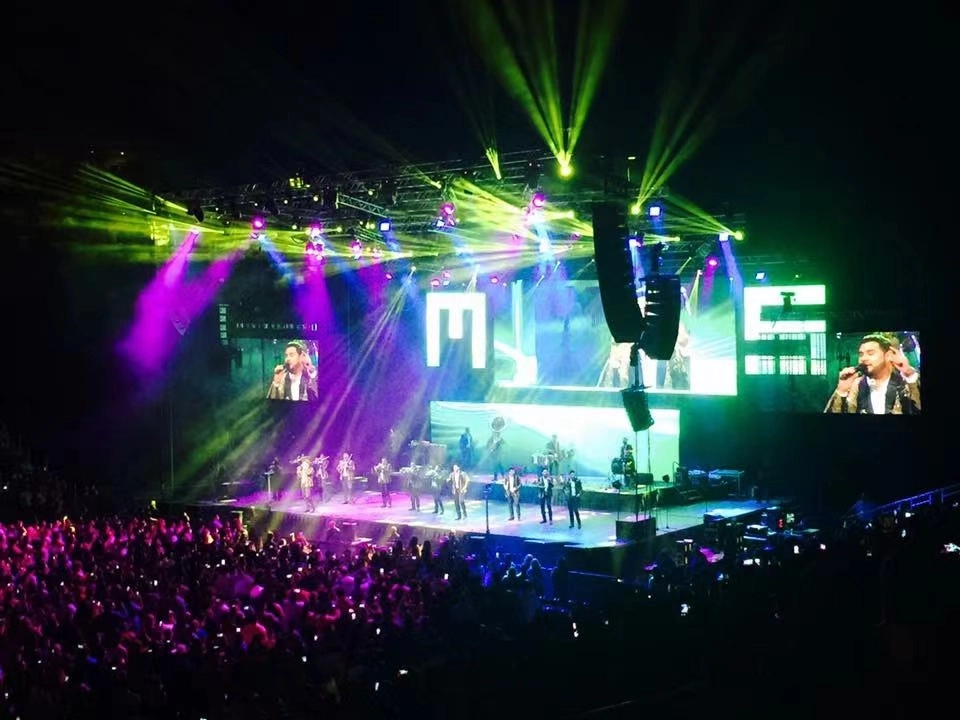
In practice, pitch should follow effective resolution: the detail an audience can actually perceive from the seats. Because overspecifying pitch adds diodes without adding visible detail, study seat maps, ceiling heights, sightlines, day and night ambient light, and camera positions first. For outdoor projects, our outdoor LED display screen guide covers sealing and brightness. However, confirm IP rating and brightness at the same time as pitch, because a sharp screen that washes out at noon is still the wrong purchase.
Visibility changes the business case. A large screen reaches upper tiers and side seats that cannot see the stage, which lifts dwell time and sponsor value; dynamic clips, live camera feeds, and interactive prompts hold attention between moments.
Stock, Made-to-Order and Custom Screens
Stock changes what an LED display screen near me can deliver this month. TW VISION keeps portable and poster displays, indoor modules and cabinets, and spare parts in Atlanta, GA, while outdoor cabinets go into production to order. Therefore, start with the delivery date you need, then choose the category that can meet it.
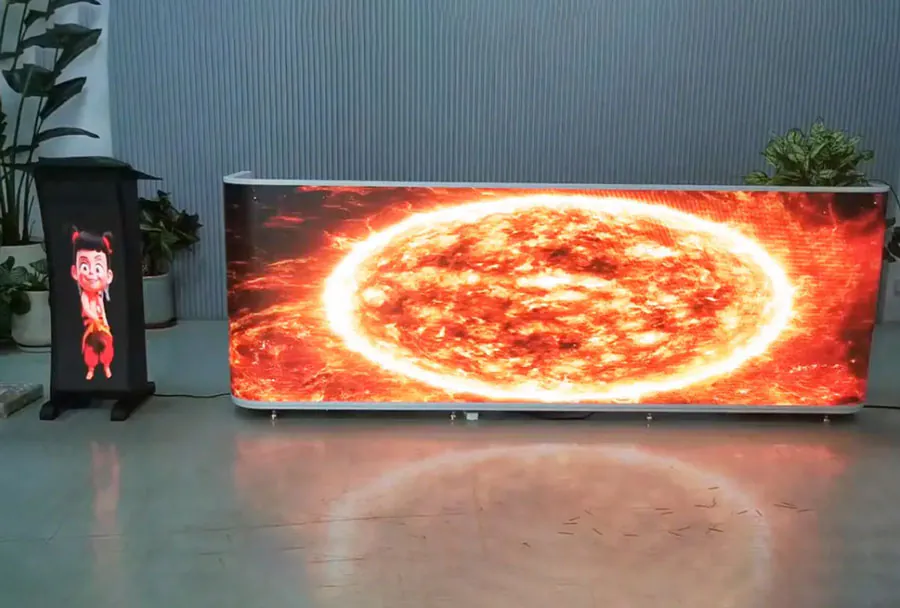
Stock hardware suits fast deployment. A tri-foldable LED poster folds into a case for one-person transport, and an IP-CV indoor panel uses 640 × 480 mm cabinets with full front service. Our U.S. stock pickup guide explains how availability and lead time work.
Before paying a deposit, however, ask for the warehouse address and collection hours, a live video or dated photos of the cabinets, the serial-number range, the available quantity, the shipping origin, and a written dispatch date and return location. Also ask where the cabinets and critical spare parts are made, because a U.S. warehouse is a location, not an origin.
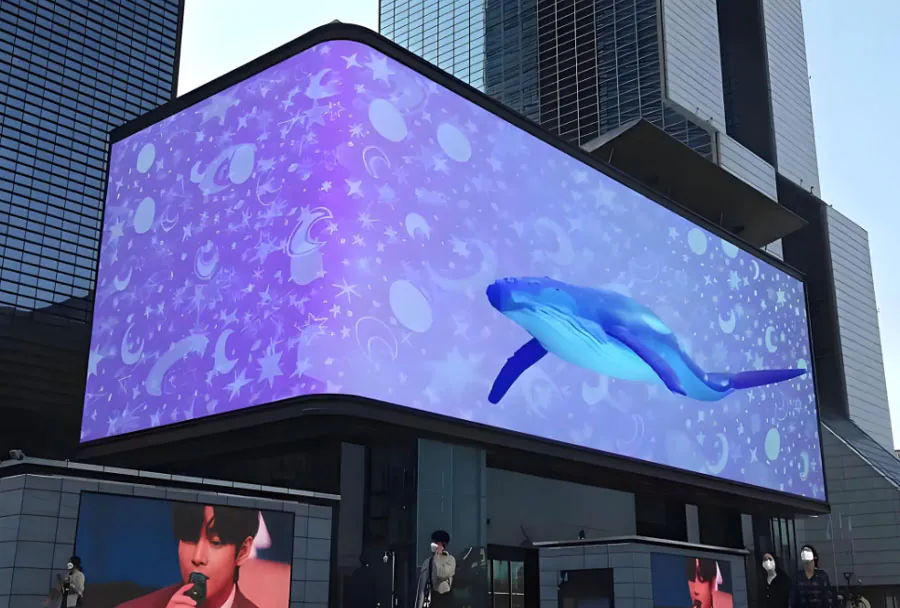
Made-to-order hardware suits fixed outdoor sites. An outdoor PO-T cabinet uses a 1,000 × 1,000 mm steel frame with front and rear access, and we build it to the pitch and quantity your site needs. Custom geometry follows the same logic: flat, curved, cube, ribbon, or ring, settled before production.
Ask for the cabinet matrix, total pixel dimensions, and processor output map, because a 4K source may scale to a smaller LED canvas.
Event work sits between those poles. Concerts, exhibitions, retail activations, and conferences often need a screen that travels, so specify road cases, spare modules, and a crew size the venue can supply. Therefore, ask for a labeled cable set and a packing list with the quote, because those items decide whether load-in runs smoothly.
Verify the Supplier and the Screen
When you inspect an LED display screen near me, look past the datasheet and test the screen you will actually receive. Ask for a sample cabinet, a module map, and a test report that covers brightness, color uniformity, gray scale, and dead pixels.
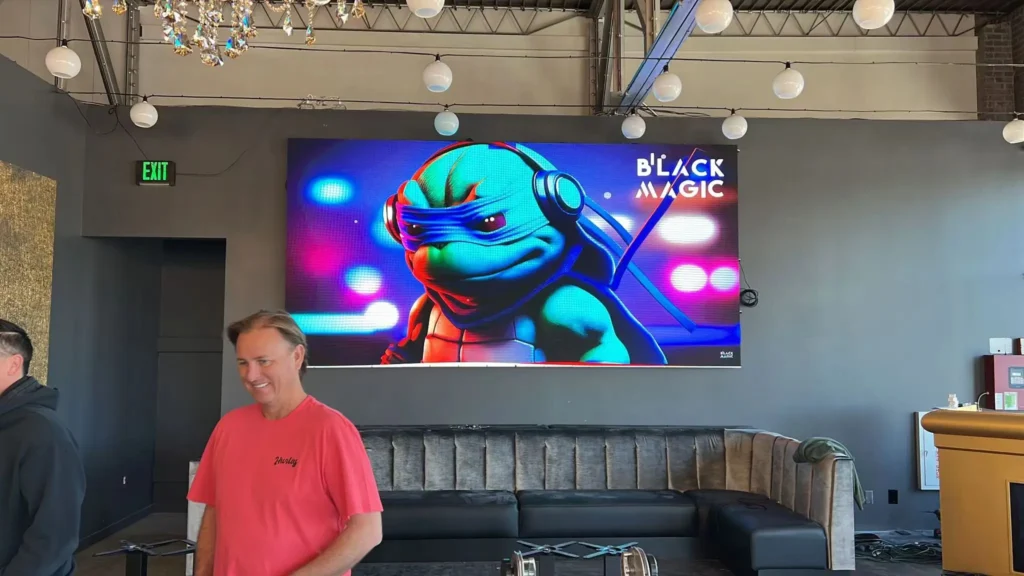
The factory should run aging tests before packing. For example, during those tests, technicians watch for failed modules, power-supply drift, and color shifts between cabinets. They should also check cabinet flatness, locking pins, and signal redundancy, because a loose connector can fail after the first road trip. Run solid-color, gray-scale, and motion patterns on the sample; check dead pixels from the real viewing distance; and photograph the module map before the screen ships.
Sealing belongs in the same review. IEC 60529 defines IP65 as dust-tight and resistant to water jets, which is the usual minimum for an outdoor face. Request the rating for both the module face and the rear cabinet, because rear doors often carry a lower rating.
In practice, IP65 alone does not prove resistance to salt, UV, wind, heat, or condensation, so ask for coating, fastener, and environmental-test details. Require a bill of materials that names the LED package, driver IC, receiving card, power supply, scan architecture, cabinet weight, signal inputs, and cabinet treatment; bar substitutions without written approval. Also ask for normal and maximum power draw per cabinet, and check the ISO 9001 scope and UL file number.
Supplier qualification closes the loop. Ask how the factory handles aging, calibration, and spare parts, then read our LED display manufacturing process to compare the answers. A supplier that cannot explain its own test sequence will struggle to support the screen after delivery.
Delivery, Pickup and Site Readiness
Pickup and freight for an LED display screen near me start with the same question: who inspects the hardware before it leaves the dock? For Atlanta pickup, book an appointment, bring the cabinet count, and open every case before loading.
However, freight adds a second inspection point: ask for crating that protects corners and modules, then photograph the pallet on arrival. Because vibration damages connectors before it cracks a cabinet, note any crushed corner or loose strap before signing. At pickup, compare the cabinet count, module count, power supplies, receiving cards, cables, and spares against the packing list, then ask for a signed handover.
Before the screen leaves the dock, run solid colors, gray scale, fine text, grid lines, skin tones, and the final playback file; check module boundaries, flicker on camera, processor artifacts, uneven brightness, and signal drops. Disconnect a source, switch to backup playback, and swap a module to prove recovery, then record the processor configuration.
After that, ask for a serial-number list by crate, crate dimensions and weights, packing photos, insurance and claim procedure, and the inspection window for concealed damage. Record defects on a signed punch list before final payment.

Site readiness decides whether the screen goes live on schedule. The owner and its contractors provide the structure, foundation, electrical circuit, disconnect, grounding, and network path; TW VISION supplies the display, cabinets, and internal electronics. In the United States, 29 CFR 1910.303 sets the general electrical installation requirements that a licensed electrician must follow. Choose listed or labeled equipment, and follow the manufacturer’s instructions.
TW VISION supplies hardware only. That boundary keeps the quote clear: the screen, cabinets, and internal electronics come from us, while site work stays with the venue’s own contractors.
Spares, Warranty and Maintenance
Spares for an LED display screen near me matter more than the first invoice, because one failed module can cancel a booked event. Order at least two percent of the total module count, plus power supplies and receiving cards, and keep them on site with a labeled cabinet map.
Monitoring shortens repairs. Ask for software that reports panel faults, cabinet temperature, fan status, and signal health, then log every fault with photos and module numbers. In practice, a monthly visual check and a quarterly seal and fan inspection catch most issues early.
Meanwhile, keep a backup processor or playback source, spare modules, and a failover workflow, because one failed card can blank a live screen. Put the controller on a restricted network segment, change default credentials, and document who can publish content or trigger emergency messages. Agree on content formats, frame rates, camera-safe zones, and multi-screen synchronization before delivery.
Warranty terms should separate parts, labor, freight, and response time. Confirm where the spare depot sits, who pays for return freight, and whether the warranty covers the labor to swap a failed module. Ask for the spare-parts price list and a written response-time commitment, because a cheap screen with slow spares can cost more over five years.
Total cost of ownership follows from those choices. Efficient drivers, adaptive brightness, and a planned spare kit usually cost less than emergency replacements, especially on screens that run every day. Our LED display modules guide explains module-level service. Ask for two references with similar venues and recent event photos, and compare bids on a normalization sheet that lists scope, components, exclusions, warranty, and delivered cost. State who supplies the processor, cables, and configuration files, and who performs final calibration.
Frequently Asked Questions
Do you sell screens or book them by the day?
TW VISION sells hardware outright. Every quote covers a screen you own, plus optional spares and support.
Can I pick up an LED display screen near me in Atlanta?
Yes for stock items such as portable and poster displays, indoor modules and cabinets, and spare parts. However, we build outdoor cabinets to order, so they follow production rather than the pickup counter.
How fast is delivery?
We quote each project instead of publishing a fixed number of days. Cabinet type, pitch, quantity, and the spare-parts list all affect the schedule, so confirm them early.
Can I use the screen outdoors in rain?
Only within its IP rating and the site’s weather plan. Agree on wind limits, drainage, shutdown authority, and a rain procedure; an IP rating is not permission to operate in every storm.
How do I specify a curved screen?
Confirm whether the face is smoothly curved, faceted, or built from flexible modules. Approve cabinet angle limits, module geometry, content mapping, and a full-scale joint mock-up before production, because a smooth rendering can hide visible seams at close range.
Are there local brightness or operating-hour limits?
Yes in many cities. Confirm sign-code limits on brightness, animation, and operating hours before ordering, because the venue owns the permit and the compliance risk.
What should the purchase order include?
List permits, insurance, damage responsibility, cancellation, backup equipment, response times, acceptance criteria, and payment milestones. Put those terms in the order, not in email.
What does the warranty cover?
Parts, labor, freight, and response time vary by agreement. Ask for those four items in writing, and confirm where the spare depot sits before you sign.
Conclusion
Buying an LED display screen near me comes down to four checks. First, define the screen and the site. Second, choose stock or made-to-order based on the date you need. Third, test a sample cabinet and read the sealing and electrical documents. Finally, plan pickup or freight, then buy spares before the first event.
Compare at least two suppliers on the same sheet, and treat local pickup as an inspection opportunity rather than a discount.