

2026 Bendable LED Display Prices & Custom Solutions

2026 Bendable LED Display Prices & Custom Solutions are not as simple as a single per-square-meter number. The International Sign Association’s digital signage reports note that demand for flexible, curved, and custom LED displays has grown steadily, and more suppliers now offer bendable modules than three years ago.
Table of Contents
- Why Raw Panel Prices Are Only Half the Story
- How Curvature, Pixel Pitch, and Refresh Rate Change 2026 Bendable LED Display Prices
- Specify Viewing Distance Before You Shop
- Custom Solutions: Hidden Cost Drivers You Should Audit
- Turnkey Bids vs. Component Sourcing: Which Custom Path Costs Less
- Contract Terms That Protect Your Custom LED Display Budget
- How tight can a bendable LED display curve?
- Can bendable LED panels be used outdoors?
- Do I need a special controller for a bendable LED display?
- How do I avoid overpaying for custom brackets and machining?
- What is the difference between bendable and curved LED panels?
- Conclusion
Buyers often discover that the final installed price can land far above the raw panel quote once controllers, mapping, installation, and custom brackets are included. The problem is not just cost: confusing specs and vague bids make it hard to compare vendors fairly.
This guide walks through five best secrets: how suppliers build quotes, which specs change price, which custom cost drivers are missed, when to buy turnkey versus component sourcing, and how to lock down a fair contract.
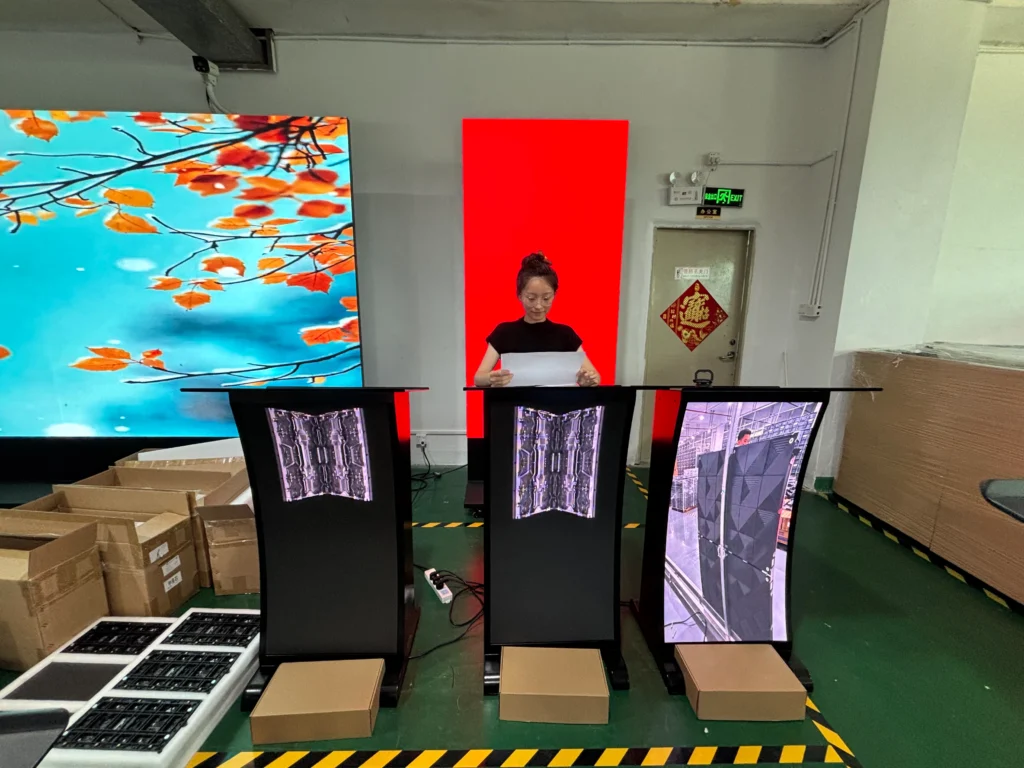
Front desk screen made by TW VISION P1.8 with bendable modules.
Why Raw Panel Prices Are Only Half the Story
The first thing to understand about 2026 Bendable LED Display Prices & Custom Solutions is that the advertised panel price rarely equals the installed price. A bendable LED module may be quoted per panel or per square meter, but that figure often excludes data cables, power supplies, receiving cards, spare modules, and mounting hardware.
Industry trade sources, including the International Sign Association, publish sign and display industry data that can help you benchmark a quote. You should treat any single price as a starting point, not a final number.
When you compare 2026 Bendable LED Display Prices & Custom Solutions from different suppliers, ask for a complete bill of materials rather than a headline unit price.
How to apply this: Ask every supplier for a line-item quote before you compare final prices.
How Curvature, Pixel Pitch, and Refresh Rate Change 2026 Bendable LED Display Prices
Several specifications move 2026 Bendable LED Display Prices & Custom Solutions more than vendor brand. Pixel pitch is the single largest price driver. A 1.5mm pitch panel typically costs far more than a 3mm or 4mm panel because it packs more LEDs into the same area.
Tighter curves require narrower module widths and custom PCB routing, which adds engineering time and unit cost.
Refresh rate also matters for camera-heavy environments. A display tuned for 1920Hz refresh usually carries a higher price than a 960Hz display because it needs better driver components. For 2026 Bendable LED Display Prices & Custom Solutions, the cheapest panel is often the wrong fit if the spec sheet does not match the actual viewing distance and content type.
Specify Viewing Distance Before You Shop
If the nearest viewer will be 3 meters away, a 4mm pitch may look perfectly fine. If viewers will stand 1 meter away, a finer pitch is necessary.
In one case, a retail buyer ordered ultra-fine 1.5mm modules for a second-level storefront display where no one would ever be close enough to notice the difference, paying more for no visible benefit.
How to apply this: Ask for a pixel pitch, brightness, and refresh rate matrix from the supplier before requesting pricing.
Custom Solutions: Hidden Cost Drivers You Should Audit
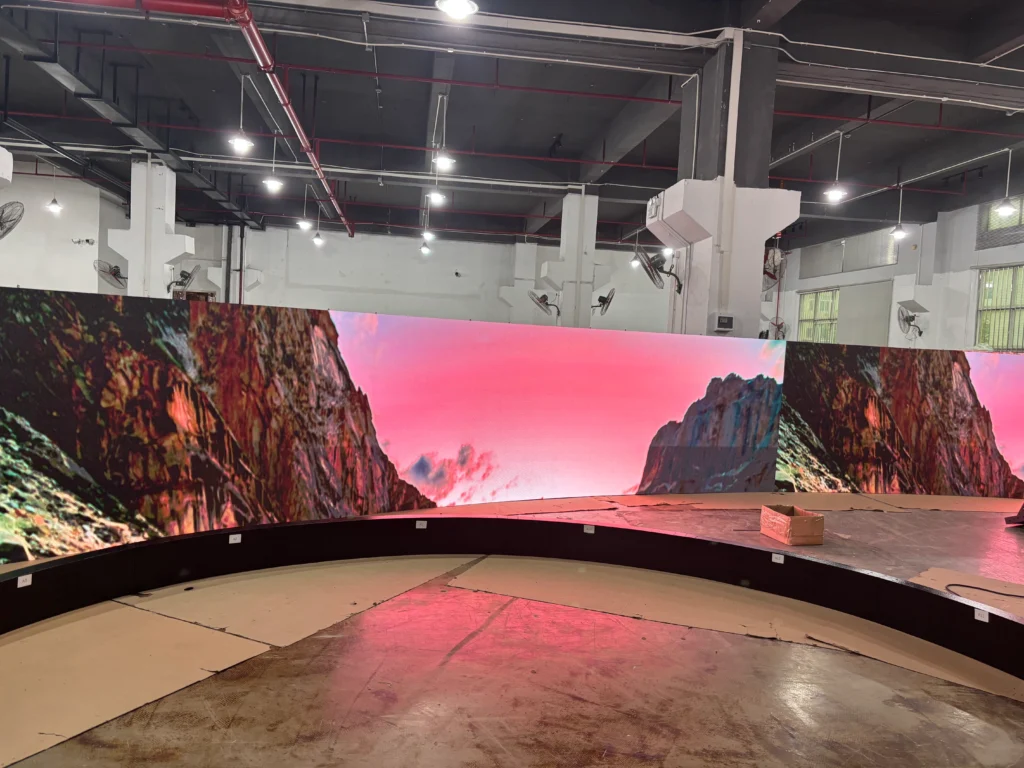
Custom Solutions for 2026 Bendable LED Display Prices & Custom Solutions often fail on three hidden cost drivers: structural support, thermal management, and signal mapping. A curved wall needs custom brackets, and those brackets can cost as much as a meaningful share of the panel budget if you do not compare them separately.
Before you approve a custom design, create a comparison matrix in Google Sheets to separate engineering, hardware, and installation costs. When you compare 2026 Bendable LED Display Prices & Custom Solutions, look for the following line items rather than accepting a lump sum:
| Cost driver | Why it matters | What to ask |
|---|---|---|
| Structural bracket | Curved walls need custom metalwork | Ask for CAD drawings before quote |
| Thermal design | Flex modules run hotter in tight curves | Confirm cooling path and airflow |
| Mapping software | Each curve changes pixel mapping | Ask if mapping is included or billed separately |
| Spare parts | Custom shapes need matched spares | Require a spare module allowance in bid |
| Onsite tuning | Curves need more calibration time | Ask for fixed onsite-hour allowance |
How to apply this: Use a Google Sheets quote comparison template and request line items for structural design, mapping, and tuning.
Turnkey Bids vs. Component Sourcing: Which Custom Path Costs Less
When evaluating 2026 Bendable LED Display Prices & Custom Solutions, ask for both a turnkey bid and a component line-item quote. Turnkey bids usually bundle hardware, installation, and support into one price. Component sourcing can look cheaper, but it shifts engineering and warranty risk onto you.
A turnkey bid may include project management, structural drawings, and onsite tuning. A component quote may only cover panels and power supplies.
One common scenario: a system integrator that builds repeat installations may save money by sourcing bendable LED modules directly, while a single retail store may find a turnkey bid simpler and safer. Autodesk AutoCAD files are often required to verify curvature before a supplier will quote a custom bracket for 2026 Bendable LED Display Prices & Custom Solutions.
How to apply this: Request both a turnkey and a component line-item quote for the same drawing, then compare annual support cost.
Contract Terms That Protect Your Custom LED Display Budget
Protecting 2026 Bendable LED Display Prices & Custom Solutions starts with payment milestones. The Federal Trade Commission’s Truth in Advertising standards state: “Before disseminating an advertisement, advertisers must have a reasonable basis for objective claims.” If a supplier says “seamless 360-degree bending” or “zero color shift,” ask for test data before you rely on that promise.
Put acceptance criteria in writing. That means pixel calibration, color shift limits, dead pixel counts, and onsite sign-off. A clear contract also defines who pays if the custom bracket does not match the curved wall.
For a 2026 Bendable LED Display Prices & Custom Solutions project, a 30% deposit, 50% after successful bench test, and 20% after onsite sign-off is a practical structure many buyers use to limit risk.
How to apply this: Put three milestones in writing before paying any deposit.
Frequently Asked Questions About 2026 Bendable LED Display Prices & Custom Solutions
How tight can a bendable LED display curve?
Most standard bendable LED modules can curve to a radius between 300mm and 500mm, though exact limits vary by module width and PCB design. A custom solution may require cutting the PCB into narrower segments for extreme curves. Before ordering, ask the supplier for the rated bending radius for your exact pixel pitch.
When evaluating 2026 Bendable LED Display Prices & Custom Solutions, extreme curves often add mechanical engineering cost.
Can bendable LED panels be used outdoors?
Yes, but only with a rated outdoor or semi-outdoor housing. Standard indoor bendable modules are not weatherproof. An outdoor flexible LED display needs a sealed casing, anti-corrosion treatment, and a brighter LED output. If you plan a 2026 Bendable LED Display Prices & Custom Solutions project for a storefront, specify IP65 protection and ask for a thermal cycling test report.
Do I need a special controller for a bendable LED display?
Not always. Many bendable panels use standard receiving cards and mapping software, but curved installations often require custom pixel mapping. A special controller becomes necessary when the display has irregular cuts, angled seams, or non-rectangular corners.
For 2026 Bendable LED Display Prices & Custom Solutions, ask whether the controller and mapping license are included or billed as a separate line item.
How do I avoid overpaying for custom brackets and machining?
Get multiple bracket quotes using the same CAD file. Suppliers may charge very different setup fees for curved metalwork. Ask for the exact material, finish, and tolerance. If you request bends that exceed a standard radius, costs usually rise.
When you compare 2026 Bendable LED Display Prices & Custom Solutions, request a cost breakdown rather than accepting a lump sum for metalwork.
What is the difference between bendable and curved LED panels?
Bendable LED panels are made to be flexed during installation, while curved LED panels are manufactured with a fixed curvature. Bendable modules can be adjusted on site; fixed curved cabinets cannot. For many custom videowalls, a 2026 Bendable LED Display Prices & Custom Solutions buyer may choose bendable modules because they allow last-minute radius changes without re-tooling.
Conclusion
– A raw panel price is only one line item in 2026 Bendable LED Display Prices & Custom Solutions; installed costs depend on structure, mapping, and tuning.
– Pixel pitch, curvature, and refresh rate are the main price levers.
– Request a line-item quote and compare turnkey versus component paths using Google Sheets.
– Put milestone payments and acceptance tests in your custom display contract.
Download the supplier drawings, populate a comparison sheet, and push every bidder to quote the same CAD file before you sign.
