

Flexible Bendable LED Screen for Creative Displays

Introduction
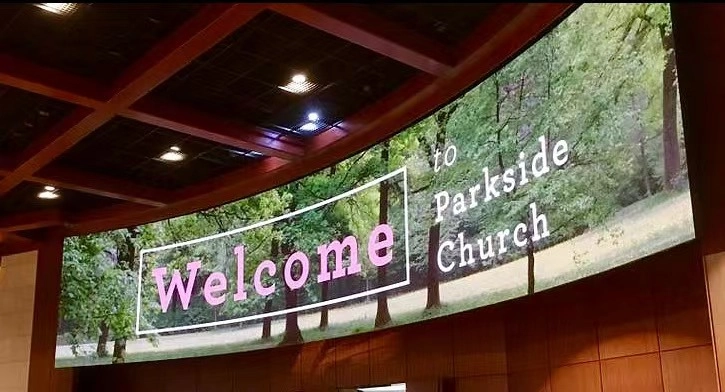
A flexible bendable LED screen is changing how brands, venues, and designers think about digital display technology. Unlike rigid traditional panels, this type of screen can curve, wrap around structures, and adapt to custom environments without losing brightness or visual impact. That makes it useful in retail spaces, exhibitions, control rooms, entertainment venues, and architectural installations where standard flat screens fall short.
As demand grows for immersive visual experiences, businesses are looking for display systems that combine durability, creative freedom, and efficient performance. A flexible Bendable LED Screen answers that need by offering lightweight construction, modular installation, and strong image quality in both indoor and outdoor settings. This guide explains how it works, where it performs best, what advantages it offers, and what buyers should evaluate before making an investment.
Product Overview
Core Concept and Design Philosophy
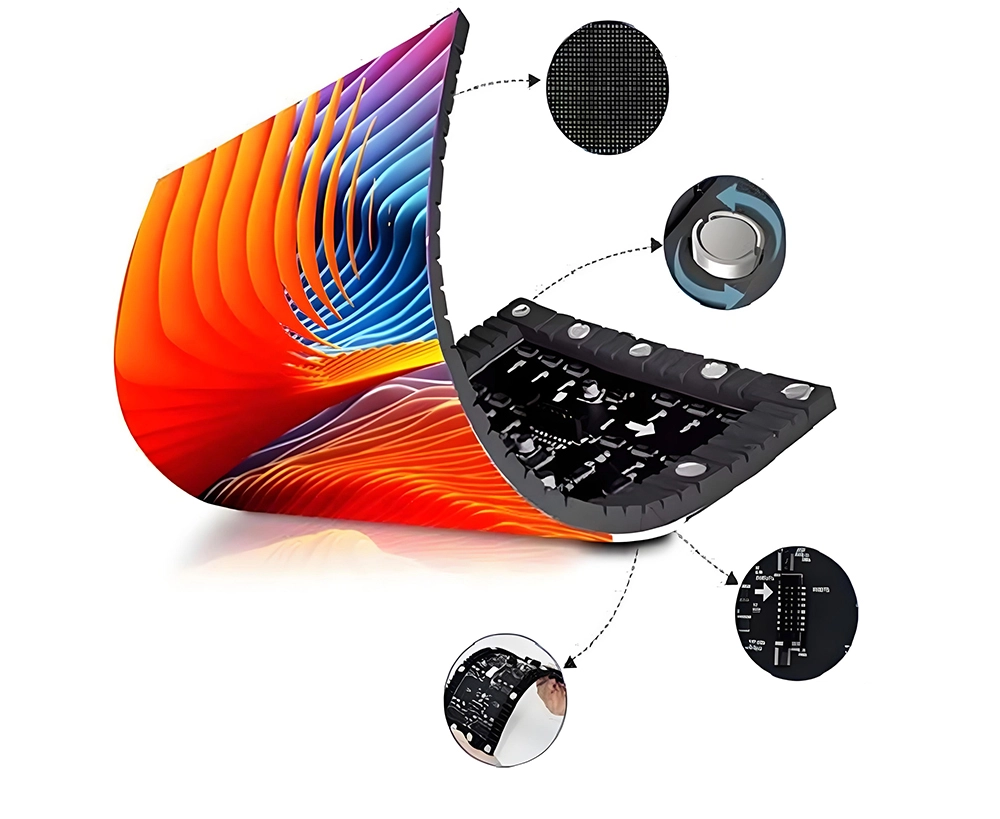
TW VISION’s bendable screen is designed around three core principles: flexibility, durability, and consistent optical quality. The technology uses advanced flexible substrates, optimized thin-film transistor (TFT) backplanes or organic thin-film architectures, and encapsulation methods that protect active layers from mechanical fatigue and environmental ingress. The result is a display that can bend to small radii repeatedly without sacrificing color accuracy or brightness.
Key Technical Characteristics
– Substrate: Flexible polymer or ultra-thin glass options depending on application and required stiffness.
– Backplane: Low-temperature polysilicon (LTPS) or oxide TFTs adapted for bending, and in some cases OLED stacks for emissive performance.
– Encapsulation: Multilayer barrier films providing moisture/oxygen protection while retaining flexibility.
– Mechanical tolerance: Designed for thousands to tens of thousands of bend cycles at specified radii.
– Thickness: Ultra-thin stack (often sub-500 μm total) to enable tight bending without delamination.
These characteristics together create a display capable of meeting both consumer aesthetic desires and industrial reliability requirements.
Materials and Mechanical Durability
Flexible Substrates
TW VISION employs flexible substrates like polyimide (PI), polyethylene naphthalate (PEN), and ultrathin glass (UTG) variants for different trade-offs between flexibility and scratch resistance. Polyimide provides excellent thermal stability and bend endurance, while UTG offers superior scratch resistance and optical clarity at the cost of somewhat reduced bend radius capacity.
Encapsulation and Barrier Technologies
flexible displays are vulnerable to moisture and oxygen, especially when using OLED emitters. TW VISION’s multilayer encapsulation uses alternating inorganic/organic films (atomic-layer-deposited oxides and polymeric layers) to achieve low permeation rates. Flexible thin-film encapsulation (TFE) helps maintain emissive lifetime while allowing bending continuity.
Mechanical Testing and Fatigue Resistance
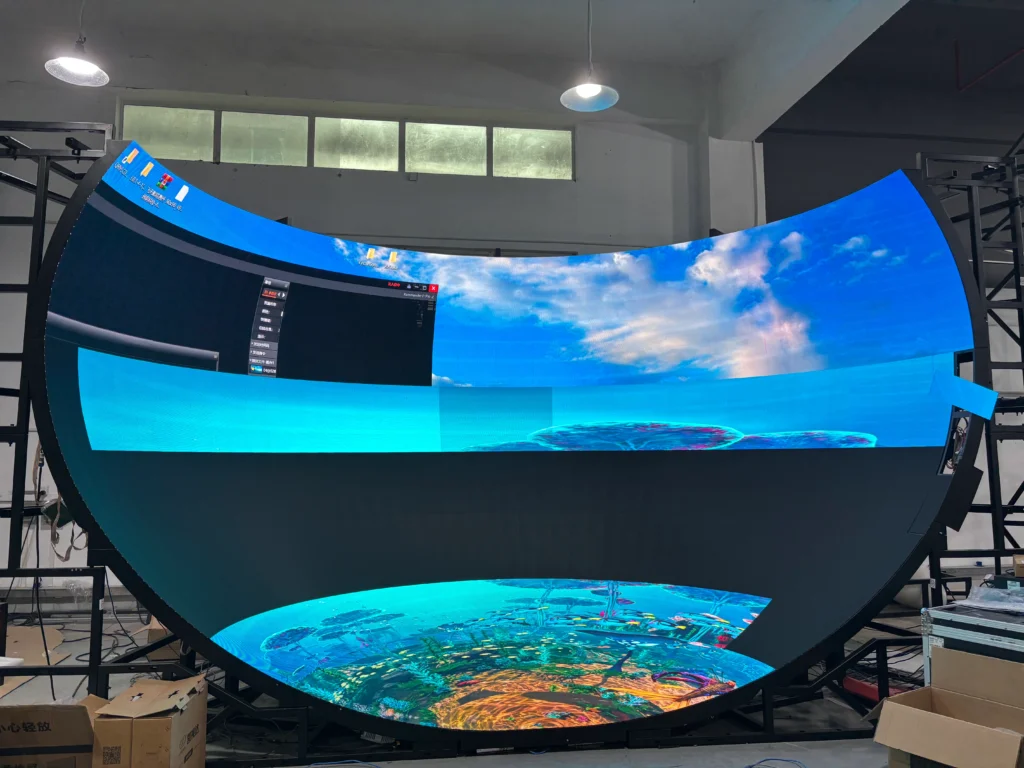
Durability is validated through cyclic bend testing, thermal cycling, and mechanical shock. TW VISION specifies bend cycles (e.g., >50,000 cycles at a given radius) and offers grades for different use cases. Stress-relief routing in driver flex circuits, neutral mechanical plane alignment, and reinforcement at hinge areas are standard design practices to prevent early failure.
Applications of Flexible Bendable LED Screen in Different Industries
The value of a flexible bendable led screenn becomes even clearer when looking at real-world applications. Its adaptability allows it to serve many industries that need both function and strong visual presence.
Retail and Shopping Centers
Retailers use a led screen to create eye-catching storefronts, curved window displays, and immersive product zones. Because the display can wrap around pillars or follow interior architecture, it helps brands turn ordinary spaces into attention-grabbing experiences.
Events and Stage Production
Concerts, product launches, conferences, and trade fairs often rely on visual impact. Flexible LED displays are popular here because they can form wave backdrops, circular stage elements, tunnels, and suspended visual structures that enhance live content.
Museums and Experience Centers
Museums and themed attractions use these screens to create storytelling environments. Curved visual surfaces help deliver panoramic or interactive content that feels more immersive than standard flat panels.
Corporate and Commercial Spaces
Modern offices, lobbies, and showrooms increasingly use digital architecture to communicate brand identity. A they can be integrated into reception walls, feature columns, and curved meeting-room displays to create a premium and modern impression.
Outdoor Advertising and Architecture
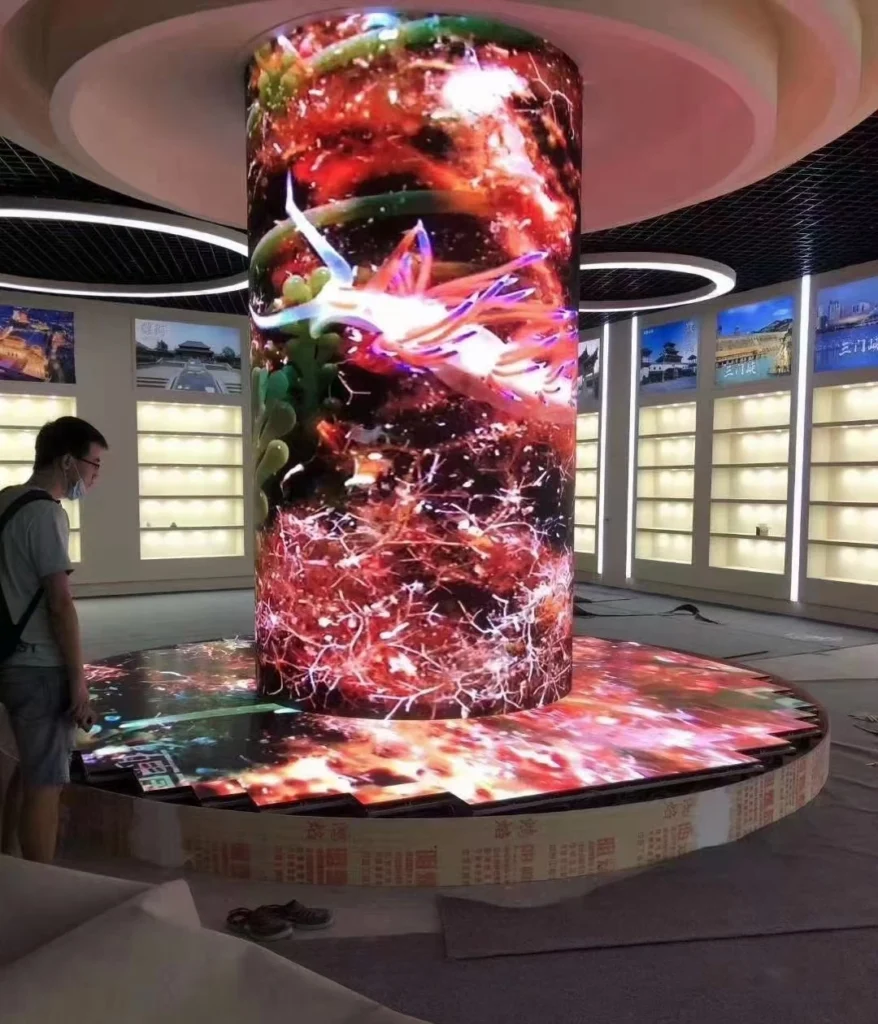
In city centers and public venues, flexible LED technology allows advertising screens to follow building contours. This makes it possible to create large-format media facades, cylindrical signs, and sculptural installations that stand out in crowded environments.
Because it fits both creative and commercial use cases, this display category continues to grow across industries that want visual communication with stronger spatial impact.
Performance Attributes and Use Cases
Display Quality
Flexible displays from TW VISION maintain high contrast ratios and wide color gamuts. Calibration and color management ensure that bend states do not significantly alter color temperature or gamma. For OLED embodiments, per-pixel emissive control delivers deep blacks and fast response times; for LCD-based flexible solutions, advanced backlighting and optical films are used to preserve brightness and uniformity under deformation.
Common Use Cases
– Consumer electronics: foldable smartphones, tablets, and rollable laptops.
– Wearables: curved smartwatches and flexible health monitors that conform to the body.
– Automotive: flexible instrument clusters and ambient displays that integrate into dashboards and interior panels.
– Digital signage: rollable or retractable billboards and point-of-sale units for temporary installations.
– Industrial equipment: displays for harsh environments where shock-resistance and conformability matter.
Analysis Table
| Feature | Typical Specification | Measured Parameter | Key Benefit | Primary Application |
|---|---|---|---|---|
| Minimum Bend Radius | 5–10 mm (depending on substrate) | Flex radius at which optical integrity is retained | Enables tight-fold devices and compact rollable form factors | Foldable smartphones, rollable digital signage |
| Bend Cycle Endurance | ≥50,000 cycles (standard grade) | No visible cracks, <5% brightness loss | Provides long operational life for repeated bending | Consumer electronics, wearables |
| Overall Thickness | 200–500 μm total stack | Total thickness across the active display area | Supports ultra-thin, lightweight, low-profile designs | Wearables, foldable displays |
| Brightness | 300–1,000 nits (depending on display technology) | Peak luminance (cd/m²) | Delivers clear visibility in various lighting conditions, including outdoor environments | Automotive displays, digital signage |
| Moisture Barrier | WVTR ≤ 10⁻⁶ g/m²/day (with TFE) | Water Vapor Transmission Rate (WVTR) | Protects OLED layers from moisture and extends display lifespan | OLED displays, consumer electronics, automotive applications |
How to Choose the Right Flexible Bendable LED Screen
Selecting the right the concept requires more than comparing prices. Buyers need to match technical specifications with installation conditions, viewing distance, content goals, and maintenance requirements.
Pixel Pitch
Pixel pitch affects image clarity and ideal viewing distance. A smaller pitch works better for close-up indoor viewing, while a larger pitch may be suitable for large-scale displays viewed from farther away.
Flexibility Radius
Not every screen bends to the same degree. Check the minimum bending radius to confirm the product can achieve the shape your project requires without damaging modules or reducing display stability.
Brightness and Environment
Indoor installations typically need lower brightness than outdoor projects. If the screen will be exposed to sunlight or weather, choose a model with high brightness and an appropriate IP rating.
Refresh Rate and Image Quality
For events, broadcasting, or premium branding, a high refresh rate is important to reduce flicker and ensure smooth motion. Good grayscale performance and color consistency also matter for professional visual output.
Installation and Maintenance
A the approach should be evaluated for service access, module replacement speed, and support structure requirements. Easy maintenance can significantly reduce operational costs over time.
Supplier Reliability
The product is only one part of the investment. Buyers should also evaluate manufacturing quality, warranty terms, technical support, spare parts availability, and installation expertise. A reliable supplier helps reduce risk across the full project lifecycle.
When these factors are reviewed carefully, businesses can choose a display solution that delivers both creative impact and dependable long-term performance.
Installation, Maintenance, and Long-Term Performance
A it can deliver excellent value, but performance depends heavily on proper installation and ongoing care. Even advanced display technology will underperform if it is poorly mounted, mismatched to the environment, or maintained inconsistently.
During installation, the supporting structure must match the required screen curvature and load distribution. Technicians need to confirm alignment, power stability, signal integrity, and ventilation. For custom shapes, precision matters even more because minor inconsistencies can affect visual smoothness across the surface.
Routine maintenance usually includes cleaning, checking module connections, inspecting power supplies, and replacing damaged LED units when needed. Because many systems are modular, repairs can be localized rather than requiring replacement of the whole display.
Long-term performance is influenced by several factors:
– Operating temperature
– Humidity exposure
– Usage hours
– Power quality
– Quality of LED chips and driver ICs
– Correct content calibration
A well-specified Flexible Bendable LED Screen from a reputable manufacturer can offer long service life, stable brightness, and consistent color reproduction. For organizations that depend on continuous display operation, preventive maintenance is usually more cost-effective than reactive repair.
FAQ
What is a Flexible Bendable LED Screen used for?
A Flexible Bendable LED Screen is used for curved and creative digital display installations in retail stores, exhibitions, stages, museums, corporate spaces, and outdoor architecture. It helps deliver visual content on surfaces where traditional flat displays are difficult to use.
Is a Flexible Bendable LED Screen suitable for outdoor use?
Yes, a Flexible Bendable LED Screen can be suitable for outdoor use if it is designed with the proper brightness level, weather protection, and IP rating. Buyers should confirm that the specific model matches the environmental conditions of the project site.
How long does a Flexible Bendable LED Screen last?
The lifespan of a Flexible Bendable LED Screen depends on component quality, operating environment, and maintenance practices. High-quality systems can deliver many years of reliable performance when installed correctly and serviced regularly.
Is a Flexible Bendable LED Screen more expensive than a standard LED display?
In many cases, a Flexible Bendable LED Screen costs more than a standard rigid display because of its specialized materials, engineering, and custom installation possibilities. However, the added design flexibility and stronger visual impact can justify the investment.
How do I choose the best Flexible Bendable LED Screen for my project?
To choose the best Flexible Bendable LED Screen, evaluate pixel pitch, curvature requirements, brightness, refresh rate, maintenance access, installation environment, and supplier support. The right choice depends on how the display will be used and where it will be installed.
Conclusion
A Flexible Bendable LED Screen offers a strong combination of creative freedom, modern visual impact, and practical performance. Its ability to adapt to curved and irregular surfaces makes it a valuable solution for businesses and organizations that want more than a standard flat display. From retail branding and stage production to architectural media and immersive environments, this technology supports display concepts that are both functional and visually distinctive.
For buyers, success comes from matching the right specifications to the real demands of the project. A well-chosen Flexible Bendable LED Screen can improve audience engagement, strengthen brand presence, and deliver reliable long-term value. As digital display design continues to evolve, flexible LED technology is set to remain an important option for innovative visual communication.
