The Role of TW VISION in Creating the Next Generation of Largest LED Screens

The global appetite for larger, higher-resolution LED screens has grown dramatically in recent years. From stadium fa?ades and concert stages to urban media towers and immersive digital art installations, the demand is no longer just for bigger displays but for systems that can deliver unprecedented brightness, reliability, and pixel density across massive surfaces. Meeting those demands requires not only component-level innovation but an integrated approach spanning design, manufacturing, software, logistics, and sustainability. TW VISION has emerged as a key player in this space, positioning itself to shape the next generation of the largest LED screens through a combination of technological innovation and systems thinking.
The Role of TW VISION in Creating the Next Generation of Largest LED Screens
Strategic Vision: From Components to Complete Systems
TW VISION’s core strength lies in its end-to-end perspective. Instead of focusing solely on LED modules or pixel chips, TW VISION develops and integrates the full stack: LEDs, driver electronics, thermal management, mechanical support, and control software. This systems approach enables seamless optimization across trade-offs—brightness versus power consumption, pixel density versus heat dissipation, and structural integrity versus weight. For architects and event integrators, that translates to turnkey solutions that simplify installation, reduce integration risk, and improve long-term maintainability.
By partnering early with architects and systems integrators, TW VISION ensures that large-scale installations are considered holistically. This includes early-stage structural planning, site-specific thermal simulations, and integrated cabling and power planning. The result is faster deployment cycles and fewer costly surprises on complex projects such as stadium wraps, urban media towers, and massive stage backdrops.
Innovations in Module Design and Scalability
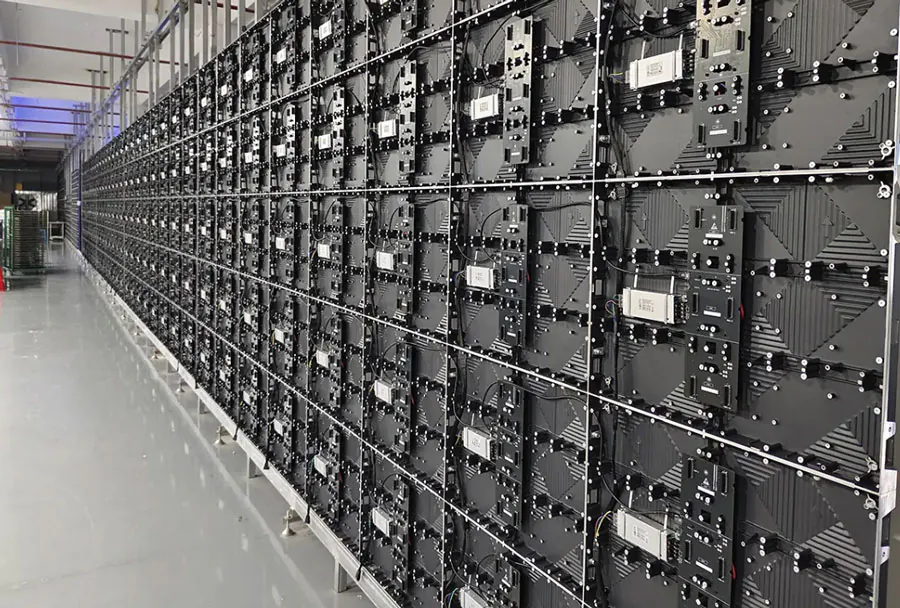
One of the primary technical challenges in building the largest LED screens is maintaining uniform image quality and reliability across very large surface areas. TW VISION addresses this through modular, tile-based designs that allow for precision alignment and efficient servicing. Their standardization of module sizes and interconnection protocols makes it possible to scale displays horizontally and vertically with predictable performance.
Key innovations include high-precision mechanical latches, rigid-but-lightweight aluminum frames, and sealed module interfaces for outdoor durability. TW VISION’s approach also prioritizes redundancy: distributed power and data pathways ensure that single-point failures do not render large sections inoperative, an essential feature for mission-critical displays in sports and public safety contexts.
Advanced Electronics and Pixel-Level Control
At the heart of next-generation large screens is the ability to render high-fidelity images at varying viewing distances. TW VISION has invested in driver IC optimization and bespoke calibration tools that enable fine-grained control of color, brightness, and timing. Their driver architectures support higher refresh rates and HDR content while minimizing motion artifacts—critical for live broadcasts and dynamic video content.
Pixel-level calibration, often automated during factory production and refined on-site, ensures consistent color temperature and luminance across panels. This is especially important for screens assembled from hundreds or thousands of modules where small variances can become visible over large areas. TW VISION’s calibration suites also include remote monitoring capabilities, allowing for ongoing adjustments and predictive maintenance.
Control Systems, Software, and Content Management
Hardware without smart control is only half the equation. TW VISION invests heavily in control systems that manage large screen arrays with precision and flexibility. Their software stacks handle synchronization across modules, real-time diagnostics, and content distribution over various network topologies. For large installations, deterministic timing and low-latency content delivery are essential; TW VISION leverages FPGA-assisted timing and optimized network protocols to ensure frame-accurate playback.
Content management systems (CMS) offered by TW VISION integrate with standard media workflows while providing additional capabilities for scheduling, multi-zone layouts, and adaptive content scaling per pixel pitch and viewing distance. These tools are vital for advertisers and venue managers who need dynamic content control across complex, non-rectangular surfaces.
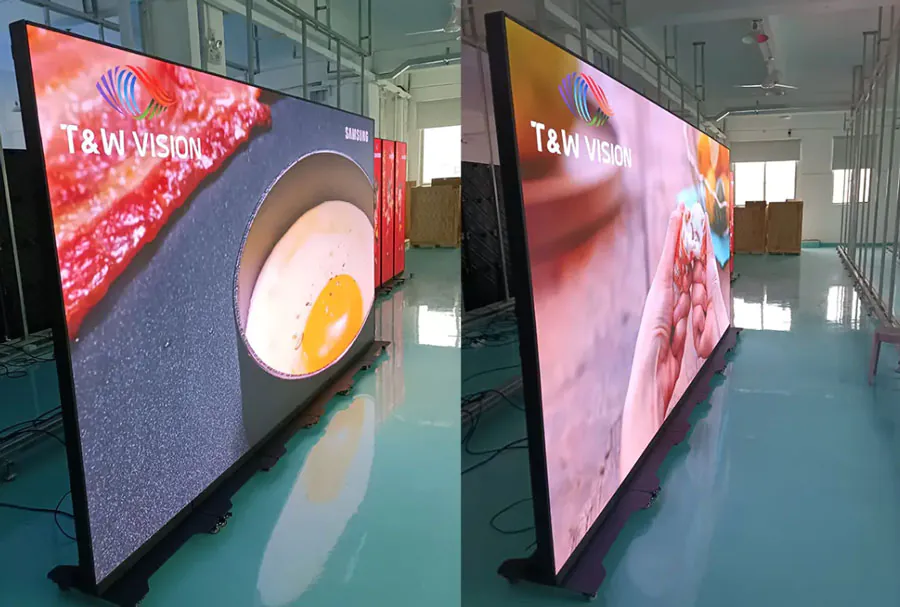
Thermal Management and Durability for Large-Scale Installations
Heat dissipation becomes a non-trivial engineering challenge as screen size and pixel density increase. TW VISION approaches thermal management through multi-tier strategies: passive heatsinking in module design, thermal interface materials to conduct heat to structural frames, and active airflow management in enclosed installations. For outdoor mega-screens exposed to sunlight, reflective coatings and temperature-aware dimming profiles protect LEDs without sacrificing visibility.
Materials science matters for longevity. TW VISION sources high-grade protective coatings and conformal encapsulation techniques to shield sensitive electronics from moisture, dust, and corrosive pollutants—critical for screens mounted in urban canyons or coastal environments.
Sustainability and Energy Efficiency
Large led displays can be significant energy consumers. TW VISION emphasizes energy-efficient LEDs, high-efficiency power supplies, and intelligent brightness control tuned to ambient light sensors. They also design for recyclability: modular components and standardized connectors make disassembly and parts replacement straightforward, reducing waste over the lifecycle of a screen.
Life-cycle assessments (LCA) and energy modeling are integrated into project planning, enabling clients to quantify operational costs and environmental impact. For customers with sustainability goals or regulatory constraints, those metrics can be decisive in vendor selection.
Logistics, Project Management, and Field Support
Deploying the world’s largest LED screens often involves complex logistics—heavy lifting, crane schedules, electrical hookups, and multi-trade coordination. TW VISION differentiates itself by offering project management and field engineering support that goes beyond delivery. Their teams provide pre-installation site surveys, installation training for local crews, and commissioning services to ensure signal integrity and visual uniformity at scale.
Furthermore, TW VISION’s supply chain resilience is built to support large projects with tight timelines. Inventory strategies for critical components and modular preassembly options shorten on-site integration time and reduce weather exposure during installation windows.
Comparative Analysis: TW VISION vs. Typical Industry Approaches
Below is an analytical table comparing TW VISION’s approach to typical industry practices, highlighting the competitive advantages and real-world impacts.
| Aspect | TW VISION Solution | Technical Element | Competitive Advantage | Real-world Impact |
|---|---|---|---|---|
| System Integration | End-to-end hardware + software stack | Unified protocols, integrated CMS | Fewer integration issues, faster deployment | Reduced project timelines, predictable performance |
| Scalability | Modular tile architecture | Standardized mechanical & electrical connectors | Seamless upscaling and serviceability | Easier expansion, lower maintenance downtime |
| Image Quality | Pixel-level calibration & HDR support | Advanced drivers, factory+field calibration | Consistent visuals across large areas | Better viewer experience, higher ad value |
| Reliability | Redundant power/data paths | Distributed electronics, hot-swap modules | High uptime in critical venues | Reliable live events and safety-critical signage |
| Sustainability | Energy-efficient LEDs & modular recyclability | Ambient sensing, efficient PSUs | Lower OPEX and environmental footprint | Lower lifetime costs and compliance with green policies |
Case Studies and Deployment Examples
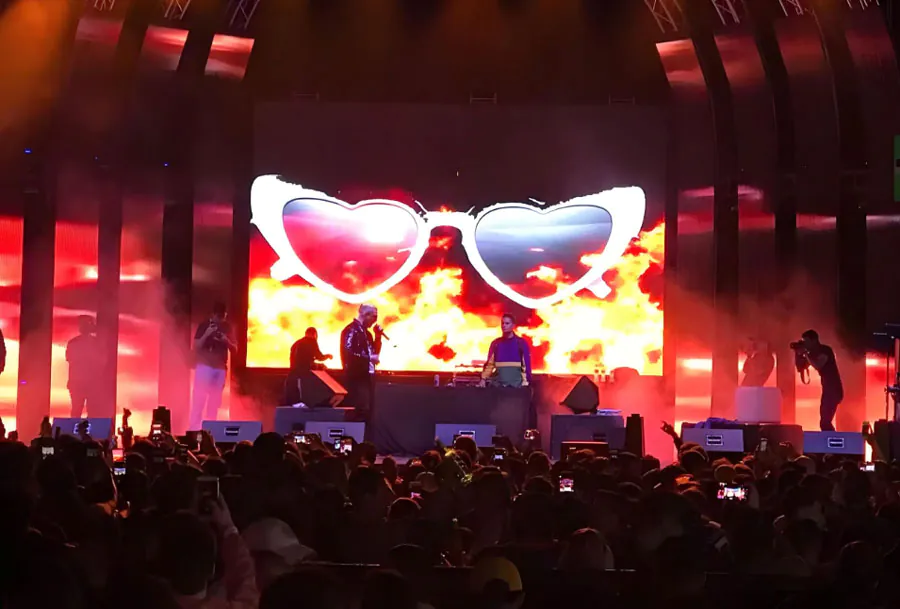
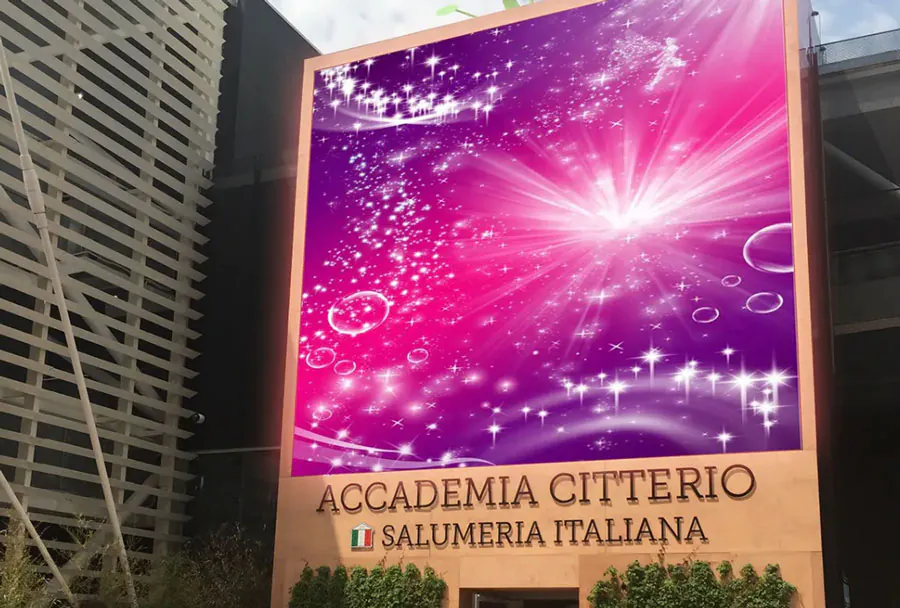
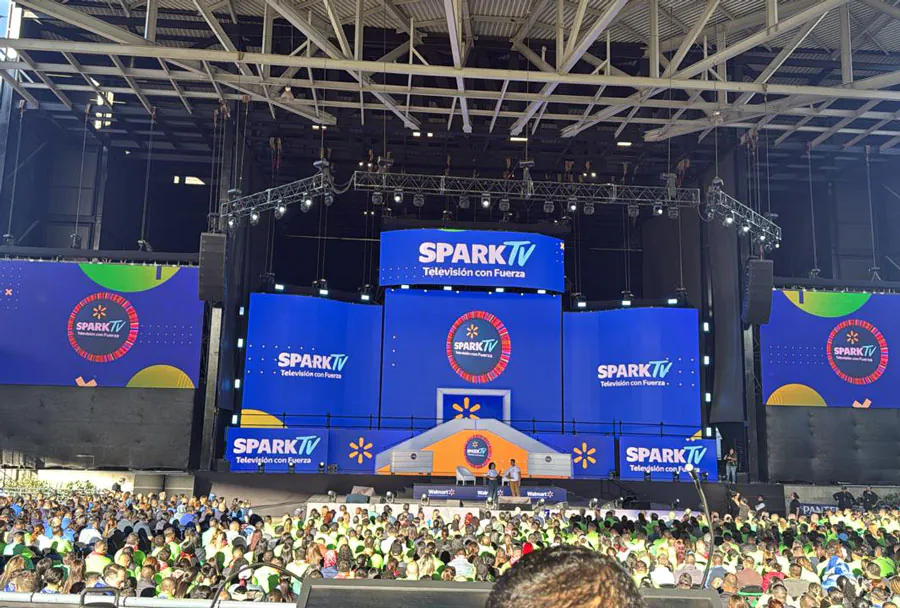
TW VISION’s portfolio includes stadium ribbon displays, arena center-hung screens, and city-facing media towers. In stadium settings, their solutions have delivered ultra-wide video real estate with synchronized multi-zone playback, enabling advertisers and broadcasters to target content with high precision. For urban media fa?ades, TW VISION’s weatherproof modules and thermal designs have demonstrated multi-year uptime even under harsh weather cycles.
In one notable deployment, TW VISION integrated a 1,200-square-meter fa?ade screen that wrapped irregular architectural contours. By leveraging pre-visualization software and custom module shapes, the installation preserved aesthetic intent while maintaining broadcast-quality imagery. The project required close collaboration with structural engineers and local authorities—an area where TW VISION’s project management capabilities were crucial.
Challenges and Future Directions
Creating next-generation largest LED screens is not without challenges. Supply chain volatility for semiconductor components, rising expectations for miniaturized pixels at scale, and regulatory constraints related to light pollution and energy use all shape the evolution of the market. TW VISION must continue investing in local manufacturing flexibility, alternative supply pathways, and in-house R&D to stay ahead.
Emerging trends such as micro-LED for ultra-high brightness and contrast, adaptive content driven by AI for audience engagement, and the convergence of AR overlays with physical screens represent promising avenues. TW VISION’s existing strengths in system integration position it well to incorporate these technologies, but the company will need agile partnerships with chipmakers, AI software vendors, and material scientists to accelerate adoption.
TW VISION as a Systems Innovator
The next generation of the largest LED screens will be defined as much by systems engineering as by individual component improvements. TW VISION’s comprehensive approach—combining modular mechanical design, advanced electronics, robust thermal strategies, and smart control software—addresses the full stack of challenges inherent in large-scale displays. Their emphasis on reliability, serviceability, and sustainability further distinguishes their solutions in environments where uptime and operational costs matter.
For stakeholders—from city planners to venue owners and advertisers—the appeal of TW VISION lies in predictable outcomes: deployments that meet visual expectations, perform reliably under demanding conditions, and adapt to future upgrades. As urban spaces and live events continue to demand ever-larger canvases for storytelling and commerce, companies that master integration and lifecycle strategy will lead. TW VISION’s trajectory suggests it will be one of those leaders, shaping both the technical capabilities and the operational practices that define the future of mega-scale LED displays.