LED Display Manufacturing Process: Quality Control and Precision Production Guide: TW VISION

Introduction
The LED Display Manufacturing Process is the foundation of producing reliable, high-brightness, and long-lasting display solutions for indoor and outdoor applications. From raw material inspection to final aging tests, every stage must follow strict technical standards to ensure display consistency, color accuracy, durability, and performance. As a leading manufacturer, TW VISION has built a strong reputation by combining precision engineering with rigorous quality control. This article provides an in-depth look at TW VISION’s production processes and quality assurance, highlighting the expertise, authority, and reliability of its operations.
Table of Contents
- Introduction
- Raw Materials and Component Selection in LED Display Production
- Key raw material inspection points
- SMT Assembly and Module Production Standards
- Core SMT quality control measures
- Cabinet Integration, Calibration, and Precision Engineering
- Important cabinet production factors
- Testing, Aging, and Reliability Assurance
- Common final test categories
- Continuous Improvement, Process Control, and Manufacturing Excellence
- Key strategies for long-term production excellence
- FAQ
- Why is quality control so important in LED display manufacturing?
- What is the most critical step in LED display production?
- How do manufacturers ensure uniform brightness and color?
- What tests are performed before LED displays are shipped?
- How does precision production affect LED display lifespan?
- Conclusion
In this article, we will explore the LED Display Manufacturing Process: Quality Control and Precision Production Guide in depth, covering each critical production step, the role of inspection systems, the importance of environmental testing, and the methods used to maintain precision across the full manufacturing cycle.
TW VISION factory live video:
Raw Materials and Component Selection in LED Display Production
A successful LED Display Manufacturing Process begins with careful raw material and component selection. High-quality LED displays depend on the consistency and reliability of every part, including LED chips, PCB boards, driver ICs, power supplies, masks, cabinets, connectors, and control systems.
Manufacturers usually start by qualifying suppliers through audits, certifications, and sample testing. Incoming quality control is essential because even small variations in LED wavelength, brightness, or chip packaging can affect final display uniformity. During the LED Display Manufacturing Process, all raw materials should be checked for electrical performance, dimensional accuracy, thermal characteristics, and compatibility with assembly requirements.
Key raw material inspection points
– LED lamp beads: brightness, color temperature, wavelength consistency, and viewing angle
– PCB boards: thickness, copper quality, solder mask integrity, and circuit accuracy
– Driver ICs: signal stability, refresh rate support, and power efficiency
– Power supplies: voltage stability, overload protection, and heat dissipation
– Cabinet materials: structural strength, anti-corrosion performance, and assembly precision
Consistency at this stage is critical because defects in source materials are much harder to correct after assembly. In advanced facilities, automated optical equipment and spectrometers are used to sort and grade LEDs before they move to production. This helps maintain screen-wide consistency and reduces visible brightness or color differences.
Another important part of the production is traceability. Every component batch should be logged and linked to production records. If a quality issue appears later, traceability systems allow manufacturers to quickly isolate the root cause, reducing downtime and preventing broader product failures.
By investing in strict supplier management and incoming inspection, manufacturers create a stable base for every downstream production activity.
SMT Assembly and Module Production Standards
The next major stage in the LED Display Manufacturing Process: Quality Control and Precision Production Guide is surface mount technology, commonly known as SMT assembly. This is where LED chips, driver components, resistors, capacitors, and integrated circuits are mounted onto PCB boards with high-speed automated equipment.
Precision is everything in SMT production. The solder paste printing process must be controlled carefully to ensure proper volume and alignment. Too much paste can create bridging, while too little can lead to weak solder joints. In the Manufacturing Process, automated solder paste inspection systems are often used to measure deposition accuracy before components are placed.
After printing, pick-and-place machines mount components at high speed with micron-level precision. These machines rely on vision systems to verify orientation and position. If LED placement deviates even slightly, the final module may show uneven pixel spacing or reliability issues. Precision placement also affects reflow soldering, where temperature profiles must be optimized to avoid thermal damage while ensuring strong electrical connections.
Core SMT quality control measures
– Solder paste viscosity and thickness control
– Pick-and-place accuracy calibration
– Reflow oven temperature profiling
– Automated optical inspection after soldering
– X-ray inspection for hidden solder joint defects
Once SMT is complete, the modules move to cleaning, inspection, and initial lighting tests. During this part of the LED Display Manufacturing Process: Quality Control and Precision Production Guide, technicians verify that each module lights correctly, communicates with the control system, and shows no dead pixels, short circuits, or color inconsistencies.
Module assembly also includes mask installation, glue filling where required, waterproof treatments for outdoor screens, and frame fixation. Tolerance control is extremely important because slight warping or dimensional variation can affect later cabinet assembly. Flatness, alignment, and fastening torque are typically measured to maintain production precision.
A well-controlled SMT process improves both yield and long-term performance. It minimizes rework, reduces field failures, and ensures that each display module meets the visual and electrical standards expected in premium LED products.
Cabinet Integration, Calibration, and Precision Engineering
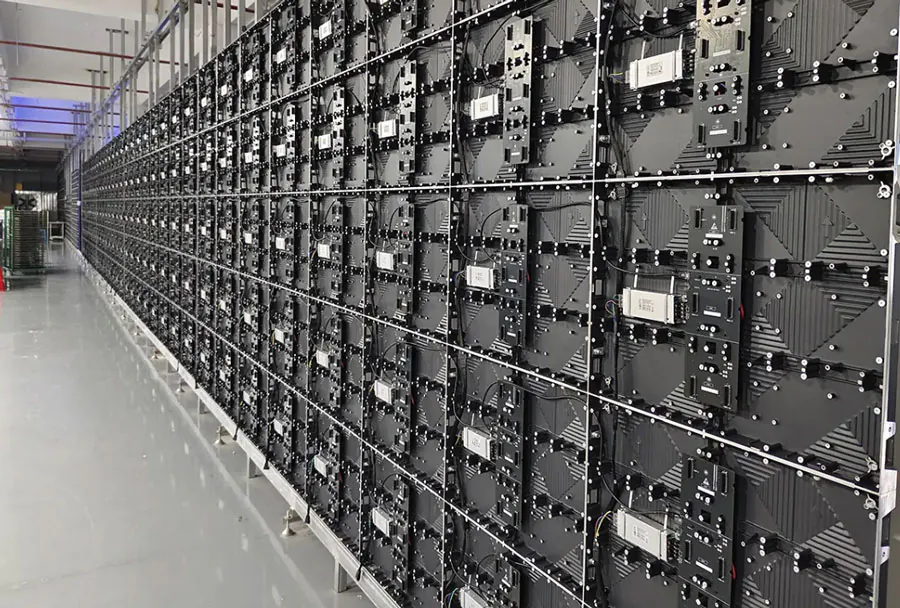
After modules are completed, the LED Display Manufacturing Process: Quality Control and Precision Production Guide continues with cabinet integration. This stage combines LED modules, receiving cards, power supplies, cables, and structural components into a complete display unit.
Cabinet precision directly affects final screen flatness and seamless splicing. For rental displays, command centers, retail video walls, and large outdoor billboards, poor cabinet tolerances can create visible gaps, misalignment, or inconsistent viewing surfaces. That is why the LED Display Manufacturing Process: Quality Control and Precision Production Guide places strong emphasis on CNC machining accuracy, frame rigidity, and connector positioning.
Important cabinet production factors
– CNC machining tolerance control
– Frame flatness and rigidity verification
– Fast lock and splicing mechanism precision
– Cable routing safety and organization
– Thermal management design and airflow planning
At this stage, manufacturers often conduct power-on tests for each cabinet. These tests verify communication stability, grayscale performance, refresh rate consistency, and signal integrity. Any flicker, line fault, abnormal pixel behavior, or power fluctuation must be corrected before the cabinet moves to calibration.
Calibration is a central part of the LED Display Manufacturing Process. Even when high-quality LEDs are selected, slight differences in brightness and color still occur. Professional calibration systems use cameras and software to measure each pixel or module and then apply correction coefficients. This process improves uniformity across the entire display.
Color calibration addresses red, green, and blue balance, while brightness calibration ensures visual consistency from cabinet to cabinet. For high-end displays, grayscale calibration and gamma correction are also applied to improve image depth and smoothness. These adjustments are especially important for broadcasting studios, virtual production environments, and premium advertising applications where visual precision is non-negotiable.
Cabinet integration is also where durability features are checked. Outdoor products may undergo waterproof sealing verification, anti-dust inspection, and corrosion resistance evaluation. The better the mechanical and electrical integration, the more stable the display will be in real-world operating conditions.
Testing, Aging, and Reliability Assurance
One of the most critical stages in the LED Display Manufacturing Process is final testing and aging. Even if components and assembly processes are well controlled, reliability must still be proven under working conditions before shipment.
Testing usually begins with electrical verification. Engineers measure voltage, current, grounding integrity, insulation performance, and signal transmission stability. Then the display is run through functional testing, including solid color patterns, grayscale transitions, video playback, rapid refresh checks, and communication stress tests. In the LED Display Manufacturing Process, these tests help identify hidden failures that may not be visible during a brief inspection.
Common final test categories
– Dead pixel and bright line inspection
– Brightness and chromatic uniformity measurement
– Refresh rate and grayscale testing
– Temperature rise monitoring
– Power consumption evaluation
– Waterproof and dustproof testing for outdoor products
Aging tests are especially important. During aging, the display operates continuously for a defined period, often 24 to 72 hours or longer depending on product class and customer requirements. The goal is to expose early-life failures, unstable solder joints, defective power supplies, and communication errors. The LED Display Manufacturing treats aging as a preventive quality step rather than a simple final check.
Environmental reliability testing may also be required. Manufacturers often simulate high temperature, low temperature, humidity, vibration, and transport shock conditions. For outdoor LED displays, UV resistance and salt spray testing can be relevant as well. These evaluations determine whether the product will maintain performance in demanding climates and operating environments.
Quality documentation is another key output from this stage. Test reports, calibration records, aging logs, and inspection results provide proof of compliance and help customers trust the manufacturer’s production standards. When manufacturers build robust testing systems into the production, they improve consistency, protect brand reputation, and reduce warranty risk.
Continuous Improvement, Process Control, and Manufacturing Excellence
The best production does not end with shipment. Leading manufacturers continuously analyze production data to improve efficiency, reduce defects, and raise product quality over time.
Statistical process control is often used to monitor defect rates, soldering performance, calibration accuracy, and module failure trends. By reviewing this data, engineers can identify recurring issues and implement corrective actions before they affect large production batches. In a modern manufacture processing, continuous improvement is supported by digital traceability, equipment maintenance schedules, and operator training programs.
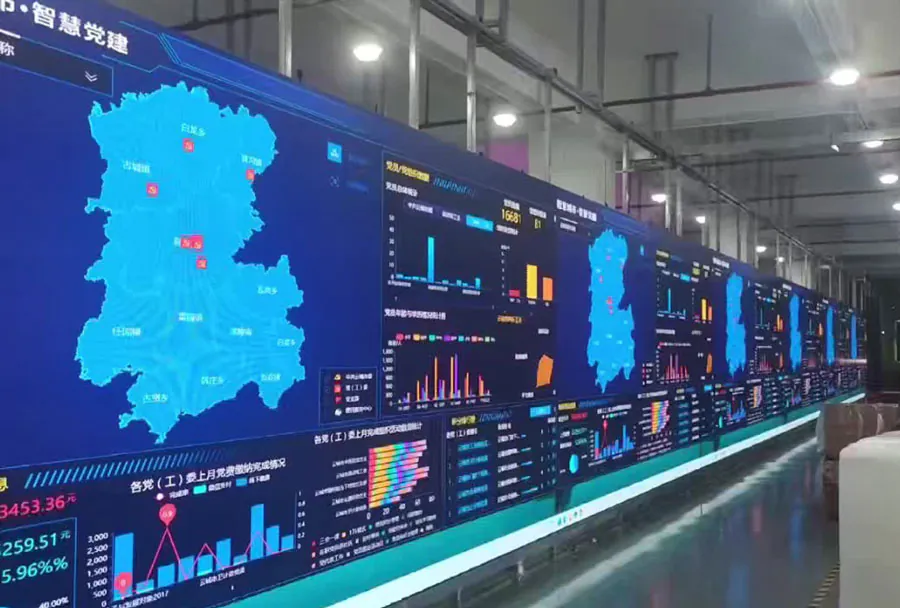
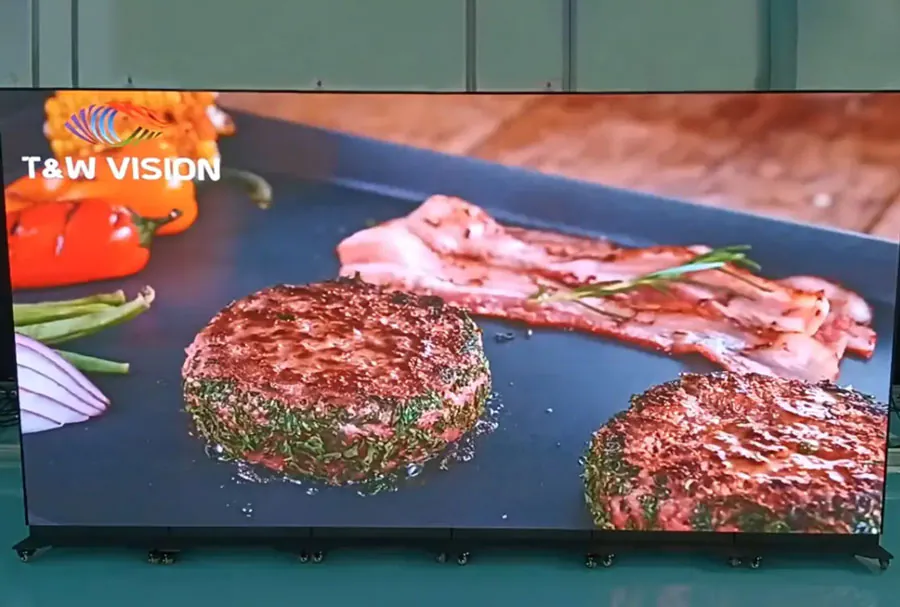
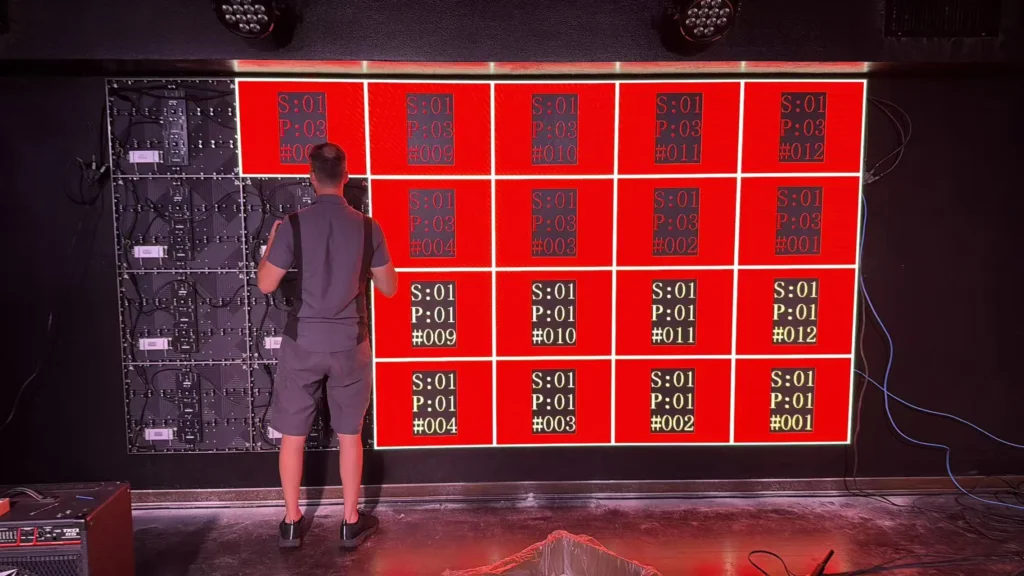
Indoor P2.5 led display aging in the factory.
Key strategies for long-term production excellence
– Real-time monitoring of production KPIs
– Preventive maintenance for SMT and testing equipment
– Staff training for assembly and inspection consistency
– Root cause analysis for recurring defects
– Standard operating procedure updates based on performance data
Operator skill also matters. Even with advanced automation, human oversight is essential for troubleshooting, process verification, and quality judgment. Skilled teams are better able to detect subtle visual issues, maintain assembly discipline, and respond quickly when abnormal trends appear.
Lean manufacturing principles can further strengthen the Manufacturing Process. Reducing wasted movement, minimizing rework, improving line balance, and standardizing work instructions all contribute to lower costs and more consistent output. At the same time, investment in automated inspection and AI-assisted analysis can improve defect detection speed and accuracy.
Manufacturers that pursue excellence across every process stage are better positioned to deliver products with strong visual performance, reliable operation, and long service life. In a competitive market, production precision and quality control are not optional—they are essential advantages.
FAQ
Why is quality control so important in LED display manufacturing?
Quality control is essential because the it involves many interconnected components and steps. A defect in raw materials, soldering, calibration, or cabinet assembly can reduce display performance, shorten lifespan, and increase maintenance costs. Strong quality control ensures brightness consistency, stable operation, and long-term reliability.
What is the most critical step in LED display production?
There is no single step that matters most, because the LED Display Manufacturing Process depends on consistency from start to finish. However, many experts consider SMT assembly, calibration, and final aging tests especially critical since they directly affect pixel performance, visual uniformity, and field reliability.
How do manufacturers ensure uniform brightness and color?
Manufacturers ensure uniformity by selecting closely matched LEDs, using automated optical sorting, and applying camera-based calibration systems. In the Guide, these methods help correct brightness and color deviations across modules and cabinets, resulting in a more seamless display image.
What tests are performed before LED displays are shipped?
Before shipment, products usually undergo electrical testing, image quality inspection, communication checks, brightness and color measurement, aging tests, and environmental verification where needed. The process uses these tests to confirm that the display meets technical and durability requirements.
How does precision production affect LED display lifespan?
Precision production improves solder joint quality, structural stability, heat management, and electrical consistency. As a result, the Quality Control and Precision Production Guide helps reduce premature failures, protect image quality, and extend the operational life of the display.
Conclusion
The LED Display Manufacturing Process: Quality Control and Precision Production Guide shows that high-performance LED displays are the result of disciplined engineering, strict inspection systems, and continuous improvement at every production stage. From raw material qualification and SMT assembly to cabinet integration, calibration, and final aging tests, each step plays a direct role in display quality, reliability, and service life.
For manufacturers and buyers alike, understanding the LED Display Manufacturing Process is essential when evaluating product standards and long-term value. A precise, well-controlled production system not only delivers superior visual results but also reduces failures, improves consistency, and strengthens confidence in the final LED display solution.