How To Choose A Reliable Led Display Manufacturer

How to Choose a Reliable LED Display Manufacturer starts with verifying engineering, production, compliance, and after-sales support rather than comparing price alone. The LED display market includes factories with very different levels of testing, documentation, and quality control.
Table of Contents
- 1. Define the Display’s Operating Requirements
- 2. Verify Engineering and Manufacturing Capability
- 3. Check Certifications, Safety, and Environmental Suitability
- 4. Test a Representative Sample Before Ordering
- 5. Compare Total Cost, Warranty, and Spare Parts
- 6. Assess Communication, Software, and Long-Term Support
- How can I verify whether an LED display certificate is genuine?
- What should I do if the manufacturer refuses an independent inspection?
- Is a direct factory always better than a distributor?
- Can I mix LED modules from different manufacturers?
- When should I choose a rental or temporary LED display system?
- Conclusion
Buyers often receive similar-looking quotations that hide major differences in pixel pitch, brightness testing, cabinet tolerances, component brands, warranty terms, and spare-parts availability. A low initial price can become expensive when modules fail, colors drift, or replacement parts no longer match the original installation.
This guide explains how to compare manufacturers using evidence you can request before signing a contract. You will learn how to assess product specifications, factory capability, certifications, sample testing, total cost, and long-term service.
1. Define the Display’s Operating Requirements
The first step in How to Choose a Reliable LED Display Manufacturer is to define where and how the display will operate. A manufacturer cannot recommend the right product until it understands viewing distance, content type, installation environment, operating hours, and maintenance access.
Start with these technical requirements:
– Pixel pitch: Smaller pitch generally supports closer viewing, while larger pitch can reduce cost for distant audiences.
– Brightness: Indoor, outdoor, shaded, and direct-sun applications require different brightness levels.
– Refresh rate: High-refresh products are important when the screen will appear in camera footage or live broadcasts.
– Viewing angle: Ask whether the stated angle is measured at a specific brightness reduction point.
– Ingress protection: Confirm whether the cabinet rating applies to the complete assembled product.
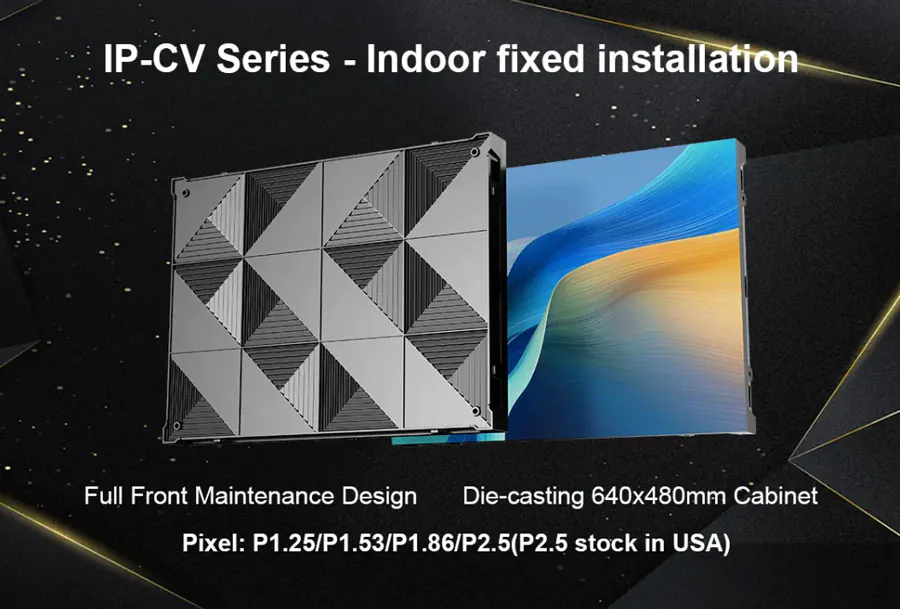
– Maintenance method: Front maintenance can matter when rear access is blocked.
– Power conditions: Check voltage, frequency, maximum power, and average operating power.
The International Electrotechnical Commission’s IEC 60529 standard defines IP protection ratings. An IP65 enclosure, for instance, is designed to be dust-tight and protected against water jets under the standard’s test conditions; it is not automatically suitable for every installation or water exposure.
Consider a roadside advertising screen installed near sea air. It may need corrosion-resistant materials and sealed power components in addition to an outdoor rating.
How to apply this: Create a one-page requirement sheet listing viewing distance, screen size, environment, brightness, maintenance access, power supply, and daily operating hours before requesting quotations.
2. Verify Engineering and Manufacturing Capability
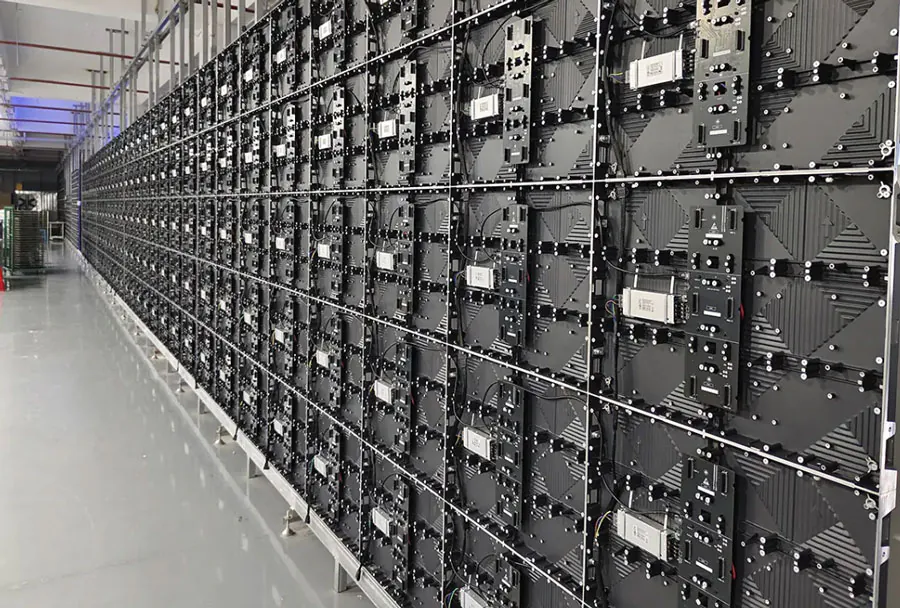
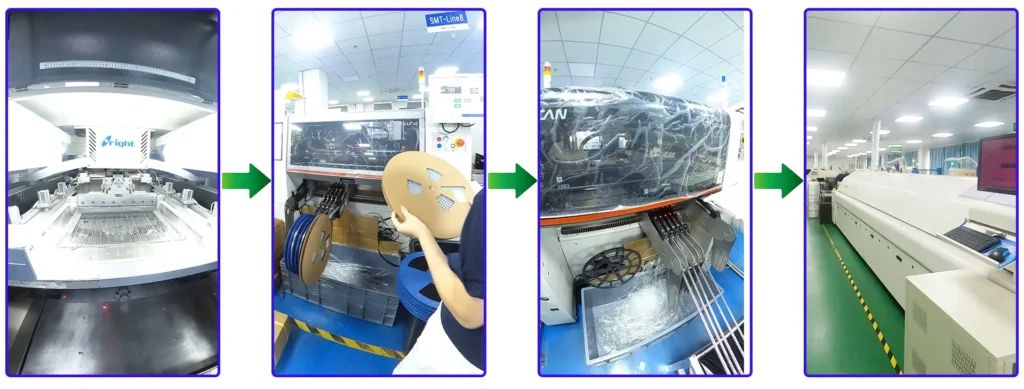
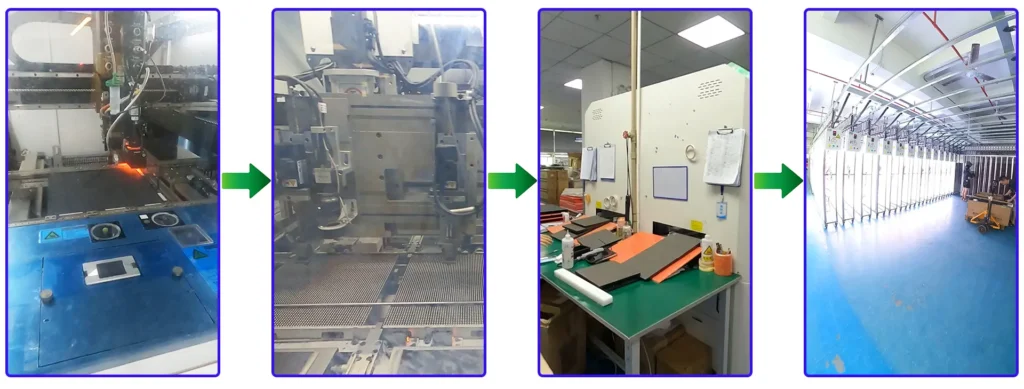
A dependable supplier should show how its products are engineered, assembled, tested, and documented. When learning How to Choose a Reliable LED Display Manufacturer, ask for evidence from the actual production process rather than relying on marketing claims.
Request information about:
– LED package brand and model
– Receiving inspection for modules and electronic components
– PCB design and soldering controls
– Cabinet flatness and module alignment
– Calibration process for brightness and color
– Burn-in testing and final inspection
– Serial-number traceability
– Quality records for rejected or repaired units
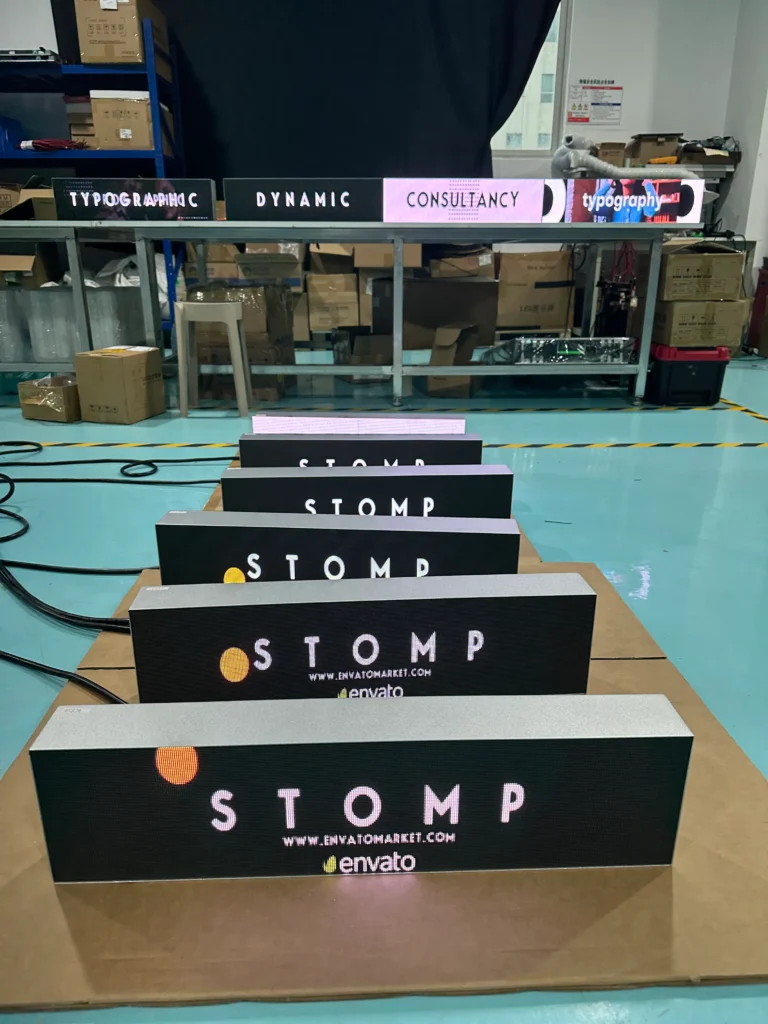
A factory’s claimed production capacity is less useful than evidence that it can repeat quality across batches. Ask to see a current production line, sample inspection records, and a test report linked to the specific model you are buying.
ISO 9001 certification can indicate that a company operates a documented quality-management system, but it does not prove that every LED display model performs well. Confirm the certificate’s scope, issuing body, validity, and listed company name.
In one case, two vendors may offer the same nominal pixel pitch while using different module tolerances. The more consistent supplier should be able to explain how it controls cabinet seams, module gaps, color uniformity, and replacement-part matching.
How to apply this: Ask each shortlisted manufacturer for a factory video or live inspection, a sample quality record, the model-specific bill of materials, and a description of its calibration and burn-in procedures.
3. Check Certifications, Safety, and Environmental Suitability
Certifications help you assess whether a product has been evaluated against recognized requirements, but they must be verified carefully. How to Choose a Reliable LED Display Manufacturer requires checking the exact product, certificate scope, testing laboratory, and installation market.
Important areas include:
– Electrical safety: Ask which standard applies to the power supply, control system, and complete display.
– Electromagnetic compatibility: Confirm that the product has relevant emissions and immunity testing.
– Ingress protection: Verify the IP rating under IEC 60529 and determine whether it covers the complete cabinet.
– Flammability and materials: Request information for installations where building or local fire rules apply.
– Environmental limits: Review operating temperature, humidity, wind load, and storage conditions.
– Regional requirements: Check whether the destination requires CE, UKCA, FCC, UL, ETL, or other approvals.
The IEC 62368-1 standard is widely used for the safety of information and communication technology equipment, including relevant electronic systems. However, the correct compliance pathway depends on the product design and destination country.
The U.S. Department of Energy explains that “LEDs use at least 75% less energy, and last 25 times longer, than incandescent lighting.” That statement concerns LED lighting generally, not a guarantee that a complete display will achieve those results. Display power use still depends on brightness, content, cabinet design, and control settings.
How to apply this: Obtain copies of current certificates and test reports, then verify the certificate number or listing directly with the issuing organization before approving the purchase.
4. Test a Representative Sample Before Ordering
A production sample is one of the most useful ways to evaluate a supplier because it exposes differences that specifications may hide. When applying How to Choose a Reliable LED Display Manufacturer, test the same cabinet, module, receiving card, and power system that will be used in the final order.
Your evaluation should include:
– Color consistency between modules
– Brightness uniformity across the cabinet
– Dead pixels and stuck pixels
– Gray-scale performance at low brightness
– Flicker when viewed through a smartphone camera
– Seam alignment and cabinet flatness
– Connector fit and cable labeling
– Noise from fans or power supplies
– Startup behavior after power interruption
– Content-control software and user permissions
Run the sample at normal brightness and at a lower setting. Some displays look acceptable at maximum output but reveal color shifts or uneven gray levels during dim operation.
A common scenario involves a buyer approving a small indoor sample and later receiving an outdoor cabinet with a different mask, coating, or calibration process. The approved sample should therefore be documented with photographs, serial numbers, configuration files, and written acceptance criteria.
Testing tools can remain simple. A light meter can support brightness checks, a camera can reveal visible flicker, and a calibrated colorimeter is useful when color accuracy matters. Do not treat phone measurements as laboratory certification.
How to apply this: Put the sample through a written acceptance test for at least one full operating cycle and record every defect before approving mass production.
5. Compare Total Cost, Warranty, and Spare Parts
The lowest quotation is not necessarily the lowest-cost solution. How to Choose a Reliable LED Display Manufacturer should include purchase price, shipping, installation, power consumption, maintenance labor, replacement modules, software, and expected downtime.
Compare suppliers using these cost categories:
– Display hardware and control system
– Packaging, freight, duties, and insurance
– Structural engineering and installation
– Electrical work and protection equipment
– Spare modules, power supplies, and receiving cards
– Remote support and technician travel
– Warranty exclusions and response times
– Software licensing or cloud-service charges
– Decommissioning or future expansion costs
Warranty language deserves close review. Check whether the warranty covers modules, LEDs, power supplies, receiving cards, cabinets, software, labor, shipping, and corrosion. Also ask how the manufacturer handles a failure when the original component is discontinued.
When comparing How to Choose a Reliable LED Display Manufacturer, request a recommended spare-parts list tied to the exact configuration. A spare module from a different revision may fit physically but produce a visible color or brightness mismatch.
The display’s power specification should distinguish maximum from typical consumption. A system operating at lower brightness may use less energy than its maximum rating, but the actual figure depends on content and configuration.
How to apply this: Build a five-year cost worksheet and require every supplier to provide matching line items for hardware, logistics, installation, spares, warranty service, and ongoing support.
| Evaluation area | What it tells you | Action to take |
|---|---|---|
| Product certificate | Compliance scope | Verify with issuer |
| Sample test | Real performance | Record acceptance results |
| Burn-in process | Early fault control | Request test duration and records |
| Warranty | Financial exposure | Review exclusions |
| Spare parts | Repair continuity | Price matched components |
| Service plan | Response capability | Get response times in writing |
6. Assess Communication, Software, and Long-Term Support
A reliable supplier must support the display after installation, not just deliver cabinets. The final part of How to Choose a Reliable LED Display Manufacturer is evaluating communication, documentation, software support, and the company’s ability to supply compatible parts later.
Ask for:
– A named project manager
– Installation and service manuals
– Wiring diagrams and cabinet maps
– Receiving-card and controller configuration files
– Firmware update procedures
– Remote-support process
– Escalation contacts
– Spare-parts availability period
– Training for operators and maintenance staff
– Written response and replacement targets
Software deserves a separate review. Confirm whether the control platform supports scheduled playback, user permissions, emergency messaging, screen monitoring, and offline operation. Ask how configuration backups are stored and whether you can export them without depending on a single employee account.
Tools such as NovaLCT are associated with configuration and control workflows for compatible NovaStar systems, while Colorlight provides LED display control hardware and software within its ecosystem. Compatibility should be confirmed with the exact controller and receiving-card models because software support is not universal.
A manufacturer may offer remote diagnostics, but remote access should be controlled through approved accounts and documented permissions. Avoid accepting undocumented passwords or configuration files that cannot be recovered if a contractor leaves.
How to apply this: Require a support schedule, documentation pack, configuration backup, training session, and named escalation contact as contractual deliverables.
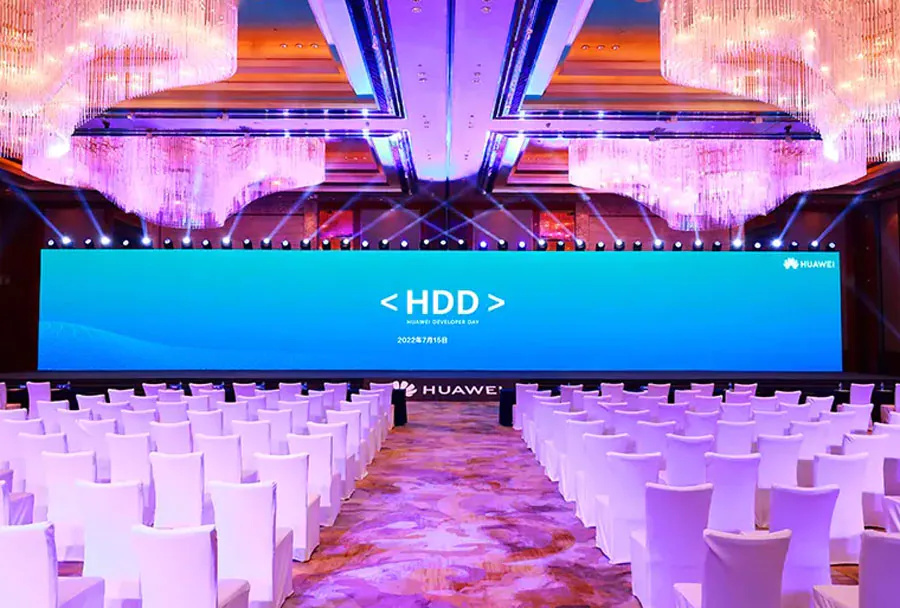
Why Choose TW VISION as Your Long-Term LED Display Manufacturer?
1. Unmatched Technical Expertise and Innovative Engineering
At the core of TW VISION’s value proposition is its profound Expertise. The company is built upon a deep-seated understanding of optoelectronics, hardware engineering, and software integration. This is not a generic assembly operation; it is a center of innovation where engineers relentlessly push the boundaries of what LED technology can achieve.
This expertise manifests in several key areas. First, in product quality and performance. TW VISION utilizes high-grade materials, from premium LED chips to robust cabinets, ensuring exceptional brightness, color accuracy (covering wide gamuts like DCI-P3 and Rec. 2020), and consistency across the entire display surface. Their R&D team focuses on solving industry pain points, such as minimizing pixel pitch for seamless viewing experiences, enhancing refresh rates for flawless camera capture, and developing advanced calibration techniques for uniform color and luminosity.
Second, their expertise covers the full spectrum of solutions. Whether you require a fine-pitch LED wall for a corporate boardroom, a rugged rental display for global touring events, a transparent LED screen for retail, or a massive stadium scoreboard, TW VISION possesses the specialized knowledge to design, engineer, and deploy the optimal solution. This breadth of knowledge ensures they are not providing a one-size-fits-all product, but a meticulously tailored system that aligns perfectly with your specific environment and application.
2. Sustainable Value and Superior Return on Investment (ROI)
Choosing TW VISION is an investment in value. While the initial purchase price is a consideration, the true cost is measured over years of operation. Their combination of energy-efficient designs (using low-power LED drivers and smart brightness adjustment), minimal maintenance requirements, and exceptional durability translates into a significantly lower Total Cost of Ownership (TCO). The reduction in energy consumption, coupled with the lack of frequent panel replacements or major repairs, delivers a compelling financial ROI. Moreover, the impact of a stunning, reliable display on brand perception, audience engagement, and operational efficiency contributes to an even greater strategic return on investment.
3.U.S stock and fast delivery
TW VISION Own warehouse in USA and stocked with large qty of led panels. It can support to shorten the production and lead time. As well, it can great decrease the risk of transportation.
Frequently Asked Questions About How to Choose a Reliable LED Display Manufacturer
How can I verify whether an LED display certificate is genuine?
Verify the certificate number, product model, legal manufacturer name, and expiration date through the issuing organization’s official database or confirmation channel. How to Choose a Reliable LED Display Manufacturer also means checking whether the document covers the complete display or only a power supply. A certificate for one cabinet revision may not apply to a later model with different components.
What should I do if the manufacturer refuses an independent inspection?
Treat refusal as a procurement risk and ask for a documented reason. How to Choose a Reliable LED Display Manufacturer may involve using a third-party inspection company, requesting production photographs with serial numbers, or ordering a small pilot batch. An inspection cannot replace technical testing, but it can confirm quantities, labeling, packaging, and visible workmanship before shipment.
Is a direct factory always better than a distributor?
No. A capable distributor may provide local inventory, installation, compliance guidance, and faster field service. How to Choose a Reliable LED Display Manufacturer should focus on accountability rather than the seller’s label. Ask who owns the warranty, who can access replacement parts, and whether the distributor has authorized technical access to the original manufacturer’s software and configuration system.
Can I mix LED modules from different manufacturers?
Usually, mixing modules is risky unless the pixel pitch, LED package, mask, dimensions, driver IC, scan mode, receiving card, calibration data, and firmware are compatible. How to Choose a Reliable LED Display Manufacturer includes planning for future replacement, not only the first installation. A physically matching module can still show different color, brightness, refresh behavior, or cabinet alignment.
When should I choose a rental or temporary LED display system?
Choose a rental system when the display will be used for short events, changing venues, or projects where permanent installation is not justified. How to Choose a Reliable LED Display Manufacturer still matters because rental products need strong cabinet hardware, fast module replacement, safe power distribution, and dependable setup support.
Confirm who handles transport damage, on-site failures, and event-day backup equipment.
Conclusion
Choosing a display supplier requires evidence across product design, factory controls, compliance, testing, commercial terms, and service. A polished quotation is only the starting point.
– Define the viewing environment and technical requirements before comparing prices.
– Verify certificates, standards, test reports, and the identity of the issuing organization.
– Test a representative sample using written acceptance criteria.
– Compare five-year ownership costs, matched spare parts, warranty coverage, and support response.
– Secure configuration files, manuals, training, and escalation contacts before final payment.
Use this process to make How to Choose a Reliable LED Display Manufacturer a documented procurement decision rather than a guess based on photographs or a low bid. Next, send your requirement sheet to several qualified suppliers and reject any quotation that cannot provide verifiable technical and service evidence.
Related Articles
- Small Pixel Pitch LED Display: Resolution,Viewing Distance & Buying Guide
- led screen panel price: led screen panel price: Complete
- led screen factory Guide to Quality and Value: Expert Guide