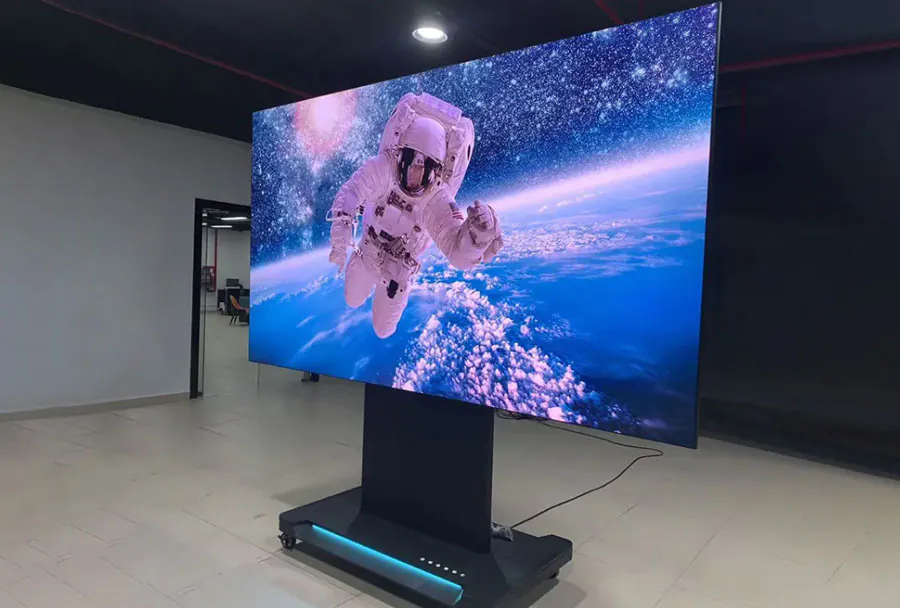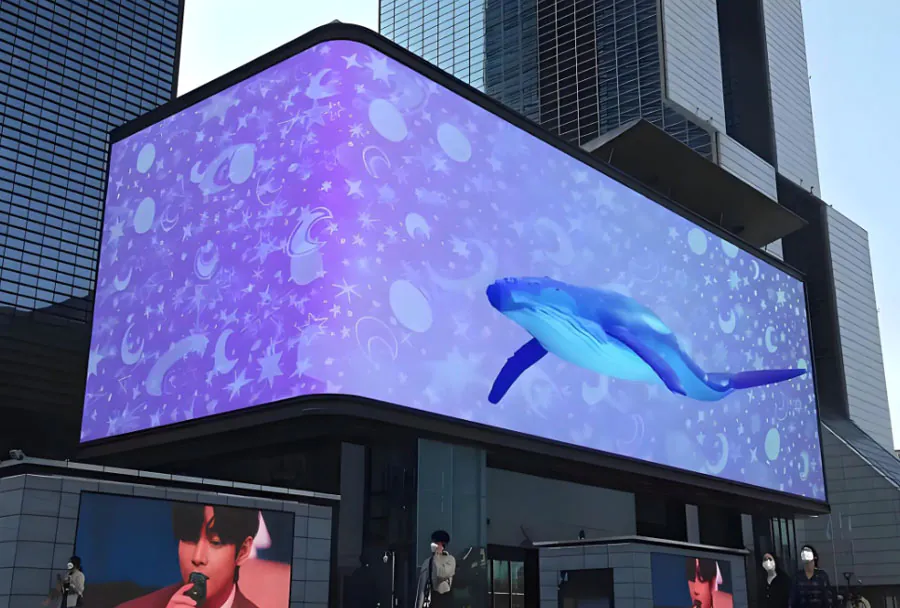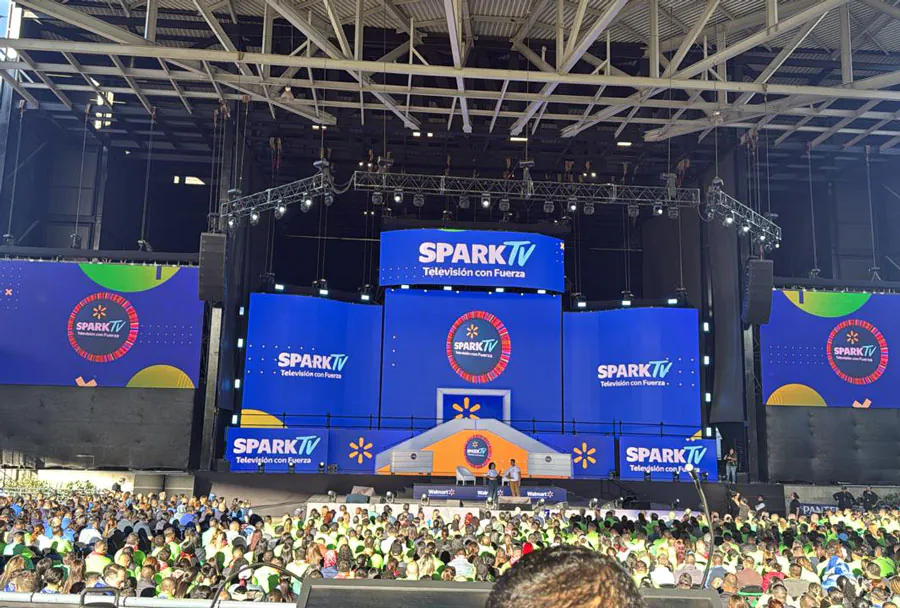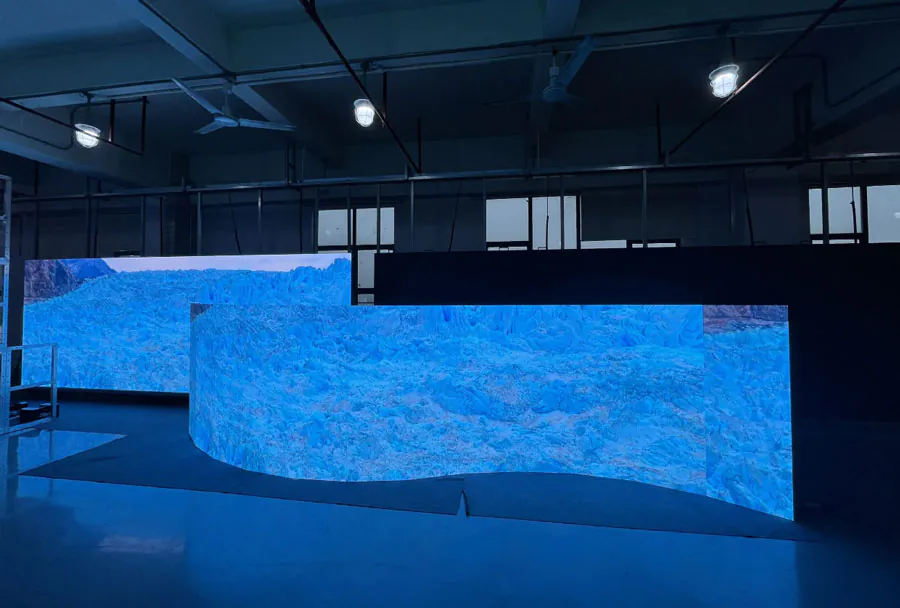
4K Digital Signage Monitor for Ultra-Clear Commercial Displays

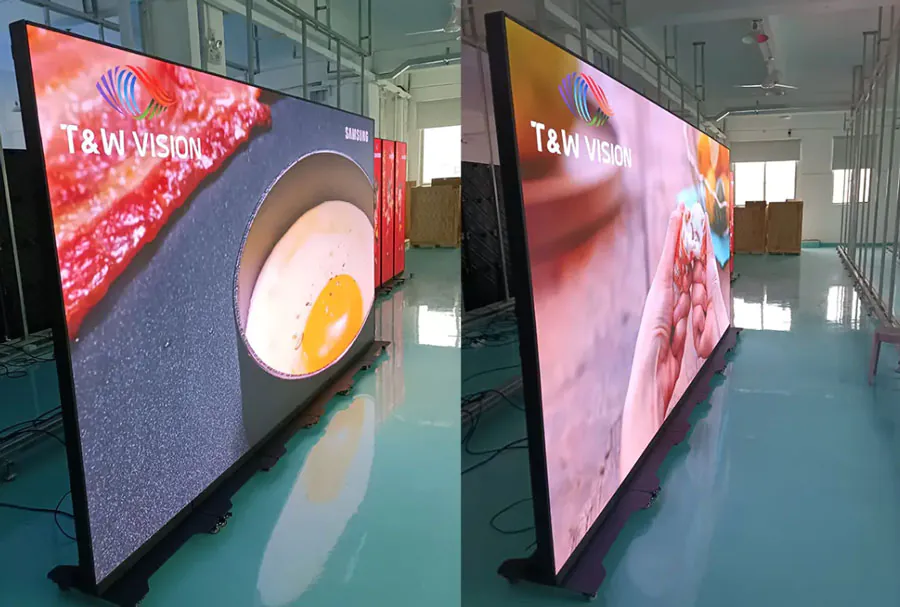
In an era where attention is the scarcest resource, screen clarity and message delivery determine whether a brand gets noticed—or ignored. A 4K Digital Signage Monitor for Ultra-Clear Commercial Displays is no longer a “nice-to-have” upgrade. It has become a core tool for retailers, hospitality operators, corporate campuses, transportation hubs, and public venues that need reliable, high-impact visual communication. As a professional signage service provider, TW VISION focuses on helping organizations deploy commercial-grade 4K signage solutions that elevate content, strengthen brand presence, and improve customer experience at scale.
Why 4K Matters in Commercial Display Environments
4K resolution (3840×2160) delivers four times the pixel density of Full HD. In real-world signage scenarios, this advantage shows up in multiple ways:
– Sharper text at close viewing distances: Menus, pricing, schedules, and wayfinding stay crisp even when viewers stand nearby.
– Better detail for premium visuals: Product close-ups, real estate tours, and lifestyle footage look more convincing and “high-end.”
– More usable screen real estate: You can display multi-zone layouts—video, promotions, QR codes, and live updates—without everything feeling cramped.
– Improved brand consistency: Logos, gradients, and color blocks render cleanly, reducing “cheap” visual artifacts that harm brand perception.
For commercial displays, clarity is not just visual. It is operational: fewer customer questions, smoother navigation, and a more efficient customer journey.
Ultra-Clear Display Performance: Beyond Resolution
Resolution alone does not guarantee an ultra-clear commercial display. A true 4K digital signage monitor must deliver clarity under challenging conditions: bright storefront windows, overhead lighting, long operating hours, and continuous playback. Key factors that influence “ultra-clear” performance include:
– High brightness and anti-glare design: Essential for visibility in retail storefronts, atriums, or sunlit lobbies.
– Wide viewing angles: Ensures colors and contrast stay consistent when audiences view from the side.
– Accurate color reproduction: Critical for fashion, cosmetics, food promotions, and brand-led campaigns.
– Stable contrast and uniformity: Helps maintain a premium look across the entire screen, especially for minimalist designs.
TW VISION typically evaluates these conditions during project planning so the final screen selection matches the venue rather than relying on “one-size-fits-all” hardware.
Commercial-Grade Reliability: Built for 16/7 or 24/7 Operation
Consumer TVs are designed for home viewing patterns, not for continuous commercial operation. A professional 4K Digital Signage Monitor for Ultra-Clear Commercial Displays should be engineered to run reliably for extended hours. For many businesses, this means 16 hours a day, 7 days a week—or full 24/7 operation in transportation, healthcare, and convenience retail.
Commercial-grade features that matter include:
– Thermal management: Better cooling design and heat tolerance, reducing downtime and panel degradation.
– Industrial components: Longer lifespan and greater stability during nonstop playback.
– Remote monitoring support: Faster troubleshooting and maintenance, especially across multiple locations.
– Consistent performance over time: Avoiding brightness decay and color shift that can undermine the display’s value.
TW VISION supports businesses by aligning display specifications with real operating demands, reducing the risk of premature hardware replacement.
Use Cases Where 4K Digital Signage Delivers Immediate ROI
A 4K signage deployment is most valuable when the display is part of a business system—driving sales, reducing service time, or improving navigation. Here are common scenarios where 4K clarity can translate into measurable results:
– Retail and shopping malls: Campaign loops, product storytelling, promotional walls, endcap displays, and interactive QR-led content.
– Restaurants and cafés: Crisp digital menu boards with dynamic pricing, high-definition food footage, and daypart scheduling.
– Corporate offices: Lobby branding, visitor guidance, executive dashboards, meeting room signage, and internal communications.
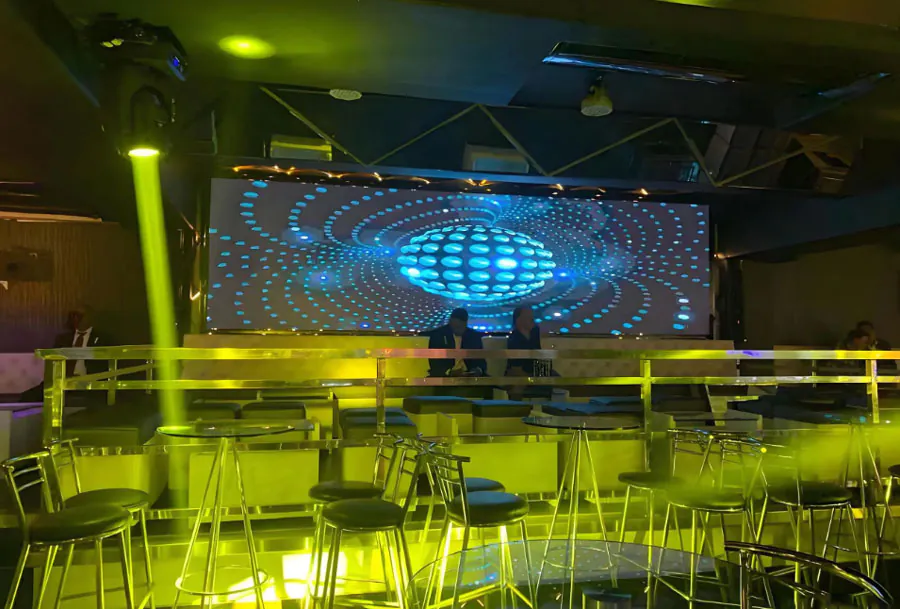
– Hotels and resorts: Welcome screens, event signage, wayfinding, and upsell promotions for dining or spa services.
– Healthcare facilities: Queue information, department guidance, public health messaging, and patient education video.
– Transportation and public venues: Timetables, alerts, advertising, and multi-language announcements.
In each case, ultra-clear visuals reduce friction: people understand information faster, trust content more, and act more decisively.
Content That Looks “Premium” on 4K Commercial Displays
4K monitors can make content look stunning—but they can also expose weak design. Low-quality images, overly compressed videos, and inconsistent typography become obvious. To fully utilize ultra-clear commercial displays, TW VISION typically recommends a content approach that includes:
– True 4K assets where possible: Especially for hero videos and flagship product visuals.
– Clean typography and strong hierarchy: Legibility at a distance is just as important as detail up close.
– Motion design with restraint: Smooth transitions and purposeful animation increase engagement without causing distraction.
– Multi-zone layouts: Combining brand video, promotions, and real-time updates (weather, queues, social proof) in a structured layout.
– Consistent templates: Standardized design systems allow multi-store rollouts without visual chaos.
With the right templates, a 4K signage network becomes easier to manage because every update stays on-brand.
Installation Considerations: Orientation, Mounting, and Space
A commercial signage monitor is part of a physical environment. The same 4K panel may perform very differently depending on mounting height, viewing distance, ambient light, and orientation. Key planning decisions include:
– Landscape vs. portrait: Portrait works well for directories, fashion displays, and narrow wall spaces; landscape suits menus and video storytelling.
– Mount type and safety: Wall mounts, ceiling mounts, floor stands, or kiosk enclosures—each has different load requirements.
– Cable routing and aesthetics: Clean installation improves brand perception; hidden cabling also reduces tampering risk.
– Accessibility for maintenance: Panels in tight enclosures should allow quick access for service.
– Sound strategy: Many venues avoid audio to reduce noise; if audio is required, consider separate speakers for clarity.
TW VISION’s role as a service provider is to ensure the display functions as a “system” in the venue, not just a screen on a wall.
Connectivity, Control, and CMS Compatibility
Modern digital signage is about control. The ability to schedule content, target screens by location, and update messaging instantly is what turns a monitor into a business tool. A 4K Digital Signage Monitor for Ultra-Clear Commercial Displays should support practical deployment requirements such as:
– Reliable input options: HDMI and other standard interfaces for media players or integrated controllers.
– Network management readiness: For multi-site rollouts, remote updates are essential.
– Compatibility with signage players: Whether using dedicated players, Android-based solutions, or enterprise media systems.
– Scheduling and proof-of-play: Useful for marketing accountability and advertising partners.
– Failover content options: Keeping screens active even if network connectivity is interrupted.
TW VISION helps businesses choose a control architecture that fits their operational maturity—simple for single sites, scalable for growing networks.
Energy Efficiency and Total Cost of Ownership (TCO)
A common misconception is that 4K signage is “expensive.” In reality, the purchase price is only one part of cost. A well-selected commercial monitor can lower total cost through:
– Longer lifespan: Designed for commercial duty cycles, reducing replacement frequency.
– Lower maintenance: Fewer failures, better stability, and easier remote troubleshooting.
– Efficient scheduling: Turning down brightness at night or powering screens based on foot traffic.
– Reduced printing costs: Digital updates replace posters, banners, and manual labor.
For businesses with frequent promotions or multi-location operations, digital signage can convert recurring print costs into a controlled, trackable system.
How TW VISION Supports 4K Digital Signage Projects
Choosing a monitor is only one step. Successful deployments depend on planning, installation quality, and ongoing content operations. As a service provider, TW VISION typically supports clients through a structured approach:
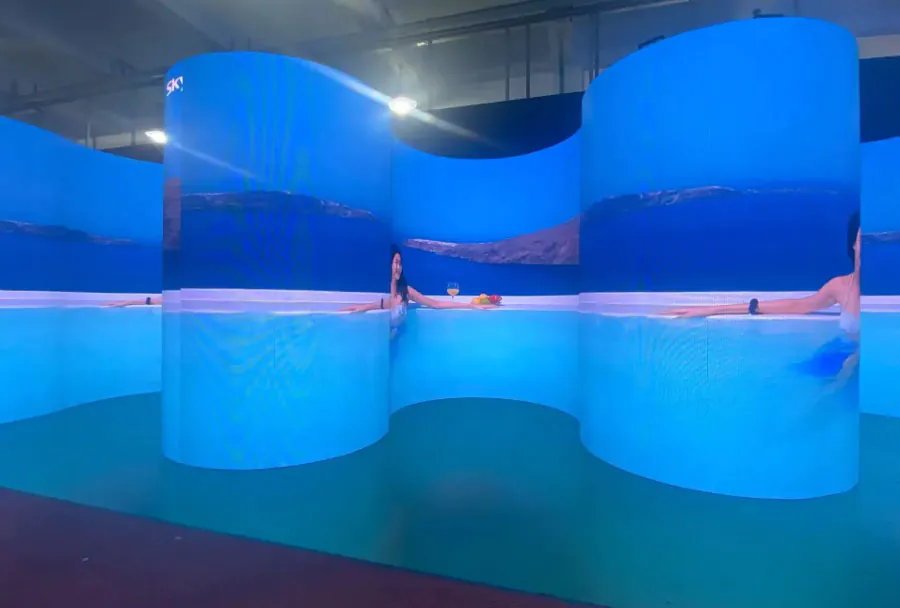
– Needs assessment: Identifying audience distance, lighting conditions, and messaging goals.
– Display and system recommendation: Matching panel specs, control methods, and mounting solutions to the site.
– Installation and commissioning: Ensuring stable operation, correct orientation, safe mounting, and clean cable management.
– Content guidance: Helping teams design templates and content workflows suitable for 4K clarity.
– Operational support: Maintenance planning, remote management strategy, and expansion roadmaps for additional locations.
This end-to-end perspective helps organizations avoid common pitfalls like buying the wrong brightness level, mounting screens too high, or running low-quality content that wastes the potential of 4K.
Ultra-Clear Commercial Communication Starts with the Right 4K Signage Monitor
A 4K Digital Signage Monitor for Ultra-Clear Commercial Displays is a strategic investment in visibility, clarity, and brand trust. When properly selected and deployed, it can strengthen customer engagement, increase promotional agility, and reduce the friction of everyday communication. With TW VISION as the service provider, businesses can move beyond “just installing screens” and build a professional signage ecosystem—one that is reliable, scalable, and designed to make every message look unmistakably clear.