

dj screen: 12 : Complete Guide to Visual DJ Setups Today

Introduction
A great DJ Screen can transform a simple music set into a fully immersive show. Whether you play at weddings, clubs, corporate events, festivals, or private parties, the right display setup helps shape the audience experience and strengthens your stage presence. Modern DJs use screens for branding, motion graphics, live visuals, lyric displays, event themes, and even synchronized video content that matches the beat.
Table of Contents
- Introduction
- Why a dj screen matters for modern performances
- Types of dj screen options available
- 1. DJ facade screens
- 2. TV and monitor displays
- 3. LED video panels
- 4. Projection-based systems
- 5. Integrated booth displays
- How to choose the right dj screen for your events
- Venue size and audience distance
- Indoor vs. outdoor use
- Portability and setup time
- Resolution and image quality
- Content compatibility
- Durability and reliability
- Budget and return on investment
- Best practices for setting up a dj screen professionally
- Match the visuals to the event
- Keep branding clean and readable
- Think about sightlines
- Manage cables and power safely
- Test in the actual lighting environment
- Prepare backup content and connections
- Avoid overusing effects
- Content ideas and maintenance tips for a dj screen
- Content ideas for different event types
- Use visuals as an upsell
- Maintain hardware regularly
- Update your visual library
- Review performance after events
- FAQ
- What is a dj screen used for?
- Is a dj screen worth it for mobile DJs?
- What is the best dj screen for small events?
- Can I use a TV as a dj screen?
- How do I choose content for a dj screen?
- Conclusion
Choosing the ideal DJ Screen involves more than finding a display that looks impressive. You need to consider size, portability, resolution, lighting conditions, software compatibility, durability, and budget. Some DJs want a compact and elegant facade with built-in visuals, while others need large LED walls for major venues. This guide explains the main options, features, setup strategies, and buying factors so you can build a visual system that fits your performances and business goals.
Why a dj screen matters for modern performances
The visual side of DJing has become far more important in recent years. Audiences now expect a complete entertainment experience, especially at professional events. A these helps you create a focal point that makes your booth look polished and intentional instead of temporary or unfinished. This matters for both in-person impact and social media content, since photos and videos of your setup often influence future bookings.
One of the biggest benefits is branding. A screen can display your name, logo, event identity, sponsor graphics, or custom animations that reinforce your professional image. This is especially useful for mobile DJs and event DJs who want every setup to look premium and memorable.
A visual display also improves versatility. At weddings, elegant monograms or ambient visuals create a refined atmosphere, while nightclubs thrive on high-energy motion loops, corporate events are well served by branded slides and sponsor content, and school dances or parties come alive with bold effects and dynamic video loops.In each case, the same system can serve different goals with the right content.
Another reason DJs invest in visual equipment is to hide cables, stands, and cases. A facade or booth-mounted display creates a cleaner front-facing appearance. This immediately upgrades the stage aesthetic and gives clients the impression of a more organized, high-end service.
Finally, screens support engagement. Visuals synchronized with music can increase crowd energy, reinforce transitions, and help shape the mood throughout the event. While music remains the foundation, the right visual layer adds depth and professionalism that many clients and venues now expect.
Types of dj screen options available
There is no single best DJ screen for every performer. The right choice depends on your event style, venue size, and transport needs. Understanding the main categories will help you make a practical investment.
1. DJ facade screens
These are among the most popular options for mobile DJs. A facade screen typically sits in front of the DJ table and hides gear while displaying backlit visuals, panels, or projection effects. Some models are simple white scrims designed for uplighting, while others include video-compatible surfaces or LED elements.
Facade screens work well for weddings, birthdays, private events, and small corporate setups. They are usually lightweight, foldable, and easy to transport. Their biggest advantage is appearance: they instantly create a cleaner and more professional front view.
2. TV and monitor displays
Some DJs use standard flat-screen TVs or commercial monitors as a the concept solution. These displays are practical for lyric videos, slideshows, logo loops, event branding, and smaller visual presentations. They can be mounted behind the booth, placed on stands, or integrated into stage decor.
This is often one of the most budget-friendly routes, particularly for DJs expanding into video DJing or event branding. However, standard TVs may struggle in very bright environments or large venues where visibility matters.
3. LED video panels
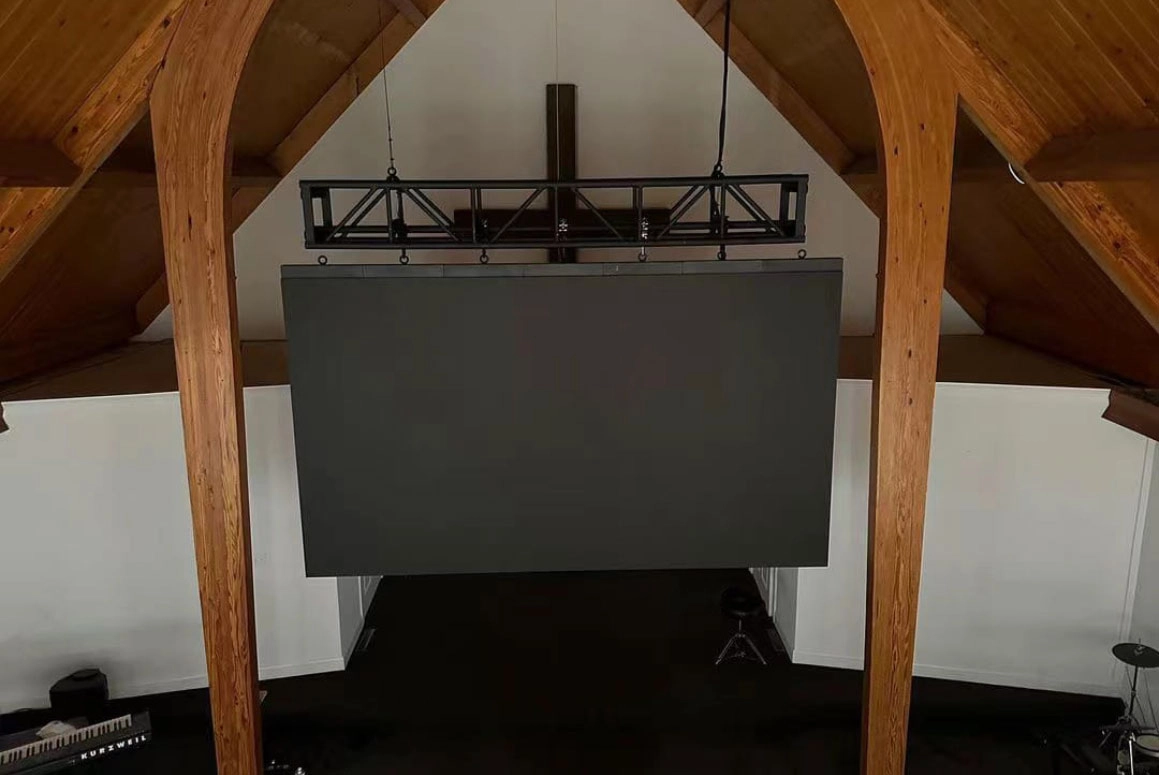
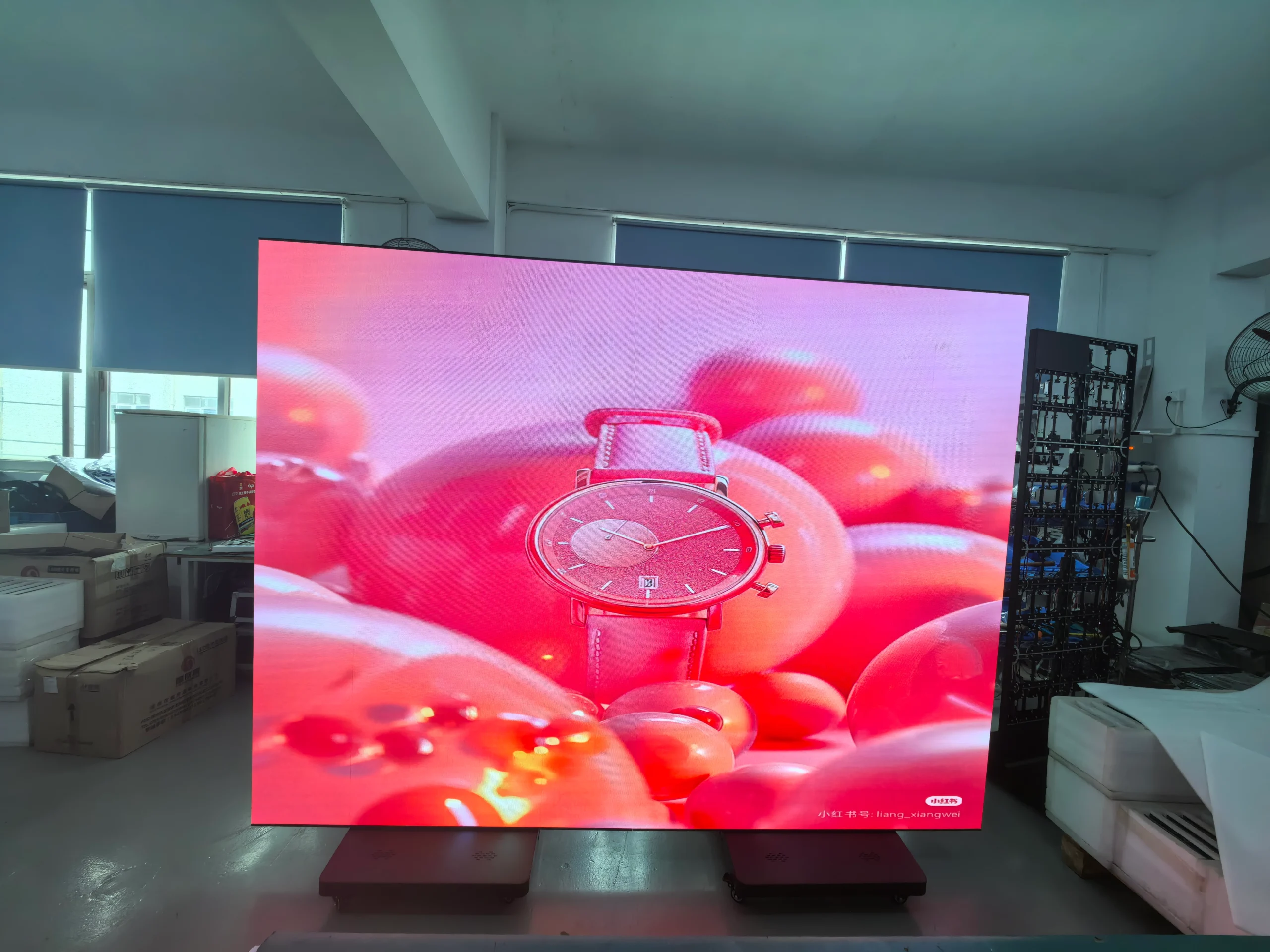
LED panels are the premium choice for large-scale impact. They can form video walls, booth fronts, stage backdrops, or custom shapes. This type of system offers strong brightness, modular flexibility, and excellent visibility in challenging lighting conditions.
For club residencies, festivals, and large corporate events, LED panel systems deliver the most dramatic effect. The downside is cost, setup complexity, and transport logistics. Many DJs rent these systems for major events rather than buying them outright.
4. Projection-based systems
A projector can turn a facade, wall, or rear screen into a dynamic visual display. Projection offers creative flexibility and can be cost-effective in some scenarios. It is often used for custom event visuals, logo projection, and themed visual storytelling.
That said, projection depends heavily on lighting control. In bright rooms, image quality can drop significantly. For daytime or well-lit venues, projection may not perform as well as LED or direct-view displays.
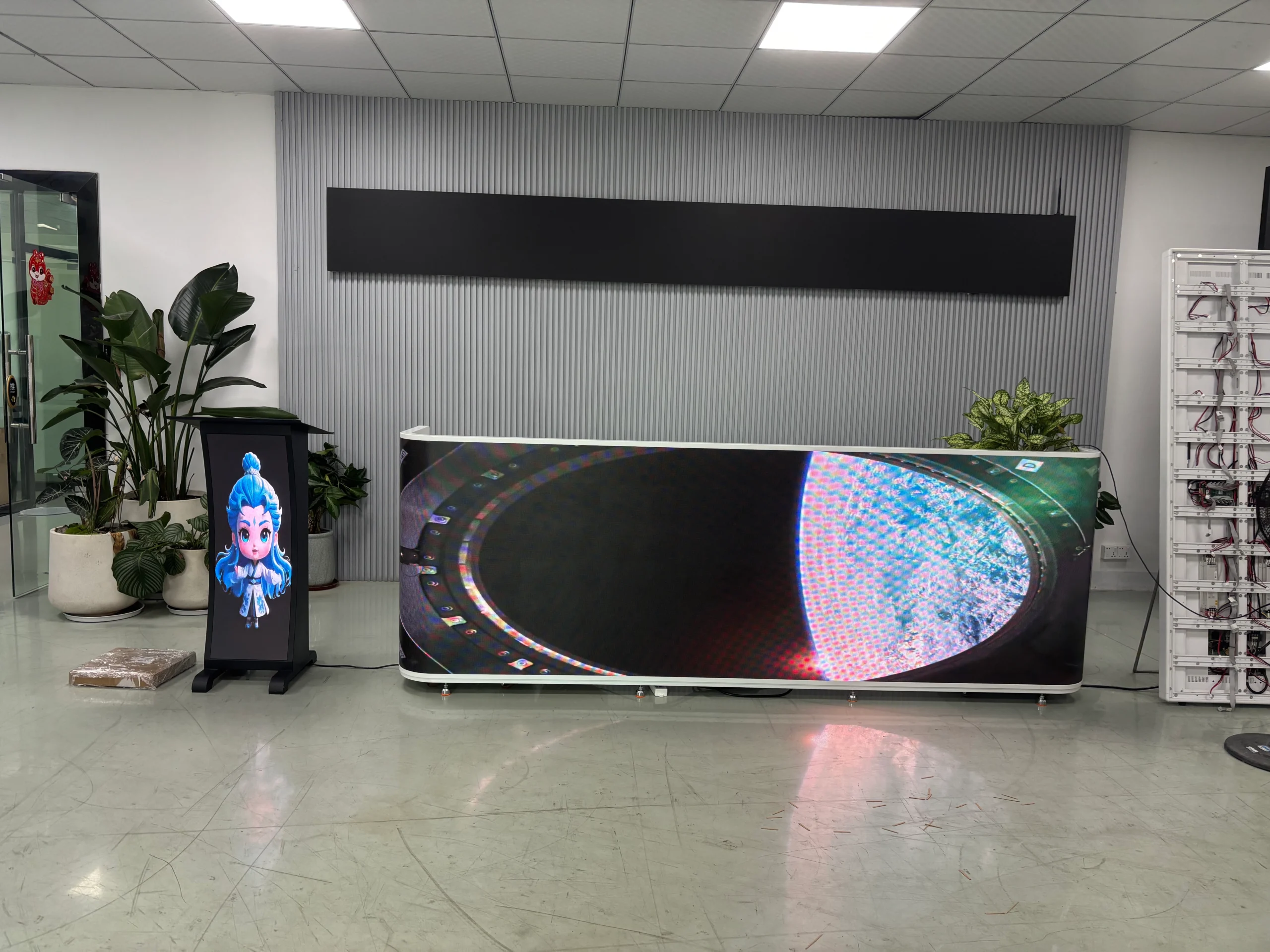
5. Integrated booth displays
Some premium DJ booths now come with built-in visual panels or display sections. These are designed for DJs who want an all-in-one look with minimal visible hardware. They are sleek and modern, often used by high-end event companies and performers focused on luxury presentation.
Integrated booths can be excellent for brand consistency, but they may be more expensive and less flexible than modular systems.
Here is an example of integrated booth display.
How to choose the right dj screen for your events
Selecting the best the approach starts with understanding how and where you perform. A setup that works beautifully for weddings may be completely wrong for club work or touring. The following factors are the most important to evaluate before buying.
Venue size and audience distance
The larger the room, the more powerful your display needs to be. Small private events may only require a facade or a modest monitor. Larger venues often need brighter and bigger display solutions so visuals remain clear from a distance. If guests are far from the booth, small screens lose impact quickly.
Indoor vs. outdoor use
Lighting conditions matter a lot. Indoor ballrooms and dark clubs are more forgiving, while outdoor or daytime environments require high brightness. If you frequently perform outdoors, prioritize direct-view LED systems or very bright commercial displays instead of projection.
Portability and setup time
Mobile DJs should carefully consider weight, folding design, case requirements, and assembly time. A visually impressive system is not always practical if it takes too long to install or needs multiple crew members. A portable it should match your event volume and transport capacity.
Resolution and image quality
For text-heavy content like logos, names, and sponsor messages, clarity is essential. High resolution improves readability and overall polish. For large LED setups, pixel pitch becomes especially important. The closer the audience is to the display, the finer the pixel pitch should be.
Content compatibility
Think about what you want to display. Static logos, motion graphics, music visualizers, event themes, and live camera feeds all require different workflows. Make sure the screen works with your laptop, DJ software, video playback tools, and any visual software you plan to use.
Durability and reliability
Event gear must survive transport, frequent assembly, and varying venue conditions. Look for build quality, stable stands, protected cabling, and transport cases. Reliability matters because visual failures can damage your reputation during a live event.
Budget and return on investment
A DJ booth screen should be evaluated as both a performance tool and a business asset. If it helps you win better bookings, upsell premium packages, or improve your brand image, it may justify a higher initial cost. Think beyond purchase price and consider maintenance, accessories, cases, mounts, and software.
Best practices for setting up a dj screen professionally
Buying the right equipment is only part of the process. To get real value from your these, you need a professional setup strategy. Poor placement, weak content, or cable clutter can reduce the visual effect even if the hardware is excellent.
Match the visuals to the event
A luxury wedding should not look like a nightclub, and a teen party should not feel visually flat. Build content libraries for different event types so you can quickly match the tone. Elegant ambient loops, subtle color motion, bold geometric effects, branded graphics, and seasonal themes all have their place.
Keep branding clean and readable
If you use logos or name graphics, avoid clutter. Short, bold visuals work best in live environments. Overly busy designs can become distracting or unreadable from a distance. Use strong contrast and simple motion for a polished result.
Think about sightlines
Your audience should be able to see the display without the booth blocking the view. Test placement carefully. A they mounted too low, too high, or at a bad angle can lose much of its visual value. Also consider how photographers and videographers will capture the booth.
Manage cables and power safely
Visual gear often adds more power supplies, controllers, adapters, and signal cables. Keep everything secured, taped, and hidden where possible. Safety is critical at public events, and a tidy setup also looks more professional.
Test in the actual lighting environment
Visual content can look very different depending on ambient light. Whenever possible, test brightness and contrast in conditions similar to the live event. If your display looks amazing in a dark room but washed out in daylight, your content or hardware may need adjustment.
Prepare backup content and connections
Live events can be unpredictable. Bring spare cables, adapters, and duplicate media files. If your playback source fails, a backup can save the show. Reliability is one of the most important parts of a premium event presentation.
Avoid overusing effects
Not every event needs nonstop flashing visuals. Sometimes subtle motion is more elegant and effective. The goal is to support the music and atmosphere, not overwhelm the audience. Strong visual timing and restraint often create a more premium impression than constant intensity.
Content ideas and maintenance tips for a dj screen
Once your the concept is in place, the next challenge is maximizing its long-term value. Content quality and maintenance habits will determine whether your system remains an asset or becomes an underused expense.
Content ideas for different event types
For weddings, monograms, soft animated textures, romantic motion backgrounds, and coordinated color palettes work beautifully, while corporate events benefit from branded slides, sponsor logos, event titles, and clean motion graphics, and club or party settings are best enhanced with rhythmic loops, abstract visuals, bold typography, and beat-driven animations.
School events and youth parties respond well to brighter colors and higher-energy effects. Private luxury events often benefit from subtle, elegant visuals rather than overly aggressive motion. If you serve many event types, build separate folders and playlists in advance so switching styles is fast and easy.
Use visuals as an upsell
A the approach can become part of your premium package strategy. You might offer custom names, branded visuals, event themes, sponsor displays, or video playback as add-on services. This turns your display into a revenue generator rather than just a decor element.
Maintain hardware regularly
Clean screens carefully using manufacturer-approved methods. Dust, fingerprints, and scratches reduce image quality. Inspect hinges, mounting points, power supplies, and cables after each event. If you use modular LED panels, check connectors and alignment often.
Transport protection is also essential. Cases, padded covers, and proper cable storage can significantly extend equipment life. Many performance issues come from avoidable damage during loading and unloading rather than from actual product defects.
Update your visual library
Clients notice when visuals feel outdated. Refresh your content periodically with modern motion loops, new branding templates, seasonal themes, and event-specific packages. The more current your visual presentation feels, the easier it is to position your services as premium.
Review performance after events
Take photos and videos of each setup, then evaluate what worked. Was the display bright enough? Did the content fit the mood? Was text readable? Did the booth look balanced in the room? These reviews help you improve placement, programming, and workflow over time.
The followed video provide a solution about how to control the DJ screen.
FAQ
What is a dj screen used for?
A dj screen is used to enhance the visual presentation of a DJ setup. It can display branding, motion graphics, custom event visuals, sponsor content, lyrics, or synchronized video effects while also helping hide equipment and cables for a cleaner booth appearance.
Is a dj screen worth it for mobile DJs?
Yes, a dj screen can be very worthwhile for mobile DJs because it improves presentation, supports branding, and can help justify higher pricing. It is especially useful for weddings, corporate events, and private parties where a polished setup influences client perception.
What is the best dj screen for small events?
For small events, the best dj screen is often a portable facade screen or a modest flat-panel display. These options are easier to transport, quicker to set up, and more budget-friendly while still making the booth look more professional.
Can I use a TV as a dj screen?
Yes, many DJs use a TV as a dj screen for logos, slideshows, videos, and visual loops. It is a practical entry-level option, though it may not be ideal for very bright venues or large audiences where higher brightness and scale are needed.
How do I choose content for a dj screen?
Choose content for a dj screen based on the event type, audience, venue style, and brand identity. Weddings usually work best with elegant visuals, while clubs and parties often benefit from energetic motion graphics and beat-driven loops.
Conclusion
A professional dj screen is more than a decorative extra. It is a powerful tool for branding, audience engagement, booth presentation, and service differentiation. Whether you choose a simple facade, a monitor-based setup, projection, or a full LED wall, the best solution is the one that matches your event style, budget, and workflow.
By focusing on venue needs, portability, content quality, and reliable setup practices, you can turn a dj screen into a valuable part of your performance identity. With the right planning, visuals do more than support the music—they help create a complete experience that audiences remember and clients are willing to pay more for.
