

LED video wall viewing distance problem guide: Expert Guide

Introduction
The LED video wall viewing distance problem is one of the most important factors to consider when planning a digital display. No matter how bright, colorful, or technically advanced a screen may be, poor distance planning can reduce image clarity, cause visual discomfort, and limit the installation’s overall impact. Businesses, event organizers, retailers, control rooms, and advertisers all need to understand how display size, pixel pitch, content type, and audience placement work together.
Table of Contents
- Introduction
- Why Viewing Distance Matters for LED Video Walls
- Pixel Pitch and the Core Cause of Display Clarity Issues
- How to Calculate the Right Distance for Different Applications
- 1. Start with minimum viewing distance
- 2. Consider optimal viewing distance
- 3. Match distance to content
- 4. Account for audience behavior
- 5. Evaluate screen size and field of view
- Common Mistakes That Make Viewing Distance Worse
- Choosing by price alone
- Ignoring content requirements
- Overestimating audience distance
- Focusing only on display size
- Forgetting ambient conditions
- Skipping on-site visualization
- Not planning for future content changes
- Best Solutions for Indoor and Outdoor Viewing Challenges
- Indoor solutions
- Outdoor solutions
- Content-based solutions
- Work with experienced LED suppliers
- FAQ
- What is the main cause of the LED video wall viewing distance problem?
- How do I choose the right pixel pitch?
- Is smaller pixel pitch always better?
- Can content design reduce viewing distance issues?
- Does viewing distance matter for outdoor LED walls?
- Conclusion
Solving the LED video wall viewing distance problem helps ensure viewers can read text, see details, and enjoy a comfortable visual experience. Whether you are installing an indoor display in a corporate lobby or a large outdoor screen in a public venue, choosing the right viewing distance directly affects performance, usability, and return on investment.
This blog will tell you from the factory viewing angle and explain the viewing distance for you.
Why Viewing Distance Matters for LED Video Walls
The LED video wall viewing distance problem affects both image quality and audience engagement. If viewers stand too close to a screen with a large pixel pitch, they may notice gaps between LEDs, making the image appear grainy or uneven. If they stand too far away, small text, fine graphics, and subtle visual details may become difficult to see.
A properly planned viewing distance supports several key objectives:
– Better readability for text-heavy content
– Improved image sharpness
– Reduced eye strain
– Stronger brand presentation
– More effective communication in public or professional spaces
When businesses ignore the LED video wall viewing distance problem, they often invest in a screen that looks impressive on paper but performs poorly in the real-world environment. This is especially common when buyers focus only on screen size and brightness without thinking about where viewers will actually stand.
The distance issue is also linked to the purpose of the display. A trade show booth may require close-range viewing, while a stadium screen is designed for long-distance visibility. In a control room, operators need to see detailed information at a comfortable distance for many hours. In retail, customers may approach from different angles and distances, creating more complex planning needs.
Another reason this matters is that viewing distance influences cost. A finer pixel pitch usually delivers better close-up image quality, but it also increases the purchase price. Understanding the correct distance allows buyers to balance budget and performance rather than overpaying for unnecessary resolution or underinvesting in a display that cannot meet visual expectations.
Pixel Pitch and the Core Cause of Display Clarity Issues
At the center of the LED video wall viewing distance problem is pixel pitch. Pixel pitch refers to the distance, usually measured in millimeters, between the center of one LED pixel and the center of the next. The smaller the pixel pitch, the higher the pixel density, which generally means sharper images at closer viewing distances.
Here is a simple way to understand the relationship:
– Small pixel pitch: Better for close viewing
– Large pixel pitch: Better for long viewing distances
For example:
– P1.2 to P1.8 displays are often used in boardrooms, broadcast studios, and premium indoor spaces
– P2 to P3.9 displays are common in retail, conference rooms, and exhibition environments
– P4 to P10 displays are often used for larger indoor halls or outdoor installations where viewers are farther away
A general rule often used in the industry is that the minimum comfortable viewing distance in meters is roughly equal to the pixel pitch in millimeters. So a P3 screen may be comfortably viewed from about 3 meters away, while a P6 screen may be better suited to around 6 meters or more. This is not a strict law, but it is a practical starting point.
The LED video wall viewing distance problem becomes more noticeable when content includes:
– Small text
– Detailed charts
– Fine lines
– Facial close-ups
– High-resolution product visuals
If the content is mostly bold graphics, logos, and large-format advertising, viewers can often stand farther away without a significant loss in communication quality. On the other hand, data-rich environments demand more precision.
It is also important to remember that resolution alone does not solve everything. A large LED wall with high total resolution may still look poor at close range if the pixel pitch is too wide. Many buyers confuse screen resolution with actual viewing suitability, but the distance between pixels remains the critical factor for perceived image smoothness.
How to Calculate the Right Distance for Different Applications
To solve the LED video wall viewing distance problem, planners need to consider more than a simple formula. A successful calculation depends on the screen’s pixel pitch, physical size, installation height, audience movement, and content style.
1. Start with minimum viewing distance
A common baseline is:
Minimum viewing distance (meters) ≈ pixel pitch (millimeters)
Examples:
– P1.5 LED wall ≈ 1.5 meters minimum
– P2.5 LED wall ≈ 2.5 meters minimum
– P4 LED wall ≈ 4 meters minimum
This estimate helps determine whether a display is appropriate for close interaction.
2. Consider optimal viewing distance
Optimal viewing distance is often farther than the minimum. Many viewers prefer a range where the full screen can be seen comfortably without excessive head movement. A screen may technically be visible at the minimum distance, but not ideal for prolonged viewing.
3. Match distance to content
The LED video wall viewing distance problem changes depending on what appears on the screen:
– Text and spreadsheets require finer pixel pitch and closer planning
– Video playback allows more flexibility
– Advertising graphics can tolerate greater distances
– Control room dashboards need precise visibility
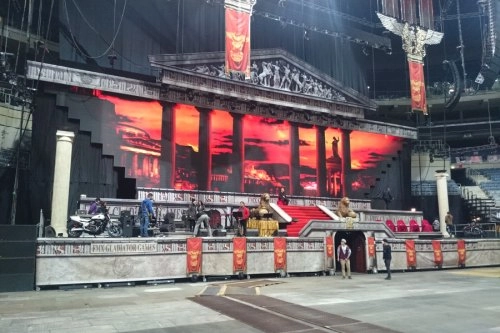
– Stage backdrops are usually viewed from farther away
4. Account for audience behavior
Will people walk past the display quickly, stop and study it, or sit facing it for long periods? A lobby screen seen from 5 to 15 meters needs different planning from a showroom display that customers inspect from 1 to 3 meters.
5. Evaluate screen size and field of view
Large screens can be overwhelming at very short distances, even when the pixel pitch is fine. Comfortable viewing involves both image clarity and the ability to see the entire display naturally.
For practical planning, here is a general guideline:
| Pixel Pitch | Approx. Minimum Viewing Distance
P1.2 | 1.2 m | Broadcast studios, executive spaces |
P1.5 | 1.5 m | Boardrooms, luxury retail |
P1.8 | 1.8 m | Corporate lobbies, conference spaces |
P2.5 | 2.5 m | Retail, exhibitions, indoor ads |
P3.9 | 3.9 m | Event venues, churches, indoor stages |
P5 | 5 m | Large halls, outdoor signs |
P6-P10 | 6-10 m | Outdoor billboards, stadium displays |
This table does not replace a site survey, but it provides a practical framework. In many real projects, the LED video wall viewing distance problem is solved by combining this baseline with on-site testing, content simulation, and audience flow analysis.
Common Mistakes That Make Viewing Distance Worse
Many organizations face the LED video wall viewing distance problem because of avoidable planning mistakes. Understanding these issues in advance can save money and prevent disappointing results after installation.
Choosing by price alone
A cheaper display with a larger pixel pitch may seem attractive initially, but if the audience will be standing close to the screen, image quality may suffer. In these cases, the screen becomes a poor fit for the environment.
Ignoring content requirements
Not all content needs the same resolution. A simple branding loop is very different from financial dashboards or menu boards. Failing to align pixel pitch with content complexity often leads to poor readability.
Overestimating audience distance
Some buyers assume people will stay far away, but real behavior can be different. In retail stores, museums, and showrooms, visitors often move much closer than expected. This makes the LED video wall viewing distance problem more severe.
Focusing only on display size
A bigger screen does not automatically create a better experience. If the pitch is too wide for the intended audience position, the enlarged image may simply make pixel structure more obvious.
Forgetting ambient conditions
Lighting, installation angle, and surrounding architecture also influence perceived image quality. While pixel pitch remains central, these factors can amplify or reduce visibility issues.
Skipping on-site visualization
Mockups, renderings, or temporary demo panels help decision-makers understand how a screen will look from different distances. Without testing, assumptions can lead to expensive mistakes.
Not planning for future content changes
A display that works today for basic video may fail tomorrow if the organization later wants to show detailed analytics, smaller text, or premium brand content. Future-proofing is often part of solving the LED video wall viewing distance problem effectively.
The best approach is to define the nearest likely viewer, the average viewer, and the farthest important viewer. This range provides a more realistic basis for product selection than relying on a single distance number.
Best Solutions for Indoor and Outdoor Viewing Challenges
The LED video wall viewing distance problem can be solved with the right mix of technology selection, layout design, and content strategy. The ideal solution depends heavily on whether the display is indoor or outdoor.
Indoor solutions
Indoor environments usually involve closer viewing distances, which makes fine pixel pitch more important. Offices, conference centers, retail stores, and studios often need high-resolution LED walls that maintain a smooth image at short range.
Best practices for indoor spaces include:
– Use finer pixel pitch for close-view applications
– Test text legibility at actual viewing positions
– Align screen height with natural eye level
– Avoid overly small fonts in content design
– Consider all likely approach paths, not just front-facing views
Indoor spaces also tend to involve longer viewing times. That means comfort matters as much as visibility. In this context, the LED video wall viewing distance problem is not only about whether people can see the screen, but whether they can watch it comfortably for extended periods.
Outdoor solutions
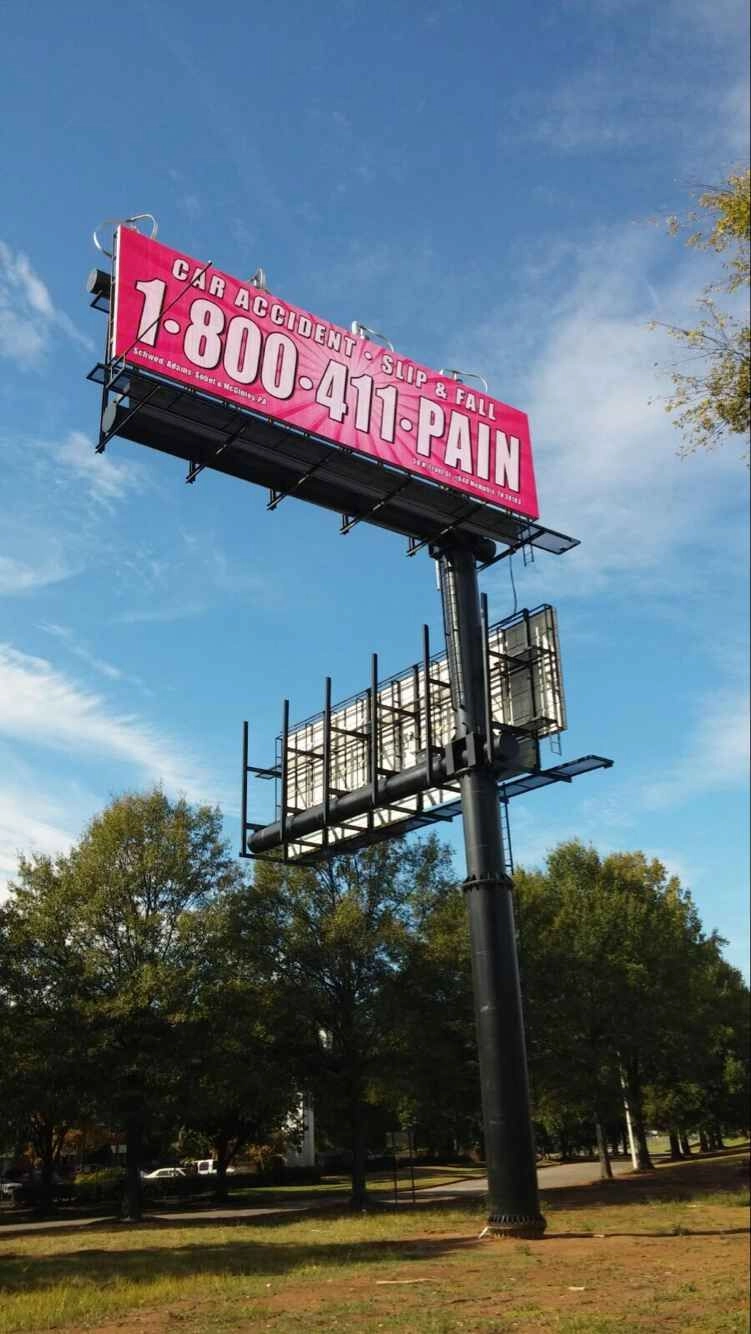
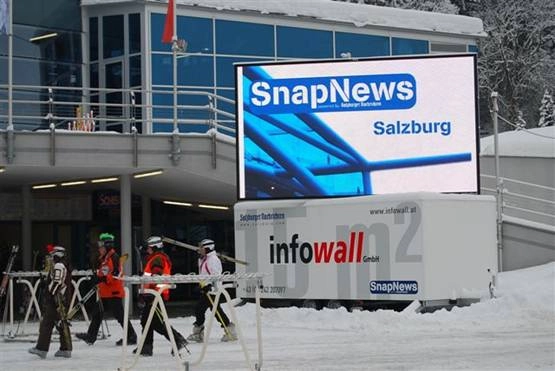
Outdoor LED walls are often viewed from greater distances, so wider pixel pitches are usually acceptable. However, distance planning still matters. Highway billboards, stadium boards, transit displays, and public advertising screens all require careful audience mapping.
Best practices for outdoor spaces include:
– Match pitch to traffic speed and viewing range
– Use larger text and bold graphics
– Account for sunlight and brightness requirements
– Study angles of approach and dwell time
– Confirm readability for both near and far viewers when relevant
Outdoor projects often prioritize impact over fine detail. Still, the LED video wall viewing distance problem remains critical when advertisers expect logos, pricing, or event details to be readable within a limited viewing window.
Content-based solutions
Sometimes the most cost-effective fix is not changing the hardware but optimizing the content. If replacing the wall is unrealistic, businesses can improve results by:
– Increasing font size
– Reducing visual clutter
– Using higher contrast colors
– Simplifying layouts
– Designing specifically for real viewer distance
This approach cannot fully compensate for poor hardware selection, but it can reduce the effects of an existing mismatch.
Work with experienced LED suppliers
An experienced supplier will evaluate:
– Pixel pitch
– Screen dimensions
– Viewing angles
– Installation height
– Content type
– Audience behavior
– Environmental conditions
This full-picture analysis is often the fastest way to prevent the LED video wall viewing distance problem before it becomes an expensive operational issue.
FAQ
What is the main cause of the LED video wall viewing distance problem?
The main cause of the LED video wall viewing distance problem is a mismatch between pixel pitch and where viewers stand. If the pitch is too large for close viewing, the image can look pixelated and unclear.
How do I choose the right pixel pitch?
Start by identifying the nearest typical viewer. A practical guideline is that the minimum viewing distance in meters is close to the pixel pitch in millimeters. To avoid the LED video wall viewing distance problem, also consider content detail, screen size, and whether the installation is indoor or outdoor.
Is smaller pixel pitch always better?
No. Smaller pixel pitch improves close-up clarity, but it also increases cost. The best choice depends on real viewing conditions. Solving the LED video wall viewing distance problem means balancing image quality, budget, and application needs.
Can content design reduce viewing distance issues?
Yes. Larger text, simpler graphics, and stronger contrast can improve visibility. While content changes cannot completely fix hardware limitations, they can reduce the impact of the LED video wall viewing distance problem in some situations.
Does viewing distance matter for outdoor LED walls?
Absolutely. Outdoor displays are typically viewed from farther away, but audience position still matters. If details need to be readable, proper planning is essential to avoid the LED video wall viewing distance problem.
Conclusion
The LED video wall viewing distance problem is not a minor technical detail. It is a core factor that determines whether an LED display succeeds or fails in real-world use. By understanding pixel pitch, audience behavior, content requirements, and installation context, buyers can make smarter decisions and avoid costly mismatches.
Whether the display is for a boardroom, retail store, event venue, control room, or outdoor advertising site, addressing the LED video wall viewing distance problem early leads to better clarity, stronger communication, and a more valuable long-term investment. The right screen is not simply the brightest or biggest option. It is the one that matches how people actually see it.
