
Flexible LED Display Solutions for Luxury Hotel Design

Flexible LED Display for Luxury Hotels is becoming a practical standard for properties that want curved, column-wrapped, and ceiling-mounted visuals without visible cabinet seams. According to ENERGY STAR, LED lighting products use at least 75% less energy than incandescent lighting, which matters for large-format hotel displays that run all day.
TW VISION has LED Screen stock in the USA. Talk to us if you are interested.
The American Hotel & Lodging Association AHLA emphasizes that visible public-area technology upgrades shape first impressions and event-site decisions. When a property asks Where Can Flexible LED Displays Be Used in Hotels, the response should cover both revenue-generating event spaces and high-traffic guest circulation. The challenge is that many hotel owners still picture rigid panels bolted to a wall.
That outdated view leads to missed revenue in spaces that could command higher event fees or stronger guest engagement.
Below are five placement areas that deliver the most practical hotel value. Each section includes a specific control or installation check you can use before you commit.
- Secrets for Hotel Design & Procurement Guide
- 1. Match the Display to the Space and Viewing Distance
- 2. Prioritize Brightness and Ambient Light Control
- 3. Choose the Right Pixel Pitch for Luxury Detail
- 4. Specify Stable Processing, Calibration, and Maintenance Access
- Processing and Calibration
- Thermal and Service Access
- 5. Integrate With Hotel AV and Content Systems
- Where Can Flexible LED Displays Be Used in Hotels
- 1. Lobby and Reception Feature Walls
- Quick Comparison: Flexible LED Hotel Zones
- 2. Ballroom and Event Stage Backdrops
- 3. Restaurants, Bars, and Rooftop Venues
- 4. Arrival Zones and Guest Wayfinding
- 5. Spa, Pool, and Wellness Environments
- Can flexible LED displays be used outdoors at a luxury hotel pool?
- What is the difference between flexible LED film and flexible LED modules for hotel interiors?
- How do hotels prevent content from looking distorted on curved flexible LED walls?
- What maintenance schedule should a luxury hotel expect for flexible LED displays?
- Can an existing hotel retrofit a flexible LED display into a historic lobby?
- Conclusion
Secrets for Hotel Design & Procurement Guide
1. Match the Display to the Space and Viewing Distance
Flexible LED panels can bend around columns and curved walls, but the first requirement is defining where guests will actually stand. A widely used direct-view LED design rule states that minimum comfortable viewing distance in meters is roughly equal to the pixel pitch in millimeters.
A 2mm pitch panel therefore works best when guests are at least two meters away, while a 4mm pitch can serve a double-height atrium viewed from much farther back.
Key requirements for flexible LED displays in luxury hotels start with this viewing geometry, because a panel that looks sharp from the lounge may appear pixelated at the front desk. Ignoring this early can undermine the other key requirements for flexible LED displays in luxury hotels.
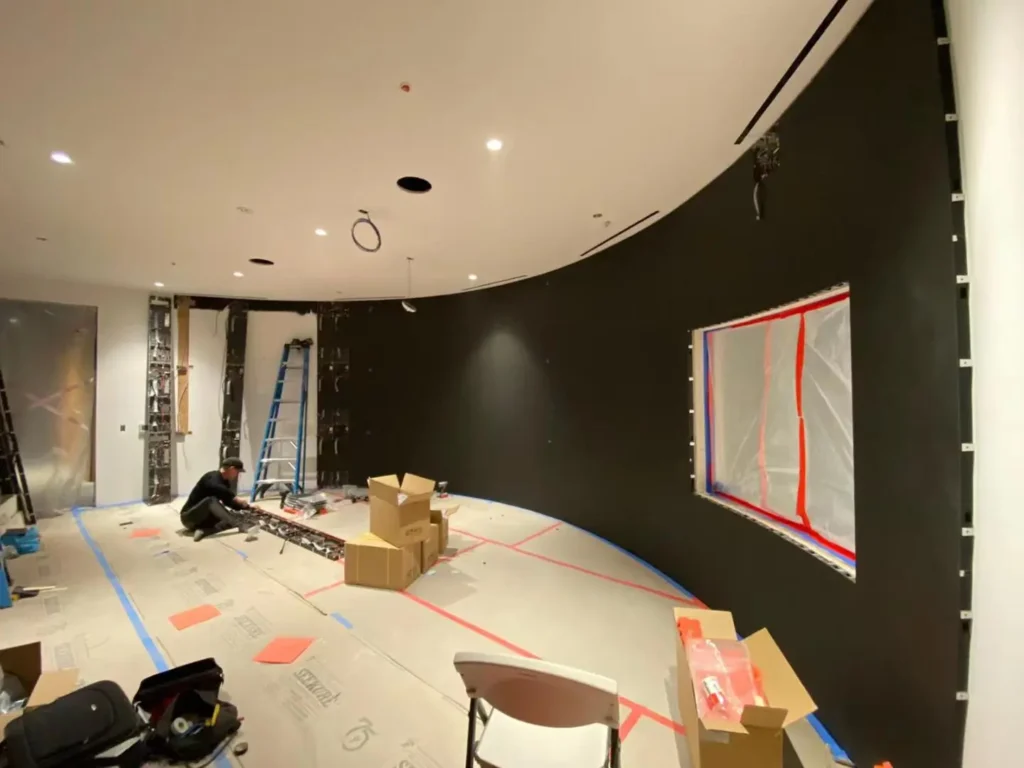
Consider a property that wrapped a 3mm flexible LED panel around a lobby column. From the main entrance it looked elegant, but guests waiting at the concierge desk were close enough to see individual pixels. The issue was not panel quality; it was the mismatch between viewing distance and pixel pitch.
How to apply this: Map sightlines from every guest touchpoint, then test a physical sample at the closest intended viewing distance before finalizing the pitch.
2. Prioritize Brightness and Ambient Light Control
Luxury lobbies often feature floor-to-ceiling glass, and sunlight can erase a display that looks bright in a showroom. AVIXA, the Audiovisual and Integrated Experience Association, emphasizes that display luminance must be selected relative to ambient light rather than as an absolute value.
Direct-view LED panels in window-facing spaces often need 2,000 nits or more to remain legible, while interior ballrooms and lounges may perform well at 600 to 1,200 nits. Key requirements for flexible LED displays in luxury hotels include brightness headroom, because running a panel at full output to fight glare shortens LED life and increases heat.
In one case, a hotel specified a 1,000-nit flexible LED wall in a south-facing atrium and then had to run it at maximum output every afternoon. The module produced more heat, and color drift appeared within the first year. When evaluating key requirements for flexible LED displays in luxury hotels, treat brightness as a system choice, not a panel specification.
How to apply this: Measure ambient light in lux at different times of day, then request a luminance plan from the vendor that accounts for worst-case sunlight.
3. Choose the Right Pixel Pitch for Luxury Detail
Pixel pitch is the distance between individual LED centers, and it directly controls how close a guest can stand before the image breaks down. For premium areas near check-in desks, bars, or elevator lobbies, fine-pitch flexible LED modules between 1.2mm and 2.5mm are common.
For large architectural features seen from a distance, a 3mm or larger pitch can reduce cost without sacrificing perceived sharpness.
Key requirements for flexible LED displays in luxury hotels should tie pixel pitch to the closest guest position, not just the average viewing distance. The table below turns these key requirements for flexible LED displays in luxury hotels into a selection shortcut.
| Pixel pitch | Closest comfortable viewing | Action to take |
|---|---|---|
| 1.2mm | ~1.2 m | Use at bar tops and close desk walls |
| 1.5mm | ~1.5 m | Good for reception back walls |
| 2.0mm | ~2 m | Spec for lobby feature walls |
| 2.5mm | ~2.5 m | Reserve for atrium or pre-function |
| 3.0mm+ | ~3 m+ | Limit to distant architectural surfaces |
A spa front desk installed a 2.5mm curved LED wall behind the counter. Guests standing in line were less than two meters away and could perceive pixel structure, prompting a retrofit to a 1.8mm panel.
How to apply this: Use the pitch-to-distance rule to shortlist panels, then view a live sample with branded content before committing.
4. Specify Stable Processing, Calibration, and Maintenance Access
Processing and Calibration
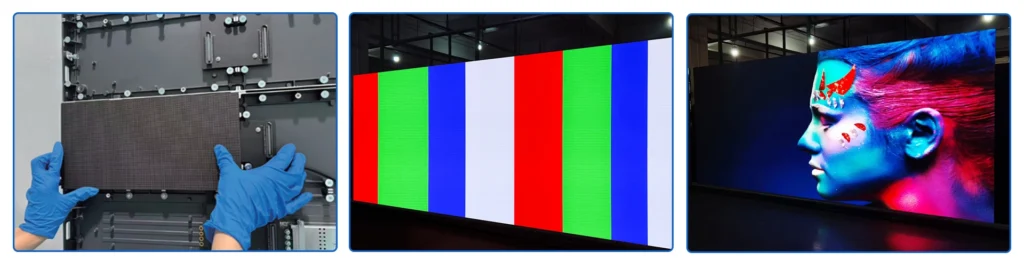
Flexible LED displays only look as good as the processing and calibration behind them. Curved surfaces can reveal color shifts and banding if the video chain is underspecified. Use NovaStar processors for scaling, HDR, and low-latency switching, and calibrate panels with CalMAN to consistent Rec.709 or DCI-P3 targets.
For pixel-accurate mapping across curved modules, a media server such as Resolume is practical. Many camera-ready flexible LED panels list a refresh rate of 1920 Hz or higher to avoid flicker in guest photos and social videos.
Thermal and Service Access
Key requirements for flexible LED displays in luxury hotels must include service access and thermal management. Curved and wrapped installations often trap heat behind the wall, and heat is one of the biggest drivers of color drift and LED life reduction.
Manufacturer data sheets commonly rate LED modules at 50,000 to 100,000 hours, but that lifespan assumes proper ventilation and brightness levels.
A hotel wrapped a flexible LED display around a lobby column with no rear service opening. When one module failed, the repair team had to remove the decorative cladding, turning a one-hour fix into a multi-day project. This is why key requirements for flexible LED displays in luxury hotels should always include calibration and service access in the same review.
How to apply this: Require front-service or magnetic module removal and confirm HVAC clearance behind the display before installation.
5. Integrate With Hotel AV and Content Systems
Even the best flexible LED wall becomes a blank rectangle if the hotel cannot manage content easily. A luxury property needs a content workflow that survives the opening team. Key requirements for flexible LED displays in luxury hotels include a content management system that staff can operate without an AV engineer.
Operational readiness is one of the most overlooked key requirements for flexible LED displays in luxury hotels.
Hospitality technology surveys consistently report that content scheduling and remote monitoring are among the most common operational pain points. AHLA emphasizes that guest-facing technology should be reliable and intuitive.
A hotel installed a flexible LED display in the pre-function area but managed content from a laptop behind the bar. After the opening team left, the wall stayed on a static logo for months.
How to apply this: Connect the display to a media server and CMS that hotel staff can update from a standard web dashboard, and include remote monitoring in the service agreement.
Where Can Flexible LED Displays Be Used in Hotels
1. Lobby and Reception Feature Walls
When evaluating Where Can Flexible LED Displays Be Used in Hotels, the lobby is usually the strongest single starting point. A curved LED feature wall behind reception or wrapping a structural column gives guests an immediate visual signal of the property’s standard.
The lobby answer to Where Can Flexible LED Displays Be Used in Hotels depends on locating the display where guests naturally pause.
Choose a fine-pitch module for close viewing. Many hotel integrators specify 2.5mm or finer pixel pitch for lobby walls because guests often stand within a few feet of the surface. Indoor brightness in the 800–1,000 nit range usually avoids glare while keeping content visible in daylight.
Fine-pitch lobby walls are one of the clearest examples of Where Can Flexible LED Displays Be Used in Hotels when close viewing is required.
Use a control platform such as NovaStar to map a single continuous image across curved modules. This prevents seams and color shifts from panel to panel.
Quick Comparison: Flexible LED Hotel Zones
| Zone | Best LED Format | Key Installation Check | Action to Take |
|---|---|---|---|
| Lobby feature wall | Fine-pitch flexible module | Structural backing and power | Request a heat-load calculation |
| Ballroom stage | Curved column wrap | Rigging and service access | Schedule a rigging review |
| Restaurant/bar front | Transparent or mesh flexible LED | Viewing distance and brightness | Test at service-hour light levels |
| Reception desk front | Curved fascia module | Cable concealment | Test content at low brightness |
| Pool/spa area | IP65-rated flexible module | Moisture sealing | Verify IP rating in writing |
| Guest corridor | Lightweight film or mesh | Fire safety and egress | Check fire rating and clearance |
How to apply this: Ask your integrator for a sample panel mounted on the actual curved surface before you sign a purchase order.
2. Ballroom and Event Stage Backdrops
Ballrooms are often the first revenue-bearing answer to Where Can Flexible LED Displays Be Used in Hotels. Meeting and event planners routinely choose venues based on visual flexibility. A curved LED backdrop behind a speaker panel or a wrapped column in a ballroom foyer can make the same room feel like a custom production stage.
This is another clear answer to Where Can Flexible LED Displays Be Used in Hotels. Flexible modules can hug rounded truss, stage risers, and temporary set pieces without the weight of rigid cabinets. Many event AV teams report that curved LED walls are easier to reconfigure between sessions than traditional flat panels.
This type of curved backdrop also demonstrates Where Can Flexible LED Displays Be Used in Hotels without rebuilding the room for each event.
A common scenario: a ballroom has a permanent curved stage wall. Instead of building a custom hard set, the hotel can install flexible LED modules that follow the curve and change content for each group.
For display planning and layout documentation, manufacturers such as Planar provide modular LED wall resources that help compare pixel pitches and service access options.
How to apply this: Require a content map and service-access drawing for every ballroom configuration before the install.
3. Restaurants, Bars, and Rooftop Venues
When considering Where Can Flexible LED Displays Be Used in Hotels, restaurants and bars offer design-first options. Flexible LED displays belong in spaces where straight screens would interrupt the design. A curved LED band above a bar, a transparent display on a glass partition, or a cylindrical column wrap in a rooftop lounge can create atmosphere without blocking sightlines.
Hotel food and beverage operators often report that dynamic backbar and entry displays extend guest dwell time and support beverage or event upsells. The visual effect is strongest when brightness is matched to actual service conditions. Brightness testing helps hotel operators understand Where Can Flexible LED Displays Be Used in Hotels without causing guest discomfort.
This placement also answers Where Can Flexible LED Displays Be Used in Hotels beyond the meeting room. Look for transparent or mesh LED with a high transmittance rating if you want to preserve window views. Samsung’s commercial display line, available through Samsung Business, includes transparent LED signage options for glass-facing bar and retail areas.
How to apply this: Run a live brightness and contrast test during service hours, not in an empty room.
4. Arrival Zones and Guest Wayfinding
The question Where Can Flexible LED Displays Be Used in Hotels often starts with the first space guests see. Arrival zones are used by almost every guest, but many hotels still leave them visually static.
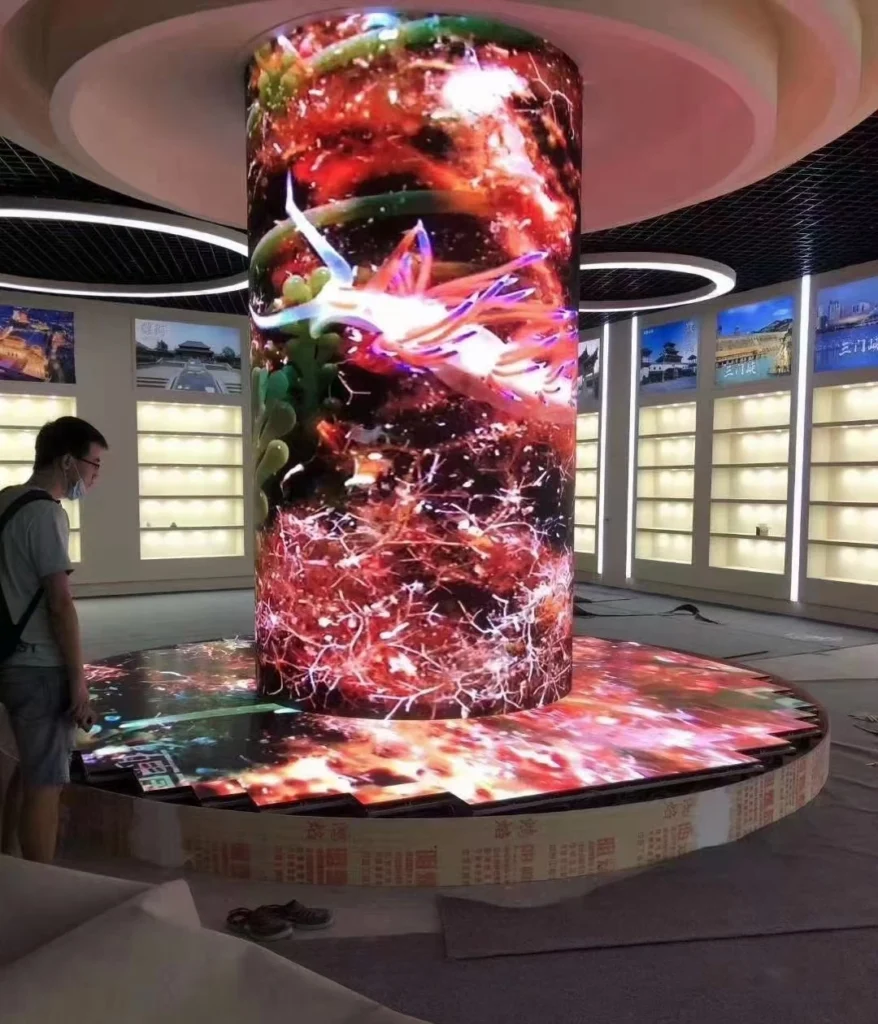
Flexible LED can wrap the curved ceiling of a porte cochere, line an elevator lobby arch, or form a rounded digital totem near the front desk.
Hotel operators commonly mention that arrival-zone LED wayfinding reduces repeat guest questions and moves check-in traffic more smoothly. A flexible, curved wayfinding surface is also easier to update remotely than printed signage. This operational benefit is a strong answer to Where Can Flexible LED Displays Be Used in Hotels beyond decorative reasons.
This is often an overlooked answer to Where Can Flexible LED Displays Be Used in Hotels. Modular systems such as those from Absen include curved and outdoor-rated options that fit irregular entry architecture.
How to apply this: Confirm outdoor brightness and IP protection before placing flexible LED in a covered drive or open-air arrival canopy.
5. Spa, Pool, and Wellness Environments
Where Can Flexible LED Displays Be Used in Hotels with humid or splash-prone conditions? Wellness spaces are a viable answer when specifications are correct. Flexible LED displays can work near moisture, but only when the modules and installation details are specified for that environment.
Curved LED walls behind a spa reception desk, a soft media ceiling in a relaxation room, or a poolside feature wall can lengthen the wellness experience.
Many integrators recommend IP65-rated or higher flexible modules for poolside or splash zones. Moisture sealing is not a place to compromise because hotel humidity and chlorine exposure will find weak connections quickly. This moisture focus is essential when asking Where Can Flexible LED Displays Be Used in Hotels near water.
If you are still mapping Where Can Flexible LED Displays Be Used in Hotels, wellness spaces offer a premium design statement that most competitors do not have. Use sealed connectors, proper drip loops, and an accessible service hatch for any area near water.
How to apply this: Request written IP and warranty documentation that names the exact humidity or splash conditions of your intended space.
Frequently Asked Questions About Flexible LED Display for Luxury Hotels
Can flexible LED displays be used outdoors at a luxury hotel pool?
Yes, if the flexible LED display for luxury hotels carries an IP65 or higher rating for dust and water resistance. A covered cabana or semi-open terrace may work with a lower rating, but direct rain or pool splash demands full outdoor protection. Always confirm the panel’s operating temperature range and UV resistance before specifying an outdoor curved feature.
What is the difference between flexible LED film and flexible LED modules for hotel interiors?
Flexible LED film is thin, lightweight, and often semi-transparent, making it useful for window applications. Flexible LED modules are thicker but easier to service and replace. For a hotel lobby or ballroom, a flexible LED display for luxury hotels built from modules usually offers better long-term reliability, while film works better when sightline transparency matters more than service access.
How do hotels prevent content from looking distorted on curved flexible LED walls?
Distortion happens when flat content is mapped directly onto a curved surface. The fix is pixel-accurate content mapping through media servers and calibration tools. For a wrapped column, the source file must match the physical curve geometry.
A flexible LED display for luxury hotels should be mapped with a test grid before final content is loaded, then checked from multiple guest viewing angles.
What maintenance schedule should a luxury hotel expect for flexible LED displays?
Plan quarterly visual inspections, annual calibration, and module replacement as issues appear. A high-use ballroom flexible LED display for luxury hotels may need more frequent checks than a spa corridor installation. Ask the integrator for a recommended service calendar based on usage hours, dust levels, and whether the display runs continuously or only during events.
Can an existing hotel retrofit a flexible LED display into a historic lobby?
Often yes, because flexible panels can mount on curved or uneven surfaces without heavy steel structures. Historic properties usually require approval for power access, hidden cabling, and mounting anchors. A flexible LED display for luxury hotels in a listed building should be reviewed with a structural engineer and heritage consultant before the design is finalized.
Conclusion
– Specify pixel pitch by guest viewing distance, not screen size alone
– Resolve power, heat, and access constraints before ordering panels
– Require professional on-site calibration and front-serviceable modules
– Build a content control system the hotel team can operate daily
A flexible LED display for luxury hotels works best when it is planned as an integrated guest experience rather than a standalone screen. Start with a sightline map, an electrical load calculation, and a calibration requirement in your vendor contract.
Your next step is to walk the actual space with an integrator and compare two panel samples side by side in the real lighting conditions.