Global LED Display Market Strategy and Business Positioning

Global LED Display Market Strategy and Business Positioning rarely fails because of bad hardware. It fails because suppliers sell screens instead of a clear reason to buy from them.
Table of Contents
- 1. Map Demand by Segment, Not by Screen Size
- The Segments Worth Separating
- Build a Two-Page Segment Map
- 2. Price for Total Cost of Ownership, Not Cost per Square Meter
- The Four Costs Buyers Forget
- Present TCO Without Losing the Price Fight
- 3. Build a Regional Channel Position You Can Defend
- Pick One Channel to Own, Rent the Rest
- Measure Channel Health, Not Just Revenue
- 4. Turn Supply Chain and Manufacturing Choices Into a Moat
- Decide What You Make, What You Buy
- Make Software, Calibration, and Service the Product
- 5. Track the Metrics and Compliance Rules That Protect Your Position
- The Four Numbers Worth Reviewing Monthly
- Compliance as a Positioning Asset
- How do tariffs and local-content rules change where I should position?
- What is the biggest positioning mistake new LED display brands make?
- Which certifications matter most for government and transport tenders?
- How do I measure brand share if I am a smaller LED display supplier?
- How do I position microLED and COB fine-pitch products against established SMD lines?
- Conclusion
Demand has fragmented into a dozen application niches — from virtual production volumes to all-in-one meeting-room panels — and each niche rewards a different pitch, a different margin, and a different proof point. Most manufacturers still compete on pixel pitch and price per square meter, which is exactly why so many of them struggle to hold a premium.
That leaves a practical problem: how do you choose where to compete, how do you price for it, and how do you defend the ground you take? This guide covers five things you can apply this quarter — segment mapping, total cost of ownership pricing, defensible regional channels, supply chain moats, and the compliance metrics that protect your position.
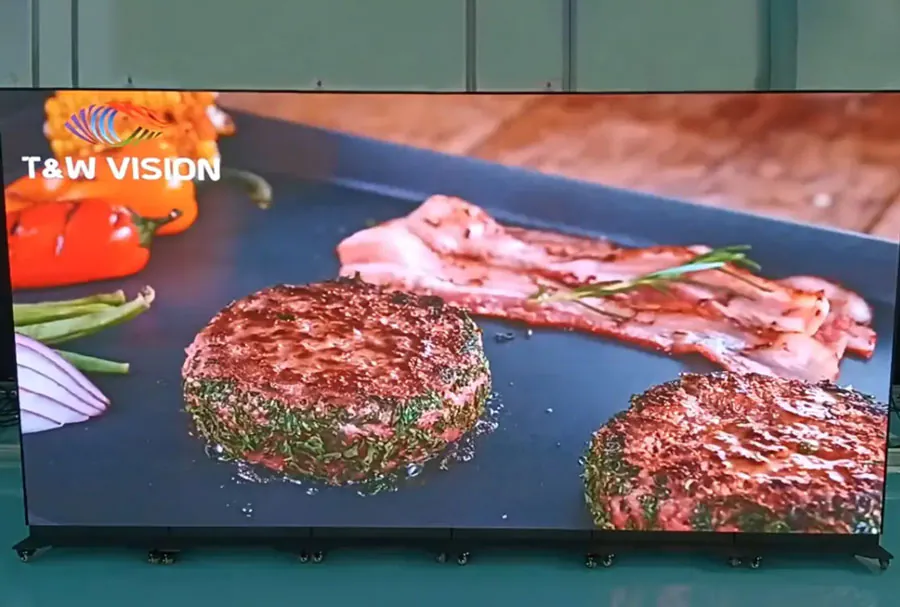
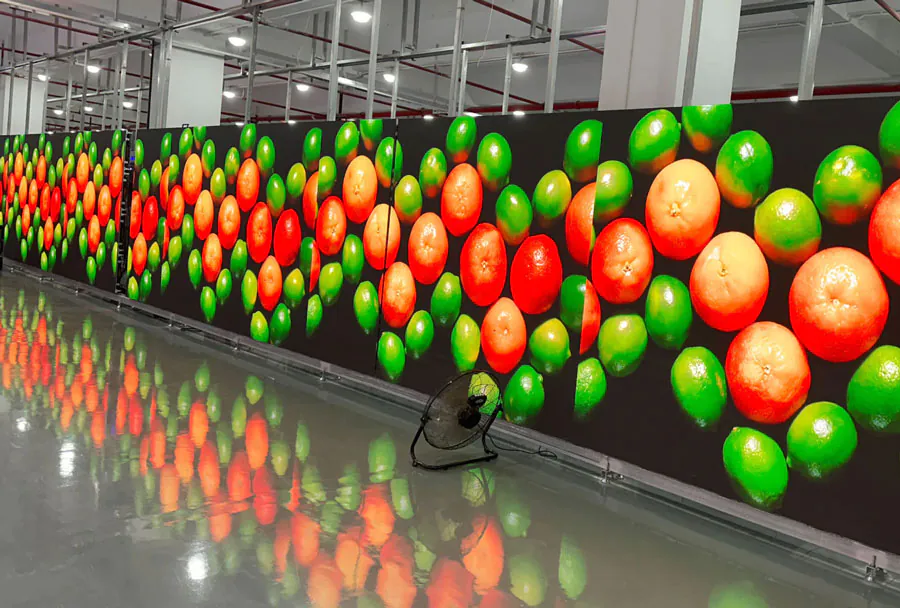
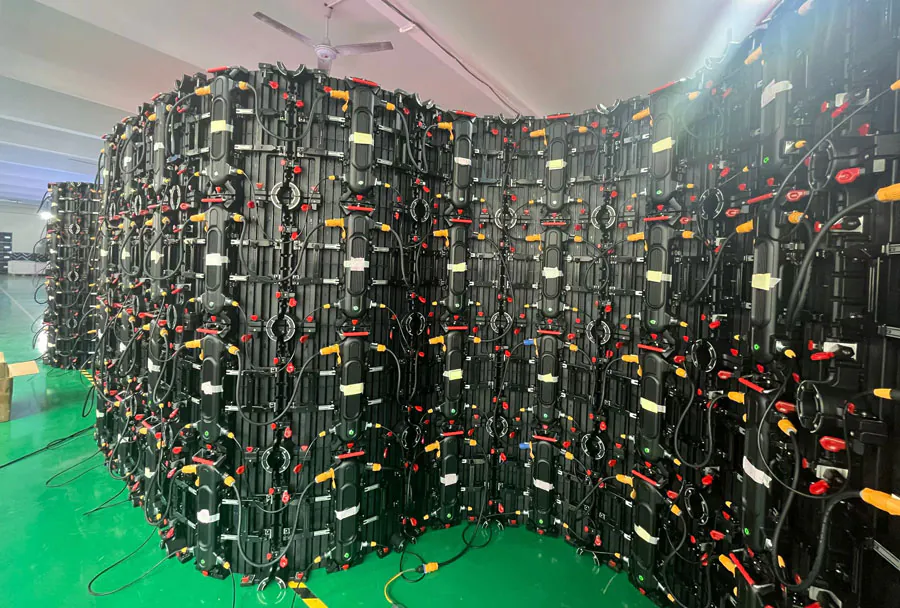
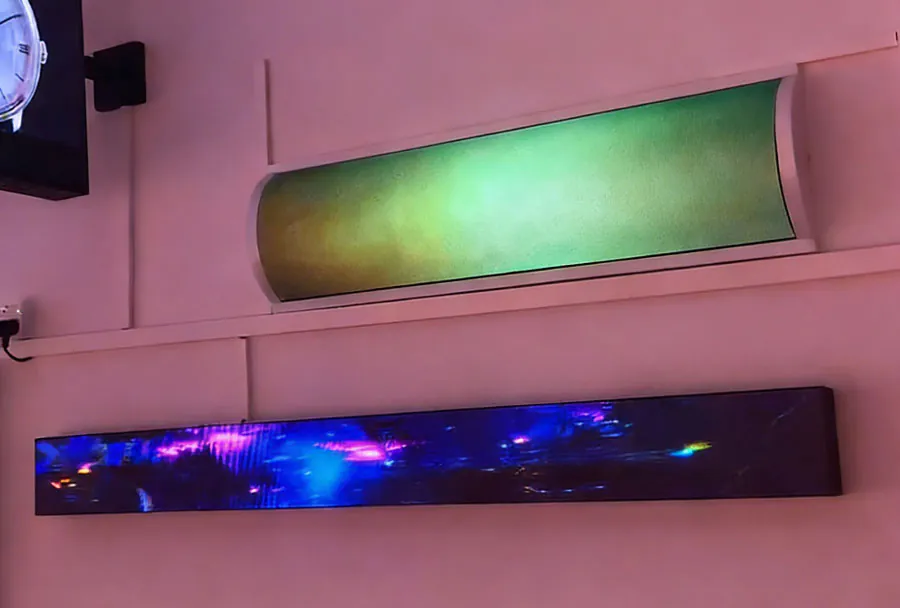
indoor and outdoor LED rental panels made by TW vision, 100% front service and front installation.-PI series.
1. Map Demand by Segment, Not by Screen Size
Segment mapping means grouping your addressable market by the application the buyer cares about, not by pixel pitch or indoor-versus-outdoor labels. A control-room operator, a retail media owner, and a film studio weigh reliability, color accuracy, and service response very differently — and they buy through different people.
Industry analysts have tracked this shift for years. Omdia and TrendForce both organize their LED and large-area display research by application and technology rather than by screen size alone. That is a signal about where value has migrated.
Global LED display market strategy and business positioning starts with admitting that one global pitch competes badly against specialists who own a single niche completely.
The Segments Worth Separating
– Corporate and education fine-pitch: buyers want quiet operation, easy install, and a CMS their IT team can run.
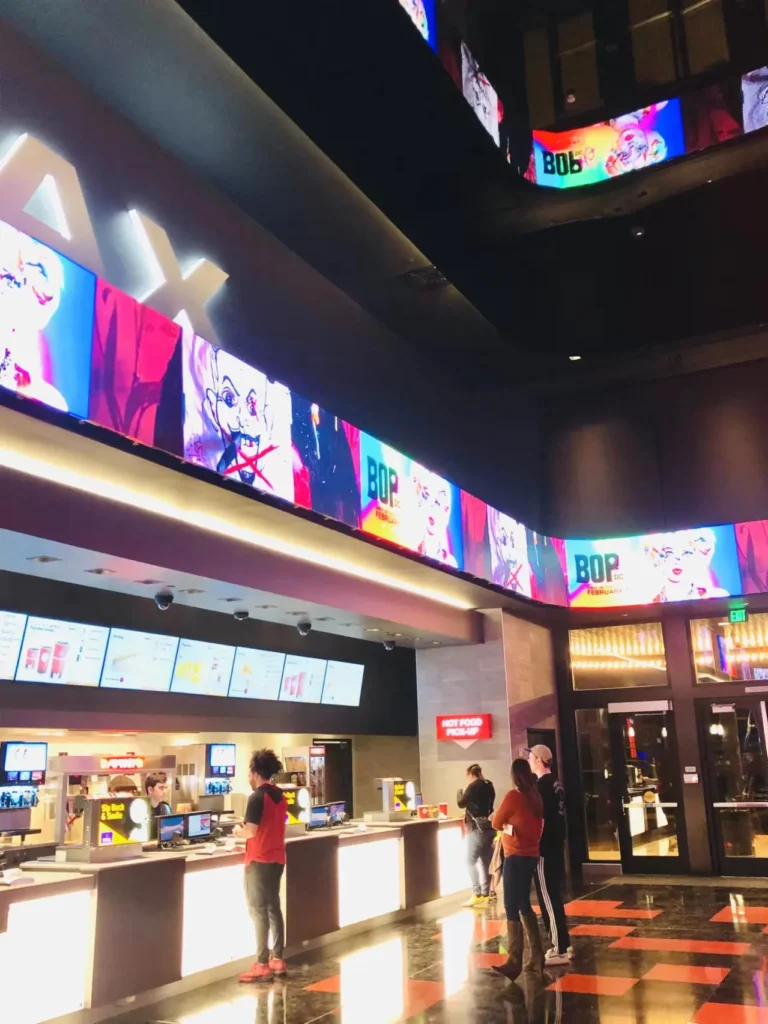
– Outdoor DOOH: buyers care about uptime, power cost, and remote monitoring.
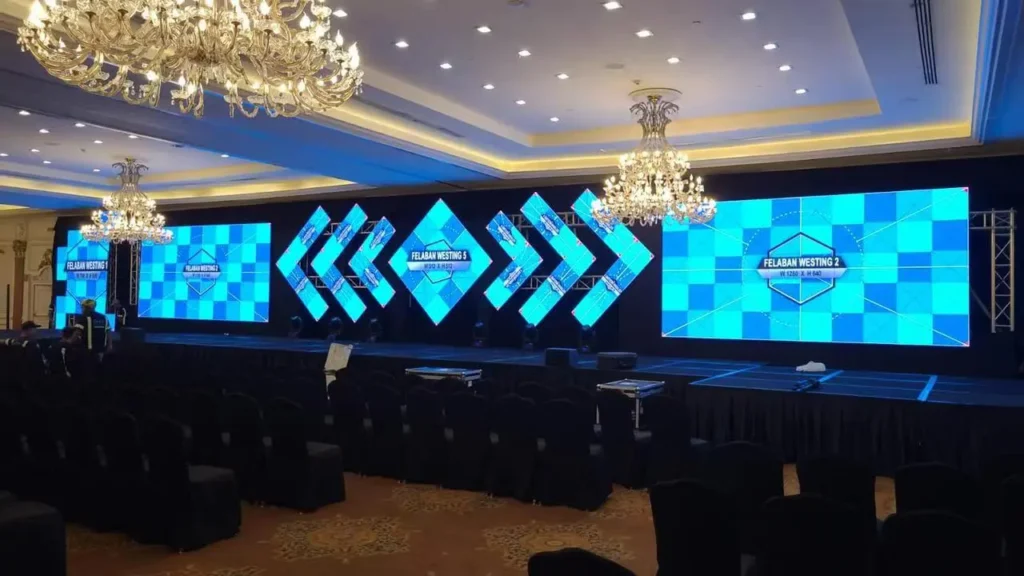
– Rental and staging: weight, rigging speed, and road case durability decide the sale.
– Virtual production: refresh rate, latency, genlock, and color science decide the sale.
– Transport and control rooms: certification and 24/7 service response dominate.
– All-in-one conference displays: software and camera integration beat panel specs.
Build a Two-Page Segment Map
For each segment, write down who signs the purchase order, the budget cycle, the typical replacement cycle, the minimum technical threshold you must clear, and the service expectation. Anything you cannot answer is a segment you are not ready to sell into.
| Segment | Buyer’s top priority | Margin pressure | Action to take |
|---|---|---|---|
| Corporate fine-pitch | Easy install, low noise | High | Bundle CMS plus service |
| Outdoor DOOH | Uptime, power cost | Medium | Quote five-year power |
| Rental and staging | Weight, rigging speed | Medium | Publish rigging data |
| Virtual production | Refresh, latency, color | Low to medium | Prove genlock and calibration |
| Transport and control | Certification, service | Low | Build a compliance pack |
| All-in-one conference | Price, camera integration | High | Win on software, not panels |
How to apply this: score each segment on average deal size, sales cycle length, and service cost — that one exercise sharpens your global LED display market strategy and business positioning faster than any rebrand.
2. Price for Total Cost of Ownership, Not Cost per Square Meter
Total cost of ownership pricing means quoting five years of power, service, spares, and calibration alongside the panel price. Mature-market buyers increasingly evaluate LED walls this way because the hardware is rarely the largest line on the invoice.
Efficiency programs reinforce that habit. ENERGY STAR publishes efficiency criteria for display products, and public-sector procurement teams in the United States frequently reference them when writing specifications.
Global LED display market strategy and business positioning gets much easier when your sales team can discuss operating cost without guessing.
The Four Costs Buyers Forget
- Power over the full lifetime — brightness settings, drive scheme, and auto-dimming change this dramatically.
- Spare modules and receiving cards — an obsolete driver IC can strand a wall for weeks.
- On-site labor — in some markets, a single service visit costs more than a replacement module.
- Control software — licensing or subscription renewals are easy to overlook in a five-year budget.
Present TCO Without Losing the Price Fight
Do not lead with a higher price. Lead with a five-year table showing hardware, power, service, and spares side by side. For a DOOH operator, add the cost of every hour the screen is dark; that number usually dwarfs the hardware delta between a cheap panel and a reliable one.
How to apply this: build a one-page TCO calculator for your three best-selling SKUs and give it to your channel partners so they quote the same way you do.
3. Build a Regional Channel Position You Can Defend
A defensible channel position means owning at least one route to your buyer that a competitor cannot copy inside a quarter. That could be a certified integrator network, a local service depot, or a direct enterprise sales team.
Regional realities differ sharply, and global LED display market strategy and business positioning has to respect them:
– North America: domestic service capability, tariff exposure, and specification-driven tenders.
– Europe: CE marking, EMC testing, data protection rules, and integrator-led projects.
– Middle East and Asia-Pacific: project distributors, government tenders, and relationship-led selling.
– Latin America and Africa: price sensitivity, financing terms, and spare-parts logistics.
Industry bodies are useful here. The Digital Signage Federation publishes guidance and community resources that help suppliers understand how end users and integrators actually buy.
Pick One Channel to Own, Rent the Rest
Choose the channel where you can be genuinely better — certified partner training, for example — and invest there. Use distributors elsewhere and accept thinner margins rather than pretending to own every route.
Measure Channel Health, Not Just Revenue
Track the number of certified partners, win rate with your top ten integrators, and average service ticket closure time. Revenue alone hides a channel that is quietly rotting.
How to apply this: list your top five routes to market and mark exactly one as “own” and the rest as “rent” — then fund training for the one you own.
4. Turn Supply Chain and Manufacturing Choices Into a Moat
Most LED display brands buy LEDs, driver ICs, and often complete panels from a small number of supplier clusters, so genuine differentiation lives in what you control: calibration, firmware, processing, and service.
US-based Daktronics has long used domestic manufacturing and service as a core selling point for public-sector and sports work — a reminder that logistics can be a positioning asset, not just a cost center.
Virtual production raises the bar further. LED volumes used for in-camera visual effects need low latency, high refresh, and genlock, and processing systems such as Brompton Technology are widely deployed on those stages. Global LED display market strategy and business positioning in that niche is largely a processing and calibration story, not a panel story.
Decide What You Make, What You Buy
Write down which components you will build in-house, which you will co-develop with a supplier, and which you will simply buy. Then be honest with buyers about it — vague answers lose enterprise deals.
Make Software, Calibration, and Service the Product
Factory calibration data, remote monitoring, and firmware update history are things customers feel every week. Panel specs are things they read once.
How to apply this: audit your last ten lost deals and note how many were lost on hardware specs versus service, calibration, or software gaps — then reallocate next year’s R&D budget accordingly.
5. Track the Metrics and Compliance Rules That Protect Your Position
Positioning is only real if the numbers confirm it. Track win rate by segment, gross margin by channel, service contract attach rate, and first-year RMA rate every month.
Compliance protects the ground you take. The International Electrotechnical Commission explains that IEC 62471 covers the photobiological safety of lamps and lamp systems, including the blue-light hazard that high-brightness LED emitters can present at close viewing distance — a real consideration for retail and close-view installations.
Other requirements worth tracking include EMC rules (FCC Part 15 in the United States, EN 55032 and EN 55035 in the EU), safety standards such as IEC 62368-1, RoHS and REACH material restrictions, and road-authority specifications for variable message signs. If your displays include cameras or audience analytics, data protection law such as the GDPR also applies.
The Four Numbers Worth Reviewing Monthly
- Win rate by segment.
- Gross margin by channel.
- Service attach rate.
- First-year RMA rate.
Compliance as a Positioning Asset
Contract-ready certification shortens tender qualification and removes you from the “cheap and unverified” category. Global LED display market strategy and business positioning is easier to defend when compliance documentation is routine rather than improvised.
How to apply this: assemble a compliance pack this month — certificates, test reports, and a short data protection statement — and attach it to every enterprise proposal.
Frequently Asked Questions About Global LED Display Market Strategy and Business Positioning
How do tariffs and local-content rules change where I should position?
Tariffs change landed cost, but they change credibility more. If a tender requires domestic assembly or local service, that requirement becomes a positioning fact you must design around, not a pricing problem. Map the rules market by market, then decide whether to assemble locally, partner with a domestic integrator, or exit that segment entirely.
Global LED display market strategy and business positioning should follow the rules, not fight them.
What is the biggest positioning mistake new LED display brands make?
The most common mistake is claiming to serve every segment at once. New brands often publish one spec sheet for retail, transport, and rental buyers, which signals to all three that none is a priority. Pick two segments, build reference installations there, and let the case studies do the selling.
Global LED display market strategy and business positioning works best when it is narrow enough to be believable.
Which certifications matter most for government and transport tenders?
Tenders usually weight safety, EMC, and environmental compliance above panel performance. Expect to produce IEC 62368-1 safety evidence, FCC or EN EMC test reports, RoHS and REACH declarations, and sometimes application-specific approvals for road signage. Missing paperwork disqualifies you before a demo happens.
Treat certification as a sales asset within your global LED display market strategy and business positioning, not an afterthought.
How do I measure brand share if I am a smaller LED display supplier?
You rarely have access to reliable share data, so measure influence instead. Track how often you appear on shortlists, how many integrators list you as an approved vendor, and how often buyers request you by name. Those proxies move before revenue does.
A smaller supplier can still build a strong global LED display market strategy and business positioning by owning a narrow, well-documented niche.
How do I position microLED and COB fine-pitch products against established SMD lines?
Position them on application fit, not on being newer. COB fine-pitch suits environments where durability and surface protection matter, while SMD lines remain competitive for many indoor fixed installations with standard viewing distances. Selling “newer technology” invites a spec argument you may lose. Tie the choice to the buyer’s environment instead.
That framing strengthens any global LED display market strategy and business positioning.
Conclusion
Positioning in this industry is a set of choices, not a slogan. The suppliers that hold margins tend to share a few habits:
- Market segmentation is based on applications and buyer needs rather than panel size alone.
- Buyers receive total cost of ownership estimates supported by verified power consumption, service, and spare-parts data.
- Distribution strategies prioritize one core sales channel while leveraging partners for other routes to market.
- Beyond hardware, calibration, firmware, servicing, and compliance are offered as value-added products.
Pick one segment and one channel to own this quarter, then build the TCO sheet and compliance pack that make your claim credible. Global LED display market strategy and business positioning rewards focus far more than it rewards reach.