Why Top Las Vegas Hotels Choose TW VISION as Their LED Screen Rental Partner

LED Displays for Las Vegas Hotels: Choosing the Right Screen for Each Space starts with one practical question: what must guests see, from what distance, under what lighting conditions? A lobby directory, pool-deck promotion, conference schedule, and roadside sign require different screen designs.
Table of Contents
- 1. Match Screen Type to the Hotel Space
- Lobby and Reception Areas
- Meeting and Ballroom Areas
- Exterior and Pool Areas
- 2. Choose Pixel Pitch and Brightness Together
- 3. Design Content for Guest Behavior
- Wayfinding and Directories
- Promotions and Brand Content
- Event Communications
- 4. Plan Power, Heat, Service, and Compliance
- 5. Measure Results and Control Operating Costs
- Screen Selection Comparison
- How often should hotel LED displays be recalibrated?
- Can LED displays replace printed hotel signage completely?
- What should a hotel do when a screen loses network access?
- Are transparent LED screens useful for hotel windows?
- How should hotels handle urgent or emergency messages?
- Conclusion
For a successful installation, LED Displays for Las Vegas Hotels: Choosing the Right Screen for Each Space must be evaluated according to the guest task and the environment.
LED technology is also more efficient than older lighting approaches. The U.S. Department of Energy reports that residential LED products use at least 75% less energy and last up to 25 times longer than incandescent lighting, although commercial display performance depends on brightness, operating hours, ventilation, and control settings.
Hotel teams often make costly decisions by choosing a screen based only on size or resolution. The better approach considers viewing distance, sunlight, content type, accessibility, service access, and total operating cost.
This guide explains how to match displays to five common hotel spaces, compare key specifications, verify compliance, and avoid installation mistakes that reduce readability or increase maintenance.
1. Match Screen Type to the Hotel Space
The best display for a Las Vegas hotel depends on the space’s viewing distance, ambient light, content, and guest traffic pattern. LED Displays for Las Vegas Hotels: Choosing the Right Screen for Each Space should begin with a written assessment of those conditions.
A screen that works well behind a reception desk may be unsuitable for a parking entrance or outdoor pool area.
Lobby and Reception Areas
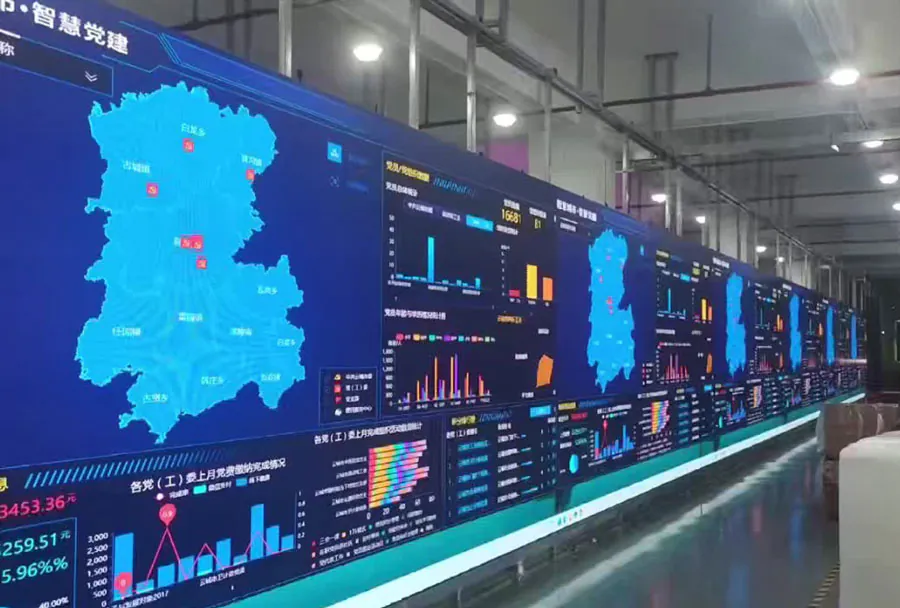
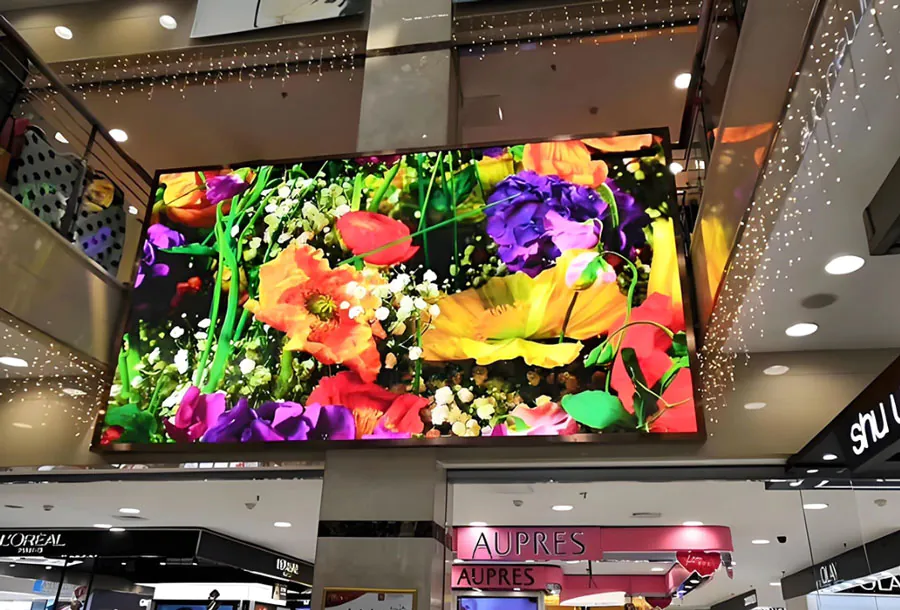
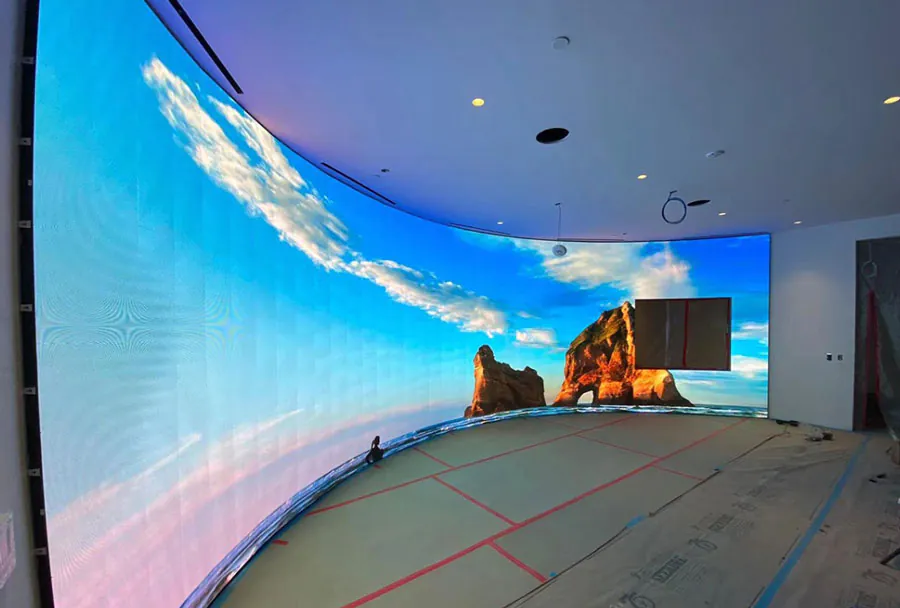
Lobby displays usually need fine pixel pitch, strong color consistency, and wide viewing angles. Guests may stand close to the screen, so visible pixel structure can make text and branding look rough. Indoor fine-pitch LED is often appropriate for large feature walls, digital concierge content, and event messaging.
LED Displays for Las Vegas Hotels: Choosing the Right Screen for Each Space should prioritize close-view clarity wherever guests read information at walking speed.
Meeting and Ballroom Areas
Ballrooms need flexible content scheduling. A display may show a welcome message during registration, sponsor content during breaks, and presentation material during a session. The system should support multiple input sources and quick content changes without requiring a technician on the floor.
In LED Displays for Las Vegas Hotels: Choosing the Right Screen for Each Space, ballroom flexibility is as important as image quality.
Exterior and Pool Areas
Outdoor screens require weather-rated cabinets, higher brightness, sealed connections, and corrosion-resistant hardware. Pool decks also introduce humidity, splash risk, and reflected sunlight. An outdoor-rated product should be selected based on its documented ingress-protection rating and installation conditions.
LED Displays for Las Vegas Hotels: Choosing the Right Screen for Each Space should account for moisture, sun exposure, and chemical residue before a product is approved.
LED Displays for Las Vegas Hotels: Choosing the Right Screen for Each Space should therefore be treated as a space-planning decision rather than a product-size decision.
How to apply this: Walk each proposed location at the same time of day guests will use it, record approximate viewing distances, and classify the space as indoor, sheltered outdoor, or fully exposed. This process makes LED Displays for Las Vegas Hotels: Choosing the Right Screen for Each Space more precise during supplier discussions.
2. Choose Pixel Pitch and Brightness Together
Pixel pitch controls the ideal viewing distance, while brightness controls whether content remains readable in the surrounding light. Neither specification should be selected alone. LED Displays for Las Vegas Hotels: Choosing the Right Screen for Each Space requires both measurements to be considered together.
A smaller pixel pitch generally supports closer viewing, but it can raise purchase and service costs. A larger pitch may be practical for a roadside monument or ballroom wall viewed from across the room. The correct choice should come from a viewing-distance study, not a preference for the smallest available number.
For LED Displays for Las Vegas Hotels: Choosing the Right Screen for Each Space, the most expensive pitch is not automatically the most suitable one.
Brightness also requires restraint. A screen that is too dim can disappear in daylight, while one that is unnecessarily bright can create glare, distract drivers, and make indoor guests uncomfortable. Use automatic brightness control where available, and confirm whether brightness is specified in nits under a documented measurement method.
Brightness testing is central to LED Displays for Las Vegas Hotels: Choosing the Right Screen for Each Space because conditions change throughout the day.
The U.S. Department of Energy explains that LED performance depends on factors such as thermal management and driver quality, not just the semiconductor itself. That principle applies to commercial display systems: cabinet design, power supplies, ventilation, and control software affect real-world performance.
For LED Displays for Las Vegas Hotels: Choosing the Right Screen for Each Space, ask the supplier to provide recommended viewing distance, minimum and maximum brightness, refresh rate, and calibration details in writing.
How to apply this: Request a daylight demonstration for exterior screens and a close-range text demonstration for indoor screens before approving a purchase. These demonstrations give LED Displays for Las Vegas Hotels: Choosing the Right Screen for Each Space a practical performance standard.
3. Design Content for Guest Behavior
Content should be designed around how guests move through the property, not around the maximum capabilities of the hardware. A guest walking through a lobby needs fast recognition, while a conference attendee may need detailed schedule information. LED Displays for Las Vegas Hotels: Choosing the Right Screen for Each Space should therefore connect hardware decisions with actual guest behavior.
Wayfinding and Directories
Wayfinding content should use short labels, strong contrast, consistent arrows, and a clear hierarchy. Avoid placing too many destinations on one frame. If a guest must stop and study the screen, the content is probably too dense for a high-traffic area.
The readability standards for LED Displays for Las Vegas Hotels: Choosing the Right Screen for Each Space should reflect normal walking speed.
Promotions and Brand Content
Promotional screens can rotate restaurant offers, spa appointments, entertainment schedules, and loyalty messages. Each message should have a clear action, such as scanning a code, visiting a desk, or entering a venue. QR codes need sufficient physical size and contrast for the intended scanning distance.
LED Displays for Las Vegas Hotels: Choosing the Right Screen for Each Space can support promotions effectively when each message has one clear purpose.
Event Communications
Conference displays need accurate, rapidly editable information. A content management system should allow authorized staff to update room numbers, session times, and sponsor materials without replacing media files manually. Hotels should assign content owners before hosting the first event on their LED displays.
The Web Content Accessibility Guidelines from the World Wide Web Consortium provide widely used guidance for readable contrast and accessible digital content. While LED signage has specific physical considerations, the same readability principles remain useful.
Consider a ballroom display that shows a sponsor logo beside a session title. If the logo dominates the frame, attendees may miss the room or time information. Content priorities should be set before creative production.
LED Displays for Las Vegas Hotels: Choosing the Right Screen for Each Space works best when each screen has a defined content owner, update process, and escalation path.
How to apply this: Create three sample frames for every screen: a wayfinding message, a promotion, and an urgent operational notice, then test whether each can be understood at normal walking speed. This test helps confirm that LED Displays for Las Vegas Hotels: Choosing the Right Screen for Each Space serves guests rather than simply displaying content.
4. Plan Power, Heat, Service, and Compliance
A display installation is successful only when it remains accessible, serviceable, and safe after opening day. Electrical planning, structural support, ventilation, cable routing, and maintenance access should be resolved before fabrication. LED Displays for Las Vegas Hotels: Choosing the Right Screen for Each Space should include these infrastructure concerns from the beginning.
Large LED walls can produce substantial heat and require power distribution that matches the manufacturer’s documentation. Do not assume an existing outlet or circuit is adequate. A qualified electrical professional should confirm load calculations, disconnect requirements, grounding, and local permitting needs.
These details protect the long-term performance of LED Displays for Las Vegas Hotels: Choosing the Right Screen for Each Space.
Service access also affects the design. Front-service cabinets may cost more but can reduce disruption in a finished lobby. Rear-service systems may be practical in a dedicated equipment room or outdoor structure with safe access. Service planning is a major part of LED Displays for Las Vegas Hotels: Choosing the Right Screen for Each Space because inaccessible components increase downtime.
The 2010 ADA Standards for Accessible Design specify a maximum forward reach of 48 inches for many operable parts and a minimum reach height of 15 inches in applicable conditions. Displays are not automatically covered in the same way as controls, but touch interfaces, kiosks, ticketing devices, and accessible routes can trigger additional requirements.
The National Fire Protection Association publishes codes and standards relevant to electrical and life-safety planning. Local authorities and the hotel’s fire-protection consultant should determine which requirements apply to the installation.
For LED Displays for Las Vegas Hotels: Choosing the Right Screen for Each Space, compliance should be reviewed with the electrical contractor, architect, property owner, and local authority having jurisdiction.
How to apply this: Add power, access, ventilation, structural loading, emergency messaging, and inspection responsibilities to the project scope before requesting final bids. This scope gives LED Displays for Las Vegas Hotels: Choosing the Right Screen for Each Space a clear installation and approval path.
5. Measure Results and Control Operating Costs
A hotel display program should be evaluated using operational and guest-facing measures, not just screen uptime. The right metrics depend on the display’s purpose. Hotels should manage LED displays as operational systems and measure their performance against defined outcomes.
Measure whether guests still need staff assistance to find common destinations when using a digital directory. For event signage, measure how quickly staff update schedules and how many manual changes they make. To evaluate promotions, use campaign-specific landing pages, reservation codes, or point-of-sale references instead of assuming every sale resulted from the screen.
A useful technical dashboard can include uptime, playback errors, brightness settings, temperature alerts, content-update history, and network status. These signals help distinguish a creative problem from a hardware or connectivity problem. A dashboard is especially useful for LED Displays for Las Vegas Hotels: Choosing the Right Screen for Each Space because it makes recurring faults easier to identify.
Energy use should also be reviewed. A screen running at maximum brightness throughout the night may consume more power than necessary, especially when the property is quiet. Scheduling, automatic dimming, and sleep modes can reduce unnecessary operation while preserving visibility during active periods.
These controls improve the operating economics of LED Displays for Las Vegas Hotels: Choosing the Right Screen for Each Space.
Google Analytics can help measure visits and conversions from trackable campaign URLs. Google Search Console is useful for checking search performance for landing pages connected to display campaigns, but it does not measure screen exposure directly. A third-party digital signage platform may provide scheduling, device monitoring, and proof-of-play reports.
A common scenario is a resort promoting a restaurant on lobby screens while using a dedicated URL in the creative. That creates a measurable path from message exposure to online action, although offline influence still requires a separate process.
Hotels should manage LED displays as operational channels by assigning clear owners and establishing reporting rules.
How to apply this: Assign one owner to review device health weekly and one marketing owner to compare campaign landing-page activity with reservations, inquiries, or tracked redemption codes. This division keeps LED Displays for Las Vegas Hotels: Choosing the Right Screen for Each Space accountable to both operations and marketing.
Screen Selection Comparison
| Space | Main requirement | Common risk | Action to take |
|---|---|---|---|
| Lobby | Close-view clarity | Pixel visibility | Test small text nearby |
| Ballroom | Flexible scheduling | Slow updates | Confirm CMS permissions |
| Pool deck | Weather resistance | Moisture damage | Verify outdoor rating |
| Parking entrance | Long-distance visibility | Insufficient brightness | Test in daylight |
| Guest kiosk | Accessibility | Poor reach or contrast | Review ADA conditions |
| Restaurant area | Promotional flexibility | Content overload | Limit message hierarchy |
Hotels can compare LED display options for each location by weighing viewing distance, environmental exposure, content needs, and service requirements.
Frequently Asked Questions About LED Displays for Las Vegas Hotels: Choosing the Right Screen for Each Space
How often should hotel LED displays be recalibrated?
Recalibration should follow the manufacturer’s guidance and the property’s operating conditions. A display near direct sunlight, pool chemicals, dust, or heavy construction may need attention sooner than an indoor lobby wall. LED Displays for Las Vegas Hotels: Choosing the Right Screen for Each Space should include a visual inspection for color mismatch, brightness variation, dead pixels, and cabinet alignment.
Keep calibration records so recurring defects can be linked to specific modules or power components.
Can LED displays replace printed hotel signage completely?
No. Printed signs may remain useful for temporary notices, room-level instructions, emergency information, and locations without power or network access. LED Displays for Las Vegas Hotels: Choosing the Right Screen for Each Space should account for failure states, maintenance periods, and guests who need information away from a digital screen.
A hybrid system is often more resilient, particularly when a property serves large events with frequent last-minute changes.
What should a hotel do when a screen loses network access?
The display should have a defined offline behavior, such as continuing the last approved playlist or showing a static service message. Staff should know whether the issue involves power, the media player, the local network, or the content platform.
LED Displays for Las Vegas Hotels: Choosing the Right Screen for Each Space should include documented escalation contacts and a local fallback procedure. Test the offline mode before launch instead of waiting for an outage.
Are transparent LED screens useful for hotel windows?
Transparent LED can work when a hotel wants to preserve visibility through glass while displaying branding or event content. It is less suitable when the window receives intense sunlight or when guests need an unobstructed view.
LED Displays for Las Vegas Hotels: Choosing the Right Screen for Each Space should compare transparent LED with projection, LCD window displays, and printed film. Review heat, structural attachment, cleaning access, and nighttime brightness before selection.
How should hotels handle urgent or emergency messages?
Urgent messages need a controlled override process with authorized users, predefined templates, and a clear return-to-normal procedure. Do not rely on the display as the sole emergency communication method; use alarms, staff announcements, accessible notifications, and official instructions when required.
Hotels should define who can publish urgent content and establish a process for logging changes during an incident.
Conclusion
Choosing hotel LED signage is a planning exercise that connects hardware, content, accessibility, operations, and guest behavior. Hotels can choose the most effective LED display for each space by evaluating these factors together. The best screen is the one that stays readable, serviceable, compliant, and useful in its actual location.
– Match pixel pitch and brightness to viewing distance and light conditions.
– Select weather protection and service access for the installation environment.
– Build content around wayfinding, promotions, and event communication needs.
– Measure device health and business outcomes separately.
– Define ownership for updates, maintenance, emergency messages, and reporting.
LED Displays for Las Vegas Hotels: Choosing the Right Screen for Each Space becomes easier to evaluate when every recommendation is tied to a specific guest task and operating condition. Start by surveying each location, documenting viewing conditions, and requesting a proposal that includes testing, installation, maintenance, compliance review, and content management.
Related Articles
- Custom LED Display Integration: Who Is Responsible When Components Come from Different Suppliers?
- How to Test LED Display Viewing Angle Before Buying: 5 Best
- How to Test Movie Image Quality on a Home Theater LED Screen Before Buying