

How to Choose an Indoor LED Display Supplier for Your Office

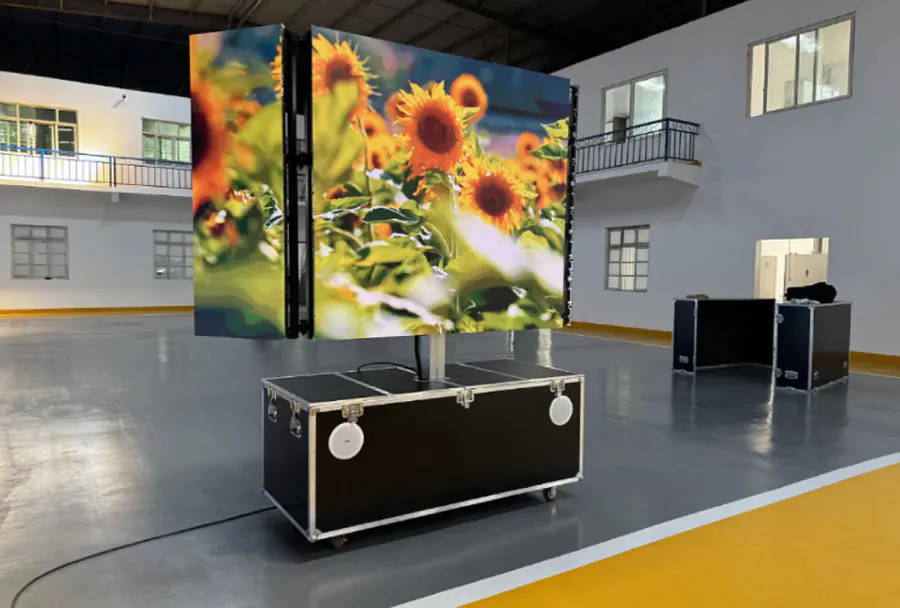
Learning how to choose an indoor LED display supplier for your office is a decision that affects your budget, your brand image, and your daily operations for years. Unlike consumer electronics, commercial LED displays involve custom pixel pitches, installation engineering, and multi-year service commitments, so a bad supplier choice is expensive to undo.
Table of Contents
- 1. Verify the Supplier’s Manufacturing and Certification Credentials
- 2. Compare Pixel Pitch, Brightness, and Refresh Rate for Office Conditions
- 3. Request Physical Samples and Third-Party Test Reports
- 4. Scrutinize Warranty Terms, Lead Times, and Payment Structure
- 5. Evaluate After-Sales Support and Local Service Reach
- What is the biggest mistake buyers make when selecting an LED display vendor?
- How long should installation and commissioning take for an office wall?
- Can I mix LED panels from two different manufacturers?
- Does a lower price always mean lower quality?
- What should I do if the supplier goes out of business after purchase?
- Conclusion
Many facility managers discover this the hard way when a screen arrives with mismatched panels or no local support. The global LED display market keeps expanding as prices fall, which means more vendors are competing for your order, and more of them are resellers with no factory behind them.
This guide walks you through five practical checks: verifying manufacturing capability, comparing technical specs, testing samples, reading contracts, and confirming after-sales support.
1. Verify the Supplier’s Manufacturing and Certification Credentials
The first filter is simple: confirm whether your candidate actually builds LED panels or just rebrands them. A genuine indoor LED display supplier will share factory audit reports, production line photos, and test data without hesitation. Knowing how to choose an indoor LED display supplier for your office starts with separating real manufacturers from middlemen who simply forward documents.
Ask for these documents directly:
– ISO 9001 certification for quality management systems
– CE, RoHS, and FCC marks depending on your region’s import rules
– IEC 62471 photobiological safety reports, which matter for screens viewed at close range in offices
– Factory audit reports from third-party inspection firms
Resellers often forward documents from their upstream factory, which can be outdated or belong to a different product line. Cross-check the certificate numbers against the issuing body’s public registry.
According to the International Trade Administration, importers are responsible for verifying that electronic goods meet U.S. safety and labeling requirements, and customs can detain shipments with invalid documentation. That liability lands on you, not the vendor.
Consider a mid-size office that ordered a 2.5mm pitch wall from an online marketplace seller. The panels arrived with CE labels that didn’t match any registered certificate, and the shipment sat in customs for weeks.
– Always request certificate numbers, not just scanned logos
– Verify at least one certificate through the issuer’s online database
– Ask which factory produced your specific panel batch
How to apply this: Send your shortlisted vendors a one-page document checklist today and score each response on completeness and speed.
2. Compare Pixel Pitch, Brightness, and Refresh Rate for Office Conditions
Spec sheets look similar across vendors, but the numbers that matter for an office differ from those for outdoor billboards. Your indoor LED display supplier should recommend specs based on viewing distance, ambient light, and camera use.
When you learn how to choose an indoor LED display supplier for your office, you quickly realize that configuration advice matters as much as the hardware itself.
The key parameters:
| Spec | What it tells you | Action to take |
|---|---|---|
| Pixel pitch (mm) | Sharpness at a given viewing distance | Match pitch to closest viewer seat |
| Brightness (nits) | Visibility under office lighting | Target 600–1,200 nits indoors |
| Refresh rate (Hz) | Flicker-free appearance on camera | Demand 3,840Hz for video calls |
| Gray scale (bit) | Color smoothness in gradients | Require 14-bit or higher |
| Power consumption | Long-term electricity cost | Ask for max and average watts |
A common scenario: a company buys a low-refresh panel for a conference room, then discovers it flickers on every video call recording. Refresh rate is the spec buyers overlook most often.
Vendors who can’t explain why they recommend a specific configuration for your room dimensions are usually working from a price list, not an engineering plan.
– Measure your closest and farthest viewing distances before requesting quotes
– State your camera and broadcast needs upfront
– Ask for a written justification of each recommended spec
How to apply this: Draw a simple floor plan with viewer positions marked, and email it to every supplier so their quotes are based on real conditions.

3. Request Physical Samples and Third-Party Test Reports
Samples expose what brochures hide. A serious indoor LED display supplier will ship a single panel or module for evaluation, sometimes free and sometimes for a refundable fee. This stage of how to choose an indoor LED display supplier for your office is where marketing claims meet measurable reality.
What to test on a sample:
- Inspect for dead pixels and color uniformity across the module
- Run a gray-scale gradient video and look for banding
- Photograph the panel with your phone camera to check for scan lines
- Measure surface temperature after an hour of operation
- Check the cabinet’s build quality, connectors, and cable routing
Third-party test reports add another layer. Labs like SGS and TÜV publish testing standards for electronic displays, and a supplier who has commissioned independent testing can usually produce the report on request.
One procurement team rejected a vendor after photographing a sample and finding visible moiré patterns that never appeared in the marketing video.
– Budget for one or two sample purchases per shortlist
– Document every defect with photos and timestamps
– Compare samples side by side under identical lighting
How to apply this: Order samples from your top two vendors this week and run the same five-step test on both, recording results in a shared spreadsheet.
4. Scrutinize Warranty Terms, Lead Times, and Payment Structure
The purchase contract reveals more about a supplier than any sales call. Vague warranty language and requests for full upfront payment are warning signs that your indoor LED display supplier may not stand behind the product. A structured approach to how to choose an indoor LED display supplier for your office always includes reading the fine print before signing anything.
Compare these contract elements:
– Warranty length: 2–5 years is standard for quality panels; lifetime claims are marketing
– Spare parts policy: what percentage of spare modules is included
– Lead time: quoted in writing with penalties for delay
– Payment terms: 30% deposit and balance on inspection is common and fair
– Dead-on-arrival policy: who pays return shipping
According to the U.S. Federal Trade Commission, written warranties must clearly state what is covered and what the consumer must do to obtain service, and ambiguous terms can be legally unenforceable. Apply the same skepticism to B2B contracts.
A facilities director once signed a deal with a 50% deposit and no delivery date clause. The screens arrived four months late, and there was no contractual remedy.
– Never pay 100% upfront to a new vendor
– Insist on a named delivery date with a delay clause
– Ask what happens if the manufacturer discontinues your panel model
How to apply this: Ask each shortlisted vendor for their standard contract and highlight every clause about delays, spares, and payment before you negotiate.
5. Evaluate After-Sales Support and Local Service Reach
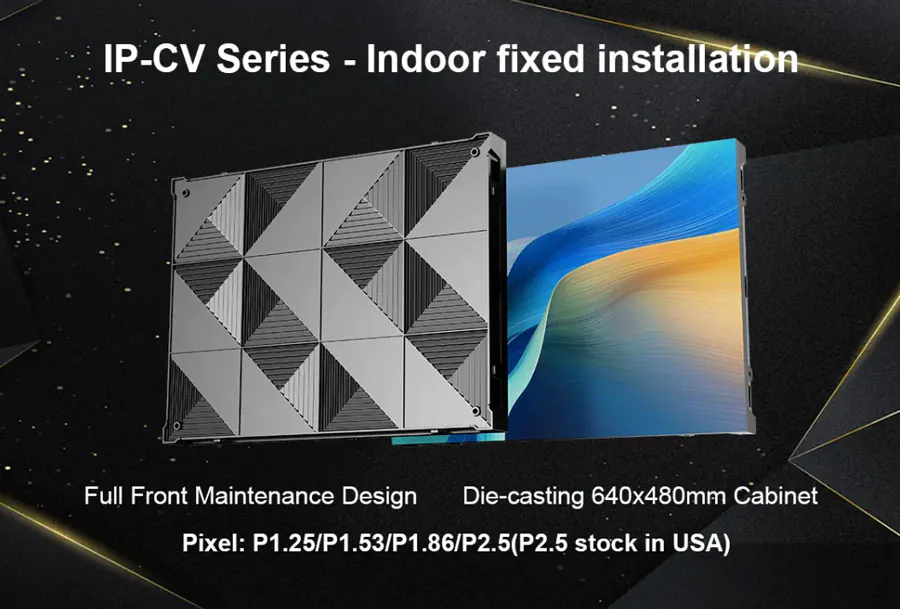
A display that fails on a Monday morning needs a fix before Friday’s client presentation. The quality of after-sales support separates a true indoor LED display supplier from a one-time shipper. The final piece of how to choose an indoor LED display supplier for your office is confirming that help exists after the invoice is paid.
Questions to ask about support:
– Do you have technicians or partners in my city or region?
– What is the guaranteed response time for a fault report?
– Can you provide remote diagnostics through the control software?
– How do I order replacement modules two years from now?
– Is there a documented escalation path for unresolved issues?
Response time commitments matter more than promises. Ask for the SLA in writing and check whether it covers labor, not just parts.
A regional bank branch learned this when a panel controller failed and the overseas vendor offered only email support in a different time zone, leaving the lobby screen dark for eleven days.
– Get the SLA signed as part of the purchase contract
– Confirm at least one local reference customer you can call
– Test the support channel with a minor question before you buy
How to apply this: Call the support line of each vendor as a pre-sales test and time how long it takes to reach a human who understands the product.
Frequently Asked Questions About How to Choose an Indoor LED Display Supplier for Your Office
What is the biggest mistake buyers make when selecting an LED display vendor?
Paying a large deposit before verifying the factory is the most common error. Buyers get swayed by glossy brochures and skip the certificate and reference checks. Always inspect documents, request samples, and talk to existing customers before money changes hands.
A disciplined process for how to choose an indoor LED display supplier for your office protects your budget and your timeline.
How long should installation and commissioning take for an office wall?
A typical 4×2 meter indoor wall takes two to five days to install and calibrate, depending on cabinet design and site readiness. Complex curved walls or ceilings with limited access can double that. Ask your vendor for a written installation schedule and confirm who handles rigging, power, and network cabling. Delays usually come from site preparation, not the panels themselves.
Factoring installation time into how to choose an indoor LED display supplier for your office prevents nasty surprises on move-in day.
Can I mix LED panels from two different manufacturers?
No. Cabinets, connectors, and control systems are rarely cross-compatible, and mixing brands voids warranties and creates calibration nightmares. Even panels from the same factory but different production batches can show color shifts. If you need to expand later, buy spare modules from the original order.
This is why verifying how to choose an indoor LED display supplier for your office includes checking their long-term parts availability.
Does a lower price always mean lower quality?
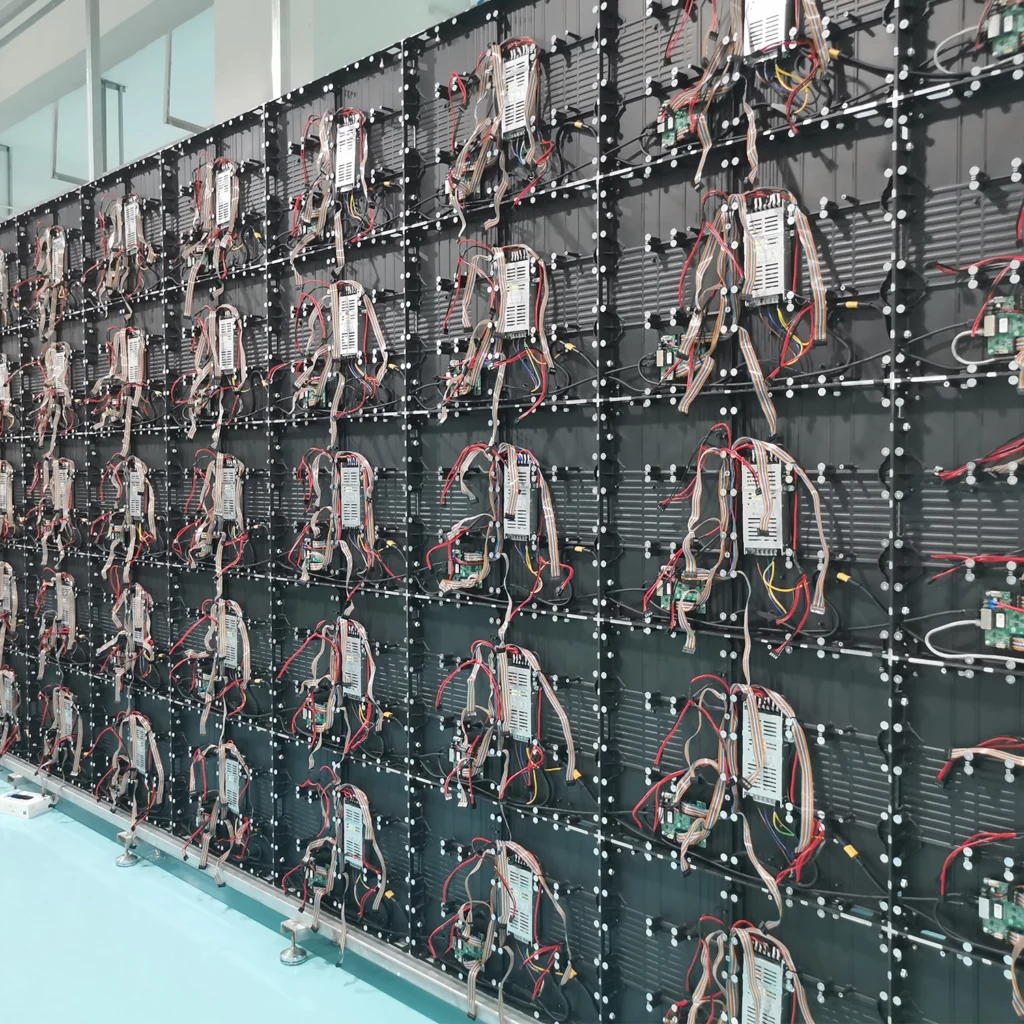
Not always, but steep discounts usually mean cheaper driver ICs, thinner cabinets, or reduced testing. Price differences between vendors often reflect component grade, not margin. Ask what specific parts differ when one quote is 30% cheaper. Request the bill of materials and compare driver IC, power supply, and LED chip brands before deciding.
Understanding how to choose an indoor LED display supplier for your office means judging value, not just the bottom line.
What should I do if the supplier goes out of business after purchase?
This risk is why you should buy from established manufacturers with years of market presence and, ideally, a local distributor. Keep spare modules in storage, since a third-party repair shop may struggle to source matching parts.
Check how to choose an indoor LED display supplier for your office by reviewing company age, financial stability, and whether they have a regional entity you can pursue legally.
Conclusion
Choosing the right partner comes down to evidence, not sales pitches. Verify factory credentials and certifications before anything else. Match pixel pitch, brightness, and refresh rate to your actual room conditions. Test physical samples and third-party reports rather than trusting spec sheets. Lock down warranty, lead time, and payment terms in writing.
And confirm that local after-sales support exists before you sign. Every step of how to choose an indoor LED display supplier for your office builds on the one before it.
– Check certificates against public registries
– Demand camera-ready refresh rates for meeting rooms
– Never pay fully upfront to a new vendor
– Get the support SLA signed into the contract
Start today by sending your document checklist to three shortlisted vendors and ordering samples from the top two. A structured approach to how to choose an indoor LED display supplier for your office will save you far more than it costs in time.
Related Articles
- ultra thin flexible led screen: Best ultra thin flexible
- flexible transparent led screen: 6 Best for Modern Displays
- led screen panel: Complete Buyer & Usage Guide: Expert Guide
