

LED screen for outdoor corporate events: 5 Best Secrets

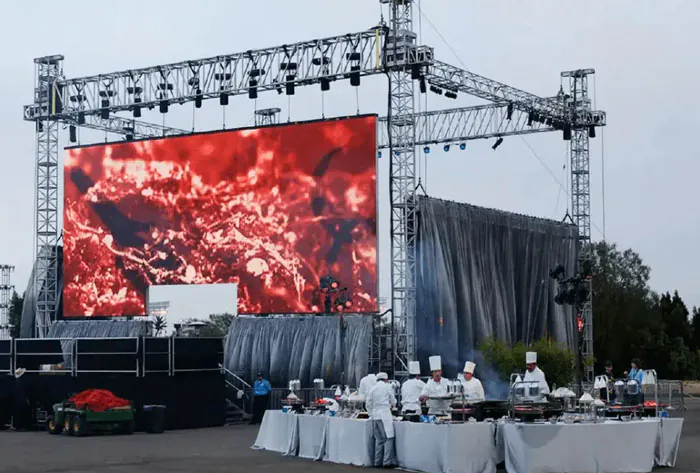
Choosing an LED screen for outdoor corporate events is not a simple matter of renting the largest panel available. The same display that looks sharp in a dim conference room can become washed out, hard to read, or unsafe when sunlight, wind, and dust enter the picture.
Table of Contents
- 1. Plan for Unforgiving Light Before You Book
- Why Nits Matter More Than Resolution Outdoors
- 2. Match Pixel Pitch to Viewing Distance
- 3. Confirm Weatherproofing, Power, and Rigging
- 4. Design Content That Survives Distance and Glare
- 5. Rent Smart, Vet the Vendor, and Test Early
- Hidden Costs and the One Test That Matters
- How far in advance should I book an outdoor LED screen for a corporate event?
- Can I use an indoor LED screen outside if the weather forecast is clear?
- What should I do if the screen loses power or a section of modules fails mid-event?
- Do I need a permit for an outdoor LED screen at a corporate event?
- Should I choose a trailer-mounted LED screen or a ground-supported wall?
- Conclusion
Many planners only notice this during a live test, with attendees already on site. The practical priority changes from resolution alone to brightness, pixel pitch, weatherproofing, and power stability. Below are the five decisions that matter most, along with a comparison table for viewing distances and a vendor checklist you can use before signing the rental agreement.
1. Plan for Unforgiving Light Before You Book
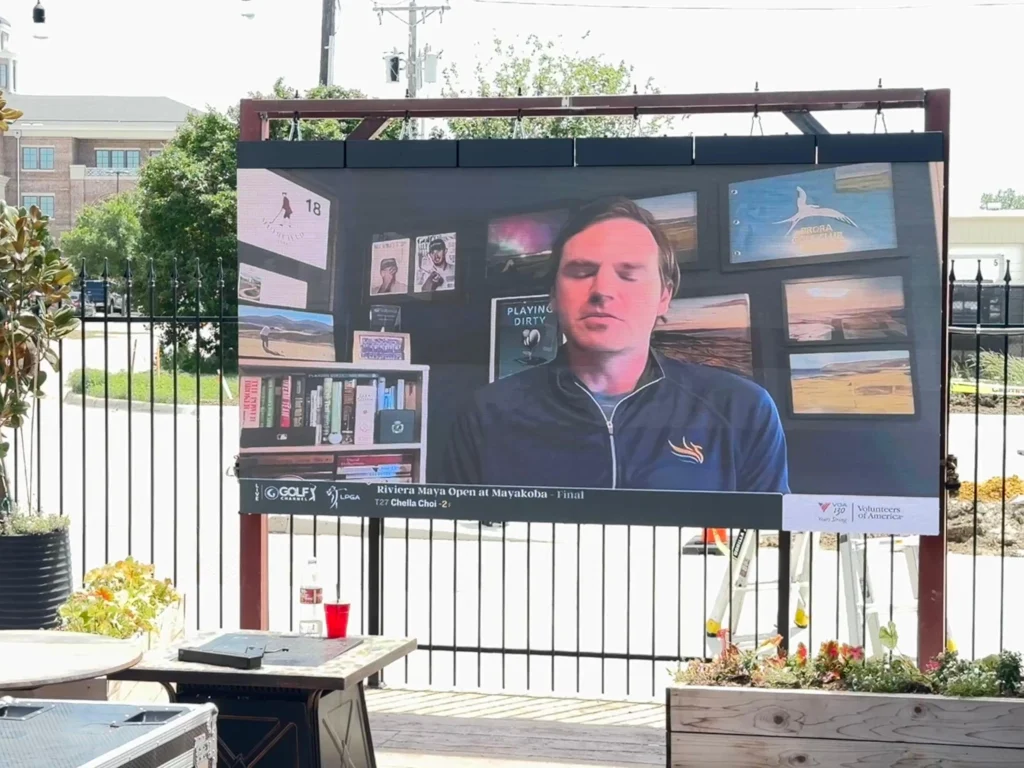
An LED screen for outdoor corporate events has to compete with direct sun, reflective buildings, and shifting shadows. According to AVIXA, the Audiovisual and Integrated Experience Association, outdoor displays require higher brightness and contrast than indoor displays to remain legible in high ambient light.
That is why event AV teams rate outdoor panels in nits, with direct-sun placements needing a much higher nit count than shaded or evening setups.
Why Nits Matter More Than Resolution Outdoors
Outdoors, perceived sharpness depends on both pixel pitch and contrast. A high-resolution indoor panel can look worse than a lower-resolution outdoor module if the brightness cannot overcome sunlight. When you cannot visit the site at the event hour, ask the vendor for a written brightness target rather than accepting an indoor default.
This early check changes how an LED screen for outdoor corporate events performs for the rest of the day.
How to apply this: walk the venue at the exact event time, note where shadows fall, and require the vendor to state the nit rating for that position.
2. Match Pixel Pitch to Viewing Distance
Pixel pitch is the distance in millimeters between adjacent LED clusters, and it controls how close attendees can stand before the image breaks into visible dots. An LED screen for outdoor corporate events used for a product demo where guests stand six feet away needs a much smaller pitch than a stage wall viewed from a 60-foot audience.
Manufacturers such as TW VISION publish pixel pitch and brightness specifications for each outdoor series, which helps you compare like-for-like.
| Viewing scenario | Common pitch range | Action to take |
|---|---|---|
| Product demo, close viewing | P2.6–P3.9 | Measure the closest attendee distance before booking |
| Registration or walkway | P4.8–P6 | Confirm readability from 10–30 feet |
| Stage or keynote wall | P6–P10 | Prioritize size and brightness over fine detail |
A smaller pitch often costs more but delivers no visible benefit when viewers are far away. That makes the closest planned viewer the most important measurement for an LED screen for outdoor corporate events.
How to apply this: mark the closest attendee position on the site map and request a pitch-to-distance calculation from the vendor before you commit.
3. Confirm Weatherproofing, Power, and Rigging
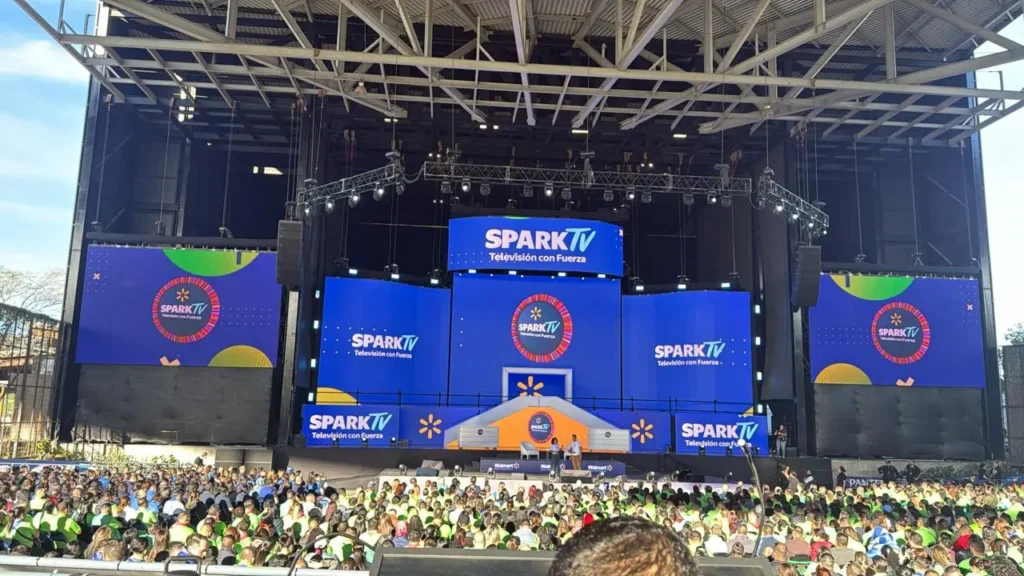
A bright panel is useless if it shuts down in dust or shakes in high wind. The IEC 60529 standard defines IP ratings, and an LED screen for outdoor corporate events should usually be rated IP65 or higher on the front and rear of the module.
IP65 means dust-tight and protected against low-pressure water jets, while IP66 adds stronger jet protection. The rating covers the panel, not the processor, cabling, or generator.
Power is another common failure point. Large outdoor LED walls often need more than a standard wall outlet, and an undersized generator can cause flicker or reboots. Wind load ratings matter for truss and trailer systems, especially in open plazas and rooftop venues.
How to apply this: request three written documents before booking: the panel IP rating, the structure wind-speed rating, and the generator load calculation.
4. Design Content That Survives Distance and Glare
Even the best LED screen for outdoor corporate events cannot fix content that is too small, low-contrast, or too busy. Laptop-sized text usually fails at a typical keynote viewing distance in direct sun. Design for the farthest viewer first: large type, short messages, and high-contrast pairs such as white on dark blue or black.
A useful test is to stand at the planned viewing distance during a daylight test and read the screen with your eyes, not through a camera. If a lower-third speaker name disappears, it will disappear for attendees too. Many AV producers use a dedicated daylight test slide rather than relying on full-motion video.
A daylight test should be mandatory for every LED screen for outdoor corporate events.
How to apply this: create one high-contrast test slide and require a daytime preview before the event opens.
5. Rent Smart, Vet the Vendor, and Test Early
For most companies, renting an LED screen for outdoor corporate events is the lowest-risk option. Buying means owning the repairs, storage, spare modules, and technician training. Rental shifts upkeep to the AV company, which is valuable when you run outdoor events only a few times each year.
Cvent, an event management platform, helps planners collect side-by-side AV quotes and compare delivery, setup, and teardown line items rather than judging by base price alone. Ask whether the crew leader holds the AVIXA Certified Technology Specialist credential or an equivalent certification.
Hidden Costs and the One Test That Matters
Check for generator fuel, overnight security, municipal permits, last-mile labor, and overtime before you sign. Before doors open, run a technical test with your logo, a lower-third name, and a camera feed on the actual screen. This catches dead modules and contrast problems early enough to fix them.
An LED screen for outdoor corporate events is only as reliable as the technician on site.
How to apply this: build a three-vendor comparison that separates panel rental from crew, power, and contingency costs, and require a 20-minute daytime test before go-live.
Frequently Asked Questions About LED screen for outdoor corporate events
How far in advance should I book an outdoor LED screen for a corporate event?
Peak spring and fall dates often book out several weeks to a few months ahead in large metro areas. The safest approach is to secure an LED screen for outdoor corporate events at the same time you confirm the venue, not after invitations go out.
For last-minute events, a smaller trailer-mounted unit may still be available, but you will likely have fewer brightness and size options.
Can I use an indoor LED screen outside if the weather forecast is clear?
No, even on a dry day an indoor panel is a poor fit. Indoor modules usually lack sealed enclosures designed for dust, humidity, and temperature swings. An LED screen for outdoor corporate events is built with higher brightness and weatherproofing, so an indoor unit may also overheat or wash out.
The only possible exception is a fully covered, climate-controlled space, and most vendors still advise against it.
What should I do if the screen loses power or a section of modules fails mid-event?
Have a dedicated technician on site from the start. The vendor should carry spare modules, receiving cards, and power supplies. For an LED screen for outdoor corporate events, ask in advance whether the processor has a redundant backup or a hot spare that can be swapped quickly.
A single dead panel is easier to fix than a full blackout, so confirm generator redundancy before doors open.
Do I need a permit for an outdoor LED screen at a corporate event?
It depends on the venue and municipality. Private hotel grounds may not require one, but public streets, parks, and mixed-use plazas often require a permit or structural review. An LED screen for outdoor corporate events may also trigger noise or light restrictions if it faces residential buildings late at night.
Ask the venue and local authority in writing, and make the AV vendor list permit requirements in the scope.
Should I choose a trailer-mounted LED screen or a ground-supported wall?
Trailer-mounted units arrive faster and work well when the site has limited setup time or soft ground. A ground-supported wall offers more sizing flexibility but needs more labor and a stable surface.
For an LED screen for outdoor corporate events, choose the trailer when access is simple and wind exposure is moderate; choose a ground build when you need a larger wall and have time for installation.
Conclusion
An LED screen for outdoor corporate events succeeds or fails before the first logo appears. Keep these takeaways in mind:
– Choose brightness for the actual sun path, not the vendor’s indoor default.
– Match pixel pitch to the closest attendee position.
– Confirm IP ratings, wind load, and generator capacity in writing.
– Design large, high-contrast content and require a daytime test.
– Rent first, compare full costs, and verify the on-site technician.
Start with a daylight site survey and a written quote that separates panel rental from power, crew, and logistics. If a vendor cannot answer nit rating, pitch, and IP rating questions clearly, look elsewhere. A short pre-event inspection is easier than fixing a blank screen during a keynote.
That discipline turns a technical rental into a reliable piece of corporate communication.
