

Outdoor LED Screen Rental for Different Events

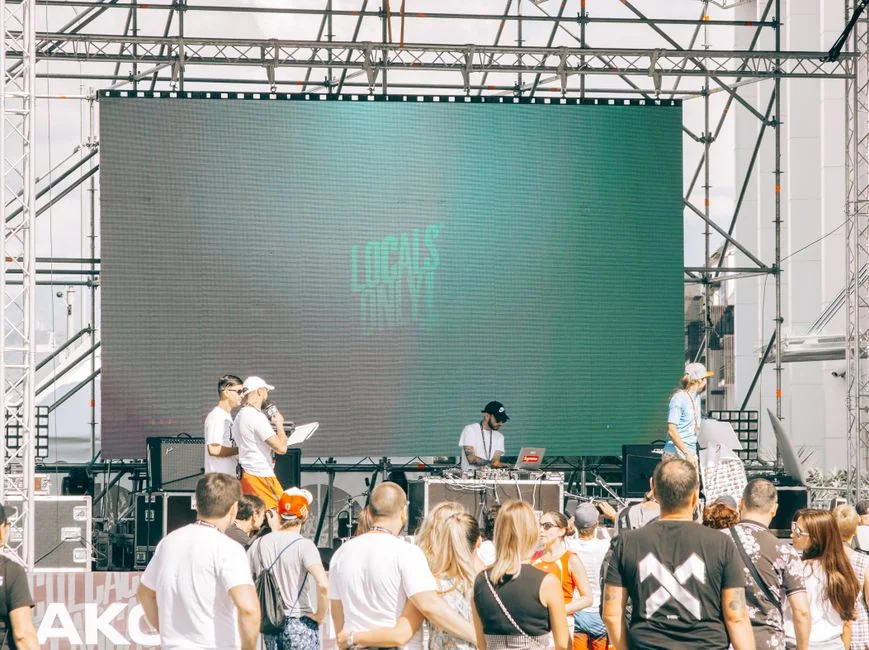
Outdoor LED screen rental has become a core part of live event production, from city festivals to corporate product launches. Many event planners now rank video displays as one of the fastest-growing line items in their AV budgets.
The problem is not finding a screen; it is choosing the right size, brightness, format, power setup, and contract terms without overspending or hitting on-site delays.
Table of Contents
- 1. How Outdoor LED Screen Rental for Different Events Pricing Works
- 2. Match Screen Size, Resolution, and Brightness to Your Event
- How to Read a Spec Sheet
- 3. Ask About Brightness Rating and Sunlight Readability
- 4. Choose Between a Mobile LED Trailer and a Modular Wall
- 5. Plan Permits, Power, and On-Site Logistics Early
- Power and Permit Checklist
- 6. Protect the Booking with a Clear Contract and Technical Support
- Contract Checklist
- 1. What brightness level do I need for a daytime outdoor event?
- 2. Can I rent an outdoor LED screen for a single day?
- 3. How much power does an outdoor LED screen rental need?
- 4. What happens if it rains during an outdoor LED screen event?
- 5. Do I need to hire a technician with the rental?
- Conclusion: Make Your Next Outdoor LED Screen Rental a Win
This guide breaks down five practical wins that help you secure the right rental. You will learn how pricing works, what screen specs matter, which physical format fits your event, how to plan power and permits, and what to lock into your contract. Each section ends with an action you can complete today.
1. How Outdoor LED Screen Rental for Different Events Pricing Works
Many first-time renters assume the screen itself is the main cost. In practice, an outdoor LED screen rental for different events is built from several line items that can change quickly.
According to the American Rental Association, equipment rental quotes for event production often include accessories, delivery, setup, and operator labor in addition to the base unit. That means two quotes for the same screen can look very different until you compare line items.
A practical way to compare local options is to list qualified AV vendors through a directory such as ProductionHUB, which connects event planners with production crews and equipment suppliers.
Key cost drivers include:
– Screen size and pixel pitch
– Delivery distance and travel time
– On-site technician fees
– Generator and power distribution
– Weather protection and contingency gear
When budgeting for an outdoor LED screen rental for different events, treat the screen as one part of a system, not a flat rental. How to apply this: ask three vendors for itemized quotes that separate equipment, transport, crew, and power.
2. Match Screen Size, Resolution, and Brightness to Your Event
The right outdoor LED screen rental for different events starts with three technical choices: total screen area, pixel pitch, and brightness. Each choice changes what your audience can actually see.
The Society for Experiential Graphic Design publishes legibility guidance showing that viewer distance, character height, and contrast determine whether outdoor text and video are readable. In bright sunlight, a screen needs enough output to overcome direct light, so always confirm the rental unit is weather-sealed and sunlight-readable.
How to Read a Spec Sheet
– Screen area: match it to your audience depth and expected crowd size
– Pixel pitch: tighter pitch improves close-view readability but costs more
– Brightness: outdoor daytime units need stronger output than indoor panels
– Weather rating: confirm the screen is rated for rain, dust, and wind exposure
| Factor | What it affects | Action to take |
|---|---|---|
| Pixel pitch | Closest readable distance | Request a viewing distance chart |
| Screen area | Visibility for large crowds | Measure your audience depth |
| Brightness | Daylight readability | Check nits rating and sun position |
| Weather rating | Rain and dust protection | Confirm IP65 or equivalent |
Consider a corporate outdoor kickoff where the CEO needs to read slides from far back. A modular wall with tighter pixel pitch becomes essential when viewers stand close to the stage, while a coarser pitch may work for a distant music crowd.
How to apply this: measure the farthest viewing distance and request a viewing distance chart before you lock a screen size. For any outdoor LED screen rental for different events, brightness is the first spec that separates a usable daytime display from a wasted investment.
3. Ask About Brightness Rating and Sunlight Readability
Daylight is the real test for outdoor screens. An indoor panel moved outside will look washed out, even in partial shade. Many event producers report a noticeable improvement when they choose panels built for direct sun and high-ambient light.
A common scenario: a brand activation under a white tent still has enough ambient light to wash out a low-brightness panel. Ask the rental company whether the display is IP-rated for outdoor use and whether it can run all day at the brightness you need.
Use this comparison to prioritize specs by rental scenario.
| Rental scenario | Spec to prioritize | Action to take |
|---|---|---|
| Daylight festival main stage | High-brightness, wider pixel pitch | Ask for a sunlight-readable panel rating |
| Close-up trade show activation | Fine pixel pitch | Request a demo at your exact viewing distance |
| Sports watch party | Fast setup and weatherproofing | Confirm IP rating and on-site technician |
| Corporate keynote | Color calibration and redundancy | Ask about spare modules and backup processor |
| Roadshow tour | Modular truck or trailer mount | Verify delivery windows and permitting support |
4. Choose Between a Mobile LED Trailer and a Modular Wall
The physical format you choose for an outdoor LED screen rental for different events changes setup time, budget, and how your venue handles crowds.
Many planners report that mobile LED trailers tend to deploy faster because the screen, lift system, and control equipment arrive in one unit. Modular walls offer more flexibility for curved or branded stage designs but require more crew and rigging time.
– Mobile trailer: best for street fairs, watch parties, and short setup windows
– Modular wall: best for keynotes, concerts, and stage backdrops
– Portable or inflatable screen: best for backyard movie nights and school assemblies
In one case, a downtown food festival chose a mobile trailer screen because the city permit limited setup to two hours before opening. The trailer arrived, raised the screen, and was content-ready within that window.
When comparing an outdoor LED screen rental for different events, request setup and strike times in writing. How to apply this: list your setup window and venue access first, then ask the rental company which format fits your schedule.
5. Plan Permits, Power, and On-Site Logistics Early
A smooth outdoor LED screen rental for different events depends on what happens before the truck arrives: permits, power, and access.
Permit timelines vary by city. Temporary structures on public land or trailers parked on streets typically require a review, and some municipalities need applications submitted weeks ahead. Confirm with your local permitting office instead of assuming the rental company handles it.
Power and Permit Checklist
– Ask the rental company for peak wattage or amp draw
– Share the load sheet with your generator vendor
– Reserve a backup generator or distribution path for outdoor weather
– Mark staging area, parking, and cable paths on a site map
– Assign someone to meet the delivery driver on load-in day
A tool like Rentman can help production managers track crew assignments, equipment reservations, and delivery windows so nothing gets lost in email threads.
A common scenario is a venue that books a trailer screen but forgets to reserve a flat, level pad. The delivery crew then loses an hour repositioning, and the event starts behind schedule.
For an outdoor LED screen rental for different events, the most avoidable delays come from undersized generators and unclear site access. How to apply this: email your venue or city contact today and ask what temporary structure and power approvals are needed.
6. Protect the Booking with a Clear Contract and Technical Support
Your outdoor LED screen rental for different events should be protected by a contract that names equipment, service hours, and what happens if weather interrupts the event.
The American Rental Association notes that rental agreements should clearly define insurance, liability, and damage responsibility before equipment reaches the site. Ask who covers damage from wind, rain, or crowd contact, and get that in writing.
Contract Checklist
– Certificate of insurance and damage waiver terms
– Rain and wind limits, especially for trailer screens
– On-site technician included or billed hourly
– Refund or credit if the screen fails during the event
A wedding planner who books a screen for an outdoor reception should ask whether the operator stays through the first dance or only handles setup. Small service details determine whether the rental feels reliable.
When reviewing an outdoor LED screen rental for different events contract, compare whether technical support is included as part of the package or billed hourly. How to apply this: before signing, ask for a sample contract and highlight insurance, weather, and operator clauses.
Frequently Asked Questions About Outdoor LED Screen Rental for Different Events
1. What brightness level do I need for a daytime outdoor event?
Daytime events usually need a high-brightness, sunlight-readable panel because direct sun washes out lower-output screens. A shaded or evening setup can use a standard-output unit and save money. When you book an outdoor LED screen rental for different events, ask for a brightness test video or on-site demonstration before the event day.
2. Can I rent an outdoor LED screen for a single day?
Yes, but one-day pricing may not be much lower than a weekend rate because transport, setup, and labor costs stay the same. Some companies offer weekday discounts or off-season rates for a single-day outdoor LED screen rental for different events. If your event is on a Saturday, ask about Friday delivery and Sunday pickup to avoid premium short-turn fees.
3. How much power does an outdoor LED screen rental need?
Power draw depends on screen size, brightness, and whether you add audio or processing equipment. Ask the rental company for peak wattage or amp draw, then size your generator with headroom. A large outdoor LED screen rental for different events may need three-phase power and separate distribution, so share the load sheet with your venue electrician before load-in.
4. What happens if it rains during an outdoor LED screen event?
Most professional outdoor LED panels carry weatherproof ratings, but wind, pooling water, and lightning can still stop a show. Your contract should name a rain plan and any cancellation window.
If you book an outdoor LED screen rental for different events in a rainy season, confirm whether the supplier provides covers, quick-disconnect power, and an operator who can shut down safely.
5. Do I need to hire a technician with the rental?
Many companies require one technician for outdoor setups because content mapping, generator sync, and weather monitoring are not plug-and-play. The extra cost often prevents bigger losses from a dead screen. When comparing an outdoor LED screen rental for different events, ask if the technician fee includes pre-event testing and real-time brightness adjustments during the show.
Conclusion: Make Your Next Outdoor LED Screen Rental a Win
Outdoor LED screens reward planners who sweat the details early. Secure the right equipment with these moves:
– Request itemized quotes that separate equipment, transport, power, and crew.
– Match screen size, pixel pitch, and brightness to your farthest viewer.
– Choose a mobile trailer, modular wall, or portable setup based on site access.
– Lock insurance, weather, and operator support into the contract.
Start with a site walk and three local quotes before you commit. With the right plan, an outdoor LED screen rental for different events becomes a high-impact asset instead of a last-minute risk.
