

TW VISION Professional Giant LED Screen Rental for Events

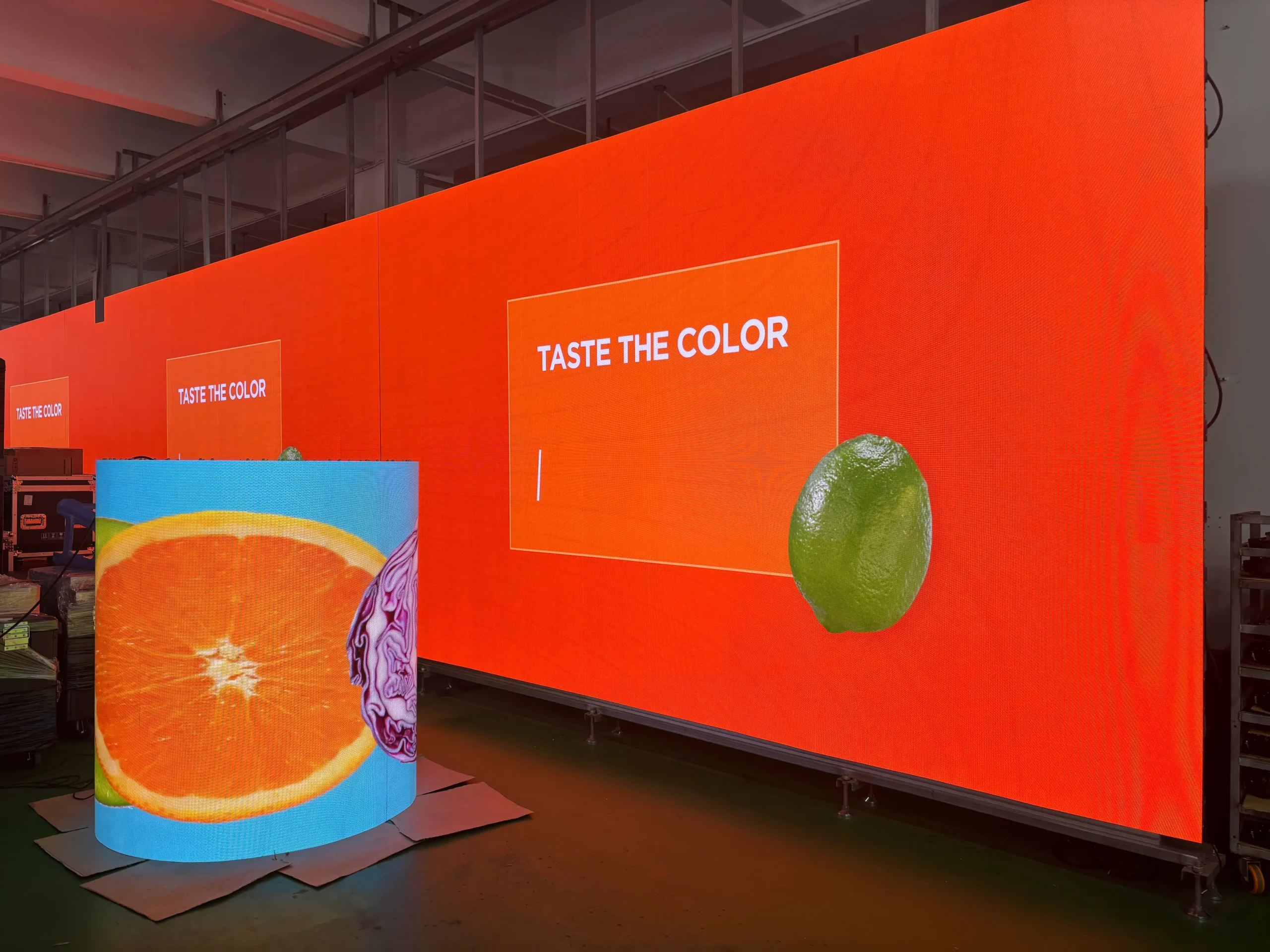
Giant LED Screen for Events: How to Choose the Right Large LED Display starts with one overlooked decision: pixel pitch, not screen size alone. What surprises many event planners is that a screen that looks brilliant in a showroom can become a pixelated wall if the nearest audience seat is only a few feet away.
Table of Contents
- Secret 1: Match Pixel Pitch to the Nearest Viewer
- Secret 2: Match the Panel Type to the Environment
- Indoor, Outdoor, and In-Between
- Secret 3: Size the Wall to the Room, Not the Stage
- Secret 4: Verify Rigging, Power, and Processing Before You Sign
- What to Request from the Vendor
- Secret 5: Compare Rental vs. Purchase by Total Cost of Use
- Hidden Costs to Include
- Secret 6. Design for Glare, Weather, and Off-Axis Viewing
- Secret 7. Build a Backup Path So One Failure Doesn’t End the Show
- What pixel pitch works best for a wedding or gala photo wall?
- Can I use an indoor LED panel outdoors under a tent?
- How do I avoid moiré patterns when filming the LED wall?
- Is a modular LED wall better than a projector for a keynote?
- How early should I book an LED screen for a conference?
- Conclusion
Industry surveys consistently show that resolution, brightness, and rigging detail are more common points of failure than the panel brand itself.
The problem is that rental quotes bundle dozens of variables, and a single specification mistake can mean blurry text, a washed-out stage, or a wall that cannot hang safely in the venue. This guide breaks the decision into five practical checks: pixel pitch, panel type, room sizing, power and processing, and rental versus purchase.
Secret 1: Match Pixel Pitch to the Nearest Viewer
Pixel pitch is the distance in millimeters between the centers of adjacent LED diodes. It controls how close people can stand before the image falls apart.
Evaluating a giant LED screen for events: how to choose the right large LED display begins with the nearest viewer, not the farthest. A practical field guideline is that each millimeter of pixel pitch equals about one meter of minimum comfortable viewing distance. For a P3.9 panel, viewers should be at least about 3.9 meters, or roughly 13 feet, away.
Most planners choose a giant LED screen for events: how to choose the right large LED display without measuring the closest seat. That is a costly mistake.
| Pixel pitch | Typical minimum distance | Best event use | What to check |
|---|---|---|---|
| P1.9 | 1.9 m (6 ft) | Photo walls, product demos, close audiences | Nearest seat to screen |
| P2.6 | 2.6 m (8.5 ft) | Ballrooms, conferences, blended stages | Main seating block |
| P3.9 | 3.9 m (13 ft) | Concerts, large keynotes, outdoor stages | General admission distance |
| P4.8 | 4.8 m (16 ft) | Outdoor backdrops, distant viewing | Farthest and nearest seat |
If the nearest viewer is 10 feet away, a P3.9 panel may look soft. A P2.6 panel is safer. How to apply this: mark the closest attendee seat on your floor plan, convert that distance to meters, and choose a pixel pitch equal to or smaller than that number.
Secret 2: Match the Panel Type to the Environment
Indoor and outdoor LED panels differ in brightness, weather sealing, and cabinet weight. Choosing a giant LED screen for events: how to choose the right large LED display also means matching the panel’s IP rating and brightness to the venue.
Indoor LED panels are commonly specified around 1,000 to 1,500 nits. Outdoor panels for direct sun are often rated 4,500 nits or higher, according to typical manufacturer specification sheets. Outdoor panels usually carry IP65 on the front and IP54 or higher on the rear. Indoor panels may not be sealed against rain, dust, or high humidity.
Indoor, Outdoor, and In-Between
A covered terrace with bright side light can still wash out an indoor screen even without rain. Specifying a giant LED screen for events: how to choose the right large LED display means reading IP ratings before falling for a bright demo.
How to apply this: walk the venue at show time, note sunlight and humidity, and ask the supplier to demonstrate the exact panel in comparable light rather than in a dark showroom.
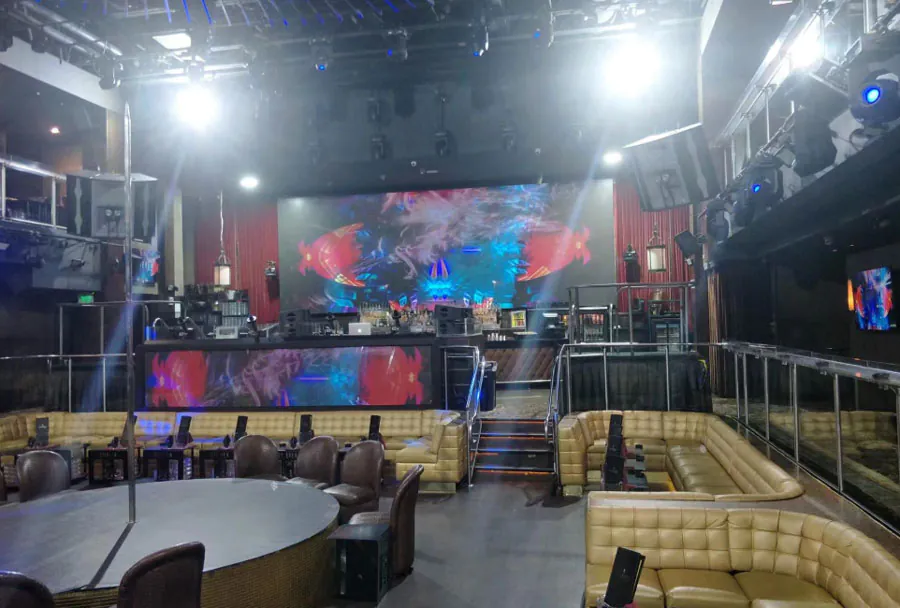
Secret 3: Size the Wall to the Room, Not the Stage
Screen height should be derived from the farthest viewer, not from the stage width or a sales package. When you specify a giant LED screen for events: how to choose the right large LED display, the AVIXA display size standard is a practical starting point.
AVIXA‘s display image size standard states that for detailed viewing tasks, screen height should be about one-sixth of the farthest viewer distance. In a 60-foot room, that works out to about a 10-foot image height for readable slides. A 16:9 wall then becomes about 17.8 feet wide.
A giant LED screen for events: how to choose the right large LED display sized only by budget often leaves the back row squinting. LED cabinets are often 500 mm × 500 mm or 500 mm × 1000 mm, so the final wall will round up to whole cabinets. This can change the aspect ratio slightly.
How to apply this: take your farthest seat distance, divide by 6 for text-heavy shows, and ask the supplier to show the exact cabinet count and final wall dimensions before you approve the design.
Secret 4: Verify Rigging, Power, and Processing Before You Sign
A giant LED panel is not a projector screen. It is a heavy electrical and structural system. Renting a giant LED screen for events: how to choose the right large LED display without checking rigging and power can create a show-day failure.
LED cabinet weight varies by design, but a multi-panel wall often requires a truss and a certified rigger. Manufacturer data sheets list both maximum and average wattage, and you should design for maximum draw, not average. A large outdoor wall can require a dedicated three-phase generator feed rather than standard wall outlets.
What to Request from the Vendor
Every giant LED screen for events: how to choose the right large LED display needs a clear power, data, and rigging map. Novastar processors send the video signal to receiving cards and handle calibration, while Resolume maps custom content across the wall.
How to apply this: request a rigging plot, power schedule, and processor model from the vendor, then have your venue’s electrician and rigger sign off before you pay a deposit.
Secret 5: Compare Rental vs. Purchase by Total Cost of Use
LED walls can be rented per panel, per square meter, or as a full production package. The cheapest line item is rarely the cheapest event. Whether to own a giant LED screen for events: how to choose the right large LED display often comes down to how many times you will use it each year.
A recurring monthly roadshow may hit ownership break-even faster than a single annual gala. Many AV firms analyze total cost over 12 to 24 months, and recurring monthly users often reach break-even before the second season.
Hidden Costs to Include
A giant LED screen for events: how to choose the right large LED display should be evaluated on total cost of use, not the rental line item. Purchase adds storage, trucking, crew, spare modules, calibration, and firmware upkeep. Rental bundles these services but charges for every use and last-minute change.
How to apply this: build a 12-month event calendar, get two quotes—one rental and one purchase with operational costs—and calculate break-even before choosing an ownership model.
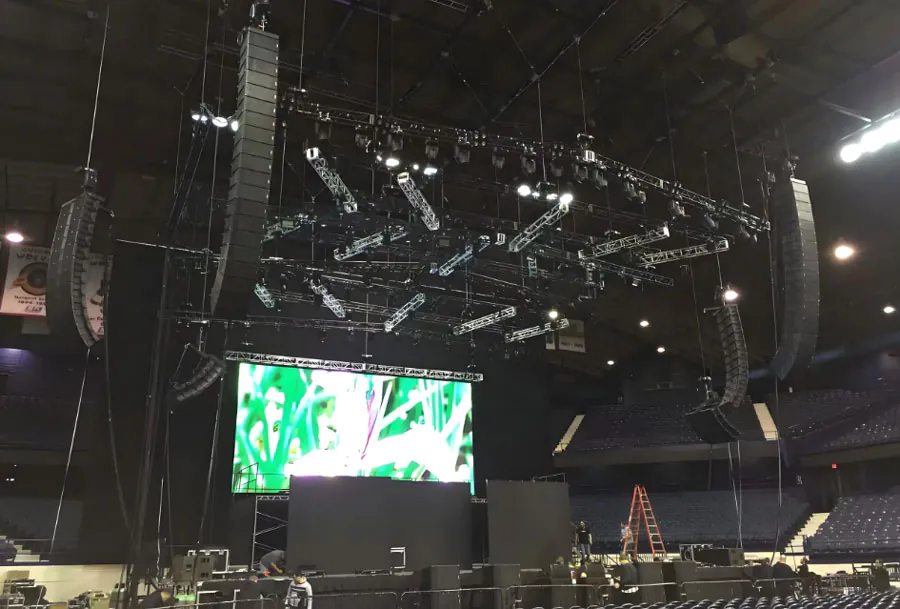
Secret 6. Design for Glare, Weather, and Off-Axis Viewing
Visibility decides whether a giant LED screen for events adds energy to the room or becomes an expensive backdrop. Check the panel’s rated viewing angle and brightness, called nits. Indoor panels often land between 1,200 and 2,500 nits, while outdoor daylight screens usually need 5,000 nits or more.
If your stage faces a west window or the screen sits in direct sun, ask for a higher-brightness outdoor-rated cabinet. Off-axis seats matter too: most LED panels hold color well within a 140–160 degree horizontal range, then shift.
When you place a giant LED screen for events in a ballroom with chandeliers or polished floors, account for reflected light that can wash out dark content. Confirm the screen’s vertical viewing angle if mezzanine or balcony seating is part of the room.
If the screen will be used outdoors after dusk, lower brightness may be more important than maximum output.
How to apply this: walk the venue floor with a site plan and mark the farthest off-axis seat, then confirm the panel’s horizontal spec covers it.
Secret 7. Build a Backup Path So One Failure Doesn’t End the Show
A giant LED screen for events can fail like any live production tool, and the audience will notice immediately. Build redundancy at the weakest points: media server output, scaler, processor, and power input.
Consider a keynote where the main server crashes five minutes before doors open; a second output routed to a spare processor can keep loop content and lower-thirds running while the operator restarts. Many teams also pre-rig a spare power feed or use a UPS on critical control gear.
Treat a giant LED screen for events as a live system, not a set piece, and assign one person to monitor processor status throughout the show. At minimum, confirm the vendor carries spare LED modules and a spare processor on the truck. A spare module is useless if nobody on site knows how to replace it.
How to apply this: write a one-page failover plan that names the backup input, spare panels, and the person who holds the processor password.
Frequently Asked Questions About Giant LED Screen for Events: How to Choose the Right Large LED Display
What pixel pitch works best for a wedding or gala photo wall?
For a photo wall where guests stand 2 to 3 meters away, choose P1.9 or P2.6. Anything looser will look soft in close-up phone photos. If the same wall sits behind a dance floor with guests farther back, P2.6 is usually enough.
When you specify a giant LED screen for events: how to choose the right large LED display, ask to see camera samples at your expected closest distance.
Can I use an indoor LED panel outdoors under a tent?
Only if the tent is fully enclosed, dry, shaded, and the panel has adequate ventilation. Indoor panels are not sealed against rain, dust, or high humidity, and direct sun can wash out 1,000 to 1,500 nits. A better option is an outdoor-rated panel with IP65.
A giant LED screen for events: how to choose the right large LED display should never be judged by showroom brightness under uncontrolled outdoor light.
How do I avoid moiré patterns when filming the LED wall?
Moiré appears when the camera sensor grid interferes with the LED pixel grid. Reduce it by using a lower pixel pitch, lowering screen brightness, adjusting the camera shutter angle, or moving the camera slightly. A giant LED screen for events: how to choose the right large LED display often includes a processor setting for refresh rate.
Test with the actual broadcast camera during rehearsal before the live stream.
Is a modular LED wall better than a projector for a keynote?
LED walls hold up much better in high ambient light, offer deeper contrast, and avoid shadow interference. Projectors may beat LED in low-light rooms with very tight budgets or ultra-large seamless images.
If your keynote has bright stage lighting or windows, using a giant LED screen for events: how to choose the right large LED display usually wins on visibility and modern stage design.
How early should I book an LED screen for a conference?
Book 4 to 6 weeks ahead for standard rental stock, and 8 to 12 weeks ahead during trade show seasons or holidays. Custom cabinet counts and processor mapping take extra time.
For a giant LED screen for events: how to choose the right large LED display, always schedule a full technical rehearsal the day before doors open so the content, power, and camera settings are verified.
Conclusion
Choosing the right giant LED screen for events: how to choose the right large LED display is a systems decision, not a screen shopping decision. The key takeaways are:
– Match pixel pitch to the nearest viewer distance, not the screen size alone.
– Choose outdoor-rated panels when any part of the show faces sun, rain, or humidity.
– Size the wall from the farthest seat using AVIXA display size guidance.
– Verify rigging, power, and processor details before paying a deposit.
Your next step is to request a full specification sheet, not just a price quote. Give the vendor your floor plan, closest and farthest seat distances, venue lighting, and content type, then compare panel pitch, IP rating, and total cost of use side by side.
