

Custom Circular LED Screen: 7 Best Secrets to Buy

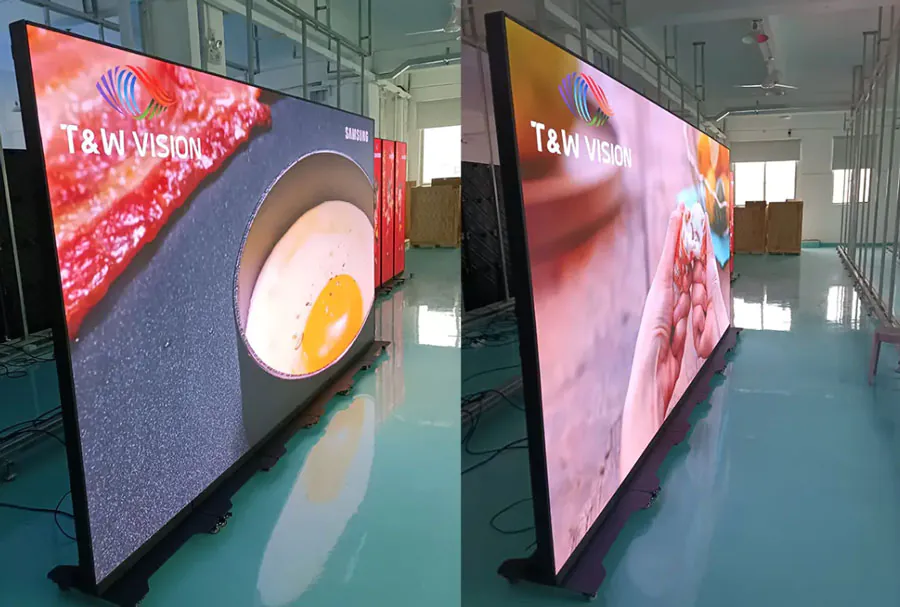
A custom circular LED screen is a display engineered from LED modules arranged into a full circle, ring, arch, or freeform curve. Unlike rectangular LED walls, the shape itself drives almost every technical decision: frame radius, module count, closing seam, pixel pitch, and content mapping.
Table of Contents
- What Makes a Custom Circular LED Screen Different
- Choosing the Right Pixel Pitch for a Circular LED Screen
- Custom Circular LED Screen Design and Structural Planning
- Frame Materials
- Closing Seam Planning
- Content Mapping for Non-Rectangular LED Surfaces
- Power, Cooling, and Maintenance for Circular LED Screens
- Front-Service vs Rear-Service
- Budgeting a Custom Circular LED Screen Project
- Selecting a Manufacturer for a Custom Circular LED Screen
- Can a custom circular LED screen display standard 16:9 video?
- How long does it take to manufacture a custom circular LED screen?
- Is a custom circular LED screen suitable for outdoor use?
- What is the minimum size for a readable custom circular LED screen?
- How do you repair a custom circular LED screen if one module fails?
- Conclusion
Industry suppliers report that non-standard LED shapes now appear regularly in high-end retail, automotive showrooms, event stages, and corporate lobbies, yet many buyers still evaluate these projects with flat-panel assumptions. The result is budget overruns, visible seams, or content that never fits the shape.
The seven decisions below decide whether a circular display performs reliably or becomes a costly correction, and each decision ends with a check you can perform before paying a deposit.
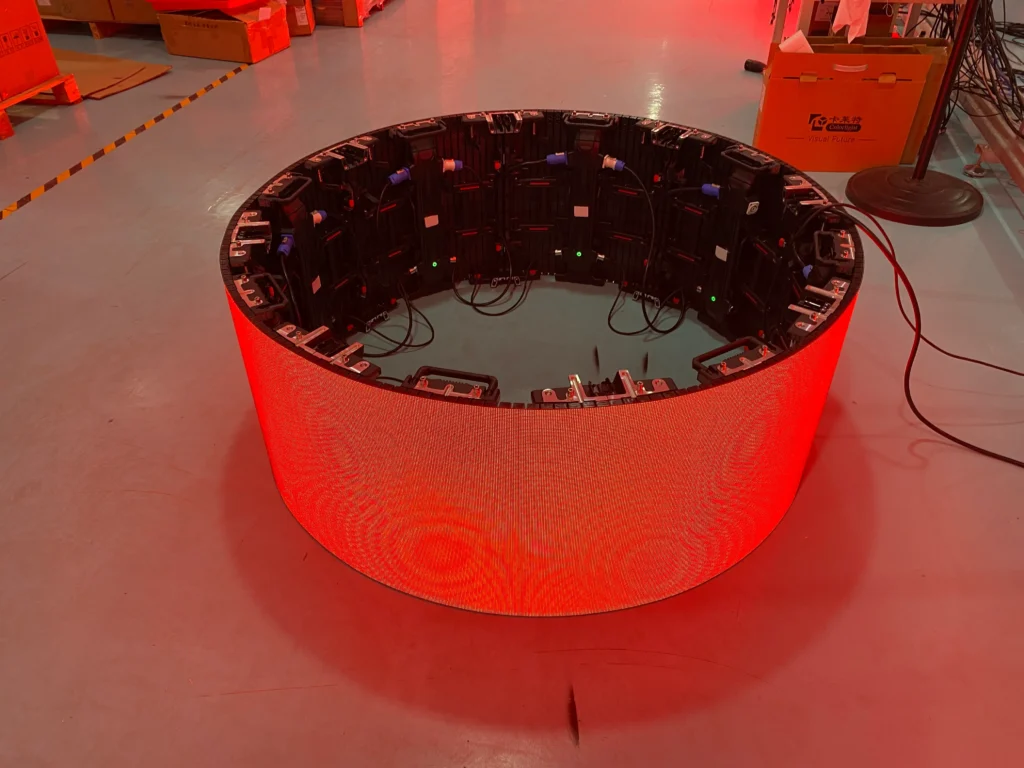
TW vision circular LED screen for rental usage. -22.5~22.5 degree. 8 panels(500x500mm) to make a circle. PQ series.
What Makes a Custom Circular LED Screen Different
A custom circular LED display is not a rectangular module bent into shape. The closed geometry forces the manufacturer to plan the circumference as an exact multiple of module width or length. If the module count does not divide evenly into the circumference, the closing seam will need a trimmed module, a curved mask, or a custom filler piece.
That single seam is where most visible errors appear.
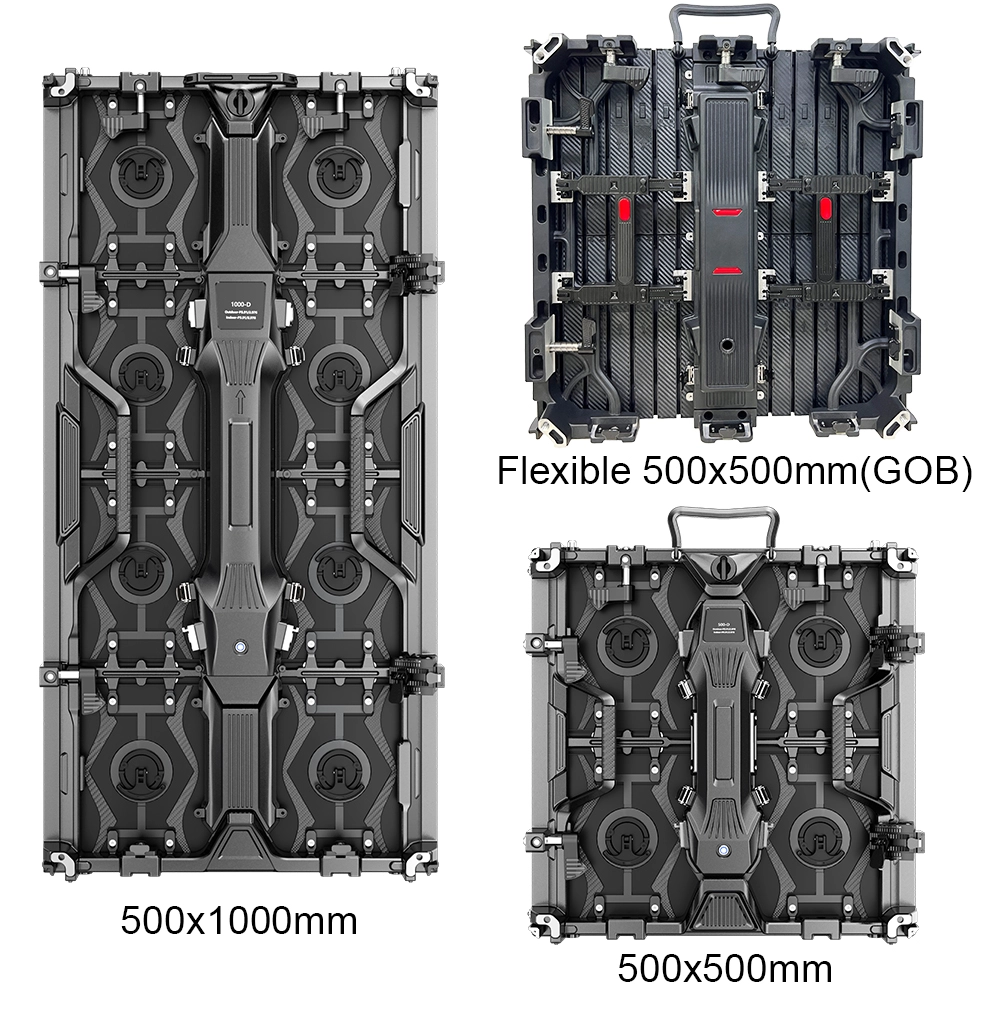
Standard indoor modules often come in 250 mm by 250 mm or 320 mm by 160 mm sizes, so suppliers usually reverse-engineer the circle diameter from the module grid. A buyer who asks for a 2-meter circle without checking module compatibility may be told it cannot close cleanly at the requested diameter.
A practical checkpoint for any custom circular LED screen is to compare the quoted diameter against the supplier’s standard module dimensions before approving the design. How to apply this: Choose a target diameter that is divisible by the module length, then ask the supplier to mark the closing seam on the drawing.
Choosing the Right Pixel Pitch for a Circular LED Screen
For a custom circular LED video wall, pixel pitch determines both image sharpness and total LED count. Indoor installations usually use P2.5 to P4 pitch because viewers stand close to the display. Outdoor circles or hanging rings above entrances can use P6 to P10 because the minimum viewing distance is much larger.
Pixel count changes geometrically with pitch, not linearly. A P2.5 panel packs about four times as many pixels per square meter as a P5 panel, which means more driver chips, cabling, and potential points of failure. This is why moving one step tighter in pitch can raise cost dramatically.
Use the closest viewer distance to choose the pitch, not a product photo. A good starting rule for indoor spaces is to match pitch in millimeters to the minimum viewing distance in meters, then verify with a physical sample.
| Pixel pitch | Typical indoor viewing distance | Best use case | Action to take |
|---|---|---|---|
| P2.5 | 2.5 m or more | Lobby circles, retail rings | Confirm exact diameter before ordering |
| P3 | 3 m or more | Mall atriums, event booths | Test content at closest viewer distance |
| P4 | 4 m or more | Ceiling rings, stage backdrops | Use curved masks for smooth edges |
| P6 | 6 m or more | Outdoor storefronts, signage | Add weatherproofing and drainage |
How to apply this: Measure the closest spot where a viewer can stand, then ask suppliers to quote the largest pitch that still looks smooth from that distance, not the tightest pitch they sell.
Custom Circular LED Screen Design and Structural Planning
The frame behind a custom circular LED video wall carries every module and must hold its radius through vibration, thermal expansion, and occasional cleaning. A frame that flexes even a few millimeters can open visible seams along the circle, making a premium display look broken.
Frame Materials
Steel and aluminum are the two common choices. Steel is less expensive and easier to weld on site, but it is heavy. Aluminum reduces weight but costs more and may need pre-machined connection points.
For a suspended or outdoor ring, the structure must also handle wind load and swing forces. A typical outdoor circular display needs structural approval from a licensed engineer because weight and wind load vary by region.
Closing Seam Planning
The closing seam is the point where the first and last module meet. Good drawings specify whether this seam will use a standard module, a trimmed module, or a custom mask. If the seam detail is missing from the drawing, that is a red flag.
Ask for a static load calculation that covers the full loaded circle, not just the panel weight. How to apply this: Before installation, request an engineering drawing with the closing seam, weld points, and total module weight marked in kilograms.
Content Mapping for Non-Rectangular LED Surfaces
Running standard 16:9 video on a custom circular LED video wall usually produces stretched edges, cropped text, or dead zones. The content must be designed on a circular canvas and mapped to the physical pixel layout. That mapping step is often ignored until the first on-site test.
MadMapper and Resolume are two widely used tools for mapping video onto non-rectangular LED surfaces. According to the official Resolume documentation, the Advanced Output feature lets you warp and slice content to match the exact arrangement of an LED installation, including circular and curved layouts.
This means your content can follow the physical module positions instead of being cropped to a rectangle.
Most integrators schedule at least one physical mapping test; skipping it is a common cause of content rework.
A practical workflow is to export a labeled test pattern with grid lines and coordinates, then run it through the processor before final content production. How to apply this: Build your content at the exact pixel resolution of the circle, and test a grid pattern on the physical display before committing to full production.
Power, Cooling, and Maintenance for Circular LED Screens
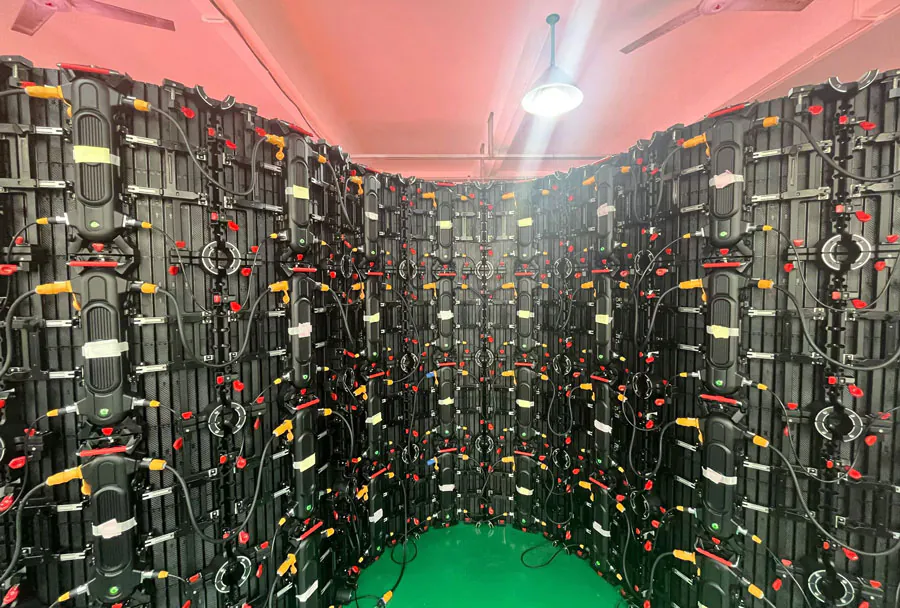
A custom circular LED display can trap more heat than a flat wall because the curved cabinet may not have a simple rear service path. Heat reduces LED brightness and accelerates color shift, so thermal planning is not optional.
Front-Service vs Rear-Service
Front-service access matters when the circular display is mounted against a wall or inside a narrow column. Rear-service designs work better when there is a walkable space behind the ring. Choose the service type before the frame is built, because changing it later usually requires a new cabinet design.
Many commercial LED modules carry a rated life of 50,000 to 100,000 hours, but that rating assumes stable power and proper cooling. The U.S. Department of Energy’s LED Lighting page states that LED products last significantly longer when heat is managed properly. The same principle applies to dense LED modules in circular signage.
An outdoor custom circular LED screen usually needs additional weathersealing and drainage, especially at the bottom of the circle. How to apply this: Ask the supplier for the maximum operating temperature and the cooling method — fans, heat sinks, or passive airflow — before you accept the design.
Budgeting a Custom Circular LED Screen Project
Budgeting a custom circular LED video wall by price per square meter alone is a common mistake. Custom shapes add engineering time, curved or trimmed masks, extra wiring, controller configuration, and content mapping. The frame and installation are often quoted separately from the LED modules, so the original number can grow quickly.
A practical data point: when comparing quotes for the same circular diameter, total project costs can vary significantly once engineering, freight, and commissioning are included. Ask every supplier for a line-item quote that separates modules, frame, controllers, content setup, and on-site labor.
A complete budget for a custom circular LED screen should also include spare parts, especially modules near the closing seam.
If a quote looks much lower than the others, it may assume a standard module layout that cannot actually close the circle cleanly. How to apply this: Compare at least three quotes at the same pixel pitch and scope, and put the engineering drawing into the purchase agreement.
Selecting a Manufacturer for a Custom Circular LED Screen
When you purchase a custom circular LED screen, the supplier’s track record with round or curved projects matters more than a general LED portfolio. A company that only builds flat walls may treat your circular order as a prototype, which shifts design risk onto you.
Ask for photos or videos of completed circular installations with a similar diameter and mounting style. Request the name of the integrator who commissioned those displays, not just the end customer. Also confirm the control system and receiving cards are compatible with custom module mapping.
NovaStar is a control system used in many LED installations; confirm that the chosen processor supports the module arrangement and mapping file from the manufacturer. A reliable custom circular LED screen supplier will provide a written drawing that specifies the closing seam, module count, and frame material.
Most field failures on custom circular screens come from mismatched panels or controller settings rather than defective LED diodes.
How to apply this: Ask for a reference install that matches your diameter and environment, then call the integrator and ask what they would change next time.
Frequently Asked Questions About Custom Circular LED Screen
Can a custom circular LED screen display standard 16:9 video?
Yes, but standard video will be cropped or stretched unless you map it properly. If you must show standard video on a custom circular LED screen, place it inside a smaller rectangular window within the circular canvas or mask the edges. This keeps logos and text readable while the circle remains decorative around the central video.
How long does it take to manufacture a custom circular LED screen?
Production time varies, but custom-shape projects typically add design and engineering before LED module assembly begins. A standard flat wall might ship in a few weeks, while a custom circular LED video wall often needs extra time for frame fabrication, curved masks, and mapping file preparation.
Confirm the production timeline in writing, and build at least two weeks of buffer for shipping delays or factory holidays.
Is a custom circular LED screen suitable for outdoor use?
It can be, but outdoor use adds IP-rated cabinets, sealed seams, drainage, and sun-brightness requirements. A custom circular LED screen mounted outdoors should use outdoor modules with higher brightness, often at least 5,000 nits, and the frame must handle wind load. The circular shape can create water traps, so drainage behind the bottom modules is critical.
What is the minimum size for a readable custom circular LED screen?
There is no universal minimum, but content legibility depends on pixel pitch and viewing distance. A small custom circular LED screen under one meter in diameter usually only supports logos and simple graphics, not text. For readable text, choose a larger diameter or a finer pixel pitch and keep the message to a few words.
How do you repair a custom circular LED screen if one module fails?
Most designs use replaceable modules that can be swapped from the front or rear. On a custom circular LED screen, the curved or trimmed module near the closing seam may need a custom spare, so order spares with the original purchase. Keep at least one seam module as a spare because it is the hardest part to replace.
Conclusion
A custom circular LED screen is a genuine engineering project, not a standard flat display with a round cutout. Keep these takeaways in mind:
– Choose the diameter around standard module sizes, and mark the closing seam on the drawing before buying.
– Match pixel pitch to the closest viewer, not the tightest option.
– Budget for the frame, custom masks, content mapping, and spare modules, not just the panel price.
– Verify the supplier’s circular reference install and control system compatibility.
Next step: gather your mounting measurements and minimum viewing distance, then use the questions above to request three line-item quotes. The cheapest offer is rarely the least expensive once the circle has to be re-engineered on site. Do not approve a drawing until the closing seam and module count are explicit.
