Smart City LED Displays: Integration, Data and Governance

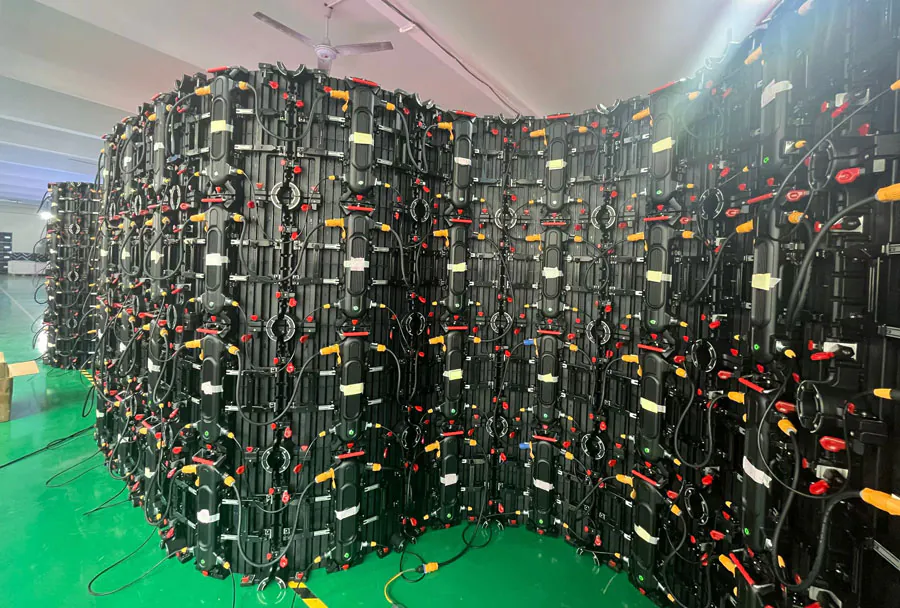
A smart city LED display is judged by what it shows at 8:40 on a Monday morning, not by the resolution printed in the brochure. If the screen still runs a tourism loop while a bus route is diverted, the hardware is fine and the system is not. City networks ask for four things at once: live mobility information, official alerts, environmental readings and everyday civic services. This page covers the layer that decides whether those jobs actually happen — data sources, content rules, network operations and governance. Cabinet specification, pitch and IP ratings live on our outdoor LED display screen pillar, because those choices are shared with every other outdoor project.
What the Screen Is Actually For
Municipal screens carry four kinds of information, and each one has a different tolerance for delay. Mobility data — arrivals, diversions, platform changes, parking occupancy — is useful for minutes and worthless by evening. Safety messaging is rare, must arrive everywhere at once, and outranks everything else. Environmental readings such as air quality, heat index and flood warnings run on a slower cycle but need a clear visual language. Civic services, from permit deadlines to waste collection changes, fill the remaining slots and keep residents checking the screen.
The practical test of a smart city LED display is not image quality but override behaviour. Ask the supplier to demonstrate an official alert pushing to every screen in the network within seconds, and to show what happens to a commercial playlist when that alert arrives. A screen that cannot answer that question is a billboard with a network cable, and it will fail the first audit after a real emergency.
Who buys the screen shapes what it must do. Councils usually need civic notices and emergency broadcast across a district, with a procurement file that survives public scrutiny. Transit authorities need arrival data first and treat advertising as a subsidy. Business improvement districts want footfall and events, and often own the advertising rights. Media operators buy screens as inventory and need proof-of-play. Those four buyers want the same cabinet and very different software, so write the requirement from the operator’s side of the network.
From Data Feed to Screen
Start by mapping every content slot to a source and an owner. A transit template pulls arrival predictions from the operator’s API; an air-quality template pulls from the environmental monitoring service; an events template pulls from the council calendar. Each template keeps a field mapping, a refresh interval and a named owner, so a broken feed can be traced to a person rather than to a mystery. Screens that fail quietly are almost always screens with no owner.
A workable chain looks like this: the API returns a prediction, the scheduling layer refreshes the template every 30 to 60 seconds, and the player holds the last good value with a timestamp when the feed drops. That timestamp matters, because a screen showing a stale arrival time without one erodes trust faster than a blank panel. Build a fallback slide, a house style and a rollback path before the first screen goes live. The same discipline makes a smart city LED display easier to audit later.
Content Rules for Public Space
People read public screens for three to five seconds, often while walking, driving or holding a child’s hand. That constraint drives the rules: one message per frame, five to seven words, high contrast, and type large enough to read from the far side of a crossing. Motion should mark a transition rather than run continuously, because constant animation reads as advertising and trains people to ignore the screen. Dwell time of 10 to 15 seconds per message is a useful starting point for a network that mixes information and promotion.
Plan for two audiences from day one. A bilingual rotation, or a second language carried in a smaller line, doubles the message capacity without doubling the screen count. Emergency templates should be written, translated and approved before they are needed, with a fixed layout that cannot be edited under pressure. If the screen speaks for a city, the wording, colour and hierarchy of that alert frame deserve the same review as the hardware.
Hardware Built for 24/7 Duty
Continuous operation changes the specification. A cabinet that runs 20 hours a day, every day, accumulates heat cycles and dust that an event screen never sees, so thermal design and service access matter more than a fractionally higher peak brightness. A light sensor that dims output after dark reduces both glare complaints and power draw. Front-service modules, locking doors and a documented spare-parts list keep a network maintainable without scaffolding every time a module fails.

Beyond that, the choices are the same as any outdoor project: pitch matched to viewing distance, IP65 sealing on the exposed face, and a mounting design that leaves room for airflow. Our PO-H pole cabinets carry that layout for street furniture. Treat a smart city LED display as a ten-year asset, because the network software will be replaced long before the cabinet is.
Redundancy belongs in the specification, not in the service contract. Ask for dual power inputs or a documented UPS option on screens that carry emergency messaging, a watchdog that restarts a frozen player, and local storage large enough to hold a week of content. Check whether the network path can fail over to a mobile data link without a site visit. These details add a small cost per cabinet and remove the most common cause of a dark screen in a public square.
Network Operations
A network of screens needs a single control layer, not a folder of USB sticks. Remote monitoring should report online status, cabinet temperature, brightness level and signal health per screen, with alerts when a screen stops reporting. Proof-of-play logs turn a civic screen into an accountable one: they show which messages ran, when, and for how long, which is what an auditor or a sponsor will ask for.
Set the override hierarchy in writing. Emergency alerts outrank public-safety notices, which outrank transit information, which outrank civic notices, which outrank commercial content. Each level needs its own approval path and its own test schedule, and the whole chain should be rehearsed once a quarter. Firmware updates belong on a staged rollout — one screen first, then the district — because a bad update on a hundred-screen smart city LED display network is an outage, not an inconvenience.
Security, Privacy and Governance
Publishing rights are the quiet failure point. If anyone with a login can push a message to every screen in the city, the network is one careless password away from an incident. Use role-based accounts, two-person approval for emergency frames, and an immutable audit trail that records who published what. Segment the screen network from office IT, and treat each player as an untrusted endpoint when you design the firewall rules.
Privacy deserves an explicit policy rather than a default. Cameras, Wi-Fi probes and audience analytics are optional add-ons, and each one needs a lawful basis, a retention limit and a published notice. Data minimisation is the safer route: count footfall, not faces. A short public statement about what the screens show, who approves it and how to complain does more for trust than any technical feature, and it protects the project when a council changes.
Procurement and Deployment
Connectivity decides the architecture before the hardware is chosen. Fibre suits fixed installations with existing ducts; LTE or 5G suits temporary and heritage sites where trenching is impossible, at the cost of a data plan per screen. Confirm power capacity, distribution and surge protection at each location, then confirm permits: digital sign approval, electrical approval and, in many cities, a separate consent for any screen that carries third-party advertising.
Roll out in phases. Three pilot screens in different environments — a transport hub, a high street and a park — expose the real problems: glare at a particular hour, a feed that times out, a cabinet that overheats in a recess. Write an acceptance test that uses live data rather than a test video, and include a failure drill. Only after the pilot should a smart city LED display order scale to a district.
Contract terms decide how fast a network recovers. Pin down a response time for a dead screen, a stock of spare modules held locally, and who pays for access equipment when a lift is needed. Ask whether the supplier supports the player software as well as the cabinet, because a hardware warranty that excludes the control layer leaves the operator exposed. Tie payment milestones to the pilot acceptance test rather than to delivery, so the incentives stay aligned through commissioning.
What the Network Costs to Run
Electricity is only part of the operating cost, but it is the easiest to model. Take average watts, multiply by run hours, and divide by 1,000 for kilowatt-hours, the unit the U.S. Energy Information Administration uses for billing calculations. A 4 m² pole screen drawing 500 W average across 20 hours uses 10 kWh a day, or about 3,650 kWh a year, before dimming cuts the night-time share.
Add a data plan per screen, a content management licence, a maintenance contract and a realistic module-replacement allowance. Those four lines usually exceed the electricity bill within three years, which is why the cheapest cabinet with no service agreement is rarely the cheapest network. Budget for one spare module per ten installed, and for a technician visit schedule rather than a break-fix contract.
Where It Pays Back
Civic screens repay through avoided cost as much as through revenue. Fewer printed notices, fewer calls to a help desk, faster evacuation messaging and better use of existing street furniture all show up in a council budget. Commercial slots on the same network can offset part of the operating cost, provided the override hierarchy keeps public information first and the advertising consent exists.
Measure with something you own. Put a campaign-specific QR code or short URL on the screen, watch branded search and direct traffic during the campaign weeks, and compare footfall counts before and after. For the wider question of screen type — LED against LCD and all-in-one units — see our outdoor digital display comparison. For irregular urban architecture, LED mesh often solves a facade that a rigid cabinet cannot.
Funding usually arrives in phases, so build the case in phases. A first district that proves alert delivery, feed reliability and measured footfall gives the next phase a document to point at. Councils that publish a short annual report on uptime and message volumes find the second round of budget easier to secure than those that report only capital cost, and operators get a benchmark they can hold suppliers to.
FAQ
Do we need a custom content management system?
Not necessarily. Start from the data sources and the override hierarchy, then choose a CMS that supports templates, roles and proof-of-play. A platform that already connects to your transit feed is worth more than a feature list.
Can one new screen join an existing city platform?
Usually yes, if the player accepts the platform’s scheduling protocol and the cabinet exposes network and power status. Ask for the API documentation before ordering, and test one screen against the live platform during acceptance.
What a smart city LED display does when the network fails
A well-built cabinet keeps its last playlist locally, blanks gracefully if the feed is lost, and reports the fault. Plan for a UPS on critical screens and a documented manual override for emergency messaging.
Conclusion
A city screen earns public money when it answers a question a resident actually has, at the moment they have it. That outcome depends on owned data feeds, a written override hierarchy, role-based publishing and a maintenance budget agreed before purchase. Buy the display as a manageable endpoint, test it with live data, and rehearse the emergency path. Hardware is the visible part of a smart city LED display project; governance is the part that keeps it trusted.